The Japanese highball isn’t just a cocktail—it’s a philosophy in liquid form. Served tall, crisp, and startlingly refreshing, it’s the undisputed national refresher of Japan: a minimalist marriage of premium whisky, chilled soda water, and obsessive attention to temperature, dilution, and proportion. Unlike Western highballs—often treated as afterthoughts or boozy fillers—the Japanese version is engineered for elegance, balance, and sensory harmony. Its signature smoothness isn’t accidental. It emerges from decades of refinement in izakayas, bar counters in Shinjuku skyscrapers, and the quiet discipline of Japanese bartending culture. This article unpacks the precise reasons why the Japanese highball delivers such exceptional mouthfeel and drinkability—and gives you everything you need to make one at home that rivals what you’d get behind Tokyo’s most respected bars.
The Four Pillars of Japanese Highball Smoothness
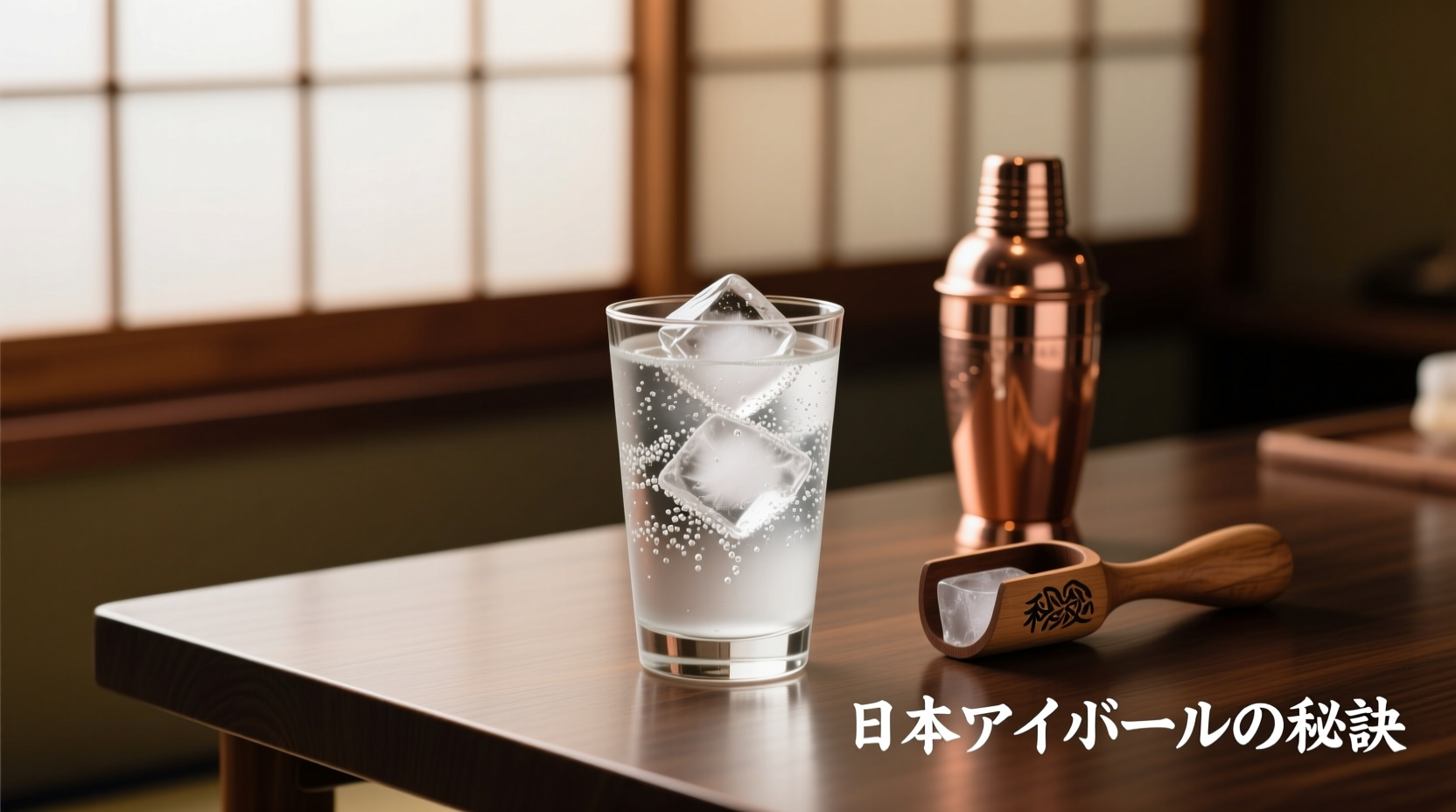
Smoothness in a highball isn’t about low alcohol or sweetness—it’s about *perceived softness*: the absence of harsh edges, heat, or volatility on the palate. Japanese bartenders achieve this through four interlocking principles, each grounded in sensory science and cultural precision.
1. Whisky Selection: Light-Bodied, Low Congener, High Purity
Japanese highballs almost never use heavy, smoky, or highly oaked whiskies. Instead, they favor light, floral, and delicately fruity blends—most notably Suntory Toki, Nikka Coffey Grain, or Hibiki Harmony. These expressions contain fewer congeners (flavor compounds like fusel oils and esters formed during fermentation and aging), which are primary contributors to alcoholic “burn” and post-consumption fatigue. A 2021 study published in Food Chemistry confirmed that grain-forward, column-distilled whiskies exhibit up to 40% lower congener concentration than pot-still malts—directly correlating with smoother sensory perception at equivalent ABV.
2. The Ice Protocol: Not Just Cold—Controlled, Consistent, and Abundant
A Japanese highball uses *at least* 7–9 large, dense, crystal-clear cubes—never crushed or small. Why? Surface area matters. Smaller ice melts faster, over-diluting the drink before it’s finished. Large cubes melt slowly, providing steady, minimal dilution over 8–10 minutes—the ideal drinking window. More crucially, Japanese bars pre-chill every element: glass, ice, soda, and even the whisky bottle (for 15 minutes in the freezer). This prevents thermal shock when soda hits room-temperature spirit, preserving carbonation integrity and preventing premature CO₂ loss—a key factor in perceived lightness.
3. Soda Water Technique: Pressure, Temperature, and Pour Angle
Japanese bartenders use chilled, high-pressure soda siphons—not flat-tasting store-bought cans. But even at home, technique compensates: pour soda *down the side* of the glass, not directly onto the whisky. This preserves effervescence by minimizing turbulence and CO₂ agitation. The result? Tiny, persistent bubbles that lift aroma and create a gentle, tingling mouthfeel—physically smoothing out ethanol’s bite. As Kazuhiro Hasegawa, head bartender at Bar Benfiddich in Tokyo, explains:
“The highball is a study in gas physics and thermal equilibrium. If your soda goes flat in 90 seconds, you’ve lost the architecture of the drink. Bubbles aren’t just fizz—they’re the vehicle for aroma, the buffer against alcohol, and the reason the first sip feels like cool air.” — Kazuhiro Hasegawa, Bar Benfiddich, Tokyo
4. Ratio Discipline: 1:3–1:4 Is Non-Negotiable
While Western highballs often stray into 1:2 territory (or worse, 1:1), the Japanese standard is rigorously 1 part whisky to 3–4 parts chilled soda. This ratio ensures the spirit remains present—but never dominant. Ethanol perception drops sharply below 12% ABV in mixed drinks; a 1:4 highball made with 43% ABV whisky lands at ~8.6% ABV—well within the range where warmth recedes and refreshment takes over. It’s not weak—it��s calibrated.
Tip: Freeze your highball glass for 10 minutes before building. A frosty vessel slows initial melting and keeps carbonation lively longer.Your Home Highball Toolkit: What You Actually Need
You don’t need a siphon or custom ice mold to begin—but skipping fundamentals sacrifices authenticity. Here’s what elevates a good home highball to a great one:
- Whisky: Choose a light, blended, or grain-forward Japanese or Canadian whisky (e.g., Suntory Toki, Nikka Coffey Grain, Canadian Club Classic 12). Avoid peated Islay malts or heavily sherried expressions.
- Soda water: Use high-quality, unflavored, naturally carbonated water (e.g., San Pellegrino, Gerolsteiner, or Topo Chico). Avoid sodium-bicarbonate sodas—they taste medicinal and flatten quickly.
- Ice: Make large cubes (2-inch minimum) using boiled, then cooled water for clarity. Store frozen in a sealed bag to prevent freezer odors.
- Glassware: A 10–12 oz highball or Collins glass—not a tumbler. Height encourages layered pouring and slower consumption.
- Tools: Jigger (for accuracy), bar spoon (for gentle stirring), and a fine-mesh strainer (optional, for removing ice shards).
The Authentic Step-by-Step Method (Tokyo Bar Standard)
This sequence mirrors the exact workflow used at Bar Orchard in Shibuya and The SG Club in Roppongi. Timing and order are critical—not optional.
- Chill: Place your highball glass in the freezer for 10 minutes. Chill your whisky bottle in the freezer for 15 minutes (do not freeze whisky—just bring it to ~4°C/39°F).
- Ice: Fill the chilled glass to the brim with 7–9 large, clear ice cubes. Gently tap the glass on the counter once to settle them.
- Pour whisky: Using a jigger, measure exactly 30 ml (1 oz) of chilled whisky. Pour it slowly over the ice—do not stir yet.
- Initial stir (3 seconds): With a bar spoon, stir gently 3 times—just enough to begin chilling the spirit and initiate minimal dilution. Stop before the whisky coats the ice.
- Soda pour: Hold the chilled soda bottle at a 45° angle. Pour steadily down the inside wall of the glass—never onto the surface. Target 90–120 ml (3–4 oz) of soda. Maintain a steady stream; do not stop and start.
- Fine stir (5 seconds): Stir *very gently* 5 more times—just enough to integrate, not agitate. Over-stirring collapses bubbles.
- Rest & serve: Let the drink sit undisturbed for 15 seconds. This allows CO₂ to re-equilibrate and the surface to settle. Serve immediately with a citrus twist (optional yuzu or lemon oil expressed over top).
Common Pitfalls—and Why They Ruin Smoothness
Even small deviations disrupt the delicate physics that produce smoothness. Here’s what breaks the spell—and how to fix it:
| Mistake | Effect on Smoothness | Fix |
|---|---|---|
| Using room-temperature whisky | Triggers rapid CO₂ loss on contact with soda → flat, dull mouthfeel | Always chill whisky 15 min in freezer (not fridge) |
| Small or cloudy ice | Fast, uneven melting → excessive dilution + bitter, watery finish | Use large, clear cubes; boil water twice before freezing |
| Pouring soda directly into center | Violent CO₂ release → large, fleeting bubbles → thin, hollow texture | Pour down the side at 45° angle |
| Stirring more than 8 seconds total | Agitates dissolved CO₂ → flatness + loss of aromatic lift | Count strokes: 3 + 5 = 8 max |
| Using low-CO₂ or sodium-heavy soda | Bitter alkalinity masks fruit notes; weak bubbles offer no textural buffer | Choose naturally carbonated, sodium-free brands |
Mini Case Study: How a Tokyo Office Worker Transformed His Evening Ritual
Kenji Tanaka, 34, a financial analyst in Marunouchi, used to unwind with a can of chu-hai after work—until a colleague invited him to Bar Kura in Ginza. There, he ordered his first proper highball: Suntory Kakubin (a classic Japanese blend) with Yamanashi spring water soda, poured tableside. “It tasted like cold mountain air,” he recalls. “No burn. No heaviness. Just clean, bright, and gone before I knew it.” Inspired, Kenji bought a soda siphon, learned ice-making, and began timing his pours. Within three weeks, he’d replaced nightly beer with two meticulously built highballs. His sleep improved. His afternoon headaches vanished. “I thought smooth meant ‘weak,’” he says. “But it’s the opposite—it’s control. Every variable has weight.” Today, Kenji teaches highball basics to colleagues at monthly “after-work bar labs”—proving that precision, not potency, defines true refreshment.
FAQ: Your Highball Questions, Answered
Can I use sparkling water instead of soda water?
No—sparkling water contains added minerals (like calcium and magnesium) that interact with whisky tannins, creating a chalky, metallic aftertaste. True soda water is pure carbonated H₂O. If you must substitute, use plain club soda (sodium bicarbonate-free) and avoid tonic or flavored variants entirely.
Why does my homemade highball taste “thin” or “sharp” compared to a bar’s?
Most likely due to temperature disparity or CO₂ loss. If your whisky or glass isn’t chilled, the soda loses effervescence instantly—robbing the drink of its textural cushion. Also, if you’re shaking or over-stirring, you’re collapsing the bubble structure that carries volatile aromatics and physically softens ethanol perception. Revisit the step-by-step method with strict temperature control.
Is it okay to add citrus or herbs?
Traditionally, no—the purity of the highball is sacred. However, a single express of yuzu or lemon oil over the surface (not stirred in) is accepted in modern Tokyo bars as an aromatic accent. Never muddle or juice citrus—it introduces acidity that competes with the drink’s delicate pH balance and amplifies alcohol heat.
Conclusion: Mastery Begins with One Perfect Pour
The Japanese highball’s smoothness isn’t magic—it’s method. It’s the consequence of respecting ingredients, honoring physics, and practicing restraint. Every element—from the density of your ice to the angle of your soda pour—exists to serve one purpose: to make the spirit disappear just enough, so all you feel is clarity, coolness, and effortless refreshment. You don’t need a $500 siphon to begin. Start tonight with one chilled glass, seven perfect cubes, 30 ml of a light Japanese blend, and 120 ml of properly chilled, high-CO₂ soda. Follow the steps. Count the stirs. Taste the difference. Then do it again tomorrow—refining, observing, feeling how temperature shapes texture, how bubbles shape perception. In a world of noisy, over-engineered drinks, the highball reminds us that the deepest pleasure often lives in simplicity, executed without compromise. Build yours. Sip slowly. And when that first, perfectly balanced note hits—know you’ve just experienced one of the most refined drinking rituals ever conceived.
💬 Have you cracked the highball code at home? Share your go-to whisky, your ice hack, or your biggest “aha!” moment in the comments—we’ll feature standout tips in next month’s deep-dive on Japanese bar tools.








