
For hikers, backpackers, and outdoor adventurers, staying dry isn’t just about comfort—it’s about safety and equipment preservation. One of the most overlooked aspects of preparedness is understanding the protection level of your hiking bag. The terms “waterproof” and “water resistant” are often used interchangeably, but they mean very different things—especially when you’re caught in a downpour on a remote trail.
The distinction becomes critical under sustained or heavy rainfall. A bag that merely resists moisture might keep your gear dry for a short time, but prolonged exposure can lead to soaked clothing, ruined electronics, and compromised insulation. Understanding the technical differences, real-world performance, and appropriate use cases can make or break your next backcountry trip.
Understanding the Terminology: Waterproof vs Water Resistant
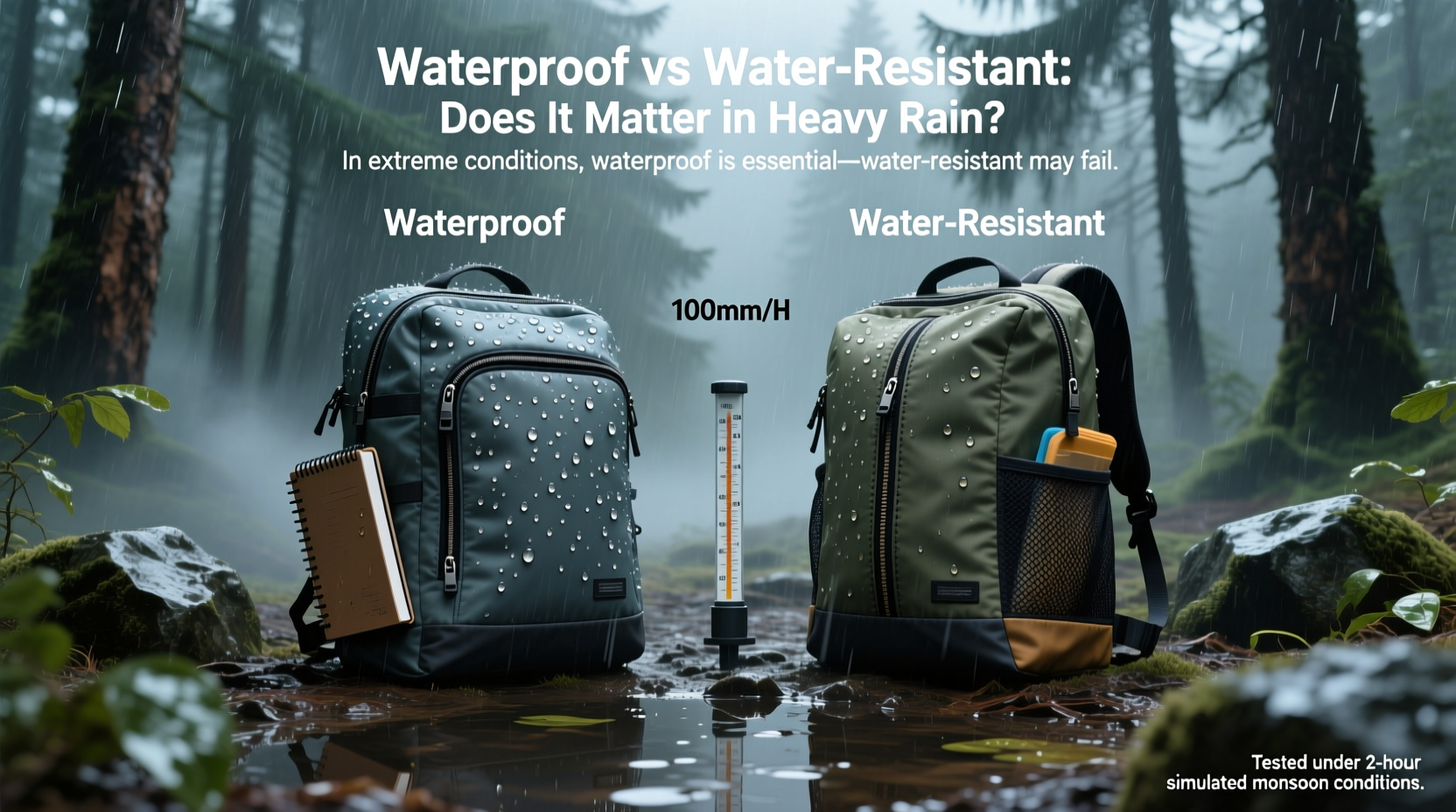
At first glance, both terms suggest protection from water, but their execution and reliability vary significantly.
- Water resistant: This means the material or construction can repel water to some degree, typically under light conditions like drizzle or brief splashes. Most standard backpacks fall into this category, often treated with a Durable Water Repellent (DWR) coating. However, this resistance diminishes over time and fails under pressure or prolonged exposure.
- Waterproof: True waterproofing means the bag is designed to prevent water penetration entirely, even when submerged. This is achieved through fully sealed seams, waterproof materials (like TPU-coated fabrics), and roll-top closures. These bags meet specific standards, such as IPX7 (submersible up to 1 meter for 30 minutes).
The key difference lies in seam construction and closure systems. Water-resistant bags often have stitched seams, which create micro-channels for water ingress. Waterproof bags use welded or taped seams and secure closures like roll-tops or zip-seals to eliminate entry points.
Tip: Don’t rely solely on product labels—check whether seams are taped or welded and if the closure system is submersion-rated.Real-World Performance in Heavy Rain
A controlled lab test doesn’t always reflect trail conditions. To assess real-world impact, consider how each type performs during extended storms.
In moderate rain lasting 20–30 minutes, a water-resistant backpack with a rain cover may suffice. However, once the rain intensifies or lasts over an hour, vulnerabilities appear. Water creeps in through zippers, soaks through fabric, and pools at the bottom if the pack sits on wet ground.
In contrast, a fully waterproof hiking dry sack or backpack maintains integrity. Even after hours of continuous rain, contents remain dry. This is particularly crucial for multi-day treks where shelter access is limited.
“On a solo trek through the Scottish Highlands, I wore a high-end rain jacket and carried a ‘weather-resistant’ pack. After six hours in horizontal rain, my jacket held up—but my sleeping bag was damp from condensation and seepage through the pack’s base. Switched to a waterproof dry bag system the next season. Never looked back.” — Daniel Reeves, Long-Distance Hiker & Outdoor Guide
Comparison Table: Waterproof vs Water Resistant Hiking Bags
| Feature | Water Resistant | Waterproof |
|---|---|---|
| Material Coating | DWR-treated nylon/polyester | TPU, PVC, or laminated eVent |
| Seam Construction | Stitched (potential leak points) | Taped or welded (sealed) |
| Closure Type | Standard zippers, flap covers | Roll-top, watertight zippers |
| Rain Cover Needed? | Yes, and still not foolproof | No, built-in protection |
| Submersion Safe? | No | Yes (IPX7 or higher) |
| Breathability | Moderate to high | Low (can trap condensation) |
| Best Use Case | Day hikes, urban use, light weather | Backpacking, kayaking, alpine environments |
When It Actually Matters: Scenarios That Demand Waterproofing
Not every hike requires military-grade protection. But certain conditions elevate the need for true waterproof gear.
- Extended Exposure to Rain: If your route offers no shelter and forecasts predict all-day rain, a water-resistant bag won’t cut it. Moisture accumulation inside leads to mildew, weight gain, and hypothermia risk from wet insulation.
- Crossing Rivers or Wet Terrain: Fording streams, walking through marshes, or bushwhacking through dew-heavy brush exposes your pack to full immersion risks. Only waterproof bags guarantee dry contents.
- Carrying Sensitive Electronics: GPS units, satellite messengers, cameras, and power banks are vulnerable to even minor dampness. A single drop inside a non-waterproof compartment can cause permanent damage.
- Winter or Alpine Conditions: Snowmelt and freezing rain penetrate faster than liquid rain. Waterproof protection prevents ice buildup inside your pack, which can damage zippers and compress insulation.
Practical Step-by-Step: Choosing the Right Bag for Your Needs
Selecting between waterproof and water-resistant isn’t just about weather forecasts—it’s about risk tolerance and trip logistics.
- Assess Your Trip Duration: Day hikes? Water-resistant with a rain cover may be enough. Overnight or longer? Prioritize waterproof options or internal dry bags.
- Check the Forecast Reliability: In regions with sudden storms (e.g., Pacific Northwest, Alps), assume worst-case scenarios. Overprepare rather than under.
- Evaluate Access Needs: Waterproof roll-top bags limit quick access. If you frequently grab items (map, snacks, rain jacket), consider a hybrid: waterproof main compartment with water-resistant external pockets.
- Test Before You Trust: At home, simulate conditions. Spray your bag with a hose for 10 minutes, then check inside. Better yet, submerge it briefly (if safe for materials).
- Layer Your Protection: Even with a waterproof backpack, use internal dry sacks for added security. Think of it as redundancy—your electronics deserve more than one line of defense.
FAQ: Common Questions About Hiking Bag Water Protection
Can I make a water-resistant bag waterproof?
You can improve its performance with aftermarket treatments—apply seam sealant, use a high-quality rain cover, and store essentials in dry bags—but you cannot achieve true waterproofing without structural changes like sealed seams and roll-top closures.
Do all “waterproof” bags perform equally?
No. Quality varies. Some brands use partial seam taping or inferior zippers. Look for third-party testing data or IP ratings. Trusted models include those from DryTech, Sea to Summit, and Ortlieb, which publish detailed waterproofing specs.
Won’t a waterproof bag trap sweat and condensation?
Yes, breathability is a trade-off. Waterproof materials block moisture transfer, leading to internal condensation from body heat and humid air. To mitigate this, avoid over-packing, ventilate when possible, and use moisture-wicking liners or silica gel packs for sensitive items.
Final Verdict: Does It Really Matter?
Yes—especially when conditions exceed casual drizzle. For fair-weather hikers, a water-resistant backpack with a reliable rain cover may be sufficient. But for anyone venturing into unpredictable climates, remote terrain, or extended trips, the peace of mind from a truly waterproof system is invaluable.
The cost difference is often minimal compared to replacing soaked gear or facing a dangerous situation due to wet clothing. Moreover, waterproof technology has evolved: modern bags are lighter, more ergonomic, and better organized than ever.
Ultimately, your hiking bag isn’t just storage—it’s a protective shell for everything you depend on in the wild. Treating water protection as optional is like skipping a helmet on a mountain bike trail. Possible? Yes. Wise? Not when a safer option exists.
💬 Your turn: Have you ever been caught in heavy rain with a soaked pack? What would you do differently? Share your story and help others choose smarter gear.








