Celery is often celebrated for its crisp texture and subtle, earthy flavor—but what truly defines its culinary behavior is something far less visible: water. With one of the highest hydration levels among common vegetables, celery stalks are composed almost entirely of water, a fact that influences everything from their crunch to their role in soups, stocks, and raw preparations. Understanding the exact water content percentage in celery stalks isn't just a nutritional footnote—it's essential knowledge for cooks aiming to balance moisture in dishes, preserve freshness, or leverage celery’s natural properties in both everyday meals and advanced techniques. This article explores the science behind celery’s hydration, how it affects cooking outcomes, and practical ways home and professional chefs can use this information to improve their results.
Definition & Overview
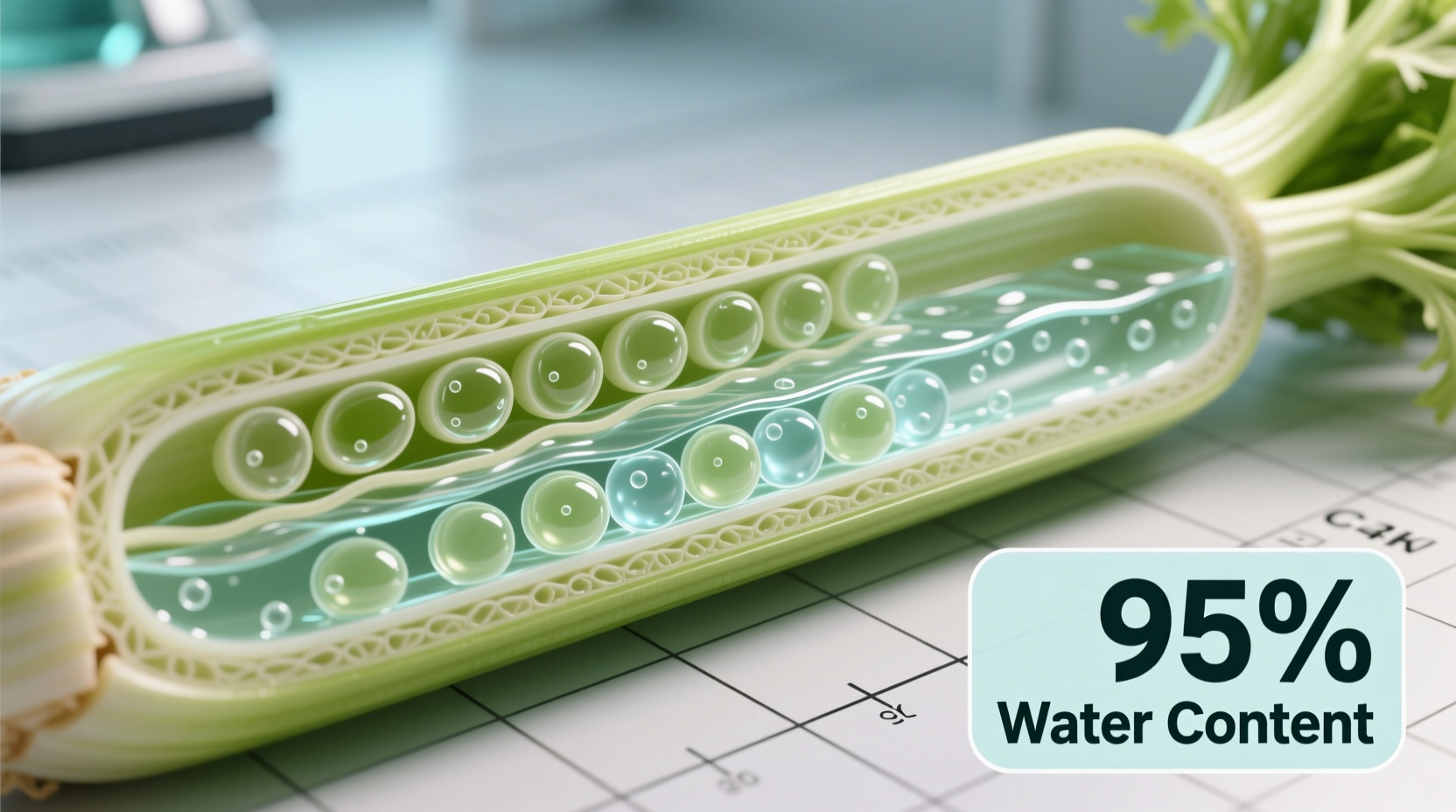
Celery (Apium graveolens) is a marshland plant species in the Apiaceae family, cultivated widely for its edible leaf stalks (petioles), leaves, and seeds. The most commonly consumed part in Western cuisine is the firm, fibrous stalk, typically eaten raw in salads, used as a base in mirepoix, or blended into juices and smoothies. Native to the Mediterranean, celery has been used since antiquity—not only as food but also for medicinal purposes, particularly as a diuretic and digestive aid.
The defining physical characteristic of celery stalks is their high water content, which directly contributes to their juiciness, turgor pressure (crispness), and low caloric density. This hydration level also makes celery exceptionally sensitive to dehydration, leading to limpness when improperly stored. From a culinary perspective, celery is considered a foundational aromatic, forming part of the holy trinity in Cajun cooking and the classic French mirepoix alongside onions and carrots. Its mild bitterness and vegetal sweetness emerge more fully when cooked, while its raw form delivers a refreshing, slightly peppery bite.
Key Characteristics of Celery Stalks
Beyond water content, several key traits define celery’s role in the kitchen:
| Characteristic | Description |
|---|---|
| Water Content | Average 95% by weight; ranges from 94–96% depending on freshness and variety |
| Flavor Profile | Mildly bitter, earthy, with subtle herbal and saline notes; becomes sweeter when cooked |
| Texture | Crisp and crunchy when fresh; softens significantly with heat or prolonged storage |
| Color | Pale to medium green; inner ribs are lighter due to lack of chlorophyll exposure |
| Culinary Function | Aromatic base, textural component, hydration agent, natural thickener (when pureed) |
| Shelf Life | 7–14 days refrigerated; degrades rapidly once cut or exposed to air |
| Nutritional Value (per 100g raw) | 16 kcal, 1.6g carbohydrates, 1.2g fiber, 0.7g protein, rich in vitamin K, potassium, and antioxidants |
This combination of high water and low solid content means that celery contributes minimal bulk when reduced, making it ideal for infusing flavor without overwhelming a dish with residue. However, its fragility demands careful handling—especially in recipes where moisture control is critical.
Why Water Content Matters in Cooking
The 95% water composition of celery is not merely a biological curiosity—it actively shapes how the vegetable behaves during preparation and cooking. When heated, celery releases nearly all of its internal moisture, which can dilute sauces, soups, or braises if not accounted for. Conversely, in raw applications like salads or crudités, that same water content provides desirable juiciness and mouthfeel.
In professional kitchens, chefs often “sweat” celery gently to extract some moisture before adding liquids, preventing unwanted thinning of reductions. In homemade stocks, celery contributes both flavor and water, but because so much evaporates during simmering, its final impact is concentrated rather than diluted. For dehydrated or freeze-dried products, celery’s high water loss translates into significant volume reduction—approximately 20:1 by weight when fully dried.
\"Celery is the silent hydrator in my kitchen. I rely on its water content to naturally moisten stuffings, grain pilafs, and even meatloaf mixtures without adding extra liquid.\" — Chef Elena Torres, Culinary Instructor at Pacific Coast Institute
Practical Usage: How to Leverage Celery’s Hydration
Understanding celery’s water content allows cooks to make informed decisions across a range of applications. Here are specific techniques and uses that take advantage of—or compensate for—its high moisture level:
1. Raw Applications: Maximizing Crunch and Freshness
When served uncooked, celery’s crispness comes from turgid cells full of water. To maintain this texture:
- Store whole stalks in aluminum foil or sealed containers with a damp cloth to minimize transpiration.
- Soak cut pieces in ice water for 15–30 minutes before serving to rehydrate and restore firmness.
- Use immediately after cutting to prevent weeping and sogginess in salads.
Pair raw celery with creamy dips (like ranch or peanut butter), citrus segments, or apples for contrast in texture and acidity. Its water content helps cleanse the palate between bites.
2. Cooking Techniques: Managing Moisture Release
Because celery releases about 95% of its weight in water when cooked, timing and method matter:
- Sweating: Cook diced celery over medium-low heat in fat (butter or oil) until translucent but not browned. This draws out moisture slowly, concentrating flavor while minimizing splatter.
- Sautéing: Higher heat sears the surface quickly, preserving some crispness—ideal for stir-fries or garnishes like gremolata.
- Simmering: In soups and stews, add celery early to allow full integration of flavor. Account for its water contribution by reducing added broth slightly.
- Roasting: High heat drives off moisture rapidly, caramelizing natural sugars. Roasted celery develops a deeper, nuttier profile and shrinks considerably.
Pro Tip: When making risotto or pilaf, sauté celery first to release excess water before adding rice. This prevents over-dilution and ensures even absorption of stock later.
3. Blending and Juicing: Extracting Pure Hydration
Celery juice has become popular for its perceived detoxifying effects, though scientifically, its benefits stem largely from electrolyte content (especially potassium) and hydration. One cup (240ml) of fresh celery juice contains roughly 230mg of potassium and only 40 calories—nearly all from water-soluble compounds.
To maximize yield:
- Use a cold-press juicer to extract up to 80% of total water content.
- Chill stalks before juicing to enhance clarity and reduce foaming.
- Combine with lemon or ginger to balance mild bitterness.
Note: Fiber is removed during juicing, so the result lacks the satiating effect of whole celery but offers rapid fluid delivery—useful in recovery drinks or hydrating tonics.
Variants & Types of Celery
While the standard green Pascal celery dominates supermarket shelves, several variants exist, each with slight differences in water retention, flavor, and culinary use:
| Type | Water Content | Characteristics | Best Uses |
|---|---|---|---|
| Green Pascal (Standard) | ~95% | Firm, fibrous, strong aroma; outer ribs are tougher | Cooking, juicing, snacks |
| Golden (Blanched) Celery | ~94.5% | Milder flavor, tenderer texture; grown covered to limit chlorophyll | Salads, delicate soups, garnishes |
| Red Celery (e.g., ‘Red Venture’) | ~94% | Slightly sweeter, anthocyanin-rich pigments; less bitter | Raw platters, colorful garnishes |
| Celeriac (Root Celery) | ~88% | Denser, starchier; earthy flavor with celery notes | Mashed, roasted, grated in slaws |
| Leaf Celery (Cutting Celery) | ~93% | Thin stalks, intense flavor, highly aromatic | Herbal seasoning, stir-fries, Asian dishes |
Each type responds differently to heat and storage. For example, golden celery wilts faster due to thinner cell walls, while celeriac’s lower water content makes it better suited for roasting without disintegration.
Comparison with Similar Ingredients
Celery is sometimes confused with other high-water vegetables, but key distinctions affect substitution choices:
| Ingredient | Water Content | Flavor | Cooking Behavior | Substitution Notes |
|---|---|---|---|---|
| Cucumber | 96% | Milder, cooler, no bitterness | Does not caramelize; remains crisp even when pickled | Poor substitute in cooked dishes; acceptable raw |
| Zucchini | 94% | Sweeter, neutral | Releases water quickly; turns mushy if overcooked | Can replace celery in sautés but lacks aromatic depth |
| Fennel | 92% | Anise-like, licorice | Crunchy raw, softens evenly when cooked | Stronger flavor; use half amount if substituting |
| Green Bell Pepper | 92% | Grassy, slightly sweet | Holds shape well; adds structure to dishes | Good in mirepoix alternative; adds different flavor dimension |
No direct substitute replicates celery’s unique balance of bitterness, aroma, and hydration. However, combining fennel fronds with cucumber or zucchini can mimic aspects of its profile in raw applications.
Practical Tips & FAQs
How do you store celery to preserve water content?
Wrap the entire bunch tightly in aluminum foil or place in a sealed container with a damp paper towel. Refrigerate at 32–36°F (0–2°C). This slows ethylene exposure and reduces moisture loss through respiration. Properly stored, celery retains crispness for up to two weeks.
Can you freeze celery?
Yes, but texture changes dramatically. Freezing ruptures cell walls, causing thawed celery to become limp and watery. Best used in cooked dishes like soups or sauces where texture is irrelevant. Blanch first for longer freezer life (up to 12 months).
Is celery effective for hydration?
Absolutely. With 95% water and natural electrolytes, celery supports hydration more effectively than plain water alone. Eating one large stalk (~40g) provides about 38g of water plus potassium and magnesium—ideal post-exercise or during illness-related fluid loss.
What causes celery to become stringy?
The strings are vascular bundles (collenchyma tissue) that transport water and nutrients. They become more pronounced in older stalks or when cut improperly. To remove them, use a vegetable peeler or knife to pull downward from the base, stripping away the fibrous ribbons.
How much does celery shrink when cooked?
Due to water loss, celery reduces by approximately 60–70% in volume after 15 minutes of simmering. One cup of raw diced celery yields about ⅓ cup when fully cooked—a crucial consideration in recipe scaling.
Storage Hack: Revive limp celery by cutting ends and standing stalks upright in a glass of cold water for 1–2 hours. Capillary action will rehydrate cells, restoring crispness.
Summary & Key Takeaways
Celery stalks contain approximately 95% water by weight, making them one of the most hydrating vegetables available. This high moisture level defines their sensory qualities—crispness, juiciness, and lightness—as well as their functional roles in cooking. Whether used raw for crunch or cooked to build flavor foundations, understanding water content enables better control over texture, concentration, and balance in dishes.
- Celery contributes significant liquid during cooking—adjust broths accordingly.
- Its hydration supports natural juicing, detox diets, and rehydration strategies.
- Different celery types vary slightly in water content and suitability for applications.
- No perfect substitute exists due to celery’s unique aromatic-bitter profile.
- Proper storage preserves turgor and extends shelf life up to two weeks.
For cooks seeking precision and depth, recognizing the role of water in ingredients like celery transforms seemingly minor details into tools for mastery. From maintaining salad integrity to refining stock clarity, this humble stalk proves that sometimes, the most impactful ingredient is the one you don’t even taste directly—but feel in every balanced bite.
Explore how small adjustments based on water content can elevate your cooking. Try comparing a soup made with pre-sweated versus raw celery—you’ll notice a clearer broth and more defined flavor layers.









