When it comes to denim, fit and longevity are everything. Over time, how a pair of jeans behaves in the wash can make or break their place in your wardrobe. Vintage denim and modern stretch jeans represent two distinct eras of denim design—each with its own strengths and weaknesses. While vintage styles champion authenticity and raw structure, modern stretch blends prioritize comfort and flexibility. But when both go through repeated laundering, which one truly holds its shape?
This question matters not just for fashion enthusiasts but for anyone who values durability, cost-per-wear, and sustainable clothing choices. Understanding how these fabrics respond to washing helps you choose jeans that last, maintain their silhouette, and reduce the need for frequent replacements.
The Anatomy of Denim: What Makes Vintage and Modern So Different?
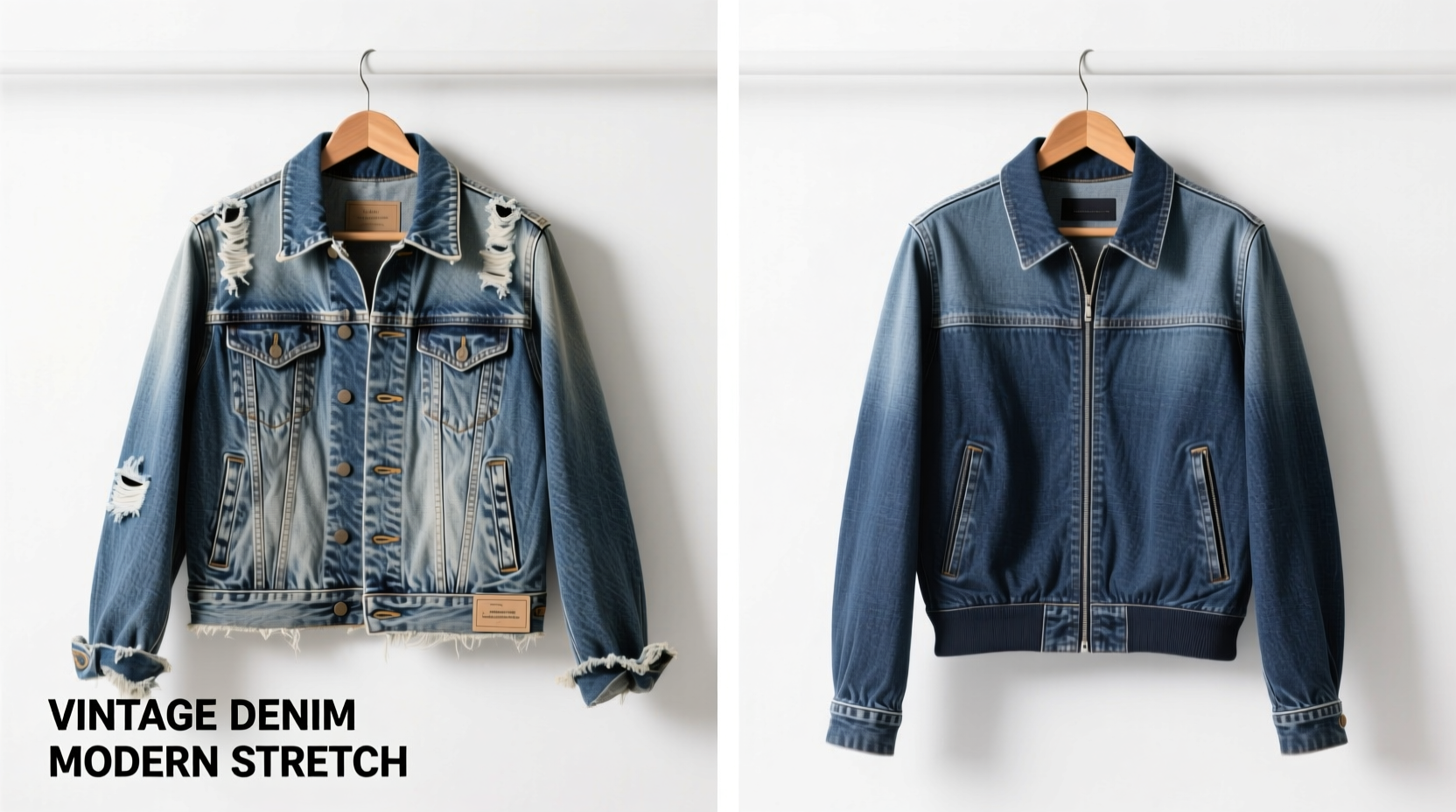
At the core of this debate is fabric composition. Vintage denim refers broadly to jeans made before the 1990s or those crafted using traditional methods—typically 100% cotton or cotton with minimal synthetic blending. These jeans are heavier (often 12–16 oz per square yard), rigid at first, and designed to mold slowly to the wearer’s body over time.
In contrast, modern stretch denim incorporates synthetic fibers like elastane (spandex) or polyurethane into the weave—usually between 1% and 5%. This small addition dramatically changes the fabric’s behavior. The result is jeans that feel softer from day one, offer greater mobility, and are marketed as “comfort-fit” or “easy wear.”
The trade-off lies in structural integrity. Cotton fibers are strong and stable when dry, but they can shrink and relax when exposed to heat and moisture. Elastane adds elasticity but degrades faster under stress, especially when repeatedly stretched and washed.
Tip: Always check the label for fiber content. Even \"denim\" can vary drastically—from 98% cotton/2% spandex to 70% cotton/30% synthetics.How Washing Impacts Fabric Structure
Washing is inevitable, but it's also one of the most destructive processes for denim. Water, agitation, and heat disrupt the tension within the yarns, leading to dimensional changes. The way each type of denim reacts depends on several factors:
- Fiber resilience: Cotton retains strength when wet but loses rigidity; elastane weakens with repeated exposure to hot water.
- Weave tightness: Tighter twill weaves (common in vintage-style denim) resist deformation better than looser constructions.
- Pre-shrinking treatment: Many modern jeans undergo sanforization—a pre-shrinking process—but vintage or unsanforized denim may shrink significantly after the first few washes.
Over multiple wash cycles, modern stretch jeans often show visible signs of sagging, particularly in high-movement areas like the seat and thighs. The elastane fibers fatigue, losing their ability to snap back. Meanwhile, vintage-style denim may stiffen or fade, but the overall shape remains more consistent—especially if cared for properly.
“Raw denim isn’t just about aesthetics—it’s engineered for longevity. When untreated cotton breaks down, it does so predictably and gradually.” — Marcus Lin, Textile Historian & Denim Archivist
Side-by-Side Comparison: Shape Retention After 10 Washes
To illustrate the differences, consider a controlled test involving two pairs of dark indigo jeans worn daily for three months and washed every 10 wears using standard home laundry settings (warm water, tumble dry low).
| Feature | Vintage-Style Denim (100% Cotton) | Modern Stretch Denim (98% Cotton / 2% Elastane) |
|---|---|---|
| Initial Fit | Tight, requires breaking in | Soft, flexible, comfortable immediately |
| After 3 Washes | Slight softening, minor fading at stress points | Seat begins to bag slightly, waistband loosens |
| After 6 Washes | Molded to body, maintains leg opening and rise | Thigh area sags, front creases deepen permanently |
| After 10 Washes | Shape intact, slight overall relaxation | Noticeable loss of elasticity, stretched knees, drooping rear |
| Drying Method Impact | Air drying preserves shape; machine drying causes minor shrinkage | Machine drying accelerates elastane breakdown; air drying slows degradation |
| Long-Term Viability | Can last 5+ years with proper care | Typical lifespan: 1.5–2.5 years before shape failure |
The data shows a clear trend: while modern stretch jeans win in initial comfort, they degrade faster structurally. Vintage-style denim, though less forgiving at first, proves superior in maintaining its original cut and proportions across repeated use and cleaning.
Real-World Example: A Year in Two Pairs of Jeans
Jamie, a graphic designer in Portland, wore two identical-looking black slim-straight jeans—one vintage reproduction made from 14oz raw cotton, the other a store-bought stretch pair with 2% spandex—for six months each. Both were washed approximately once a month using cold water and line-dried.
After six months, the stretch pair showed significant wear: the knees had bulged outward, the back pockets sagged, and the waistband gapped slightly when seated. In contrast, the vintage-style pair had developed a personalized fade pattern but still held its shape tightly. The leg opening remained unchanged, and there was no drooping in the seat.
“I thought the stretch ones would be easier,” Jamie said. “But by month four, they looked tired. The raw ones took effort at first, but now they feel like armor—and they still look sharp.”
This case underscores an important truth: perceived convenience doesn’t always translate to long-term value.
Care Practices That Extend Denim Life
No matter which type you choose, how you care for your jeans plays a decisive role in shape retention. Poor habits accelerate deterioration, while mindful routines preserve structure.
Step-by-Step Guide to Washing Denim for Maximum Shape Retention
- Wash infrequently. Denim doesn’t need laundering after every wear. Spot clean when possible and rotate pairs weekly.
- Turn jeans inside out. This protects the dye and reduces surface abrasion during washing.
- Use cold water only. Hot water breaks down fibers faster, especially elastane.
- Select gentle cycle or hand wash. Agitation causes friction that leads to pilling and stretching.
- Avoid fabric softeners. These coat fibers and weaken tensile strength over time.
- Line dry horizontally. Hang jeans by the waistband to prevent leg elongation. Never use a clothesline through the legs.
- Steam instead of ironing. Direct heat can damage synthetic blends and set wrinkles permanently.
Choosing Based on Lifestyle: Who Should Wear Which?
There’s no universal answer. Your ideal choice depends on how you live, work, and move throughout the day.
If You Prioritize Longevity and Authenticity
Vintage-style denim is likely the better option. It’s ideal for people who appreciate craftsmanship, want fewer replacements, and don’t mind a break-in period. These jeans develop character over time and are favored by denim purists and sustainability advocates.
If You Need All-Day Comfort and Mobility
Modern stretch denim serves best for active lifestyles—commuters, parents, or professionals on their feet. However, expect a shorter lifespan and plan for earlier replacement. Look for higher cotton content (95%+) and avoid excessive stretch percentages unless absolutely necessary.
Hybrid Option: Low-Stretch Raw Blends
Some brands now offer “best of both worlds” options: 98% cotton with 2% T400 or Coats Dual FX—advanced synthetic fibers designed to resist breakdown better than traditional spandex. These provide subtle give without sacrificing durability.
“The future of denim isn’t about choosing between rigidity and comfort—it’s about engineering smarter blends that do both.” — Lena Park, Sustainable Apparel Designer
FAQ: Common Questions About Denim Shape Retention
Do all stretch jeans lose their shape eventually?
Yes, almost all will degrade over time. The rate depends on elastane quality, frequency of wear, and washing habits. High-quality stretch denim may retain shape for 1–2 years with careful use, but it will never match the structural stability of 100% cotton.
Can I restore shape to sagging stretch jeans?
Not permanently. Some recommend shrinking them by washing in hot water and drying on high heat, but this damages fibers further and rarely restores full elasticity. Prevention through proper care is far more effective than attempted recovery.
Are raw vintage jeans worth the discomfort?
For many, yes. The initial stiffness fades within 2–4 weeks of regular wear. Once broken in, they conform precisely to your body and resist deformation far better than stretch alternatives. Plus, the unique fading patterns add personal style value unmatched by mass-produced jeans.
Final Checklist Before Buying Denim
- ✅ Check fiber content: aim for ≤2% synthetic for stretch, or 100% cotton for maximum durability.
- ✅ Assess your lifestyle: do you need flexibility or long-term shape?
- ✅ Research brand reputation: some specialize in durable, shape-retaining denim (e.g., Naked & Famous, Iron Heart, Flat Head).
- ✅ Confirm care instructions: machine washable? Dry-clean only? Line dry required?
- ✅ Consider weight: 12–16 oz denim holds shape better than lightweight 8–10 oz versions.
Conclusion: Shape Matters—Choose Wisely
When comparing vintage denim to modern stretch, the winner in shape retention after repeated washes is clear: traditional cotton-based denim outperforms synthetic-blend counterparts in structural integrity and longevity. While modern stretch offers undeniable comfort, it sacrifices durability—particularly in critical areas like the knee, thigh, and seat.
Ultimately, choosing the right denim means aligning material performance with your values. If you seek lasting quality, distinctive aging, and minimal environmental impact, vintage-style jeans are the superior investment. If daily comfort outweighs long-term shape, modern stretch has its place—but expect to replace it sooner.
🚀 Ready to build a longer-lasting wardrobe? Start by auditing your current jeans: which hold their shape, and which have already begun to sag? Share your findings—or your favorite care tip—in the comments below.








