
There’s a quiet revolution happening in wardrobes across the world. As fast fashion falters under scrutiny, more people are turning to vintage clothing—not just for sustainability, but for soul. Nowhere is this shift more visible than in the enduring popularity of band t-shirts. What was once concert memorabilia has become cultural currency. But as demand grows, so does supply—especially in the form of modern reprints. These reproductions flood online marketplaces, often indistinguishable at a glance from genuine vintage pieces. So, what’s the real difference? And more importantly: are original vintage band tees truly worth the effort of tracking down?
The answer isn’t simple. It depends on your values—whether you care about historical authenticity, material quality, investment potential, or simply wearing something that feels unique. This article breaks down the key differences between vintage originals and modern reprints, examines their respective merits, and helps you decide whether the hunt for the real thing is still worthwhile.
What Defines a Vintage Band Tee?
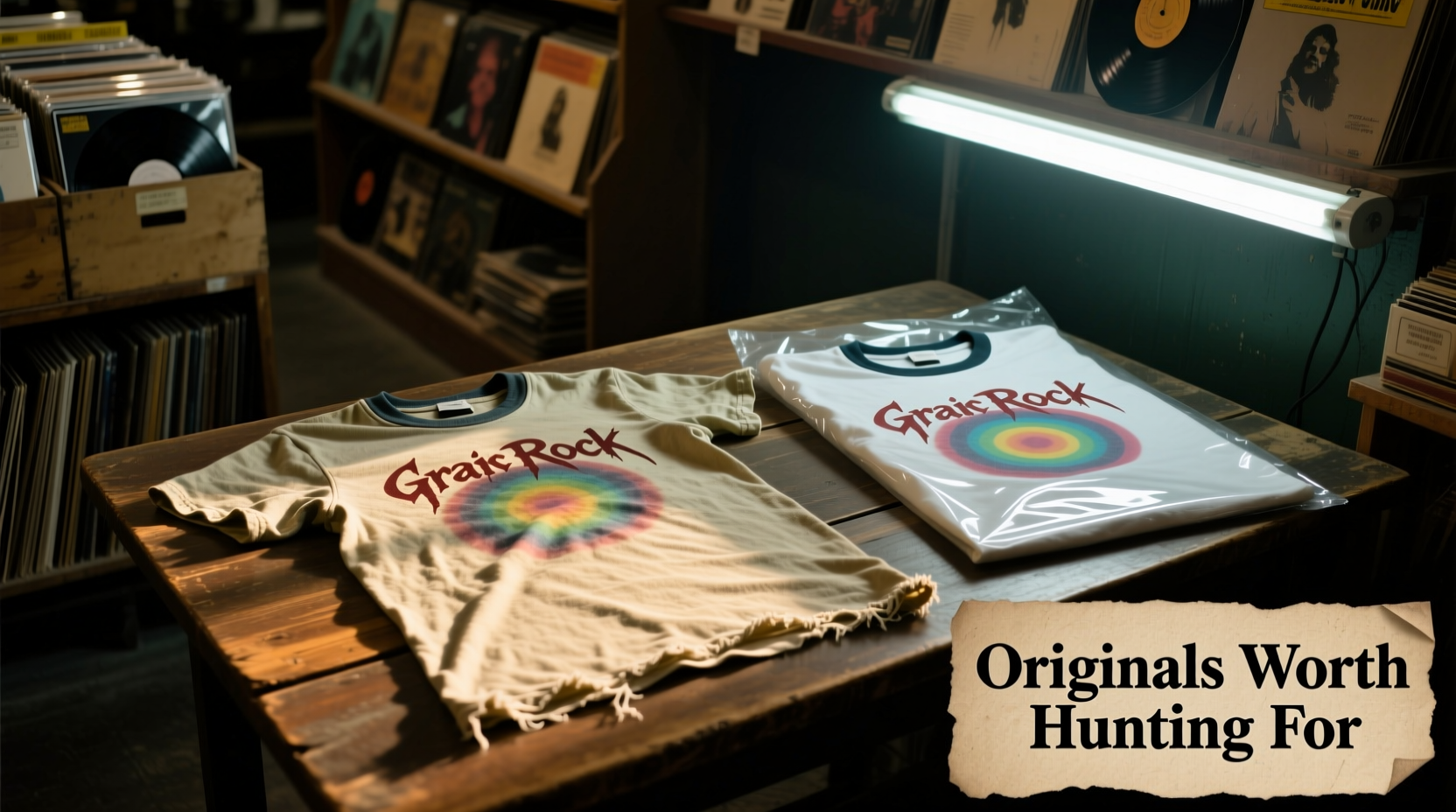
A true vintage band tee is an original garment produced during or shortly after a band’s active touring or promotional cycle—typically from the 1970s through the early 2000s. These shirts were made for concerts, album releases, or merchandise lines sold at shows. They carry the physical imprint of their era: screen-printed graphics with slight misalignments, cotton blends that have softened over decades, and labels reflecting now-defunct manufacturers like Gildan, Fruit of the Loom, or Hanes Beefy-T.
Authenticity hinges on several factors: production date, printing technique, fabric composition, and provenance. A shirt from Nirvana’s 1991 “Nevermind” tour printed on a 50/50 cotton-polyester blend with a tagless neck and a distressed print isn’t just clothing—it’s a time capsule.
Tip: Look for double-stitched side seams, tagless construction, and slightly faded logos—these are strong indicators of pre-2000s manufacturing.Vintage vs. Reprint: The Key Differences
Modern reprints aim to replicate the look of vintage shirts, but they differ in fundamental ways. While some high-end brands produce faithful reproductions using period-accurate methods, many mass-market versions prioritize aesthetics over authenticity. Below is a breakdown of the core distinctions.
| Feature | Vintage Originals | Modern Reprints |
|---|---|---|
| Production Era | 1970s–early 2000s | 2000s–present |
| Printing Method | Screen-printed, often hand-aligned | Digital or offset printing, machine-perfect |
| Fabric Quality | Heavier cotton, less shrinkage | Lighter blends, prone to pilling |
| Fit & Cut | Boxier, looser silhouettes | Tailored, often slimmer fits |
| Labeling | Original brand tags (e.g., Fruit of the Loom) | Generic or reproduction labels |
| Rarity | Limited by original run size | Mass-produced, unlimited supply |
| Average Price | $75–$300+ (depending on rarity) | $25–$60 |
The craftsmanship of vintage tees often surpasses modern equivalents. Older garments used thicker thread counts and more durable dyes. The screen-printing process allowed for richer ink saturation, and the natural wear over time creates a unique patina that cannot be replicated artificially—at least not convincingly.
Why Originals Still Matter
For collectors and enthusiasts, vintage band tees represent more than fashion—they’re artifacts. Wearing an original Ramones shirt from a 1980 European tour isn’t just about style; it’s a nod to subcultural history. These shirts were worn at actual concerts, passed through generations, and survived decades of use. That narrative adds intangible value.
From a material standpoint, vintage cotton has aged into softness without sacrificing integrity. Modern reprints, even those labeled “vintage-style,” often use cheaper fabrics that degrade faster. Many suffer from poor ink adhesion, leading to cracking or fading within a few washes.
“An original vintage tee carries the weight of time. You can feel the history in the fabric. No reprint captures that.” — Marcus Tran, Archivist at The Rock & Roll Memorabilia Institute
Moreover, originals have become investment-grade items. Rare finds—such as a pristine Led Zeppelin 1977 US Tour shirt or a Misfits “Cough/Cool” promo tee—have sold for thousands at auction. According to Heritage Auctions, demand for authentic rock memorabilia has increased by 40% since 2020, with apparel being one of the fastest-growing categories.
The Collector’s Perspective: A Real Example
Consider the case of Elena Rodriguez, a 34-year-old music archivist from Portland. Over eight years, she built a curated collection of vintage punk and grunge tees, sourcing most from estate sales and small consignment shops. Her crown jewel: a verified Pearl Jam “Ten” tour shirt from 1992, purchased for $120 at a thrift store in Seattle.
“I knew it was real the second I saw the tag,” she explains. “Fruit of the Loom, size large, with that slightly off-center print. I had seen photos of the same design in a band archive. Six months later, I got it authenticated by a memorabilia expert. Last year, someone offered me $1,200 for it. I said no. It’s not just about money—it’s about preserving a piece of music history.”
Elena’s story illustrates a broader truth: for many, the hunt is part of the reward. The thrill of discovery, the detective work involved in verification, and the personal connection to the music all deepen the experience far beyond what a quick online purchase can offer.
When Reprints Make Sense
That said, modern reprints aren’t inherently inferior—or irrelevant. For casual fans, budget-conscious shoppers, or those who want a specific design unavailable in vintage form, reprints offer legitimate advantages.
- Accessibility: Not everyone can afford $200 for a single shirt or spend weekends scouring flea markets.
- Sustainability (in some cases): Ethically produced reprints using organic cotton and low-impact dyes can be more eco-friendly than supporting secondhand speculation markets.
- Size availability: Vintage tees rarely come in larger sizes. Reprints often include extended sizing, making them more inclusive.
- Design variety: Some bands license rare or unreleased artwork exclusively for modern runs.
Brands like RE/DONE and Backstage Archive have elevated the reprint game, using deadstock fabrics and hand-screening techniques to mimic vintage quality. These sit in a gray area—neither fully original nor mass-market knockoffs—and appeal to consumers who want authenticity without the risk of counterfeits.
Checklist: How to Spot a Genuine Vintage Band Tee
If you’re considering entering the vintage market, use this checklist to evaluate potential purchases:
- Examine the label: Look for manufacturer tags common before 2000 (Fruit of the Loom, Gildan Heavyweight, Hanes).
- Check the print texture: Screen prints have a raised feel; digital prints are flat and smooth.
- Assess the fabric weight: Vintage cotton is heavier and less sheer than modern thin blends.
- Look for natural wear patterns: Fading under arms, collar cracks, and subtle discoloration suggest age.
- Verify the tour dates: Cross-reference the design with known tour years or album release timelines.
- Inspect stitching: Double-needle side seams were standard before the 2000s.
- Beware of “too perfect” condition: An unworn 1985 Metallica shirt with bright colors may be a reproduction.
Step-by-Step Guide to Building a Vintage Collection
Starting a vintage band tee collection doesn’t require deep pockets—just patience and strategy. Follow these steps to build a meaningful wardrobe of originals:
- Define your focus: Choose a genre, era, or band to specialize in. Narrowing your scope improves recognition and reduces impulse buys.
- Research key designs: Study official tour archives, fan forums, and auction records to learn which shirts are rare or valuable.
- Start locally: Visit thrift stores, estate sales, and record shops. Smaller towns often have overlooked inventory.
- Use trusted platforms: eBay, Grailed, and Etsy can yield finds—but verify seller ratings and request detailed photos.
- Authenticate before buying: Ask for close-ups of tags, prints, and seams. Compare against known examples online.
- Store properly: Keep shirts folded in acid-free tissue paper, away from sunlight and humidity.
- Wear with care: Hand-wash in cold water, inside out, and air dry to preserve integrity.
Frequently Asked Questions
Are all vintage band tees expensive?
No. Common designs from mainstream bands (like generic Rolling Stones lips shirts) can be found for $30–$60. Prices rise with rarity, condition, and historical significance. Obscure tours or limited regional runs command higher premiums.
How can I tell if a reprint is high-quality?
Look for details: heavyweight cotton, tagless or accurate reproduction labels, screen printing (not heat transfer), and packaging that includes provenance info. Brands like RTH (Rise Together Handmade) and Stay High Clothing are known for meticulous reproductions.
Do vintage tees shrink when washed?
Most vintage cotton shirts have already shrunk to their final size due to age and previous washes. However, hot water or machine drying can still cause minor contraction. Always wash cold and air dry to be safe.
Conclusion: The Value Beyond the Fabric
In a world of instant gratification and algorithm-driven trends, the pursuit of vintage band tees represents something deeper—a desire for authenticity in an increasingly synthetic culture. While modern reprints serve a practical purpose, they lack the soul of originals. There’s a reason why collectors will drive hours for a whisper of a rare find, why archivists document every stitch, and why fans treat these shirts like heirlooms.
Yes, originals are worth hunting for—not just for their resale value or aesthetic appeal, but for what they represent. Each one carries echoes of mosh pits, road trips, and generational anthems. They connect us to moments we may never have lived, yet still feel.
🚀 Ready to start your search? Pick a band, study their tour history, and visit your nearest thrift store this weekend. The next great find could be hanging on a rack, waiting to tell its story.








