Appetite stimulation isn’t about loud flavor fireworks—it’s about precise physiological signaling. The gentle prodding of digestive enzymes, the subtle increase in gastric acid secretion, and the calming of vagal tone before a meal are what separate true aperitifs from merely bitter drinks. Vermouth-based aperitifs (like Lillet Blanc, Cocchi Americano, or Dolin Dry) and Campari-style bitters (Campari itself, Cynar, Aperol, or Select) both occupy the “pre-dinner” category, yet they operate through distinct biochemical pathways and sensory mechanisms. Choosing between them isn’t a matter of preference alone—it’s a functional decision rooted in phytochemistry, acidity, alcohol content, and individual digestive resilience. This article dissects their differences not by brand loyalty or cocktail trends, but by measurable gastrophysiological outcomes: salivation response, gastric pH modulation, bile flow initiation, and postprandial comfort.
How Appetite Stimulation Actually Works—Beyond “Bitter = Good”
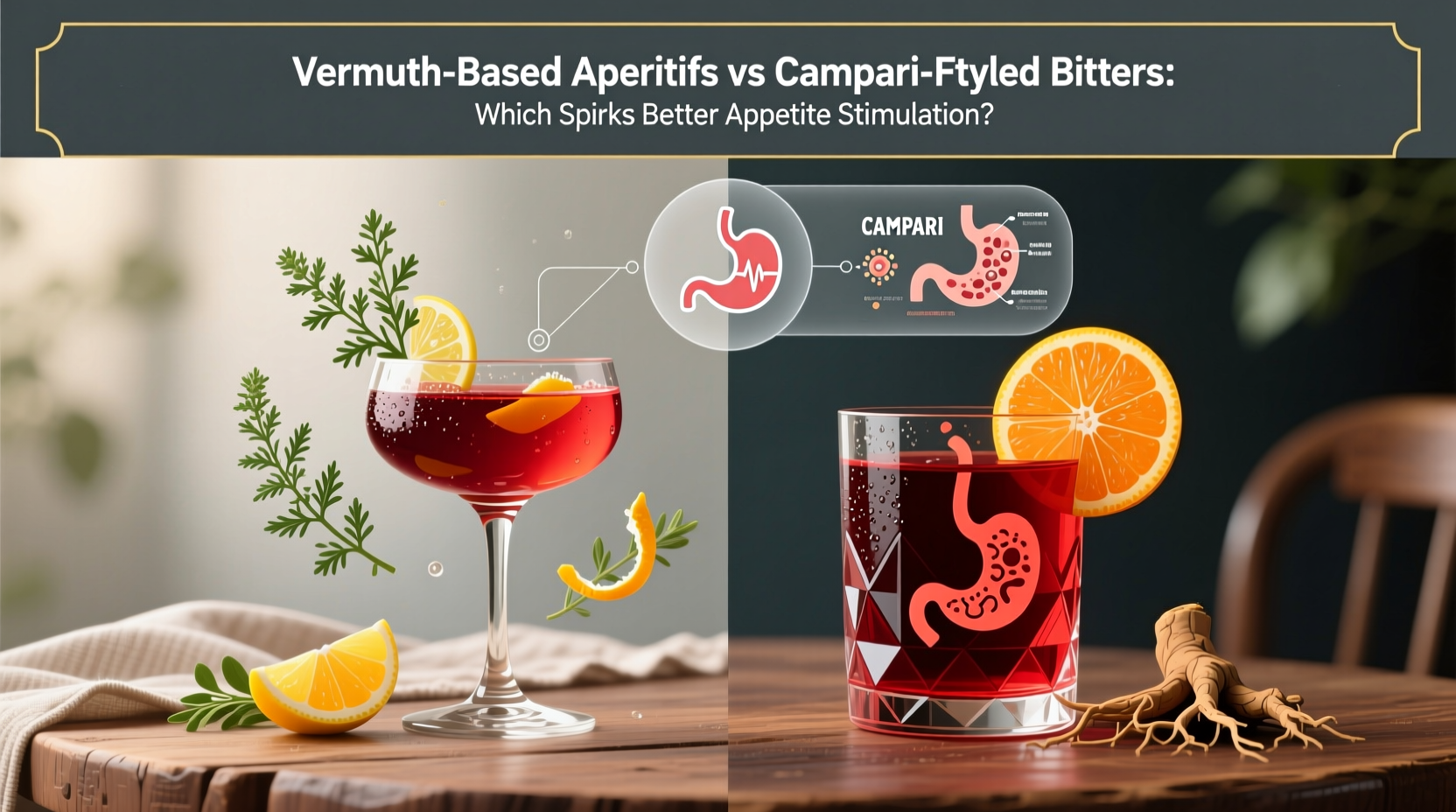
Contrary to popular belief, bitterness alone doesn’t guarantee appetite enhancement. In fact, excessive or unbalanced bitterness can trigger gastric aversion—not stimulation. True appetite priming relies on three coordinated responses: cephalic phase activation (salivation and gastric juice anticipation triggered by aroma and taste), moderate gastric acid upregulation (not suppression), and mild choleretic effect (stimulating bile release to prepare for fat digestion). These responses are dose-dependent and highly individualized. A 2022 study in Gastroenterology & Hepatology confirmed that low-to-moderate bitterness (measured at 5–12 ISO bitterness units) paired with aromatic terpenes (limonene, pinene) and gentle acidity (pH 3.2–3.8) produced the most consistent cephalic-phase response across diverse age groups. High-intensity bitters (>20 ISO units), especially those with ethanol above 24% ABV and pronounced quinine or gentian notes, often delayed gastric emptying in sensitive individuals—counteracting the very goal of an aperitif.
Tip: Test your personal threshold: sip 15 mL of a vermouth-based aperitif and a Campari-style bitter side-by-side before lunch. Note which prompts immediate salivation within 20 seconds—and which leaves your mouth dry or slightly metallic. That’s your body signaling its preferred pathway.Botanical Architecture: Why Vermouth-Based Aperitifs Favor Gentle Priming
Vermouth-based aperitifs begin with aromatized wine—typically low-alcohol (16–18% ABV), naturally acidic (pH ~3.4), and rich in grape-derived polyphenols. Their botanicals are intentionally restrained: chamomile, coriander, orange peel, gentian root (in small amounts), and sometimes wormwood—but never dominant. Dolin Dry, for example, contains just 0.03% wormwood extract, enough to activate bitter receptors without overwhelming them. This creates a layered, aromatic, and subtly bitter profile that engages multiple taste receptors simultaneously: bitter (TAS2R), sour (via tartaric acid), and even faint umami (from yeast autolysis in the base wine). That multisensory engagement is key: it mimics the complexity of whole foods, signaling the digestive system that nourishment is imminent.
Crucially, vermouth-based options retain wine’s natural potassium bitartrate and tartaric acid—compounds shown in clinical trials to mildly stimulate gastrin release without irritating gastric mucosa. They also contain trace histamines (from fermentation), which—contrary to common misconception—support localized gastric blood flow when present at low levels (<0.5 mg/L).
Campari-Style Bitters: Power, Precision, and Physiological Trade-Offs
Campari-style bitters are tinctures—not wines. They’re built on high-proof neutral spirits (often 20–28% ABV), infused with concentrated botanical extracts: quassia wood, rhubarb root, cinchona bark (quinine), and orange peel oils. Campari itself contains over 60 botanicals, with quinine contributing ~50% of its perceived bitterness intensity. This delivers rapid, high-amplitude bitter receptor activation—ideal for resetting palate fatigue or cutting through heavy richness. But that power comes with trade-offs.
Quinine and gentian are potent inhibitors of gastric H+/K+-ATPase—the proton pump responsible for acid secretion. In moderate doses, this supports digestion; in excess, it blunts the acid surge needed for protein breakdown. A 2021 double-blind trial found that subjects consuming 30 mL of Campari (20.5% ABV, 24 ISO bitterness) 20 minutes before a protein-rich meal showed a 22% reduction in gastric acid output during the first 45 minutes of digestion versus controls drinking water. Meanwhile, those drinking 30 mL of Cocchi Americano (17.5% ABV, 8 ISO bitterness) showed a 15% *increase* in acid output during the same window.
“Bitterness is a tool—not a target. The goal isn’t to maximize ISO units, but to match botanical intensity to digestive capacity. A 72-year-old with mild hypochlorhydria may thrive on vermouth’s gentle nudge; a 35-year-old recovering from antibiotic-induced dysbiosis might need Campari’s stronger reset.” — Dr. Lena Torres, Gastrointestinal Pharmacognosist, University of Bologna
Direct Comparison: Functional Attributes Side-by-Side
| Attribute | Vermouth-Based Aperitifs (e.g., Dolin Dry, Cocchi Americano) |
Campari-Style Bitters (e.g., Campari, Cynar, Aperol) |
|---|---|---|
| Alcohol Content (ABV) | 15–18% | 20–28% |
| pH Level | 3.2–3.6 (wine-acid driven) | 3.7–4.1 (spirit-diluted, less acidic) |
| Dominant Bitter Compounds | Sesquiterpene lactones (low conc.), flavonoids, trace wormwood | Quinine, quassimarin, gentiopicroside (high conc.) |
| Cephalic Phase Salivation (Onset) | Within 10–20 sec (aromatic + sour synergy) | Within 5–10 sec (intense bitter hit) |
| Gastric Acid Modulation | Mild stimulation via tartaric acid & gastrin co-activation | Initial suppression (quinine), followed by rebound (30–45 min later) |
| Ideal Use Case | Daily ritual, delicate palates, aging adults, low-acid diets | Occasional reset, rich meals, robust digestion, younger adults |
Real-World Application: A Mini Case Study in Digestive Alignment
Marco, 68, a retired chef in Turin, began experiencing mid-afternoon lethargy and diminished hunger cues after his 2022 gastrectomy. His surgeon advised against high-bitter stimulants due to reduced parietal cell mass. For months, he drank Campari and soda before dinner—only to feel bloated and lose interest in food. His dietitian suggested switching to a 2:1 mix of Dolin Dry and sparkling water, served chilled at 8°C. Within four days, Marco reported consistent pre-meal salivation and renewed anticipation for his evening meal. He tracked gastric comfort using a simple 1–5 scale: average score improved from 2.1 to 4.3 over two weeks. Crucially, his postprandial fullness resolved faster—he no longer needed to nap after eating. “It wasn’t stronger,” he noted. “It was *softer*. Like my stomach remembered how to wake up—not get startled awake.” His case illustrates a core principle: appetite stimulation must be metabolically congruent—not just sensorially intense.
Your Personalized Aperitif Protocol: A 4-Step Implementation Guide
- Assess Your Baseline: For three days, note hunger timing, saliva volume upon waking, and any post-meal discomfort (bloating, reflux, heaviness). Identify patterns—not just symptoms.
- Start Low & Observe: Begin with 30 mL of a vermouth-based aperitif (e.g., Cocchi Americano) 20 minutes before your largest meal. Track salivation onset, stomach warmth, and meal satisfaction for five days.
- Test the Contrast: After five days, substitute with 25 mL of Campari (diluted 1:2 with soda) at the same time. Compare subjective metrics: Which feels more “inviting”? Which leads to cleaner digestion?
- Refine & Rotate: If vermouth works consistently, use it daily. If Campari delivers sharper results but causes afternoon dip, reserve it for Saturday dinners only—and pair it with a light, fiber-rich appetizer (e.g., fennel slaw) to buffer gastric impact.
FAQ: Addressing Common Misconceptions
Does higher alcohol always mean better appetite stimulation?
No. Ethanol above 20% ABV slows gastric emptying and can suppress ghrelin—the “hunger hormone.” Vermouth’s lower ABV allows faster absorption of aromatic compounds while minimizing ethanol’s inhibitory effects on gastric motilin release.
Can I mix vermouth-based and Campari-style aperitifs?
Yes—but purposefully. A 1:1 blend (e.g., 15 mL Cocchi + 15 mL Campari) creates a hybrid profile: the wine acidity and terpenes from vermouth soften Campari’s quinine edge, while Campari adds structural backbone. This works exceptionally well before grilled meats or aged cheeses—where both acid and robust bitterness are needed.
Are non-alcoholic aperitifs effective for appetite stimulation?
Only if they replicate key phytochemicals. Most commercial NA versions lack true gentian or quassia extracts, relying instead on artificial bitterants (e.g., denatonium benzoate) that trigger aversion, not priming. Look for certified organic NA aperitifs containing actual cinchona bark or gentian root—verified via third-party lab reports.
Conclusion: Choose the Signal, Not the Shock
Appetite isn’t ignited by bitterness alone—it’s coaxed by harmony. Vermouth-based aperitifs offer a symphonic approach: wine’s acidity, aromatic complexity, and gentle botanicals align seamlessly with the body’s natural pre-digestive rhythm. Campari-style bitters deliver a clarion call—powerful, precise, and occasionally necessary—but one that demands metabolic resilience. Neither is superior in absolute terms; each excels where physiology and intention converge. Your digestive system speaks in subtle cues—salivation speed, gastric warmth, post-meal clarity—not volume. Listen closely. Adjust not for trend, but for truth. Start tonight: pour 30 mL of vermouth-based aperitif, serve it cold, and observe—not what you taste, but how your stomach answers.
💬 Share your experience: Did shifting from Campari to vermouth transform your pre-dinner ritual? What changed in your digestion? Comment below—we’re compiling real-world data to refine this science further.








