For parents navigating city streets, tight parking spots, or compact cars, the question isn’t just about which stroller is most comfortable or durable—it’s about what actually fits. When space is limited, choosing between an umbrella stroller and a full travel system becomes a critical decision. While both serve essential roles in infant mobility, their dimensions, weight, and storage requirements differ significantly—especially when it comes to fitting into a small car trunk.
This guide breaks down the key differences with real-world insights, structural comparisons, and practical advice to help you make an informed choice based on your vehicle and lifestyle needs.
Understanding the Core Differences
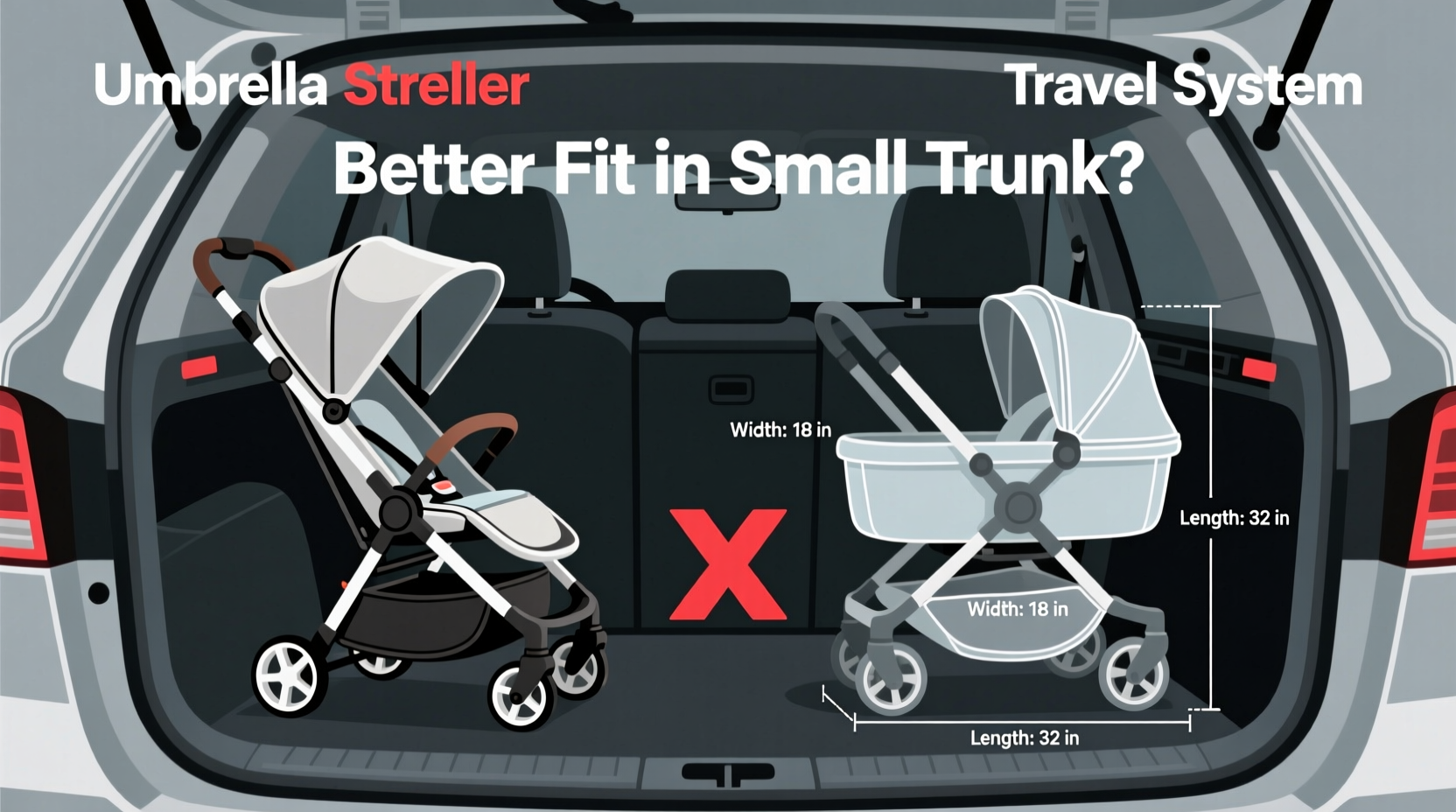
An umbrella stroller and a travel system represent two ends of the baby gear spectrum. The former emphasizes portability and simplicity; the latter prioritizes convenience, integration, and long-term use.
Umbrella strollers are lightweight, typically weighing between 9–15 pounds. They fold compactly, often resembling a folded umbrella—hence the name—and are designed for quick trips, public transit, or backup use. Their slim frames and minimal padding make them ideal for parents who value agility over luxury.
In contrast, a travel system is a coordinated set that includes a stroller base, a compatible infant car seat, and sometimes a car seat adapter. These systems allow seamless transitions from car to pavement without waking a sleeping baby. However, they are bulkier, heavier (often 20–30+ pounds), and less agile when folded.
The trade-off is clear: convenience versus compactness. But when your daily driver is a sedan, hatchback, or subcompact SUV, the real issue is whether your chosen gear will fit—reliably and repeatedly—into your trunk.
Size & Trunk Compatibility: A Real-World Breakdown
To assess trunk compatibility, consider three factors: folded dimensions, shape, and ease of loading. Most small car trunks measure between 10–14 cubic feet. For example:
- Honda Fit: ~16.6 cu ft (rear seats up)
- Toyota Prius: ~24.6 cu ft (but narrow opening)
- Ford Focus Sedan: ~13.2 cu ft
- Mazda3 Hatchback: ~20.1 cu ft with usable vertical clearance
While these numbers may seem adequate, irregular shapes, spare tires, or stored items reduce usable space. This is where design matters.
Tip: Measure your trunk’s interior depth and width before purchasing any stroller. Use a tape measure or a cardboard cutout to simulate folded dimensions.Folded Dimensions Compared
| Stroller Type | Average Weight | Folded Length | Folded Width | Folded Height | Trunk Fit Likelihood (Small Car) |
|---|---|---|---|---|---|
| Umbrella Stroller | 9–15 lbs | 30–34 inches | 8–10 inches | 10–14 inches | High – Fits diagonally or upright |
| Travel System (Stroller + Car Seat) | 20–30+ lbs | 34–40 inches | 18–22 inches | 14–18 inches | Low to Moderate – May block rear visibility or require seat folding |
The data shows that umbrella strollers not only weigh less but also occupy a fraction of the space. Their narrow profile allows them to slide behind or beside cargo, whereas travel systems often demand the entire trunk floor.
“Parents with compact vehicles consistently report frustration with travel systems—they work in theory, but not in practice when space is tight.” — Dr. Lena Torres, Urban Parenting Researcher, Family Mobility Institute
Portability and Daily Usability
Trunk fit isn’t the only factor. How easily can you load and unload the stroller, especially with a baby in hand?
Umbrella strollers win in portability. Many models feature one-handed folding, shoulder carry straps, and the ability to stand independently when folded. This makes them ideal for:
- Dropping into a grocery cart
- Carrying onto public transportation
- Stashing under airplane seats
- Quick transfers from car to sidewalk
Travel systems, while convenient at home, become cumbersome in tight spaces. Even when disassembled, the stroller frame and car seat must be carried separately. The car seat alone weighs 8–12 pounds and lacks handles suitable for extended carrying. In a small car, this often means making multiple trips or contorting to fit everything in one go.
Mini Case Study: The City Commuter Dilemma
Sophie, a marketing consultant living in downtown Boston, drives a 2022 Honda Fit. With no garage and limited street parking, she relies on her car for weekend errands and daycare drop-offs. Initially, she purchased a premium travel system for its safety ratings and smooth ride.
Within weeks, she realized the folded stroller barely fit in her trunk—especially with groceries or diaper bags. Loading it required folding the back seat, which wasn’t always possible with her toddler present. After a rainy day struggling to assemble the stroller on a narrow sidewalk, she switched to a compact umbrella model.
“It doesn’t have all the bells and whistles, but I can toss it in the trunk one-handed,” Sophie said. “Now I actually *use* it instead of avoiding outings.”
Her experience reflects a broader trend: integrated convenience often loses to practical accessibility in urban environments.
When a Travel System Makes Sense
Despite space challenges, travel systems offer undeniable benefits in specific scenarios:
- Newborns: The ability to transfer a sleeping infant from car to stroller without waking them is invaluable.
- Rural or suburban families: Larger vehicles like minivans, SUVs, or station wagons accommodate bulkier gear with ease.
- Infrequent walking: If most trips involve driving directly to destination (e.g., doctor visits, relatives’ homes), trunk space matters less.
Moreover, many travel systems convert into toddler strollers, extending their lifespan beyond infancy. Some models even accept sibling add-ons or jogging kits, offering long-term versatility.
But if your primary vehicle is compact, consider pairing a standalone infant car seat with a separate umbrella stroller. This hybrid approach maintains newborn transfer benefits while improving portability. Simply remove the car seat and place it in a compatible stroller frame using universal adapters (available for most major brands).
Tip: Look for car seats with built-in handles and lightweight designs (e.g., Nuna Pipa, Cybex Cloud Q) to enhance portability outside a travel system setup.Step-by-Step: Choosing Based on Your Vehicle
Follow this process to determine the best fit for your car and routine:
- Measure your trunk: Use a tape measure to record interior length, width, and height. Note any obstructions (spare tire, hinges).
- Test fold dimensions: Check manufacturer specs for folded size. Convert inches to feet for easier mental visualization.
- Simulate loading: Bring a box or duffel bag of similar size to your local dealership or use your current stroller as a proxy.
- Assess your routine: Do you walk frequently? Use public transit? Carry groceries? Prioritize gear that aligns with actual habits.
- Consider phased solutions: Use a travel system at home during infancy, then switch to an umbrella stroller for outings in your small car.
Checklist: Key Questions Before Buying
Answer these before committing to either option:
- ✅ Does my trunk close fully with the stroller inside?
- ✅ Can I lift and load the stroller one-handed if needed?
- ✅ Will I still use this stroller when my child is 2+ years old?
- ✅ Am I willing to fold rear seats regularly to fit the gear?
- ✅ Do I need car seat compatibility, or can I manage transfers manually?
- ✅ Is there room for diaper bags or shopping with the stroller loaded?
FAQ: Common Concerns Answered
Can I fit a travel system in a sedan trunk?
Possibly, but not comfortably. Many sedans lack the width and depth to accommodate a folded travel system without blocking the rear window or requiring seat folding. Test with exact model dimensions before purchase.
Are umbrella strollers safe for newborns?
Most are not recommended for infants under 6 months due to limited recline and lack of head support. If you need a portable option for young babies, choose a reversible umbrella-style stroller with near-flat recline or use it only with a car seat carrier.
Do travel systems come apart easily for smaller storage?
Some do, but disassembly adds time and complexity. The stroller frame remains bulky, and the car seat still requires handling. True space savings usually require storing components separately—which defeats the purpose of a seamless system.
Final Verdict: What Fits Better?
For small car owners, the answer is clear: umbrella strollers fit better in a small car trunk. Their compact fold, lighter weight, and narrow profile make them vastly more practical for daily use in compact vehicles. While travel systems offer unmatched convenience in theory, their size and rigidity often render them impractical in real-world urban or space-constrained settings.
That said, the ideal solution may not be an either/or choice. Many parents successfully combine a high-quality infant car seat with a separate umbrella stroller. This gives them the safety and comfort of a travel-ready car seat while retaining the agility of a lightweight stroller for errands, walks, and travel.
“The future of urban parenting gear isn’t bigger—it’s smarter. Compact, modular systems are rising because they respect spatial limits without sacrificing function.” — Mark Delaney, Product Editor, *BabyGear Lab*
Conclusion
Your car shouldn’t dictate your parenting choices—but it should inform them. Choosing between an umbrella stroller and a travel system isn’t just about features or brand reputation; it’s about honest assessment of your space, routine, and priorities. If you drive a compact vehicle, favoring practicality over convenience will save you time, stress, and countless awkward parking lot struggles.
Start by measuring your trunk, then test configurations that match your real life—not an idealized version of it. Whether you opt for a minimalist umbrella model or a strategic hybrid setup, the goal is the same: gear that works for you, not against you.
🚀 Ready to reassess your stroller setup? Measure your trunk today and compare it to top-rated models. Share your experience or ask questions in the comments—your insight could help another parent avoid a costly mismatch.








