
Navigating your way to San Francisco International Airport (SFO) can be a smooth experience with the right planning. Whether you're a local resident or visiting the Bay Area, understanding your transportation choices, peak traffic patterns, and time-saving strategies is essential. This comprehensive guide breaks down every viable route and mode of transport to SFO, helping you avoid delays, reduce costs, and arrive at the terminal relaxed and on schedule.
Understanding SFO's Location and Access Points
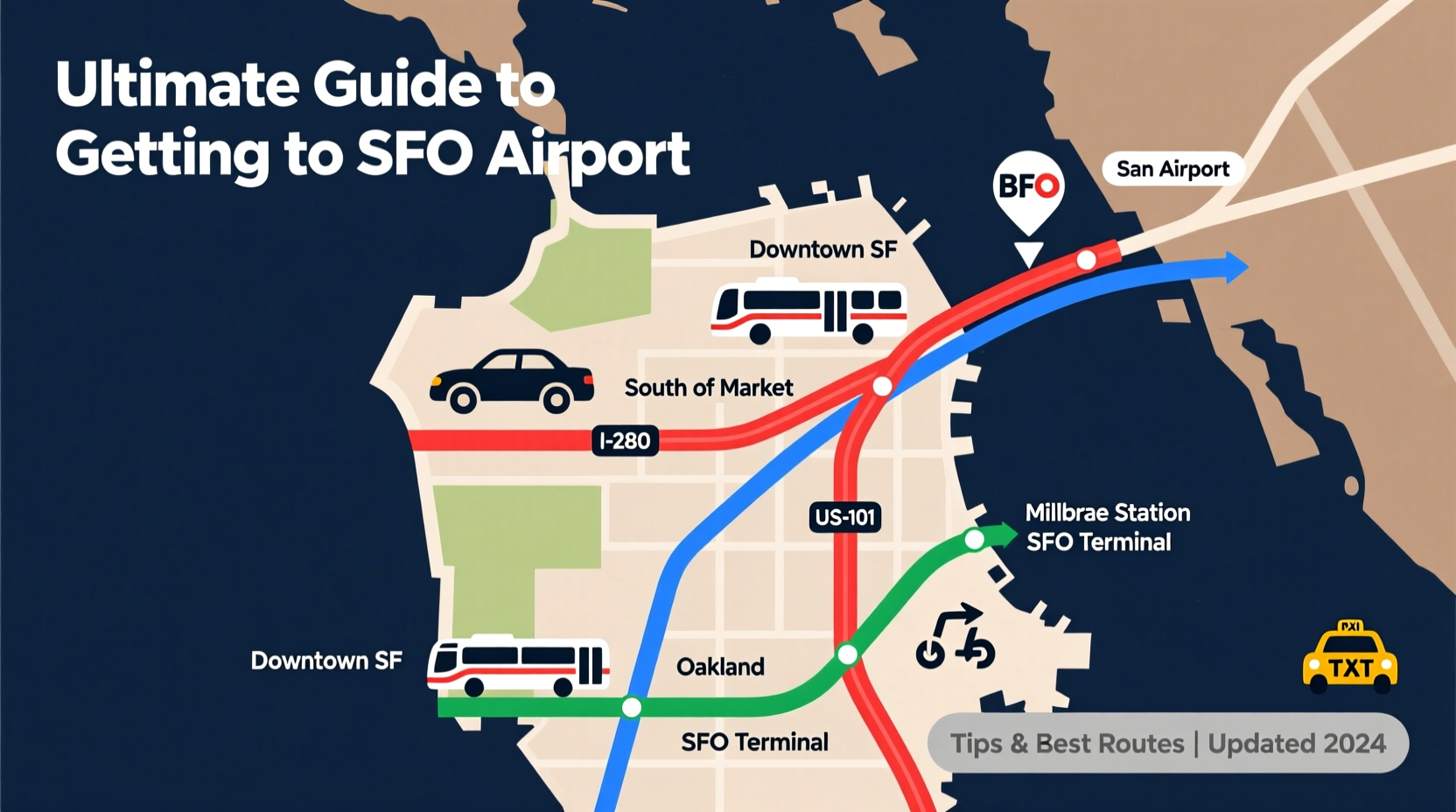
SFO is located approximately 13 miles south of downtown San Francisco, nestled along the eastern edge of San Mateo County. The airport is accessible via U.S. Route 101 and the Bayshore Freeway, making it reachable from multiple directions including the Peninsula, South Bay, East Bay, and the city itself. Three main terminals—International, Terminal 1, and Terminal 2—are connected by the AirTrain, which operates 24/7 within the airport grounds.
Key access roads include:
- U.S. 101 Northbound/Southbound – Primary artery from San Francisco, Silicon Valley, and beyond.
- Bayshore Highway (CA-82) – Parallel surface road useful during freeway congestion.
- Interstate 280 – Alternative scenic route from the west side of the Peninsula.
- Caltrain – Rail service connecting SFO directly to major stations from San Jose to San Francisco.
Top Transportation Options to SFO
Your choice of transportation depends on budget, group size, origin point, and desired comfort level. Below is a detailed comparison of the most reliable methods to reach SFO.
| Option | Cost (Approx.) | Travel Time (from SF) | Best For |
|---|---|---|---|
| Rideshare (Uber/Lyft) | $35–$60 | 20–40 min | Door-to-door convenience, solo travelers |
| Taxi | $50–$70 + tip | 20–40 min | Predictable pricing, luggage-heavy trips |
| BART (Bay Area Rapid Transit) | $8–$10 | 30–45 min | Budget-conscious travelers, no traffic risk |
| Caltrain + AirTrain | $12–$15 | 45–60 min | Peninsula commuters, eco-friendly option |
| SamTrans Bus | $2.50 (local), $5 (express) | 60+ min | Local riders, cost-sensitive travelers |
| Private Car Service | $80–$150 | Business travelers, families, early flights |
BART: The Most Reliable Public Option
BART remains one of the top choices for reaching SFO due to its direct connection. The SFO station is linked to the International Terminal via a free, automated AirTrain that runs every few minutes. Trains depart from downtown SF (e.g., Powell Street, Montgomery) every 10–15 minutes during peak times. BART avoids road traffic entirely, making it ideal during morning and evening commutes.
“BART to SFO has reduced missed flights by over 40% among frequent business travelers from downtown.” — Bay Area Transit Authority Annual Report, 2023
Driving to SFO: Routes, Parking, and Timing
If you’re driving yourself or using a rental car, selecting the optimal route based on your starting location is crucial.
From Downtown San Francisco
- Take I-80 E toward Bay Bridge.
- Merge onto US-101 S via the ramp to San Jose.
- Continue on US-101 S for about 12 miles.
- Follow signs for SFO Airport; exit at Southbound Airline Departures.
From Silicon Valley (e.g., Palo Alto, Mountain View)
- Take US-101 N toward San Francisco.
- Exit at SFO Airport/Burton Way.
- Follow airport signage to your terminal.
From the East Bay (Oakland, Berkeley)
- Cross the Bay Bridge (I-80 W).
- Take the 101 S exit toward San Jose.
- Proceed as above.
Parking at SFO
SFO offers several parking options:
- Garage G – Closest to terminals, $39/day.
- Long-Term Parking – Shuttle service, $28/day.
- Economy Lot A – Budget option, $22/day with shuttle.
- Off-Site Lots – Pre-booked valet or self-park services from $15/day.
Pre-booking parking online through the official SFO website can save up to 30% and guarantee availability.
Mini Case Study: Avoiding a Missed Flight
Jessica, a marketing consultant from Oakland, had an 8:15 AM flight to New York. She left home at 6:00 AM planning to drive across the Bay Bridge and take 101 south. By 6:45 AM, she was stuck in gridlock near the SFO exit due to an accident on 101. Realizing she wouldn’t make it in time, she exited at Millbrae and took BART into the airport. Thanks to the AirTrain connection, she arrived at her gate at 7:50 AM—just enough time to board.
This scenario underscores the importance of having a backup plan. When driving, always monitor traffic apps and know where the nearest transit hub is located.
Step-by-Step Guide: Stress-Free Arrival at SFO
Follow this timeline to ensure a seamless journey:
- 24 Hours Before: Check flight status and confirm transportation method.
- 3 Hours Before Domestic / 4 Hours Before International: Begin your trip.
- En Route: Monitor real-time traffic or transit updates.
- Arrival at Airport: Use AirTrain if arriving via BART or rental car drop-off.
- At Terminal: Proceed to check-in, security, then gate.
FAQ
Is BART safe and operational at night?
Yes, BART runs until approximately midnight Sunday–Thursday and until 2:00 AM on Fridays and Saturdays. Late-night travelers should use well-lit cars and remain aware of surroundings, but the SFO line is generally secure and monitored.
Can I take Caltrain directly to SFO?
Not directly, but Caltrain stops at the SFO/Millbrae Station. From there, a free AirTrain connects you to all terminals in under 10 minutes.
What’s the fastest way from SFO to downtown SF?
The fastest return option is usually a rideshare or taxi, especially late at night. During peak hours, BART is faster and more predictable, taking about 30 minutes to Embarcadero or Powell Street.
Final Checklist: Getting to SFO Without Hassle
- ✅ Confirm flight time and terminal assignment.
- ✅ Choose transportation based on cost, time, and weather.
- ✅ Check live traffic or transit delays before leaving.
- ✅ Allow extra time: 3 hours for domestic, 4 for international flights.
- ✅ Pack ID and boarding pass (digital or printed).
- ✅ Book parking or rideshare in advance if possible.
- ✅ Use AirTrain for internal transfers at the airport.
Conclusion
Getting to SFO doesn’t have to be stressful. With multiple transportation options, strategic route planning, and awareness of peak congestion times, you can arrive confidently and on time. Whether you choose the affordability of BART, the convenience of a rideshare, or the flexibility of driving, preparation is key. Use real-time tools, consider alternatives, and build in buffer time—your peace of mind is worth it.
🚀 Ready for a smoother airport commute? Share this guide with fellow travelers or bookmark it for your next trip to SFO!








