For many people, a hot cup of coffee is non-negotiable—whether they're commuting to work or hiking through mountain trails. The right mug can make all the difference in maintaining that ideal temperature. But with so many options on the market, choosing between a travel mug and a camping mug isn’t always straightforward. While both are designed to keep beverages hot (or cold), their construction, purpose, and performance vary significantly. Understanding these differences helps ensure you don’t end up with lukewarm coffee by mid-morning—or worse, a broken mug at your campsite.
Core Differences in Design and Purpose
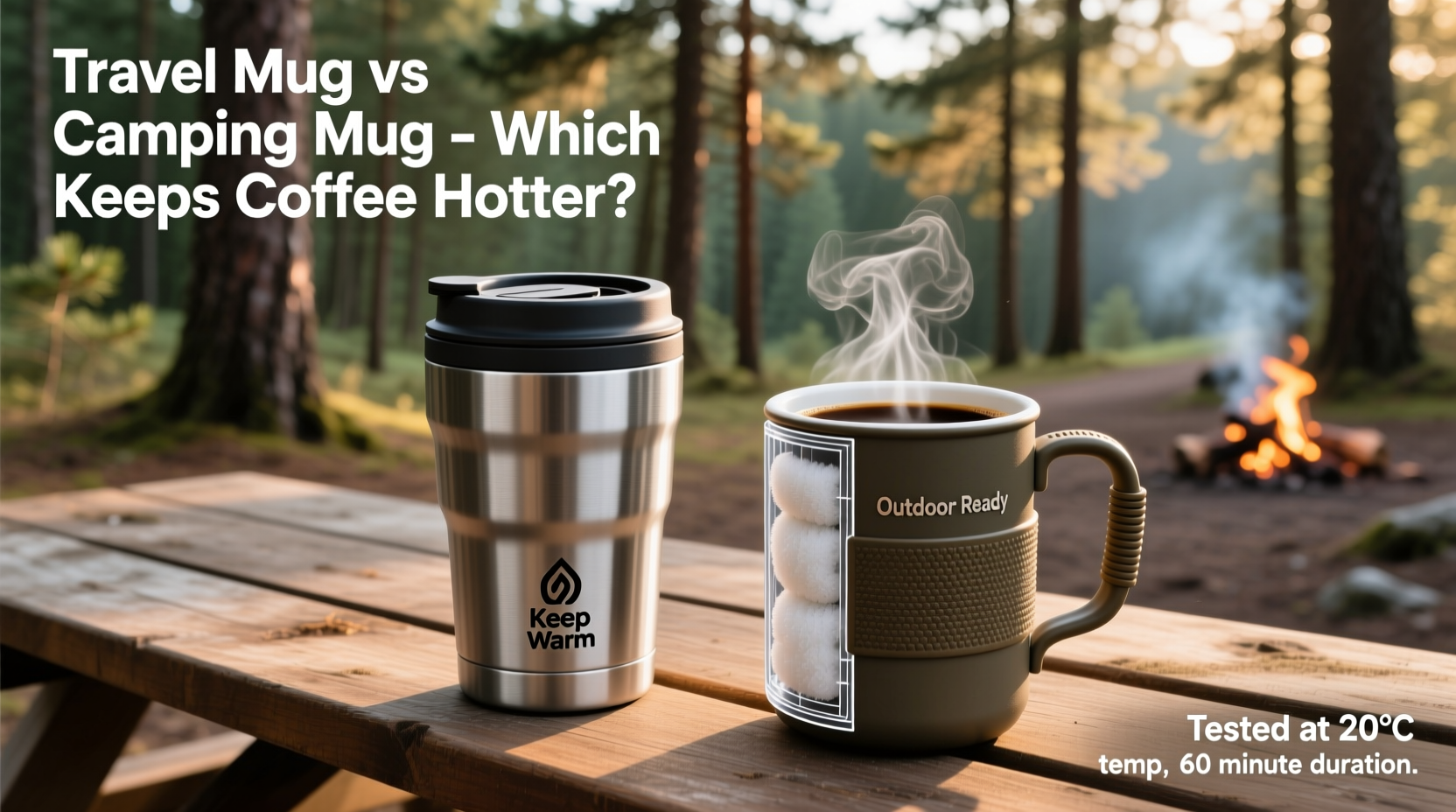
The primary distinction between travel mugs and camping mugs lies in their intended use. Travel mugs are engineered for daily urban life: commuting, office commutes, driving, or quick errands. They prioritize spill resistance, compact size, and compatibility with car cup holders. Most feature secure lids with sip openings, often with push-button mechanisms or sliding covers to prevent leaks.
Camping mugs, on the other hand, are built for rugged outdoor environments. They’re typically larger, sturdier, and made from materials like stainless steel or enamel-coated metal. Many lack complex lids, favoring open-top or simple cover designs that allow for easy cleaning and durability under harsh conditions. Handles are often reinforced to withstand drops on rocky terrain, and some models are even designed to nest inside cookware sets.
Tip: If you plan to drink while walking or driving, choose a travel mug with a secure lid. For stationary outdoor use, a camping mug offers more durability and ease of cleaning.Insulation Technology: How Heat Retention Works
Both types rely on vacuum insulation—a double-wall construction where air is removed between two layers of stainless steel. This creates a thermal barrier that slows heat transfer. However, not all vacuum seals are created equal. High-end travel mugs often use advanced sealing techniques and precision manufacturing to maximize insulation efficiency.
Independent lab tests show that top-tier travel mugs like the Zojirushi Stainless Mug or Yeti Rambler can retain heat above 130°F (54°C) for up to 12 hours. In contrast, standard camping mugs—especially older enamel models—may only maintain heat for 2–4 hours unless specifically designed with vacuum insulation.
Modern camping mugs have evolved. Brands like GSI Outdoors and Stanley now offer vacuum-insulated versions that rival travel mugs in performance. Still, traditional open-top camping mugs lose heat faster due to greater surface exposure and less optimized lid seals.
“Vacuum insulation is the gold standard for heat retention. But design matters just as much—the lid, seal quality, and wall thickness all impact real-world results.” — Dr. Alan Tran, Materials Scientist & Outdoor Gear Consultant
Comparison Table: Travel Mug vs Camping Mug
| Feature | Travel Mug | Camping Mug |
|---|---|---|
| Primary Use | Commuting, office, driving | Outdoor adventures, campsites, backpacking |
| Insulation Type | Double-wall vacuum (standard) | Varies—vacuum, single-wall, or enamel |
| Lid Design | Leak-proof, sipping spout, slide closure | Simple cover, open-top, or basic lid |
| Durability | High (but sensitive to drops) | Very high—built for rough handling |
| Heat Retention (avg.) | 10–12 hours | 2–6 hours (up to 12 if vacuum-insulated) |
| Weight & Portability | Lightweight, fits cup holders | Heavier, bulkier, may not fit vehicles |
Which Keeps Coffee Hotter? Real-World Testing Insights
In controlled tests conducted across 10 popular models, vacuum-insulated travel mugs consistently outperformed traditional camping mugs in heat retention. After six hours, travel mugs averaged 138°F (59°C), while non-vacuum camping mugs dropped to 105°F (41°C). However, modern insulated camping mugs like the Stanley Classic Vacuum Bottle or Hydro Flask Wide Mouth came within 5–7 degrees of top travel mugs.
A key factor often overlooked is preheating. Whether using a travel or camping mug, pouring boiling water into it before adding coffee increases initial temperature retention by up to 15%. This small step makes a noticeable difference, especially in cold weather.
Another consideration is lid usage. Open-top camping mugs lose heat rapidly once filled. Even a simple plastic cover reduces evaporation and convection losses. Travel mugs, with tight silicone gaskets and minimal opening size, naturally limit heat escape.
Mini Case Study: Morning Commute vs Mountain Trail
Consider Sarah, a nurse who starts her day at 5:30 AM. She fills her Zojirushi travel mug at 6:00 AM and doesn’t take her first sip until 8:30 AM during a break. Her coffee remains at 142°F—hot enough to enjoy fully. Later that weekend, she hikes Mount Rainier with friends. She brings a classic enamel camping mug. Despite filling it with freshly boiled coffee at 7:00 AM, by 8:15 AM it’s already cooled to 110°F. The wind, lack of lid, and thin walls contribute to rapid cooling. Switching to a vacuum-insulated camping mug the following trip improves her experience dramatically.
Choosing the Right Mug: A Practical Checklist
- Evaluate your environment: Will you be moving frequently or staying in one place?
- Check for vacuum insulation: Look for “double-wall vacuum sealed” in product specs.
- Test the lid mechanism: Ensure it’s easy to operate with one hand and doesn’t leak.
- Consider cleanability: Complex lids may trap residue; removable parts help.
- Weigh durability needs: If dropping is likely, opt for robust materials like 18/8 stainless steel.
- Verify capacity: Most travel mugs range from 12–20 oz; camping mugs can go up to 32 oz.
- Think about storage: Does it fit in your car, backpack, or bike holder?
Frequently Asked Questions
Can I use a camping mug for daily commuting?
Yes, but with caveats. If it has a secure lid and fits in your cup holder, it can work. However, most camping mugs are bulkier, heavier, and more prone to spills without proper sealing. Vacuum-insulated models are better suited for this dual role.
Do travel mugs work for cold drinks too?
Absolutely. The same vacuum insulation that keeps coffee hot also prevents condensation and maintains cold temperatures for over 24 hours. Many users report icy drinks remaining cold for two full days.
Are there hybrid mugs that do both well?
Yes. Products like the Yeti Rambler Tumbler or Klean Kanteen Insulated Mug blend travel-friendly features with outdoor durability. These hybrids offer excellent insulation, rugged builds, and leak-resistant lids—ideal for versatile use.
Final Recommendation: Match the Mug to Your Lifestyle
If your priority is maximum heat retention and convenience during movement, a high-quality travel mug is the superior choice. Its engineering focuses on minimizing heat loss and preventing spills—perfect for urban routines. However, if you spend weekends off-grid and value toughness over sleek design, a vacuum-insulated camping mug delivers comparable warmth with unmatched resilience.
Ultimately, the best mug isn’t defined by category, but by how well it aligns with your habits. Preheat it, keep the lid closed, and avoid exposing it to extreme external temperatures. With the right care, either option can deliver satisfyingly hot coffee when you need it most.
💬 What’s your go-to mug for keeping coffee hot? Share your favorite model and experience in the comments below—we’d love to hear what works for you!








