Sports gear—whether it’s football pads, soccer jerseys, hockey gloves, or running shoes—accumulates sweat, dirt, bacteria, and odors far more aggressively than everyday clothing. For athletes, weekend warriors, or parents managing youth sports, keeping this gear clean isn’t just about freshness—it’s essential for hygiene, performance longevity, and comfort. But when it comes to washing heavily soiled athletic wear, not all washing machines are created equal. The debate between top load and front load washers becomes especially relevant when tackling stubborn grime from intense physical activity.
While both types of machines can handle routine laundry, their mechanical design, cleaning action, water usage, and cycle options significantly impact how well they remove sweat stains, mud, grass, and odor-causing microbes from technical fabrics. Understanding these differences helps you make an informed decision based on real-world performance—not just convenience or price.
Cleaning Mechanics: How Each Washer Works
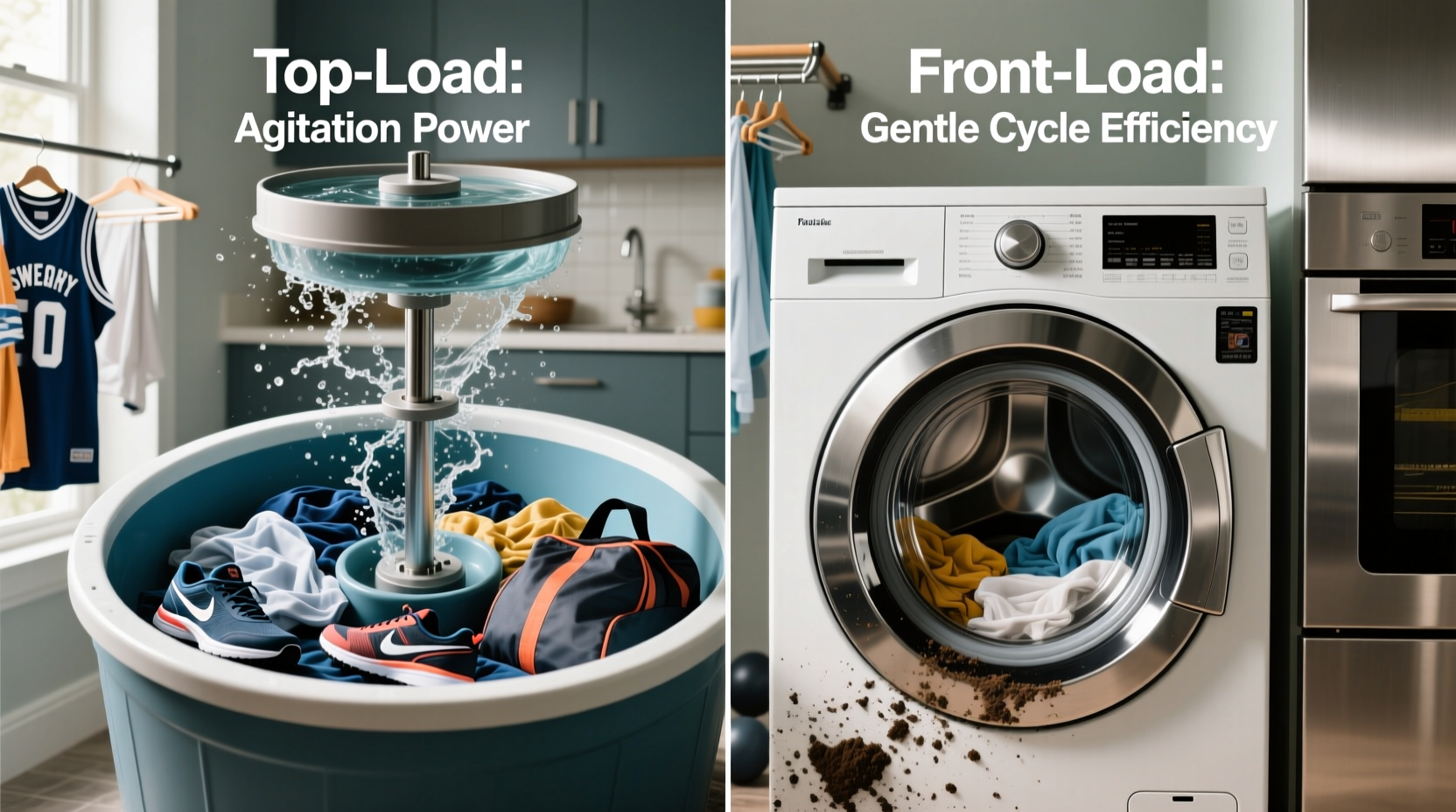
The core difference between top load and front load washers lies in their agitation method and drum orientation, which directly influence cleaning power.
Top load washers typically use a central agitator—a tall post in the middle of the drum that twists back and forth to move clothes through water. Traditional models rely on this mechanical motion to scrub fabrics together. High-efficiency (HE) top loaders have eliminated the central agitator in favor of a low-profile impeller at the bottom. These use water currents and tumbling motion to clean, consuming less water and energy while reducing fabric wear.
Front load washers, on the other hand, feature a horizontal drum that tumbles clothes through a small amount of water as it rotates. This design allows garments to lift and drop repeatedly, mimicking a gentle yet effective pounding action. Because the drum rotates horizontally, gravity plays a key role in the cleaning process. Front loaders are universally high-efficiency and use significantly less water than traditional top loaders.
Tip: For maximum stain removal, always turn sports gear inside out before washing to expose sweat-soaked linings directly to detergent and water flow.Performance Comparison: Removing Sweat, Odor, and Stains
When evaluating which washer handles dirty sports gear better, three factors dominate: cleaning effectiveness, fabric care, and odor elimination.
- Stain Removal: Front load washers generally outperform top loaders in removing set-in sweat stains and ground-in dirt. The tumbling action ensures consistent contact with detergent and deeper penetration into fabric fibers. HE top loaders without agitators come close but still lag slightly due to reduced mechanical force.
- Odor Elimination: Persistent smells from bacteria thriving in synthetic moisture-wicking fabrics require thorough rinsing and high spin speeds. Front loaders excel here because they spin faster (often 1200–1400 RPM), extracting more water and minimizing dampness where odor develops. Many also offer specialized cycles like “Sportswear” or “Hygiene Wash” with extended rinse phases and higher temperatures.
- Fabric Preservation: Agitator-based top loaders can be harsh on padded gear, elastic bands, and mesh panels. Repeated snagging or twisting may degrade materials over time. Front loaders provide gentler treatment, preserving padding integrity and seam strength in helmets, shoulder pads, and compression wear.
“Front-loading machines deliver superior soil extraction, especially for organic residues like sweat and body oils, thanks to longer wash times and optimized tumbling.” — Dr. Linda Park, Textile Performance Researcher, University of Massachusetts Amherst
Detailed Comparison Table: Top Load vs Front Load for Sports Gear
| Feature | Top Load (Agitator) | Top Load (HE Impeller) | Front Load |
|---|---|---|---|
| Cleaning Power | Moderate (good for loose dirt) | Good | Excellent |
| Water Usage | High (35–45 gal/load) | Low (15–20 gal/load) | Lowest (10–15 gal/load) |
| Spin Speed (RPM) | 600–800 | 800–1000 | 1200–1400+ |
| Gentleness on Gear | Poor (snag risk) | Fair | Best |
| Odor Removal Cycles | Rare | Sometimes | Common (Steam, Sanitize, Sport) |
| Pre-Treatment Needed? | Often required | Sometimes | Rarely (with proper settings) |
| Bulk Loading (Helmets, Pads) | Easier access | Easier access | Limited by door size |
Real-World Example: College Soccer Team Gear Maintenance
A Division I women’s soccer team in North Carolina struggled with persistent odor in their compression shorts and jerseys despite daily washing. Their athletic department used commercial top load agitator machines, assuming heavy-duty agitation would solve the problem. However, players reported lingering smells and premature fabric breakdown after just one season.
After switching to industrial front load washers with steam sanitize cycles and enzyme-based detergents, the program saw immediate improvements. Lab tests showed a 92% reduction in bacterial load on garments after washing. Coaches noted that gear lasted nearly twice as long before needing replacement. The change also reduced complaints about skin irritation, likely due to better detergent and contaminant removal.
This case illustrates that even in high-volume environments, machine type significantly affects cleanliness, durability, and athlete comfort—especially when dealing with synthetic, sweat-retaining fabrics common in modern sportswear.
Step-by-Step Guide: Optimizing Your Washer for Sports Gear
No matter which machine you own, following a structured approach improves results. Use this timeline to maximize cleaning efficiency:
- Before Washing (Pre-Treat): Spot-treat visible stains (grass, blood, mud) with oxygen-based cleaner. Avoid chlorine bleach, which degrades spandex and rubber components.
- Load Smartly: Don’t overload. Leave space for movement. Separate heavy pads from lightweight jerseys to ensure even cleaning.
- Select Cycle: Use “Heavy Duty” or “Athletic Wear” mode. If unavailable, choose longest wash time with warm water (not hot, to preserve elasticity).
- Detergent Choice: Use sports-specific detergent (e.g., HEX, WIN Sports Detergent) designed to break down lactic acid and oils without leaving residue.
- Additives: Include a cup of white vinegar in the rinse cycle to neutralize odors and soften fabrics naturally. Or use a disinfecting booster like OxiClean Sport.
- Dry Properly: Air-dry whenever possible. High heat damages moisture-wicking coatings. If using a dryer, select low heat and remove while slightly damp to prevent over-drying.
Checklist: Choosing the Right Washer for Athletic Families
- ☐ Prioritize front load if deep cleaning and odor control are top concerns
- ☐ Choose HE top load (impeller-style) if ease of loading is critical (e.g., elderly users or bulky items)
- ☐ Look for stainless steel drum to resist abrasion from cleats and pads
- ☐ Ensure availability of dedicated sportswear or sanitize cycles
- ☐ Check maximum spin speed—higher RPM means drier gear and shorter drying times
- ☐ Confirm compatibility with liquid detergent dispensers and pre-wash compartments
- ☐ Consider stackable units if space is limited but performance matters
FAQ: Common Questions About Washing Sports Gear
Can I wash football shoulder pads in any washing machine?
It depends on construction. Removable padding can usually be washed in a front loader on gentle cycle inside a mesh bag. Full-shell pads should never go in a washer—clean with disinfectant wipes instead. Always consult manufacturer guidelines.
Why do my athletic shirts still smell after washing?
Residual bacteria trapped in synthetic fibers cause recurring odor. Standard detergents often leave behind biofilm. Switch to a sports-specific formula, increase water temperature (if fabric allows), and run monthly maintenance cycles on your washer with bleach or affresh tablets to eliminate internal mold and mildew.
Is cold water enough for sweaty gear?
Cold water saves energy but is less effective at killing bacteria and dissolving oils. For heavily soiled items, use warm water (90–105°F). Cold is acceptable only when combined with enzymatic detergents and longer wash cycles.
Conclusion: Making the Right Choice for Clean, Long-Lasting Gear
When it comes to cleaning dirty sports gear, front load washers consistently outperform top load models in stain removal, odor elimination, and fabric preservation. Their tumbling action, higher spin speeds, and advanced cycle options make them ideal for handling the unique demands of athletic apparel. While HE top loaders offer a strong compromise—especially for those who prioritize ease of access and lower upfront cost—they still fall short in deep-cleaning capability.
Your choice should reflect your household’s needs: frequency of use, types of gear, sensitivity to odors, and long-term value. Investing in a quality front loader may cost more initially, but the payoff in cleaner uniforms, fresher-smelling equipment bags, and extended gear lifespan makes it worthwhile for serious athletes and active families alike.
💬 Have experience with washing sports gear? Share your best tip or machine recommendation in the comments below—your insight could help another athlete keep their kit fresh and functional!








