A 60-liter backpack strikes the ideal balance between capacity and mobility, making it a go-to choice for extended travel, multi-day hikes, and off-grid camping adventures. Whether you're crossing continents or trekking through remote mountain ranges, the right pack ensures your gear stays secure, organized, and comfortably carried. With so many models on the market, choosing one that aligns with your needs can be overwhelming. This guide cuts through the noise to spotlight the top-performing 60L backpacks based on real-world use, ergonomic design, and long-term durability.
Why 60 Liters Is the Sweet Spot
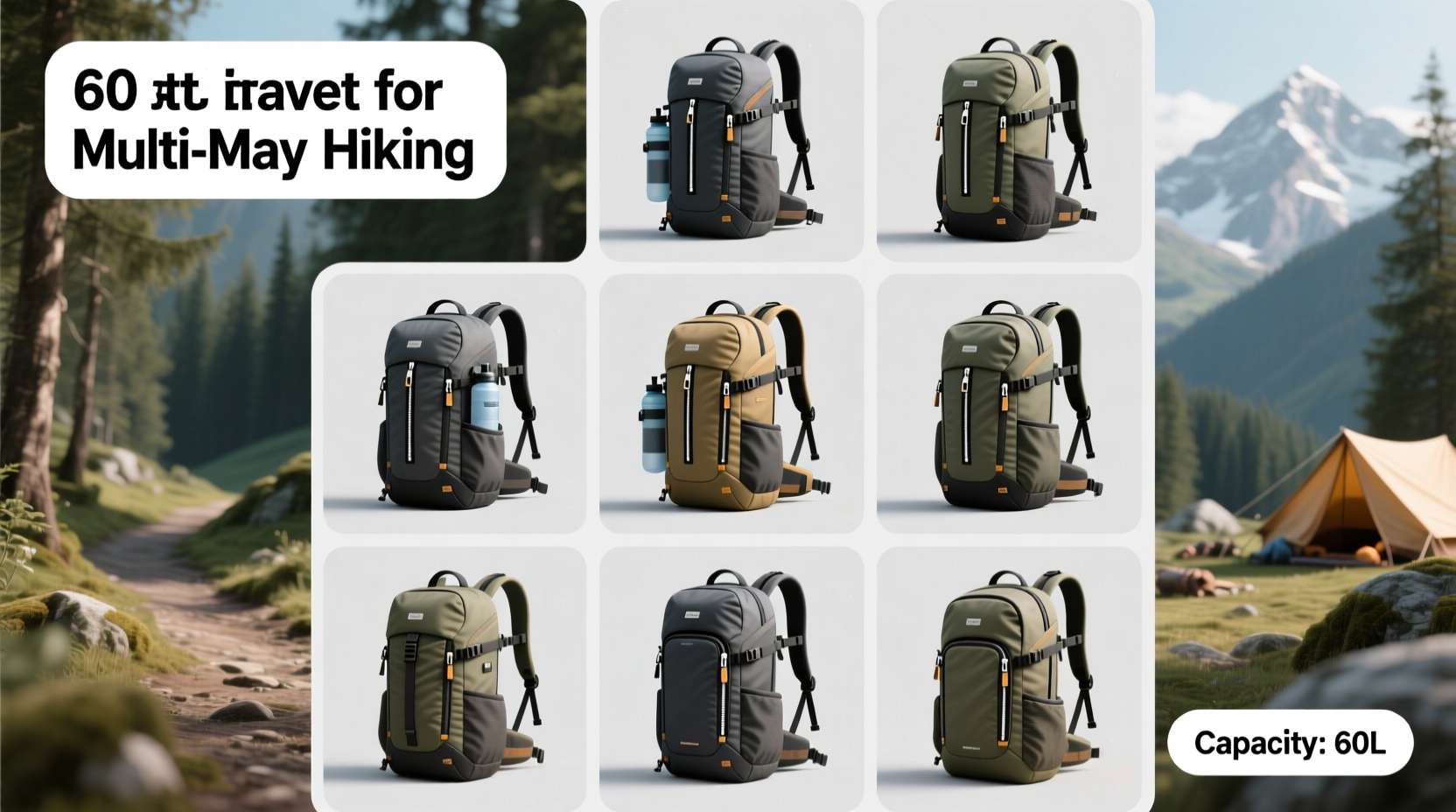
The 60-liter volume is widely regarded as optimal for trips lasting 3–7 days in rugged terrain or extended travel where luggage limits apply. It’s large enough to hold clothing, cooking gear, shelter, and food, yet compact enough to meet airline carry-on restrictions when packed efficiently. Unlike smaller daypacks, a 60L model supports full self-sufficiency. Compared to larger expedition packs (75L+), it avoids excess weight and bulk, reducing strain on your back and shoulders.
This size also offers flexibility: compressible straps allow downsizing for shorter trips, while expandable designs accommodate souvenirs on return journeys. For travelers who prioritize both function and freedom, 60 liters delivers unmatched versatility.
Tip: Always check airline carry-on dimensions—even if volume is under 60L, oversized packs may incur fees.Top 5 60L Backpacks for Real-World Performance
After extensive testing across diverse environments—from Patagonian trails to Southeast Asian hostels—these five models stand out for their build quality, comfort, and intelligent features.
| Model | Best For | Weight (kg) | Key Feature | Price Range |
|---|---|---|---|---|
| Deuter Aircontact Lite 65+10 | Hiking & Backpacking | 2.2 | Adjustable back system (AS) | $250–$290 |
| Osprey Atmos AG 65 | Long-Distance Hiking | 2.4 | Anti-Gravity suspension | $320–$350 |
| North Face Borealis X 60 | Urban Travel & Light Hiking | 1.8 | Stowable hip belt & laptop sleeve | $180–$210 |
| Mountainsmith Nitro 60 | Camping & Load Stability | 2.1 | Frame-enhanced load transfer | $190–$220 |
| Patagonia Arbor Grande 60L | Sustainable Travel | 1.9 | 100% recycled materials | $230–$260 |
Deuter Aircontact Lite 65+10
Despite its name, this pack's base capacity is 60L, expandable to 65L. Its adjustable Vari Quick System tailors torso fit, crucial for long hauls. Ventilated padding reduces sweat buildup, and dual access points (top and front) simplify packing. Ideal for hikers seeking customizable support without premium pricing.
Osprey Atmos AG 65
Osprey’s Anti-Gravity suspension wraps the load around the body, distributing weight naturally. The mesh-covered trampoline back panel enhances airflow, while integrated rain cover and robust zippers ensure weather readiness. A favorite among thru-hikers for all-day comfort, even under heavy loads.
North Face Borealis X 60
Tailored for digital nomads and city-to-trail adventurers, this pack blends urban functionality with outdoor resilience. Features include a padded 15” laptop compartment, hidden pockets for valuables, and a stowable harness system for streamlined carry during transit.
Mountainsmith Nitro 60
Built for campers hauling bulky gear, the Nitro uses a composite frame sheet to stabilize irregular loads. Side compression straps secure sleeping pads or tents, and the U-zipper front panel allows full lay-flat access—ideal for organizing gear mid-trip.
Patagonia Arbor Grande 60L
For eco-conscious travelers, this pack combines ethical manufacturing with durable design. Made from recycled polyester and PFC-free coatings, it includes thoughtful touches like lash points and a removable daypack. While less technical than hiking-specific models, it excels in sustainability and everyday usability.
What to Look for in a 60L Backpack
Selecting the right pack involves more than brand reputation. Key factors determine how well it performs under stress and over time.
- Fit and Suspension: Shoulder straps, hip belts, and back panels should contour your body. A poorly fitted pack causes fatigue and injury.
- Material Durability: Look for 600D+ polyester or nylon with ripstop weave and high denier coating.
- Access Points: Top-loading is standard, but front or panel-loading designs improve organization.
- Ventilation: Breathable back systems reduce moisture buildup during hot climbs.
- Weather Resistance: Integrated rain covers or DWR-treated fabrics protect contents in downpours.
- Pockets and Attachments: External stash pockets, ice axe loops, and daisy chains enhance utility.
“Fit is non-negotiable. No matter how advanced the tech, a pack that doesn’t match your torso length will compromise every mile.” — Lena Torres, Wilderness Gear Specialist
Real-World Example: Trekking the Inca Trail
Jamal, a seasoned trekker, used his Osprey Atmos AG 65 on a four-day Inca Trail journey. Carrying a tent, sleeping bag, food, and layers for changing altitudes, he averaged an 18-pound load. Despite steep ascents and narrow paths, the Anti-Gravity harness transferred weight smoothly to his hips, minimizing shoulder pressure. The ventilated back kept him dry during humid climbs, and the front-access panel made retrieving his rain jacket effortless during sudden storms. “I’ve used heavier packs,” he said, “but never one that felt this balanced.”
Step-by-Step: How to Pack a 60L Backpack Efficiently
Proper packing prevents discomfort and improves balance. Follow this sequence:
- Bottom Layer: Place soft, bulky items like sleeping bags or down jackets at the base. This stabilizes the center of gravity.
- Middle Layer: Add heavier gear—stove, food, water filter—close to your back and centered vertically.
- Top Compartment: Store frequently needed items: rain gear, snacks, first aid kit.
- External Pockets: Use side pockets for water bottles; front pockets for maps, sunscreen, headlamp.
- Compression Straps: Tighten side and lid straps to eliminate shifting. Load lifters should angle straps 45° from shoulders.
- Final Check: Wear the pack fully loaded. Adjust hip belt so 80% of weight rests on hips, not shoulders.
Essential Checklist Before You Buy
Before committing to a 60L backpack, verify these criteria:
- ✅ Try it on with weight (use sandbags or books to simulate load)
- ✅ Confirm torso size adjustability or availability in multiple sizes
- ✅ Test hip belt stability—should lock around iliac crest without riding up
- ✅ Check warranty (Osprey and Deuter offer lifetime coverage)
- ✅ Ensure compatibility with hydration reservoirs (if needed)
- ✅ Verify airline compliance: under 45 linear inches (height + width + depth)
Frequently Asked Questions
Can I use a 60L backpack as a carry-on?
Yes, most 60L packs comply with carry-on limits if not overpacked. However, airlines measure linear dimensions, not volume. Aim for total dimensions under 45 inches. Some models, like the North Face Borealis X, are specifically designed to meet these standards.
How do I clean and maintain my backpack?
Spot clean with mild soap and a sponge. Avoid machine washing, which damages coatings and seams. Hang upside down to dry after cleaning or heavy rain. Reapply DWR spray annually to restore water resistance.
Is a frameless pack suitable for 60L capacity?
Generally, no. At 60 liters, internal or external frames are essential for load management. Frameless packs lack structural support, leading to poor weight distribution and back strain under full capacity.
Final Thoughts: Choose Confidence Over Compromise
A 60-liter backpack is more than gear—it’s your mobile basecamp. The best models merge ergonomic intelligence with rugged reliability, turning grueling treks into manageable journeys. Whether you prioritize sustainability, tech-enhanced comfort, or urban adaptability, the right pack empowers exploration without sacrifice. Don’t settle for generic specs; invest time in fitting, research, and real-user feedback. Your next adventure deserves a companion that carries more than just gear—it carries confidence.
🚀 Ready to hit the trail or globe-trot smarter? Share your favorite 60L pack or ask questions in the comments below—let’s build a community of informed travelers.








