For decades, the running shoe market has trended toward more cushioning, higher stacks, and advanced foam technologies promising protection from impact and fatigue. At the same time, a growing movement embraces minimalist footwear—thin soles, zero drop, and maximum ground feel. The debate between thick-soled and minimalist running shoes isn't just about comfort; it's about biomechanics, injury risk, long-term foot health, and personal goals. So, is all that extra cushion actually beneficial—or could it be doing more harm than good?
The Rise of Maximalist Cushioning
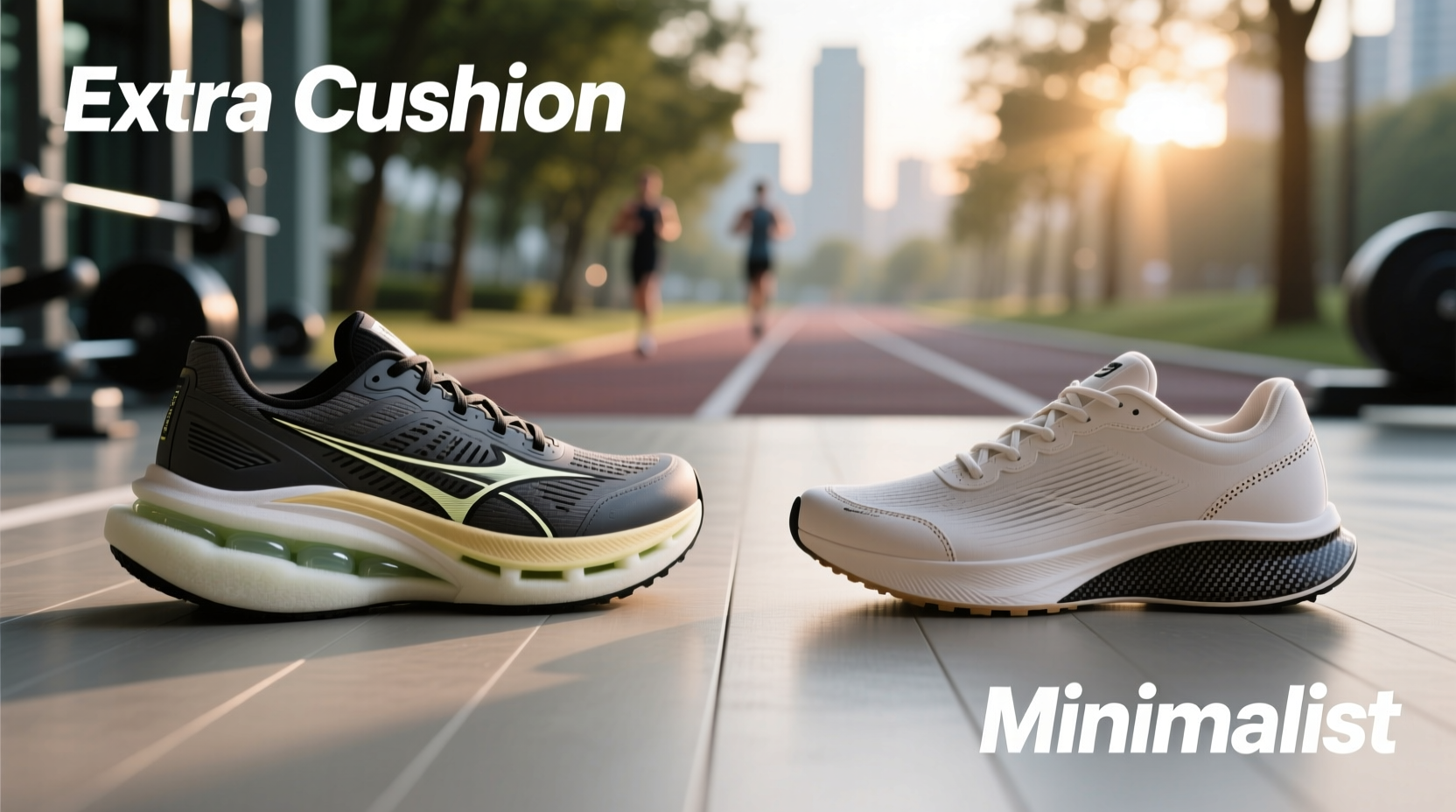
In the 2010s, brands like Hoka One One popularized maximalist shoes—ultra-cushioned, high-stack models designed to absorb shock over long distances. These shoes quickly gained favor among ultrarunners, recovery-day joggers, and runners with joint pain. The logic seemed sound: more cushion means less stress on joints, especially during repetitive impact.
Modern thick-soled shoes often feature proprietary foams (like Nike’s ZoomX or Adidas’ Boost) that claim energy return, durability, and soft landings. Many also incorporate rocker geometries to promote forward motion, reducing strain on the Achilles and calves.
However, increased cushioning changes how we run. Studies show that runners in highly cushioned shoes tend to adopt a heel-strike pattern, increasing braking forces despite softer landings. This shift may reduce immediate discomfort but could alter natural gait mechanics over time.
Tip: If you're transitioning to thick-soled shoes, gradually increase usage to allow your body to adapt to altered stride patterns.Minimalist Shoes: Back to Basics
Minimalist shoes emerged as a counterpoint to the \"more is better\" philosophy. Inspired by barefoot running research, particularly the work of Daniel Lieberman at Harvard, these shoes aim to replicate the natural movement of the foot. They typically feature:
- Low-to-zero heel-to-toe drop
- Thin, flexible soles (often under 10mm)
- Wide toe boxes for natural splay
- Lightweight construction (usually under 7 oz)
Proponents argue that minimalism strengthens intrinsic foot muscles, improves balance, and encourages a forefoot or midfoot strike—patterns associated with lower impact peaks. A 2013 study published in *Nature* found that habitual barefoot runners who use a forefoot strike generate significantly lower collision forces than heel strikers.
But minimalism isn’t for everyone. Runners accustomed to support and cushioning may experience calf soreness, Achilles irritation, or plantar fasciitis when switching too quickly.
“Running in minimal shoes isn’t inherently safer or better—it’s about alignment with your biomechanics and training history.” — Dr. Irene Davis, Director of the Spaulding National Running Center
Comparing Thick Sole and Minimalist Shoes: Key Differences
| Feature | Thick Sole (Maximalist) | Minimalist |
|---|---|---|
| Cushioning Level | High – multiple layers of foam | Low – thin rubber or EVA |
| Heel-to-Toe Drop | 8–12mm (commonly) | 0–4mm |
| Weight | 9–12 oz (average) | 5–7 oz (average) |
| Ground Feel | Reduced – insulated from surface | High – direct feedback |
| Best For | Long-distance, recovery runs, joint sensitivity | Form drills, short runs, strength development |
| Risk of Overuse Injury | Moderate (due to gait dependency) | Higher if transitioned too fast |
Real Runner Experience: Sarah’s Transition Journey
Sarah, a 38-year-old recreational runner with five half-marathons under her belt, had been using traditional cushioned shoes for years. She frequently dealt with mild knee pain after long runs. After reading about minimalist running, she decided to try a pair of Vibram FiveFingers.
She started slowly—just 10-minute walks in the shoes, then short jogs on grass. Within two weeks, she noticed improved ankle stability and stronger arches. But by week three, she developed sharp Achilles pain. She paused, consulted a physical therapist, and restarted with even shorter sessions while adding calf raises and foot mobility exercises.
After ten weeks, Sarah was comfortably running 5K in minimalist shoes and reported reduced knee strain. Her gait analysis showed a shift from heel-striking to midfoot landing. “It wasn’t the shoe alone,” she said. “It was learning how to move differently.”
Step-by-Step Guide to Choosing the Right Shoe Type
Deciding between thick-soled and minimalist shoes shouldn’t be based on trends. Follow this practical sequence:
- Evaluate Your Goals: Are you training for a marathon, rehabbing an injury, or focusing on foot strength?
- Analyze Your Gait: Get a video gait analysis at a specialty running store or clinic.
- Assess Foot Strength: Can you stand on one foot for 30 seconds? Pick up a towel with your toes? Weakness suggests caution with minimalism.
- Start Transitional: Try “moderate” shoes first—lower drop (6mm), moderate cushion (25–30mm stack). Brands like Altra or Topo offer middle-ground options.
- Introduce Gradually: Limit new shoe use to 10–15% of weekly mileage initially. Increase only if no pain arises.
- Listen to Feedback: Sore calves? Shin splints? Knee relief? Adjust accordingly.
Common Myths Debunked
- Myth: More cushion always prevents injuries.
Reality: Some studies show no significant difference in injury rates between cushioned and standard shoes. In fact, excessive cushion may delay sensory feedback, increasing instability on uneven terrain. - Myth: Minimalist shoes weaken your feet.
Reality: When introduced properly, they strengthen foot muscles and improve proprioception. The problem lies in rushed transitions. - Myth: You need arch support if you have flat feet.
Reality: Research shows many people with flat feet are asymptomatic. Strengthening the posterior tibialis and intrinsic foot muscles can provide dynamic support better than orthotics in some cases.
Frequently Asked Questions
Can I run a marathon in minimalist shoes?
Yes, but only if you’ve trained specifically for it. Elite runners like Abebe Bikila won marathons barefoot, but modern minimalist runners must build up tolerance over months. Attempting a marathon without proper preparation risks stress fractures or tendonitis.
Are thick-soled shoes bad for my knees?
Not necessarily. While they encourage heel striking—which increases braking force—the cushioning can reduce peak loading on the knee joint. For runners with existing arthritis or patellofemoral pain, thick-soled shoes may actually provide relief.
How do I know if a shoe is too minimal?
If you experience persistent pain in your calves, shins, or metatarsals within the first few uses, the shoe may be too minimal for your current strength level. Discomfort should not exceed mild muscle soreness. Sharp or localized pain is a warning sign.
Final Verdict: Is Extra Cushion Worth It?
The answer depends on who you are and what you’re trying to achieve. For runners logging high mileage on hard surfaces, thick-soled shoes can offer valuable protection and comfort. They may delay fatigue and reduce joint loading, making them ideal for recovery days or race-specific pacing.
On the other hand, minimalist shoes promote neuromuscular adaptation, foot strength, and efficient mechanics. They aren’t a cure-all, but they serve as excellent tools for building resilience and retraining movement patterns.
Rather than choosing sides, consider adopting a mixed approach. Use cushioned shoes when volume or speed demands protection. Use minimalist shoes during drills, strides, or short runs to maintain foot vitality. Your body thrives on variation—not uniformity.
The real question isn’t whether cushion is “worth it”—it’s whether your footwear supports your long-term health, performance, and enjoyment of running.
🚀 Ready to optimize your run? Audit your current shoes, assess your goals, and experiment mindfully. Share your experience in the comments—your journey might help another runner find their perfect fit.








