
Winter hiking presents unique challenges, especially when it comes to foot comfort and protection. Cold toes can ruin even the most scenic trek, and choosing the right socks is just as critical as selecting proper boots or layering clothing. Among the many options, thermal socks and wool blend socks are two of the most commonly recommended types. But what exactly sets them apart? And more importantly, do you need both for optimal performance on snowy trails?
The answer depends on your environment, activity level, and personal physiology. Understanding the science behind insulation, moisture management, and fit will help you make informed decisions—so you stay warm, dry, and blister-free in freezing conditions.
Understanding Thermal Socks: What Makes Them \"Thermal\"?
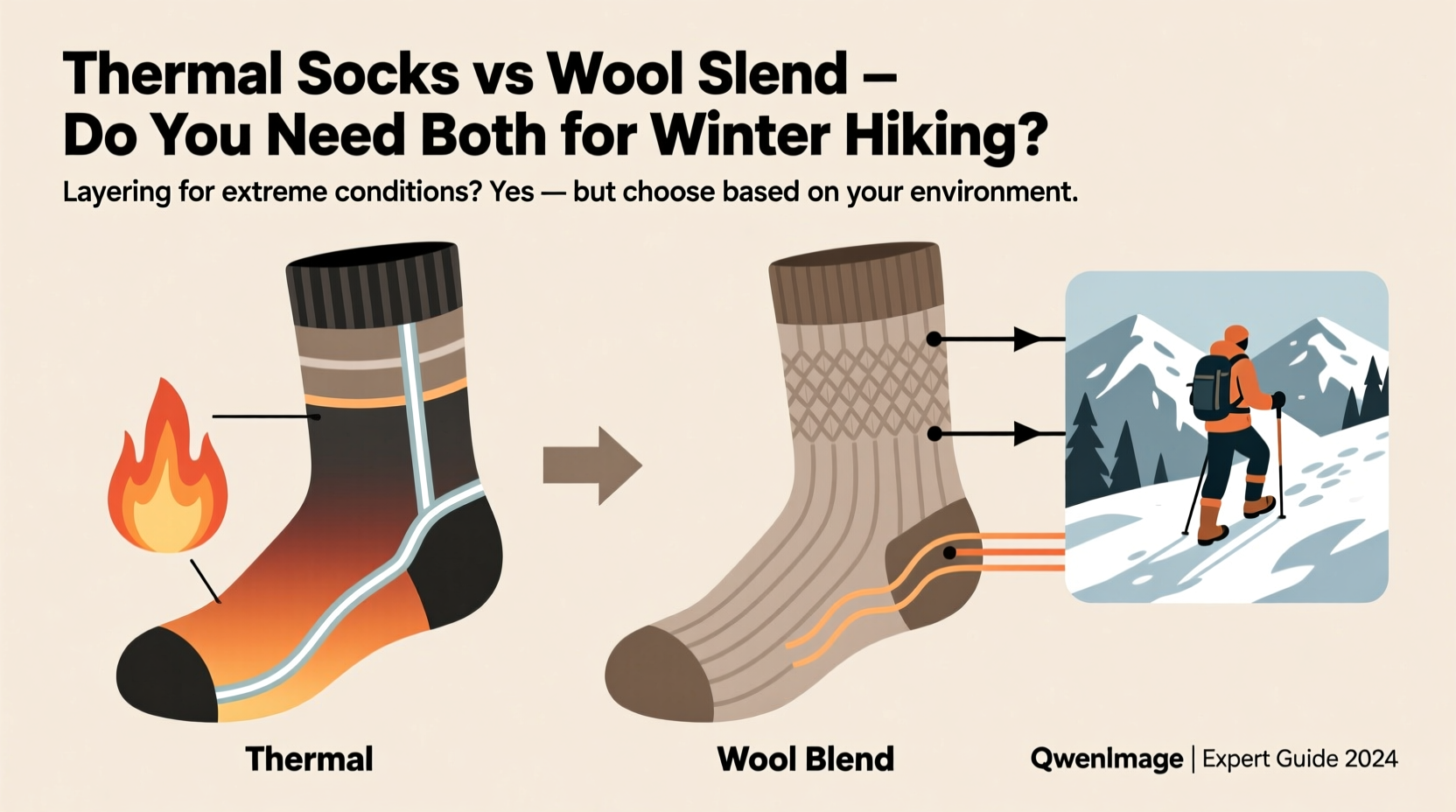
Thermal socks are engineered specifically for heat retention. They're typically constructed with synthetic fibers like polyester, polypropylene, or nylon, often blended with elastane for stretch. These materials trap air close to the skin, creating an insulating barrier that reduces heat loss. Some thermal socks also incorporate brushed linings or terry loops inside to enhance warmth by increasing loft and trapping more warm air.
Many modern thermal socks include antimicrobial treatments to reduce odor during multi-day hikes. However, because they rely heavily on synthetics, their breathability and moisture-wicking abilities vary significantly depending on quality and design.
One common misconception is that “thermal” automatically means “warm.” In reality, warmth depends not only on material but also on thickness, fit, and whether the sock stays dry. A soaked thermal sock loses much of its insulating power—sometimes faster than a wet cotton sock.
Tip: Avoid cotton-blend thermal socks for winter hiking—they retain moisture and increase frostbite risk.The Science Behind Wool Blend Socks
Wool blend socks, particularly those made with merino wool, have become the gold standard for cold-weather outdoor activities. Merino wool fibers naturally wick moisture away from the skin while retaining up to 30% of their weight in water without feeling wet. This allows them to continue insulating even when damp—a crucial advantage over most synthetics.
Wool’s crimped structure creates tiny air pockets that provide excellent thermal regulation. It warms when it's cold and releases heat when you're active, helping prevent overheating and sweat buildup. Additionally, merino wool is naturally antimicrobial, which means less odor after long days on the trail.
Most wool blend socks combine 60–80% merino with nylon (for durability) and spandex (for elasticity). This balance ensures resilience under friction, such as repeated contact with boot interiors, while maintaining softness against the skin—important for preventing irritation and blisters.
“Merino wool remains effective at temperature regulation even at high humidity levels inside boots. That makes it ideal for dynamic environments like winter hiking.” — Dr. Lena Torres, Outdoor Biomechanics Researcher, University of Colorado
Comparative Analysis: Thermal vs Wool Blend Socks
To determine whether one type outperforms the other—or if using both offers advantages—it helps to compare key performance metrics directly.
| Feature | Thermal Socks (Synthetic) | Wool Blend Socks (Merino-Based) |
|---|---|---|
| Warmth When Dry | High – excellent initial insulation | High – comparable, slightly slower to warm initially |
| Warmth When Wet | Poor – loses most insulating properties | Good – retains warmth even when damp |
| Moisture Wicking | Moderate – varies by fiber quality | Excellent – natural capillary action |
| Durability | High – resistant to abrasion | Moderate – wool wears faster but blends improve longevity |
| Breathability | Low to Moderate – prone to overheating | High – regulates microclimate effectively |
| Odor Resistance | Depends on treatment – may degrade over time | Natural – lasts through multiple uses |
| Price Range | $8–$15 per pair | $15–$25+ per pair |
While thermal socks perform well in consistently dry, static conditions (like casual winter walks), wool blends excel in variable, high-exertion scenarios where sweating is inevitable. For serious winter hikers covering long distances or climbing elevation, this distinction is critical.
Do You Need Both? Layering Strategies Explained
Some experienced hikers use both thermal and wool blend socks—but not simultaneously in the traditional sense. Instead, they adopt strategic layering techniques based on conditions.
Wearing two pairs of socks (a thin liner + thick outer) is a common practice, but pairing a synthetic thermal sock underneath a wool blend can create problems: excessive bulk, reduced circulation, and increased friction leading to blisters. The key isn’t doubling up randomly, but rather using purpose-built systems.
A better approach involves a **moisture-wicking liner sock** made of thin synthetic or silk, worn beneath a mid-weight merino wool blend sock. The liner pulls sweat away from the skin, while the wool provides insulation and manages vapor. This combination leverages the strengths of both materials without compromising fit.
In extreme cold (-10°C / 14°F or lower), some mountaineers add a third layer—an insulated vapor barrier sock (VBL)—over the wool sock to prevent moisture from escaping into the boot. While counterintuitive, VBLs keep the inner layers drier over time by stopping sweat from reaching colder zones where it could freeze.
When to Use Each Type
- Wool blend alone: Ideal for moderate winter hikes (above -5°C / 23°F), especially with breathable waterproof boots.
- Liner + wool blend: Best for long-distance treks, variable temperatures, or high-output climbs.
- Thermal-only: Acceptable only in dry, low-moisture environments or short urban outings—not recommended for backcountry use.
- Triple-layer (liner + wool + VBL): Reserved for sub-zero expeditions or static activities like ice fishing or winter camping.
Real-World Example: A Winter Trek in the White Mountains
Consider Sarah, an intermediate hiker attempting a December ascent of Mount Washington via Tuckerman Ravine. Morning temperatures were -8°C (18°F), with wind chill dropping below -20°C (-4°F). She wore waterproof hiking boots, thermal synthetic socks, and gaiters.
By midday, after hours of steep climbing, her feet felt clammy. Despite no visible snow penetration, sweat had saturated her socks. As she paused at treeline, her feet rapidly cooled. One toe began tingling—a warning sign of early frostnip.
She switched to spare merino wool blend socks from her pack, airing her feet briefly inside a bivy sack. Within minutes, circulation improved. The wool socks wicked residual moisture and rewarmed efficiently due to retained loft and thermal buffering.
This case illustrates how high-output activity generates internal moisture that compromises synthetic insulation. Had Sarah started with a liner/wool system, she might have avoided the issue altogether.
Step-by-Step Guide: Building Your Winter Hiking Sock System
- Assess expected conditions: Determine average temperature, precipitation risk, and exertion level.
- Select appropriate footwear: Ensure boots allow room for intended sock layers without compressing toes.
- Choose a base layer: Opt for a thin, seamless synthetic or silk liner sock to manage moisture.
- Add insulation: Wear a mid-weight merino wool blend sock (typically 2–3 mm thickness).
- Prepare spares: Pack at least one extra pair of wool blend socks in a waterproof bag.
- Monitor foot condition: During breaks, check for dampness, hot spots, or numbness.
- React promptly: Change socks if damp; use foot powder to reduce friction if needed.
This system prioritizes moisture control first, warmth second—because dry feet stay warm far longer than wet ones, regardless of sock thickness.
Frequently Asked Questions
Can I wear thermal socks over wool for extra warmth?
No. Layering a bulky thermal sock over a wool sock increases pressure inside the boot, restricts blood flow, and promotes blisters. If more warmth is needed, opt for a heavier-weight wool blend instead of adding layers.
Are wool blend socks worth the higher price?
Yes, for winter hiking. Their superior moisture management, temperature regulation, and durability justify the cost, especially when factoring in reduced injury risk and extended usability across seasons.
How many pairs of socks should I bring on a winter hike?
At minimum, carry two full pairs: one to wear and one dry backup. On overnight trips, include a third pair. Always store extras in sealed, insulated containers to prevent moisture absorption.
Final Recommendations and Action Plan
You don’t need both thermal and wool blend socks as separate staples in your winter hiking kit. What you *do* need is a smart, adaptable footcare strategy centered around moisture control and insulation efficiency.
For most winter hiking scenarios, a high-quality merino wool blend sock—paired with a thin liner when necessary—outperforms standalone thermal socks in every critical category. Thermal synthetics may serve as emergency backups or for very short, low-effort outings, but they should not be relied upon as primary insulation in demanding conditions.
Invest in three premium wool blend pairs, two ultra-thin liners, and a reliable drying method (such as a portable silicone sock dryer or absorbent towel). Rotate socks during multi-day trips and never reuse damp ones. Treat your feet with the same attention you give your backpack or GPS unit—because nothing ends a winter adventure faster than cold, wet, injured feet.
💬 Ready to upgrade your winter hiking comfort? Start by replacing your current socks with a tested merino blend and track the difference on your next trail. Share your experience or ask questions in the comments below.








