Whether you're a weekend runner, gym enthusiast, or wear athletic footwear daily, your sports shoes endure heavy use and accumulate sweat, dirt, and odor over time. While tossing them in the washing machine might seem like a quick fix, improper cleaning can damage materials, degrade cushioning, and shorten their lifespan. Done right, however, regular maintenance keeps your shoes performing well, smelling fresh, and looking sharp. This comprehensive guide delivers actionable techniques, material-specific care tips, and expert-backed strategies to clean your sports shoes without compromising their integrity.
Why Proper Shoe Cleaning Matters
Sports shoes are engineered for performance, not just appearance. Sweat, bacteria, and environmental debris break down adhesives, weaken fabric, and compromise breathability. Over time, uncleaned shoes lose support, develop odors, and may even contribute to skin irritation or fungal infections. Regular cleaning isn’t vanity—it’s essential maintenance that preserves structural integrity and hygiene.
According to Dr. Lena Torres, a podiatrist specializing in sports medicine:
“Shoes that aren’t cleaned regularly harbor bacteria and fungi that thrive in moist environments. This doesn’t just affect shoe longevity—it can impact foot health, especially for athletes who train frequently.” — Dr. Lena Torres, DPM
Know Your Materials: Cleaning by Shoe Type
Not all sports shoes are created equal. The cleaning method depends heavily on the materials used. Using water on leather or detergent on mesh without caution can cause irreversible damage. Below is a breakdown of common materials and how to treat them:
| Material | Cleaning Method | Avoid |
|---|---|---|
| Mesh & Knit Uppers | Hand wash with mild soap and soft brush; air dry away from heat | Machine washing (unless specified), direct sunlight |
| Synthetic Leather / Synthetic Mesh | Damp cloth wipe-down; spot clean with soapy water | Submerging, abrasive scrubbing |
| Leather (e.g., some training or cross-training shoes) | Use leather cleaner and conditioner; never soak | Water immersion, harsh detergents |
| EVA Foam Midsoles | Gentle brushing with toothbrush and soapy water | High-pressure water, bleach |
| Rubber Outsoles | Scrub with stiff brush and dish soap | Steel wool, chemical solvents |
Step-by-Step: How to Wash Sports Shoes Safely
Follow this detailed process to clean your shoes thoroughly while minimizing risk of damage.
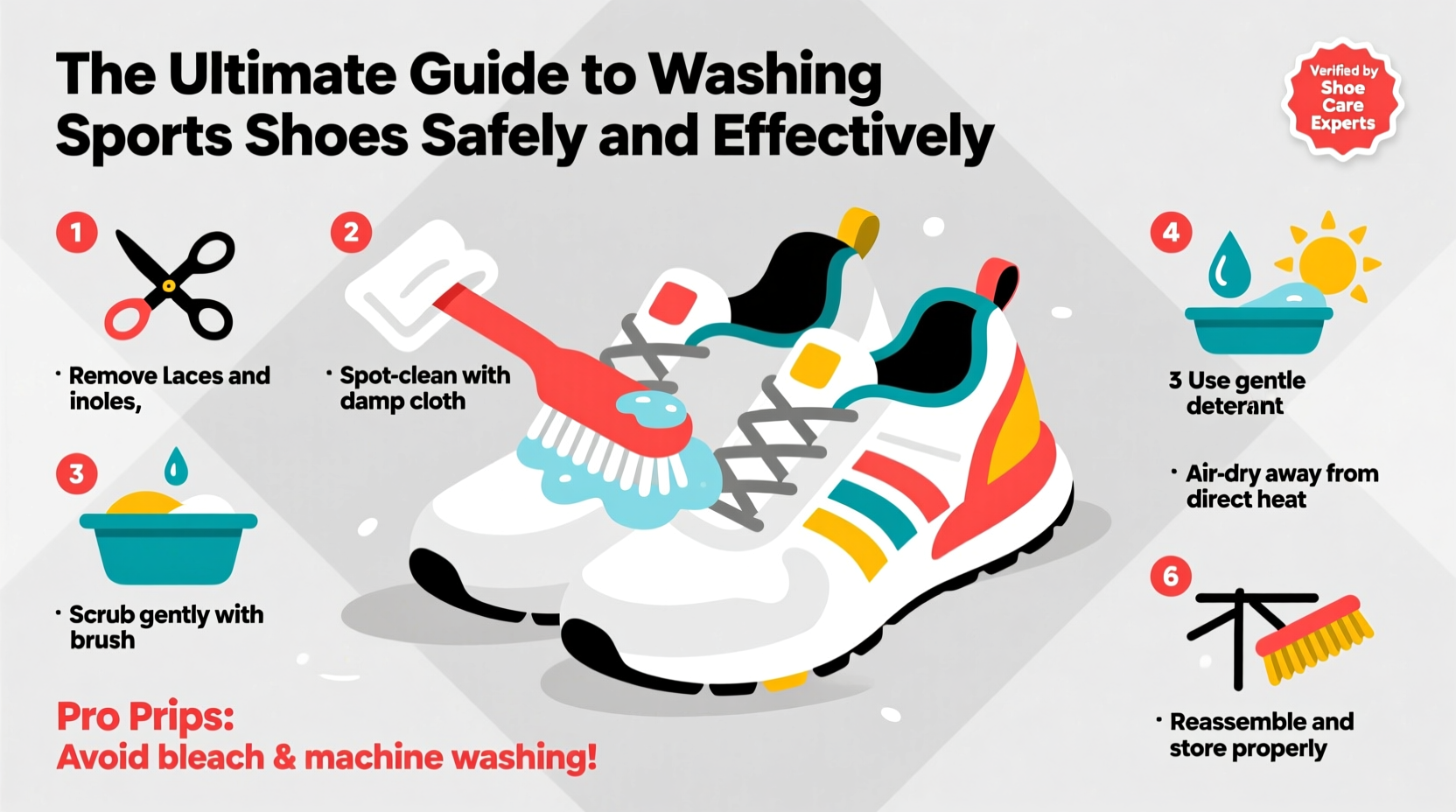
- Pre-Clean Prep: Remove laces and insoles. Shake out loose dirt and debris. Use a dry brush to sweep off surface grime from the upper and sole.
- Spot Clean First: For localized stains (mud, grass, scuff marks), dampen a microfiber cloth with a mix of mild dish soap and water. Gently dab or rub the affected area. Avoid soaking.
- Deep Clean (Hand Wash): Fill a basin with lukewarm water and a small amount of gentle detergent (like Woolite or castile soap). Dip a soft-bristled brush or sponge and gently scrub the upper, midsole, and outsole. Focus on stained areas but avoid aggressive scrubbing.
- Rinse Carefully: Use a damp cloth with clean water to wipe away soap residue. Do not fully submerge unless the manufacturer explicitly allows it.
- Dry Properly: Stuff shoes with crumpled newspaper or paper towels to absorb moisture and maintain shape. Place in a well-ventilated area away from direct sunlight or heaters. Allow 24–48 hours to dry completely.
- Reassemble: Once fully dry, reinsert clean insoles and laces. Store in a cool, dry place.
When (and How) to Machine Wash
Some manufacturers design shoes to withstand machine washing. Check the care label inside the tongue or consult the brand’s website. If approved:
- Remove insoles and laces.
- Place shoes in a pillowcase or mesh laundry bag to protect both the shoes and the machine.
- Use cold water and a gentle cycle with minimal detergent.
- Never use bleach or fabric softener.
- Always air dry—never put in a dryer.
Dealing with Odor and Insoles
Odor develops when bacteria feed on sweat trapped in the insole and lining. To combat this:
- Wash removable insoles with mild soap and water. Let them dry completely before reuse.
- For non-removable insoles, sprinkle baking soda inside and leave overnight, then vacuum out.
- Use odor-neutralizing sprays designed for footwear (avoid alcohol-based formulas).
- Rotate between multiple pairs to allow each pair to air out between uses.
Baking soda is effective because it absorbs moisture and neutralizes acidic compounds produced by bacteria. Activated charcoal inserts are another long-term solution for persistent odor control.
Real-World Example: Recovering a Trail Runner’s Favorite Shoes
Mark, an avid trail runner, returned from a muddy 10K with his favorite trail shoes caked in dried mud and emitting a sour smell. Instead of hosing them down—a common mistake—he followed a careful cleaning routine. He first scraped off excess mud with a plastic card, then brushed the treads with a toothbrush. After removing the insoles, he hand-washed the uppers with a drop of dish soap and lukewarm water. He rinsed with a damp cloth, stuffed them with newspaper, and left them near a fan for two days. The result? Shoes restored to near-new condition, with no warping or odor. Mark now cleans his shoes after every muddy run, extending their life by nearly six months beyond average wear.
Do’s and Don’ts of Washing Sports Shoes
“Cleaning your shoes isn’t just about looks—it’s about maintaining function. A dirty midsole loses responsiveness. A grimy upper loses breathability.” — Jordan Lee, Footwear Engineer at Apex Performance Lab
| Do’s | Don’ts |
|---|---|
| Use a soft brush and mild soap | Soak shoes for extended periods |
| Remove insoles and laces before cleaning | Put shoes in the dryer |
| Air dry naturally in a ventilated space | Use bleach or strong chemicals |
| Check manufacturer care instructions | Scrub aggressively with wire brushes |
| Clean shoes every 2–4 weeks with regular use | Ignore persistent odors or visible mold |
Frequently Asked Questions
Can I wash my running shoes in the washing machine?
Only if the manufacturer specifies it. Most major brands (like Nike, Adidas, Brooks) advise against machine washing due to risks of damaging cushioning and glue bonds. Hand washing is safer and more controlled.
How often should I clean my sports shoes?
Light cleaning (wiping down, airing out) should happen weekly. A thorough clean is recommended every 3–4 weeks with regular use, or immediately after exposure to mud, salt, or extreme sweat.
Why do my white shoes turn yellow after washing?
Yellowing occurs due to oxidation (exposure to sunlight), residual sweat, or using chlorine-based cleaners. To prevent this, avoid direct sun when drying, and use oxygen-based stain removers instead of bleach. Storing shoes in breathable cotton bags helps reduce discoloration.
Final Checklist: Keep Your Shoes Fresh and Functional
- ✔ Remove laces and insoles before cleaning
- ✔ Brush off loose dirt first
- ✔ Use only mild, non-abrasive cleaners
- ✔ Never machine dry or use heat
- ✔ Dry slowly in a shaded, ventilated area
- ✔ Re-lace only when fully dry
- ✔ Rotate shoes to prolong life
Take Action Today for Longer-Lasting Performance
Your sports shoes are an investment in comfort, support, and athletic performance. Treating them with care ensures they continue to deliver where it matters most. By following these proven cleaning practices, you protect not just the appearance, but the engineering and hygiene of your footwear. Start today: pull out your dirtiest pair, gather a soft brush and mild soap, and give them the refresh they deserve. Share your own cleaning tips in the comments—your experience could help another athlete keep their stride strong and their shoes fresh.
💬 Have a stubborn shoe stain or odor mystery? Tell us your story below—we’ll help you find a safe, effective solution.








