Transporting a cake—especially one meant as a gift—requires more than just placing it in a box and hoping for the best. A beautifully decorated cake can quickly become a lopsided mess if not handled with care. Whether you're delivering a birthday treat across town or carrying a wedding confection to a venue, the journey matters as much as the destination. With the right preparation, tools, and awareness of common pitfalls, you can ensure your cake arrives intact, level, and picture-perfect.
Choose the Right Cake Box
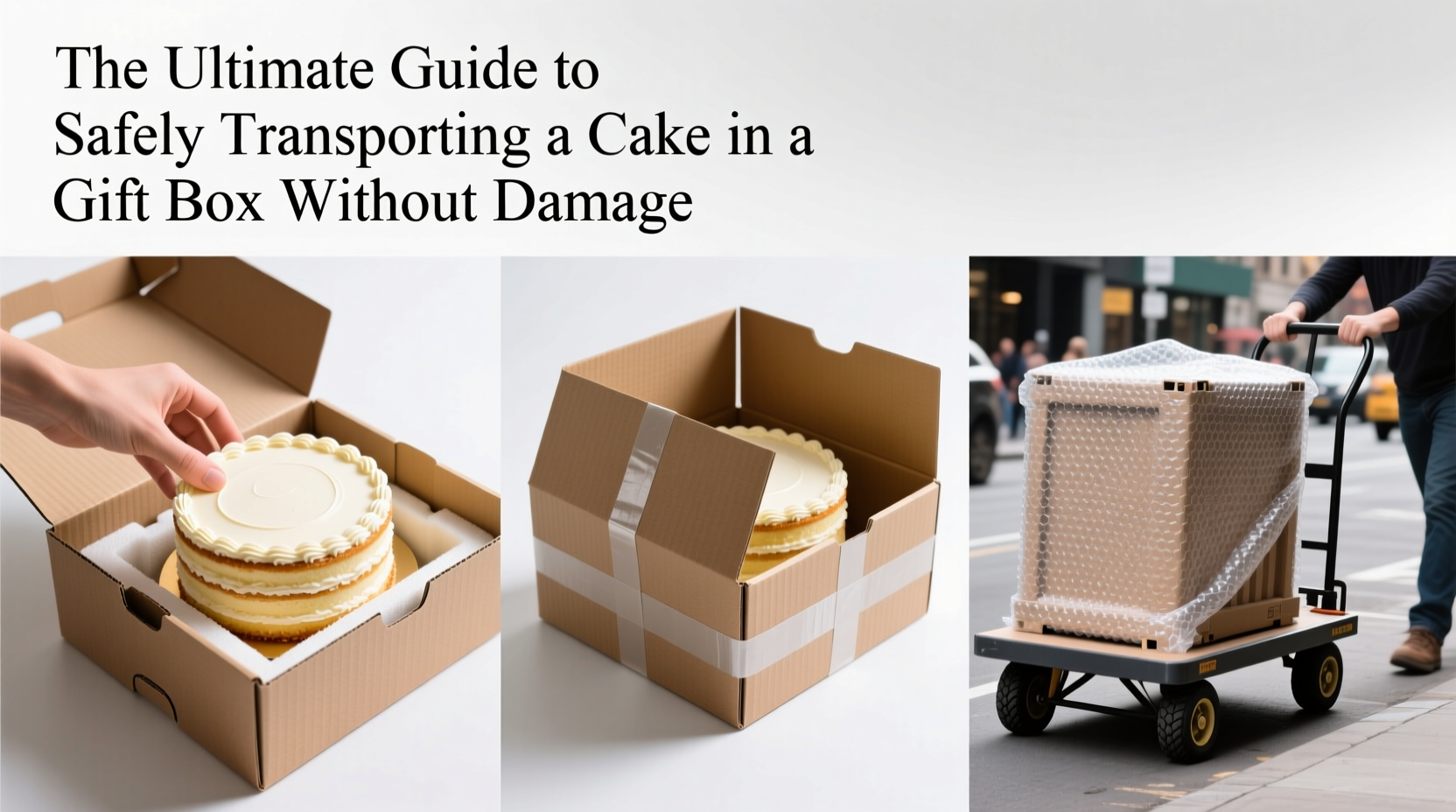
The foundation of safe cake transport begins with selecting an appropriate gift box. Not all boxes are created equal, and using the wrong size or material can lead to disaster. The ideal cake box should be rigid, food-safe, and precisely sized to fit the cake with minimal internal movement.
A box that’s too large allows the cake to shift during transit, increasing the risk of cracked layers or smudged frosting. One that’s too small may press against the sides or top decorations, causing structural damage. When measuring, add no more than half an inch of clearance on each side.
Tip: Always test the fit before decorating. Place the cooled cake in the box prior to final icing to confirm there's enough headspace for tall designs.Cardboard is the most common material for cake boxes due to its rigidity and breathability. Avoid plastic containers unless specifically designed for cakes—they often trap moisture, leading to soggy edges or condensation on fondant.
Secure the Cake Inside the Box
Even with the perfect-fitting box, a cake can slide or tilt during transport. To prevent this, stabilization is essential. The goal is to minimize any lateral or vertical motion.
Begin by placing non-slip materials under the cake board. Silicone baking mats, rubber shelf liners cut to size, or even double-sided tape applied lightly to the bottom of the board can anchor it firmly to the base of the box. This simple step prevents shifting when turning corners or braking suddenly.
For multi-tiered cakes, dowels or support rods must be inserted through each tier to bear the weight above. Never rely solely on frosting for structural integrity. After inserting dowels, place each tier directly onto the one below and secure them together with additional dowel pins if necessary.
“Cakes are fragile structures. Treat them like fine art—support every layer and eliminate movement at every point.” — Clara Nguyen, Professional Pastry Chef & Cake Designer
Step-by-Step Guide: Safe Transport Preparation
Follow this sequence to maximize the chances of a flawless delivery:
- Chill the cake: Refrigerate for 1–2 hours after decorating. Cold cakes hold their shape better and resist melting buttercream.
- Select the correct box: Ensure it fits snugly with about ½ inch of space around the sides and at least 1 inch of clearance above.
- Anchor the base: Use non-slip material between the cake board and box floor.
- Seal the box securely: Tape all flaps shut to prevent accidental opening.
- Level the transport surface: Place the box on a flat, stable area in your vehicle—never on a seat that reclines.
- Drive smoothly: Avoid sudden stops, sharp turns, and bumpy roads. Keep speed steady.
- Unbox carefully: Open the container only when ready to serve, and lift straight up—don’t slide.
Do’s and Don’ts During Transport
| Do | Don't |
|---|---|
| Place the cake in the back of an SUV or trunk where surfaces are flatter | Put the cake on a passenger seat that may tilt or move |
| Use air conditioning to avoid heat buildup in the car | Leave the cake in a hot vehicle, even for five minutes |
| Keep the box upright at all times | Tilt or lay the box on its side |
| Drive slowly over bumps or detour around potholes | Speed over uneven pavement to “get it over with” |
| Have someone monitor the cake during travel | Leave the cake unattended while running errands en route |
Real Example: The Last-Minute Birthday Delivery
Sarah baked a three-layer vanilla cake with fresh berries and whipped cream frosting for her sister’s surprise birthday party. She placed it in a standard bakery box but didn’t secure it to the base. On her way across town, she made a quick stop at a gas station. When she returned, she found the cake had slid halfway off the board, crushing the side decoration.
She remade the cake using a tighter-fitting box, added a silicone liner to grip the board, and placed it on the floor of her SUV with a friend holding it steady. This time, the cake arrived perfectly intact. The difference? Proper anchoring and continuous supervision.
This scenario underscores how easily things can go wrong—and how simple adjustments can prevent costly mistakes.
Special Considerations for Different Cake Types
Not all cakes travel the same. Delicate components require tailored approaches:
- Fondant-covered cakes: Susceptible to humidity and cracking. Avoid refrigeration unless necessary; instead, store in a cool room and transport in climate-controlled vehicles.
- Cakes with fresh fruit or cream fillings: Must remain cold. Use insulated bags with ice packs (wrapped to prevent direct contact).
- Naked or semi-naked cakes: Exposed layers are vulnerable to drying and smudging. Cover loosely with a dome lid or use a tall box to avoid contact.
- Mini cupcakes or petits fours in gift boxes: Secure each piece individually with paper liners or inserts to prevent rolling.
Frequently Asked Questions
Can I freeze a cake before transporting it?
Yes, freezing a fully decorated cake can help firm it up for travel. Wrap it tightly in plastic and freeze for 2–4 hours. Thaw in the refrigerator or at room temperature upon arrival. Note: Avoid freezing cakes with meringue buttercream or fresh fruit toppings, as texture may degrade.
What if my cake gets damaged during transport?
Minor frosting smudges can often be touched up with a palette knife and reserved buttercream. For structural issues, assess whether the layers are still edible and reassemble if possible. In many cases, adding decorative elements like flowers or chocolate shavings can camouflage imperfections.
Is it safe to stack other items on top of a cake box?
No. Never place anything on top of a cake box, regardless of how sturdy it seems. Even light pressure can compress soft layers or distort piped details. Treat the cake box as a top-only load.
Final Checklist Before You Go
- ✅ Cake is chilled and set
- ✅ Box fits snugly with adequate height clearance
- ✅ Cake board is secured to the box base
- ✅ All tiers are properly supported with dowels
- ✅ Vehicle is cool and ready for smooth transport
- ✅ Someone will monitor the cake during transit
- ✅ No stops planned unless absolutely necessary
Arrive with Confidence
Delivering a cake safely isn’t about luck—it’s about planning, precision, and respect for the dessert’s fragility. By choosing the right box, stabilizing the contents, and managing environmental factors like temperature and motion, you protect not just the cake, but the sentiment behind it. Every slice served intact is a testament to your care.
💬 Have a cake transport success story or a near-disaster save? Share your experience in the comments and help others deliver perfection.








