Moissanite has emerged as one of the most sought-after gemstone alternatives to diamonds—offering brilliance, durability, and ethical sourcing at a fraction of the cost. Among its grades, VVS (Very Very Slightly Included) moissanite stands out for its near-flawless clarity, making it ideal for high-end jewelry like tennis chains. However, not all moissanite labeled “VVS” meets that standard. Mislabeling, visual deception, and lack of standardized grading can leave buyers uncertain about what they truly own. This guide equips you with precise, actionable knowledge to confidently verify whether your tennis chain features genuine VVS moissanite.
Understanding Moissanite Clarity Grading
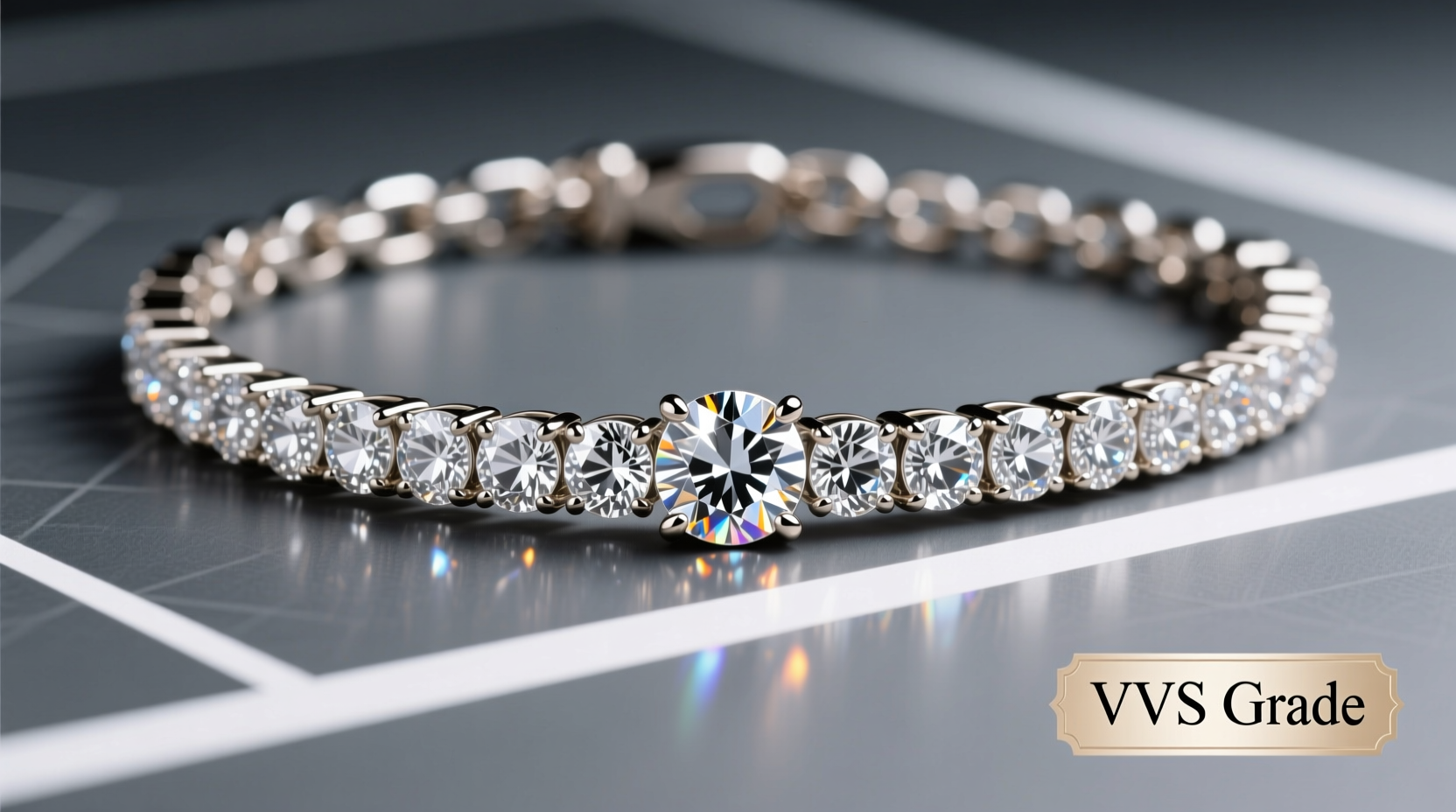
Unlike diamonds, which follow the GIA’s universally accepted clarity scale, moissanite grading lacks a single global authority. Instead, most manufacturers use a simplified system: F (Flawless), VVS, VS (Very Slightly Included), SI (Slightly Included), and I (Included). VVS moissanite contains minute inclusions only visible under 10x magnification and typically undetectable even then without trained eyes.
These inclusions are usually microscopic silicon carbide crystals or growth patterns formed during lab synthesis. In a well-made tennis chain, where dozens of stones are set closely together, consistent clarity across all stones is a hallmark of true VVS quality.
“VVS moissanite should appear optically perfect to the naked eye, even under bright light. Any visible cloudiness or dark spots suggest lower-grade material.” — Dr. Lena Torres, Gemologist & Materials Scientist
Step-by-Step Guide to Verifying VVS Moissanite in Your Tennis Chain
Confidence comes from process. Follow this structured method to inspect your moissanite tennis chain thoroughly.
- Start with Visual Inspection Under Natural Light
Place the chain on a white surface in daylight. Look for consistent sparkle, fire (color flashes), and brightness across every stone. Cloudy, dull, or uneven stones indicate inconsistencies in clarity. - Use a 10x Jeweler’s Loupe
Examine each stone individually. Focus on the center and crown areas where inclusions often form. True VVS stones will show no visible flaws. Tiny white specks or faint lines may still qualify as VVS if they require intense focus to spot. - Check for Double Refraction with a Line Test
Place the chain over a thin black line on paper. Through the table (top) of each stone, look for doubling of the line. This effect is natural in moissanite due to its double refraction—but should be clean and sharp, not distorted by internal fractures or haze. - Assess Color Consistency
VVS refers to clarity, but color matters too. High-quality VVS moissanite is typically colorless (D-F range) or near-colorless (G-H). Yellow, gray, or greenish tints may signal lower-grade material, even if clarity appears good. - Verify Certification Documentation
If purchased from a reputable vendor, request an independent lab report (e.g., IGI, GCAL). These reports confirm both clarity and authenticity. Absence of certification should raise caution.
Key Differences: VVS vs. Lower-Grade Moissanite
Recognizing subtle distinctions helps prevent being misled by marketing claims. The table below outlines critical differences between VVS and lower clarity grades commonly found in tennis chains.
| Feature | VVS Moissanite | VS/SI Moissanite |
|---|---|---|
| Visibility of Inclusions | None to the naked eye; extremely difficult to see under 10x | Slight inclusions visible under magnification; sometimes detectable in bright light |
| Brilliance & Fire | Bright, sharp sparkle with vivid color flashes | Good sparkle, but slightly muted due to light interference from inclusions |
| Transparency | Crisp, glass-like transparency | May appear slightly hazy or oily under direct light |
| Price Range (per carat) | $500–$700 | $300–$500 |
| Consistency Across Chain | All stones match in clarity and color | Some variation between stones common |
Real-World Example: Spotting Misrepresented Moissanite
Jamal purchased a 14K gold tennis chain advertised as “VVS Forever One Moissanite.” Excited by the deal, he later noticed two stones appeared darker than the rest under sunlight. Using a jeweler’s loupe, he discovered small clusters of white pinpoints inside those stones—clear signs of VS-level inclusions. Upon contacting the seller, he learned the batch had mixed clarity grades despite uniform labeling.
After requesting a third-party appraisal, Jamal received confirmation: only 80% of the stones were VVS. The rest were VS. He returned the chain and opted for a certified piece from a transparent vendor. His experience underscores the importance of personal verification—even when buying from seemingly trustworthy sources.
Essential Checklist for Buyers and Owners
Use this checklist to ensure your moissanite tennis chain meets VVS standards—or to evaluate one you already own.
- ✅ All stones exhibit identical sparkle and brightness
- ✅ No visible clouds, dark spots, or haziness under natural light
- ✅ Inclusions undetectable with a 10x loupe (or nearly so)
- ✅ Double refraction is clean and consistent across stones
- ✅ Comes with a verifiable lab certificate from IGI, GCAL, or similar
- ✅ Purchased from a brand known for transparency (e.g., Charles & Colvard, Harrods, Brilliant Earth)
- ✅ Metal settings are secure and symmetrical, indicating high craftsmanship
Frequently Asked Questions
Can VVS moissanite degrade over time?
No—moissanite is chemically stable and extremely hard (9.25 on the Mohs scale). VVS clarity does not change with age. However, dirt buildup or scratches on the surface can dull appearance, which is why regular cleaning is essential.
Is there a difference between “VVS” and “Forever One VVS”?
Yes. “Forever One” is a branded type of moissanite produced by Charles & Colvard, known for superior color and clarity consistency. When labeled “Forever One VVS,” it indicates top-tier quality within that line. Generic “VVS moissanite” may vary more in performance.
Do jewelers always accurately label moissanite clarity?
Not always. While reputable retailers adhere to ethical standards, many online sellers exaggerate grades to boost sales. Independent certification remains the most reliable way to confirm claims.
Final Thoughts: Confidence Through Knowledge
Identifying VVS moissanite in your tennis chain isn’t about guesswork—it’s about applying careful observation, the right tools, and informed judgment. With rising demand for lab-grown gems, the market is flooded with options, but also inconsistencies. By mastering visual inspection, understanding grading nuances, and demanding documentation, you protect your investment and wear your jewelry with pride.
Whether you're shopping for the first time or verifying an existing piece, take control of the process. A true VVS moissanite tennis chain offers dazzling beauty and lasting value. Now you have the knowledge to recognize it when you see it.
🚀 Ready to verify your moissanite? Grab a loupe, find some natural light, and start examining. Share your findings or questions in the comments—let’s build a community of informed, confident buyers.








