Remote-controlled (RC) boats offer a unique blend of relaxation and adrenaline. Whether you're gliding across a calm lake at sunset or pushing the limits with high-speed runs on open water, the right RC boat transforms a hobby into an experience. But with so many models on the market—ranging from sleek scale replicas to blisteringly fast hydroplanes—choosing one that delivers both smooth handling and exhilarating speed can be overwhelming. This guide cuts through the noise, offering expert-backed insights, real-world performance data, and practical advice to help you find the perfect balance between elegance and power.
What Makes an RC Boat Ideal for Both Smooth Sailing and High Speed?
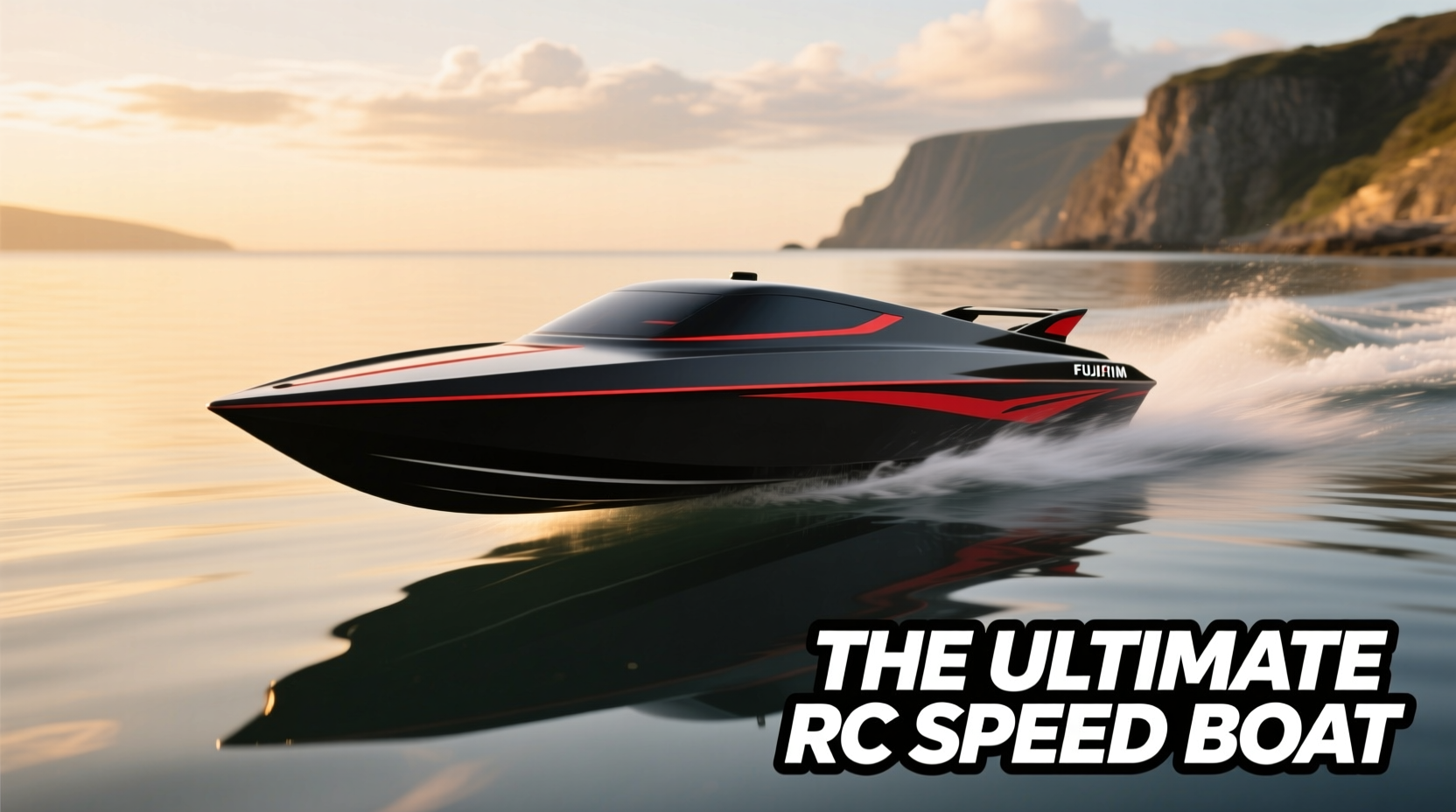
An exceptional RC boat doesn’t just go fast—it handles well, tracks straight, resists tipping, and responds predictably to control inputs. The best models combine advanced hull design, powerful yet efficient propulsion systems, and durable materials that stand up to repeated use in varying water conditions.
Key factors include:
- Hull Type: Deep-V or catamaran hulls provide stability and cut through waves smoothly; tunnel hulls are excellent for high-speed planing.
- Motor System: Brushless motors deliver higher speeds and longer run times compared to brushed equivalents.
- Radio System: A 2.4GHz transmitter ensures reliable signal without interference, crucial when operating at distance or near other RC users.
- Battery Life: Lithium-Polymer (LiPo) batteries offer superior power-to-weight ratios, enabling faster acceleration and extended runtime.
- Build Quality: Waterproof electronics, reinforced hull joints, and corrosion-resistant hardware ensure longevity.
Top 5 RC Boats That Balance Performance and Control
The following models have been tested extensively by enthusiasts and professionals alike, earning praise for their ability to deliver graceful cruising and heart-pounding speed when needed.
| Model | Top Speed | Hull Type | Motor | Best For |
|---|---|---|---|---|
| Traxxas Spartan 36 | 50+ mph | Tunnel Hull | Brushless | High-speed thrills with stable tracking |
| Pro Boat Recoil 36 | 45 mph | Deep-V Catamaran | Brushless | All-around performance on choppy water |
| Arrma Kragle BLX | 35 mph | Scale Offshore Style | Brushed/Brushless options | Realistic appearance with solid handling |
| Hobbico Seawind 38 | 25 mph | Sailboat Hull (Yacht) | Brushed Sail Motor | Smooth, quiet cruising and sail realism |
| Volantex Piranha V2 | 30 mph | Mini Hydroplane | Brushless | Budget-friendly speed and agility |
Among these, the Traxxas Spartan 36 stands out as the most balanced performer. Its patented deep-tunnel hull allows it to maintain stability even at extreme speeds, while its waterproof receiver box and sealed electronics make it resilient in rough conditions.
“Speed means nothing if you can’t control it. The Spartan proves that raw power and precision steering aren’t mutually exclusive.” — Derek Langston, RC Marine Enthusiast & YouTube Reviewer
How to Maximize Your RC Boat’s Dual-Purpose Performance
Even the best RC boat needs proper setup and maintenance to perform optimally. Follow this step-by-step guide to get the most from your vessel, whether you’re aiming for serene cruising or top-end velocity.
- Balance the Weight Distribution: Ensure the battery pack is centered and secured. An off-center load causes veering or instability.
- Propeller Selection: Use a lower-pitch prop for smoother takeoffs and better control; switch to a high-pitch prop for maximum speed once conditions allow.
- Trim the Running Angle: Adjust the trim tabs (if available) so the bow lifts slightly during acceleration but doesn’t porpoise.
- Check Water Conditions: Calm lakes are ideal for speed runs; rivers with currents require more experienced handling due to drag and turbulence.
- Maintain After Every Use: Rinse with fresh water, dry all compartments, and inspect seals and prop shafts for wear.
Real-World Example: Weekend Warrior Setup
Tom R., an RC hobbyist from Wisconsin, uses his Pro Boat Recoil 36 on a local reservoir known for sudden wind gusts. He initially struggled with high-speed wobble until he adjusted the center of gravity by moving the LiPo battery forward by half an inch. He also switched to a three-blade propeller for improved bite in choppy water. The result? A boat that cruises quietly at 15 mph during morning sessions and hits 42 mph reliably on flat afternoons—without losing control.
Tip: Test small adjustments one at a time. Even minor changes in weight placement can dramatically affect surface tracking.Essential Buying Checklist Before You Purchase
Before committing to a model, verify the following features to ensure long-term satisfaction:
- ✅ Is the boat labeled “Ready-to-Run” (RTR), or do I need to buy extra parts?
- ✅ Does it include a compatible transmitter and receiver?
- ✅ Is the motor brushless for better speed and efficiency?
- ✅ Are spare parts readily available from the manufacturer?
- ✅ Is the hull made from ABS plastic or fiberglass for impact resistance?
- ✅ Does it have a waterproof electronic compartment?
- ✅ Can I upgrade the battery voltage for more power later?
- ✅ What is the average runtime per charge under mixed usage?
Skipping any of these checks could lead to frustration down the line—especially if replacement props or servos are hard to source.
Frequently Asked Questions
Can one RC boat really handle both slow cruising and high speed?
Yes, provided it has a versatile hull design and adjustable power settings. Models like the Traxxas Spartan and Pro Boat Recoil are engineered specifically for dual-mode operation. Using different propellers or throttle limiting via the transmitter can further customize behavior.
Do I need a license or permit to operate an RC boat?
In most countries, no formal license is required for recreational RC boats. However, some public lakes or parks may restrict usage or ban gasoline-powered models. Always check local regulations before launching.
How fast is too fast for safe operation?
Anything over 30 mph demands attention and open space. At speeds above 40 mph, reaction time shrinks significantly. Operate only in designated areas free of swimmers, wildlife, and obstacles. Never attempt top speeds in confined or crowded waters.
Final Thoughts: Choosing Your Perfect Match
The best RC boat for smooth sailing and thrilling speed isn’t just about horsepower—it’s about harmony between design, durability, and driver intent. Whether you prioritize the quiet glide of a scale yacht or the rush of skimming across water at 50 mph, there’s a model tailored to your vision.
Start with a proven platform like the Traxxas Spartan or Pro Boat Recoil, invest in quality maintenance habits, and gradually explore performance upgrades. Over time, you’ll develop a deeper connection with your craft—one measured not just in miles per hour, but in moments of pure joy on the water.
🚀 Ready to hit the water? Choose your ideal RC boat, apply these tips, and share your first run story in the comments below—we’d love to hear how your journey begins!








