
When selecting a sleeping bag for backpacking, mountaineering, or even casual camping, one of the most consequential decisions is choosing between synthetic and down insulation. Each has distinct advantages and drawbacks, but the central debate often comes down to this: Is the superior warmth-to-weight ratio and compressibility of down worth the risk of it losing performance if it gets wet?
This isn’t just a technical comparison—it’s a practical decision that can affect your comfort, safety, and enjoyment in the backcountry. Down excels in dry, cold environments but falters when damp. Synthetic performs more consistently in wet conditions but adds bulk and weight. Understanding these trade-offs is essential for making an informed choice based on your environment, budget, and experience level.
How Insulation Works: The Science Behind Warmth
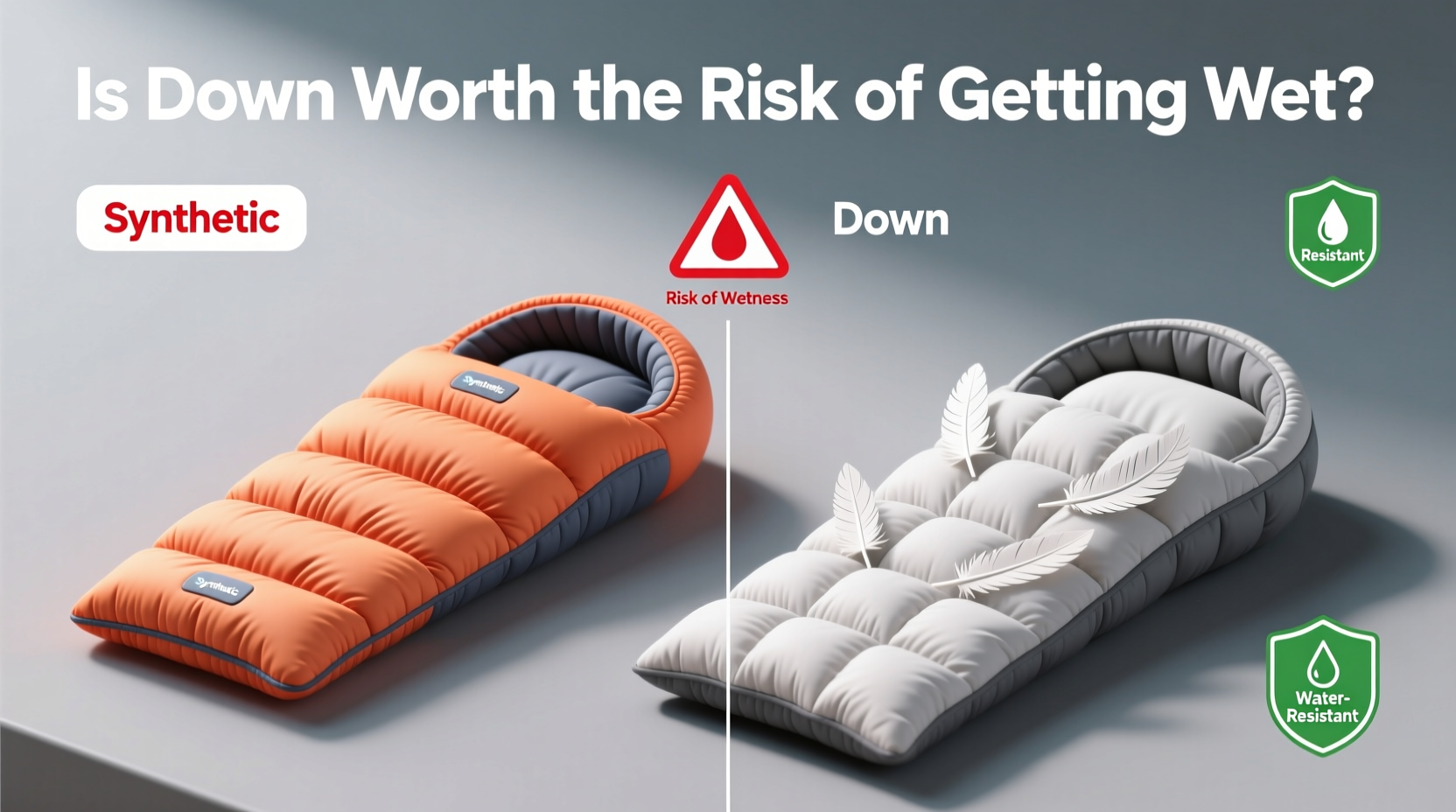
All sleeping bags trap body heat by creating a layer of still air around the user. The insulation—whether down or synthetic—holds this air in place. The effectiveness of insulation depends on two key factors: loft (how much volume the material expands to) and thermal resistance (its ability to resist heat transfer).
Down feathers, typically sourced from geese or ducks, have a complex structure with thousands of tiny filaments that radiate from a central point. This creates a three-dimensional network capable of trapping large volumes of air relative to its weight. The higher the fill power (measured in cubic inches per ounce), the greater the loft and efficiency. Premium down can reach 900+ fill power, offering exceptional warmth without heaviness.
Synthetic insulation, on the other hand, is made from polyester fibers engineered to mimic down’s loft. These fibers are arranged into continuous webs or loose clusters. While modern synthetics like PrimaLoft, Thermolite, and Coreloft have improved significantly, they still generally fall short of down in terms of warmth-to-weight ratio and packability.
Tip: Fill power matters—choose 650+ fill power for serious backpacking; 550–650 is acceptable for car camping.Performance Comparison: Down vs Synthetic
To fully grasp the implications of choosing down over synthetic—or vice versa—it helps to compare them across several critical categories.
| Feature | Down | Synthetic |
|---|---|---|
| Warmth-to-Weight Ratio | Excellent – highest available | Good – heavier for same warmth |
| Packability | Superior – compresses very small | Fair – bulkier when packed |
| Durability | High – lasts 10+ years with care | Moderate – degrades faster under compression |
| Wet Performance | Poor – loses loft and warmth when wet | Good – retains some insulation when damp |
| Drying Time | Very slow – requires thorough drying | Faster – dries more quickly |
| Cost | Higher – premium materials and construction | Lower – more budget-friendly options |
| Eco-Impact | Mixed – renewable but ethical sourcing concerns | Poor – petroleum-based, less biodegradable |
The data shows a clear pattern: down wins in efficiency and longevity, while synthetic wins in resilience to moisture and affordability. For many hikers, the question isn’t which is objectively better—but which aligns best with their typical conditions and risk tolerance.
The Real Risk of Wet Down: Myth vs Reality
It’s commonly said that “down fails when wet.” That’s not entirely accurate. Modern down is often treated with hydrophobic coatings (e.g., Nikwax Hydrophobic Down, DownTek) that repel moisture and reduce clumping. These treatments allow down to retain up to 170% more loft after exposure to dampness compared to untreated down.
However, even hydrophobic down has limits. Immersion in water—such as falling into a stream or leaving a bag exposed to rain—will still compromise its insulating ability. Unlike synthetic, which continues to provide warmth even when soaked, wet down collapses and conducts heat away from the body.
Consider this scenario: You're trekking through the Pacific Northwest in spring. Rain is frequent, humidity is high, and river crossings are unavoidable. Your down bag, despite being stored in a waterproof sack, absorbs ambient moisture over several days. By night three, it feels less lofty and takes longer to warm up. In contrast, a synthetic bag in the same conditions would maintain more consistent performance.
“Hydrophobic down is a game-changer, but it’s not waterproof. It buys you time and resilience in damp conditions, but it doesn’t eliminate the need for careful protection.” — Dr. Lena Torres, Outdoor Gear Researcher, University of Colorado
Mini Case Study: Appalachian Trail Thru-Hiker
In 2022, Sarah M., a thru-hiker on the Appalachian Trail, opted for a 850-fill hydrophobic down bag weighing just 2 pounds. She prioritized weight savings for the 2,190-mile journey. Over the course of five months, she encountered prolonged rain, high humidity, and multiple accidental dunks during stream crossings.
Despite using a heavy-duty trash compactor bag inside her pack, moisture eventually seeped in during a multi-day storm. Her bag felt clumped and less warm for two consecutive nights. She managed by wearing extra layers and using a vapor barrier liner. Once she reached a town, she dried the bag completely in a dryer with tennis balls—a process that took four hours on low heat.
She concluded: “The down bag was amazing when dry—light, warm, and compact. But the constant fear of moisture was stressful. Next time, I’d consider a high-end synthetic for the AT’s wet sections.”
When Down Is Worth the Risk—and When It Isn’t
The value of down depends heavily on context. Here’s how to determine whether the risks are justified for your adventures.
Choose Down If:
- You primarily hike in dry, cold climates (e.g., Rockies, High Sierra, winter mountaineering)
- Weight and pack size are critical (ultralight backpacking, alpine climbs)
- You’re experienced at managing gear and minimizing moisture exposure
- You can afford higher-end models with hydrophobic treatment and durable shells
Choose Synthetic If:
- You frequently camp in humid, rainy, or coastal environments (e.g., Pacific Northwest, Southeast U.S.)
- You’re a beginner who may not consistently protect gear from moisture
- Budget is a constraint—synthetic bags offer solid performance at lower prices
- You need reliable performance without meticulous drying routines
Step-by-Step Guide: Maximizing Down Bag Performance in Damp Conditions
If you choose a down sleeping bag but face wet environments, follow this protocol to minimize risk:
- Use a Waterproof Liner: Insert a polyethylene or silnylon liner inside your pack, fully enclosing the sleeping bag.
- Double-Bag It: Place the bag in a heavy-duty trash compactor bag, then into a dedicated waterproof dry sack.
- Avoid Ground Contact: Set up your tent on a tarp and use a closed-cell foam pad to prevent ground moisture wicking upward.
- Ventilate Your Tent: Reduce interior condensation by opening vents or using a mesh-first tent design.
- Dry Regularly: On rest days, hang your bag in sunlight or a dry room. Tumble dry on low with clean tennis balls every few weeks.
- Use a Vapor Barrier Liner (VBL): In persistently damp conditions, a VBL reduces moisture transfer from your body into the down.
These steps don’t make down immune to moisture—they mitigate risk. But they require diligence. If you’re unwilling or unable to maintain this routine, synthetic remains the safer bet.
Expert Insights on Long-Term Value
While initial cost favors synthetic, long-term ownership tells a different story. A well-maintained down bag can last 15 years or more, outperforming multiple cheaper synthetic replacements.
“A $500 down bag used for 10 years costs about $50 per year. A $200 synthetic bag lasting 5 years costs $40 annually—but you lose 30% more weight and pack size. Over time, down often delivers better value per gram.” — Mark Rains, Founder, Alpine Gear Review
Additionally, down is more sustainable at end-of-life. Polyester synthetics shed microplastics and take centuries to decompose. Down, being natural, breaks down more readily—though ethical sourcing (e.g., certified Responsible Down Standard) is crucial to avoid animal welfare issues.
FAQ
Can I wash a down sleeping bag if it gets wet?
Yes, but it must be done carefully. Use a front-loading washer with a down-specific detergent (e.g., Nikwax Down Wash). Rinse thoroughly and tumble dry on low heat with clean tennis balls to restore loft. Avoid top-load agitators, which can damage baffles.
Is hydrophobic down worth the extra cost?
For most backpackers, yes. Hydrophobic treatments improve drying speed and moisture resistance, extending usable life in variable conditions. The added cost is typically 10–15%, but the performance gain is significant.
Can synthetic bags match down’s warmth now?
In laboratory settings, high-end synthetics like PrimaLoft Gold come close. But in real-world use—especially at sub-freezing temperatures—down still provides superior warmth per ounce. Synthetics require more material to achieve the same rating, increasing weight and bulk.
Final Checklist: Choosing the Right Bag
Before purchasing, ask yourself these questions:
- What’s my primary environment?
- Dry/mountain = down; Wet/humid = synthetic.
- How important is weight?
- Ultralight goals favor down.
- What’s my skill level?
- Beginners benefit from synthetic’s forgiveness.
- Do I have storage and drying access?
- If not, synthetic is easier to maintain.
- What’s my budget?
- Entry-level budgets lean toward synthetic; long-term investment suits down.
Conclusion: Balancing Performance and Practicality
The choice between synthetic and down isn’t about finding the single “best” option—it’s about aligning your gear with your environment, habits, and priorities. Down offers unmatched efficiency and longevity, making it worth the moisture risk for many serious adventurers. But that risk is real, and in consistently wet conditions, synthetic provides peace of mind and dependable performance.
Modern advancements have narrowed the gap. Hydrophobic down and high-loft synthetics mean you no longer have to sacrifice as much in either direction. Still, the fundamental trade-off remains: ultimate lightness versus assured reliability.
🚀 Ready to make your next trip lighter and warmer? Reassess your sleeping bag choice based on where—and how—you actually camp. Share your experiences below and help others decide: is down worth the risk?








