The foldable phone race has evolved from experimental curiosity to a serious battleground for smartphone dominance. At the center of this shift are two devices with vastly different philosophies: Microsoft’s Surface Duo and Samsung’s Galaxy Z Fold 4. One was built as a productivity-first dual-screen device; the other, a high-end Android phablet reborn as a tablet in your pocket. But as the market matures, a critical question emerges—has Samsung, once the undisputed leader in foldables, begun to lose its edge against more focused competitors?
This isn’t just about hardware specs or screen creases. It’s about vision, user experience, and whether innovation can outpace execution. The Surface Duo may have faltered commercially, but it challenged assumptions. Meanwhile, the Z Fold 4 refined an already polished formula. Yet refinement alone might not be enough in a segment that demands reinvention.
The Design Divide: Two Visions of Foldability
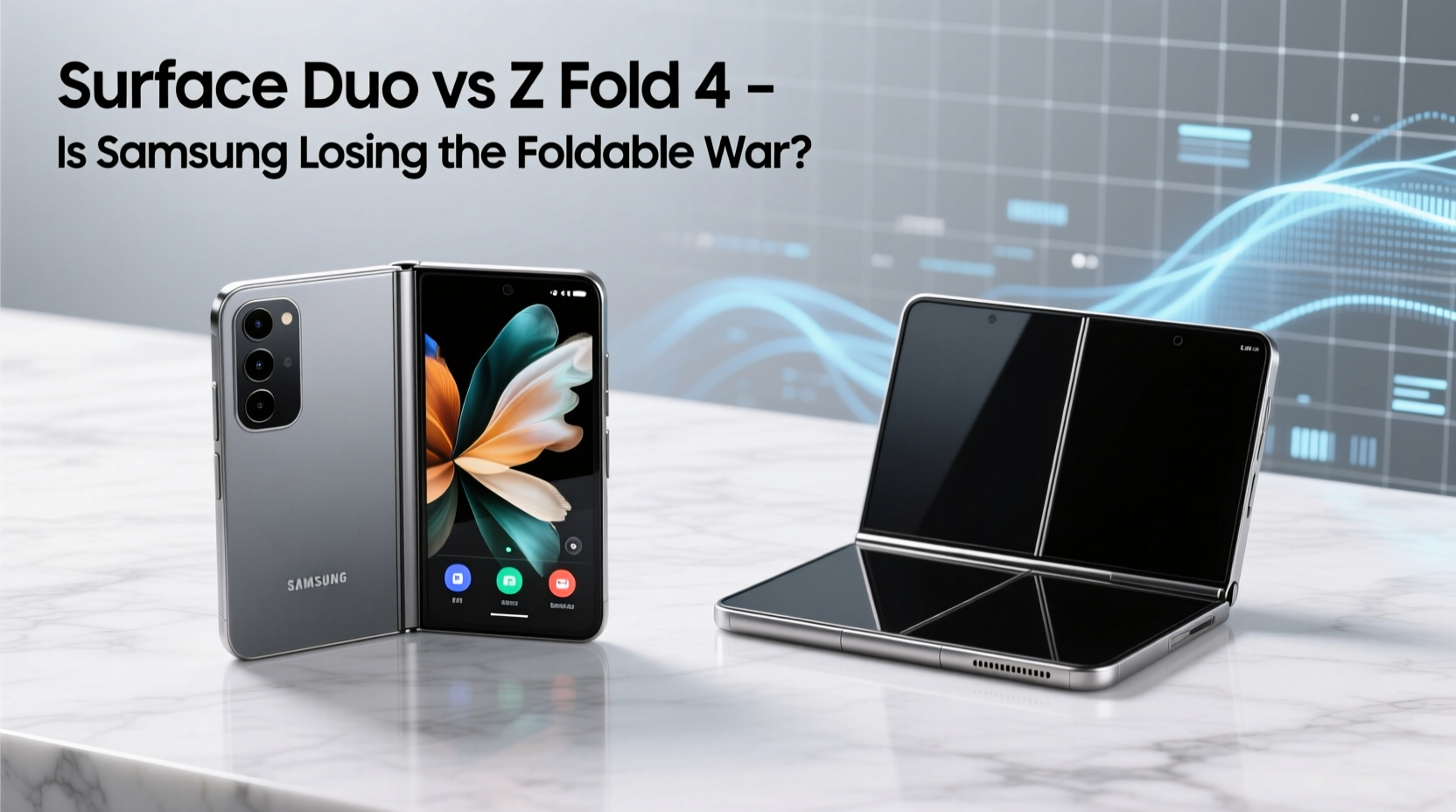
The most immediate difference between the Surface Duo and Z Fold 4 lies in their form factors. The Surface Duo features two separate 5.8-inch AMOLED displays connected by a 360-degree hinge, creating a book-like experience when unfolded. There’s no seamless inner display—just a noticeable gap between screens. In contrast, the Z Fold 4 delivers a continuous 7.6-inch foldable inner screen with a minimal crease and a 6.2-inch cover display, offering a true tablet-like interface.
Microsoft’s approach prioritized multitasking and pen input, targeting professionals who value split-screen workflows. Samsung leaned into versatility—media consumption, mobile gaming, and app continuity—making the Z Fold 4 feel more like a flagship smartphone first, foldable second.
| Feature | Surface Duo | Z Fold 4 |
|---|---|---|
| Main Display | 2 x 5.8” (combined 8.1”) | 7.6” foldable AMOLED |
| Cover Screen | None (dual use) | 6.2” external display |
| Processor | Qualcomm Snapdragon 855 | Qualcomm Snapdragon 8+ Gen 1 |
| Software Experience | Android with Microsoft Launcher | One UI 4.1.1 (Android 12L) |
| Pen Support | Yes (Surface Pen) | Yes (S Pen Fold Edition) |
| Rear Cameras | Single 11MP | Triple 50MP + 12MP + 10MP |
| Battery | Two 2270 mAh packs (4540 mAh total) | 4400 mAh (dual cell) |
The data shows a stark contrast: while the Surface Duo bet on modularity and stylus integration, the Z Fold 4 doubled down on mainstream appeal with superior cameras, faster performance, and a seamless unfolding experience.
Tip: If you prioritize multitasking across distinct apps with physical separation, the Surface Duo’s dual-screen layout offers unique advantages despite its age.Software: Where Innovation Meets Real-World Usability
Hardware alone doesn’t define a foldable. Software optimization determines whether the device feels like a novelty or a necessity. Here, Samsung holds a decisive lead—not because its software is flawless, but because it has iterated relentlessly since the original Z Fold.
The Z Fold 4 runs Samsung’s One UI with deep foldable enhancements: resizable app windows, drag-and-drop between panes, taskbar integration, and adaptive layouts that respond to folding states. Apps like YouTube, Slack, and Microsoft Office behave intelligently when transitioning from cover to main screen.
Meanwhile, the Surface Duo launched with Android 10 and a heavily customized Microsoft launcher. While it supported dual-app snapping and cross-device sync via Microsoft 365, many third-party apps failed to optimize for the dual-screen format. Even basic functions like camera preview were awkward, requiring users to flip the device or rely on the front-facing lens.
“We designed the Surface Duo for people who think differently—but we underestimated how much the ecosystem needed to change with us.” — Panos Panay, former Chief Product Officer, Microsoft
Panay’s candid reflection underscores a fundamental challenge: pioneering a new category means building both the device and the environment around it. Samsung, by contrast, entered the foldable space with massive developer outreach, funding app adaptations and setting UX guidelines early.
Market Response and Long-Term Viability
Sales figures tell a clear story. Samsung shipped over 14 million foldable devices cumulatively by 2023, with the Z Fold series commanding premium pricing and strong retention among business users. The Surface Duo, however, was discontinued after two generations due to low adoption. Critics praised its ambition but cited outdated hardware, thin battery life, and poor camera quality as dealbreakers.
Yet, dismissing the Surface Duo as a failure overlooks its influence. Its emphasis on digital note-taking, calendar integration, and lightweight portability foreshadowed trends now appearing in Samsung’s DeX mode and Google’s Pixel Fold. In essence, Microsoft lost the battle but contributed to the evolution of the war.
A Mini Case Study: The Consultant Who Switched Back
James R., a management consultant based in Chicago, purchased a Surface Duo at launch for its Outlook and OneNote integration. “I could have email on one side, notes on the other, and join Teams calls without switching apps,” he said. After six months, he returned to the Z Fold 4. “The camera was terrible, and the battery died by noon. I missed taking photos of whiteboards or scanning documents clearly.”
His experience reflects a broader trend: niche productivity wins on paper, but real-world compromises in performance and durability push users back to established platforms.
Is Samsung Complacent?
Samsung’s dominance in foldables risks breeding complacency. Each new Z Fold iteration brings marginal improvements—better hinges, slightly longer battery, incremental camera upgrades—rather than bold rethinking. The Z Fold 4, while excellent, felt more like a refinement than a revolution.
Meanwhile, Google’s Pixel Fold introduced tighter Android integration, and new entrants like OnePlus are rumored to enter the space with aggressive pricing. Huawei continues pushing boundaries in China with ultra-thin glass and novel folding mechanisms.
If Samsung rests on its laurels, it could cede ground not through defeat, but through stagnation. As analyst Jane Chen of TechInsight Asia notes:
“Samsung perfected the *what* of foldables. Now someone else might redefine the *why*. The next phase isn’t about better screens—it’s about smarter contexts, AI-driven workflows, and truly adaptive interfaces.” — Jane Chen, Senior Mobile Analyst, TechInsight Asia
Checklist: Choosing the Right Foldable for Your Needs
- Evaluate your primary use case: Is it multitasking, media, or mobility?
- Test app compatibility: Do your essential apps support split-screen or large displays?
- Assess durability needs: Consider IP ratings, hinge robustness, and warranty coverage.
- Check stylus integration: Needed for notes or drawings? Verify pen support and latency.
- Review update commitment: Look for minimum OS upgrade guarantees (e.g., 4 years).
- Budget for accessories: Cases, screen protectors, and pens add significant cost.
Frequently Asked Questions
Can the Surface Duo run modern apps smoothly?
While capable of running most Android apps, the Snapdragon 855 processor and limited RAM (6GB) result in lag during intensive tasks or prolonged multitasking. Updates have improved stability, but it lags behind current flagships.
Why did Microsoft discontinue the Surface Duo?
Low sales volume, internal strategic shifts, and challenges in differentiating the device in a crowded market led to its discontinuation. Microsoft now focuses on AI-powered experiences across devices rather than standalone hardware experiments.
Is the Z Fold 4 worth the premium price?
For professionals needing a mobile workstation, yes. Its multitasking capabilities, durable build, and strong software ecosystem justify the cost. Casual users may find it excessive compared to standard smartphones.
Conclusion: The War Isn’t Over—It’s Evolving
Samsung hasn’t lost the foldable phone war—but the rules are changing. The Surface Duo may have been a commercial misstep, but it asked important questions about how we work, create, and interact with technology. Samsung answered with polish and scale, but innovation thrives on competition, not consolidation.
The future of foldables lies not in bigger screens or thinner profiles alone, but in contextual intelligence: devices that adapt to how we live, not the other way around. Whether Samsung can lead that next wave—or whether a challenger will rise—depends on who dares to rethink the foldable not as a phone, but as a new kind of computing platform.
🚀 What’s your take on the future of foldables? Share your thoughts, debate the contenders, and help shape the next chapter of mobile innovation.








