
Beach volleyball is a high-energy sport played under direct sunlight, often for extended periods. With constant movement, sweating, and sand exposure, maintaining effective sun protection becomes a real challenge. While both sunscreen sticks and lotions are marketed as reliable options, choosing the right one can significantly impact your skin’s defense against UV damage. This article dives deep into how each product performs in the context of active beach play, examining coverage, durability, convenience, and dermatological effectiveness.
Understanding Sun Exposure in Beach Volleyball
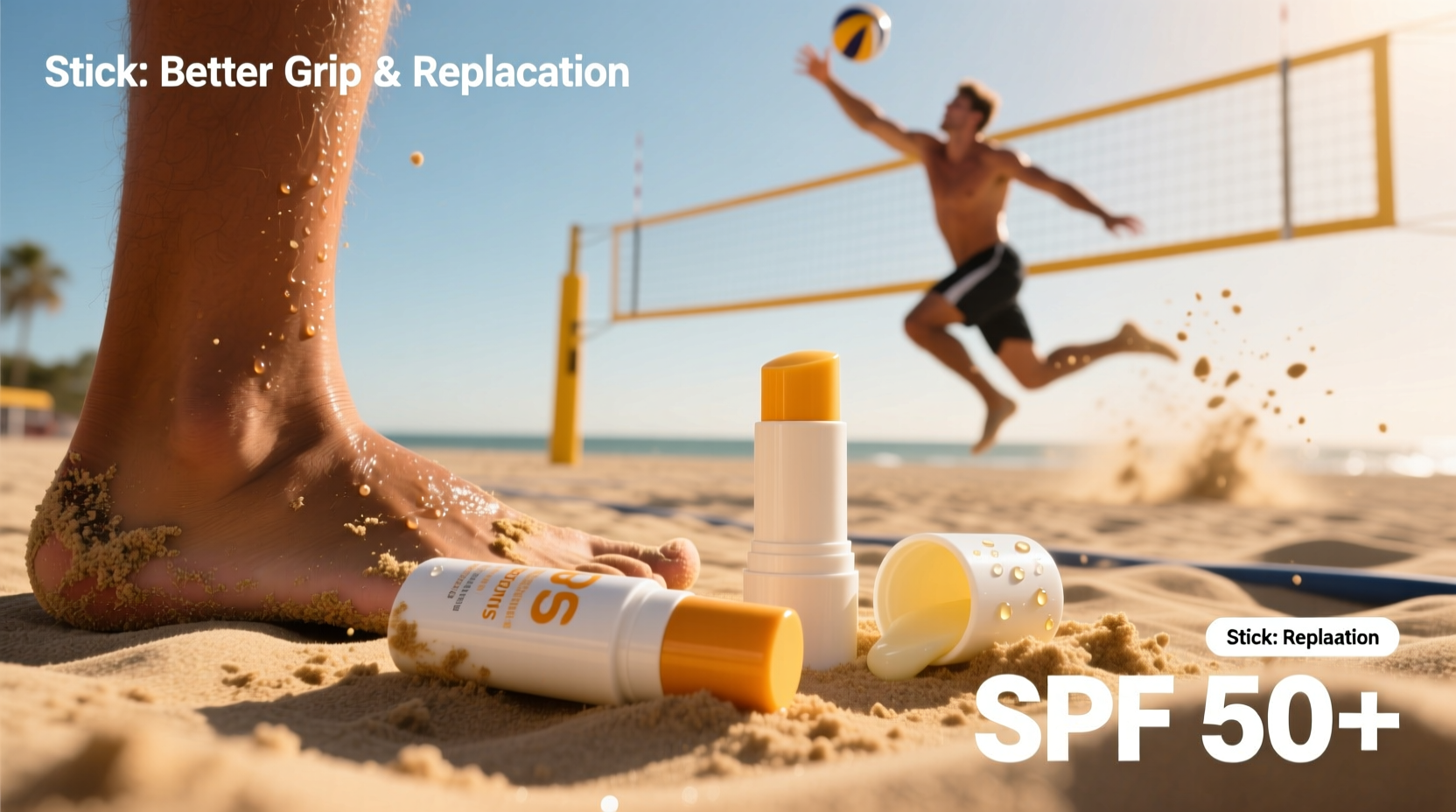
Beach volleyball players face unique environmental stressors: reflective UV rays from sand and water, intense midday sun, wind that accelerates evaporation, and physical activity that leads to heavy perspiration. According to the Skin Cancer Foundation, sand reflects up to 15% of UV radiation, increasing overall exposure even in shaded areas. Add to that the average game duration of 45–90 minutes and frequent repositioning on the court, and it's clear that consistent, robust sun protection isn't optional—it's essential.
UVB rays cause sunburn and contribute to skin cancer, while UVA rays penetrate deeper, accelerating aging and also increasing cancer risk. A broad-spectrum SPF 30 or higher is recommended by dermatologists for any prolonged outdoor activity. But efficacy depends not only on SPF rating but on proper application and maintenance throughout gameplay.
How Sunscreen Sticks Work: Pros and Limitations
Sunscreen sticks are solid formulations, typically wax-based, designed for targeted application. They resemble deodorant applicators and are popular among athletes for their portability and mess-free use.
Advantages:
- Precision application: Ideal for facial features like nose, ears, and around the eyes where lotion might sting.
- No dripping: Won’t run into eyes when sweating, making them favorable during intense rallies.
- Travel-friendly: TSA-compliant and easy to toss in a gym bag without leakage risks.
- Sand-resistant: Less likely to attract sand compared to greasy lotions.
Drawbacks:
- Limited surface coverage: Applying stick sunscreen evenly over large muscle groups (shoulders, legs, back) is time-consuming and often results in patchy protection.
- Insufficient quantity per pass: Most users apply far less than the recommended amount—about two fingers’ length per body zone—leading to reduced SPF effectiveness.
- Fatigue factor: Rubbing a firm stick across sweaty, moving skin requires more effort, especially mid-game.
Lotion Sunscreens: Coverage, Absorption, and Real-World Performance
Liquid or cream-based sunscreens remain the gold standard for comprehensive UV protection. Their fluid consistency allows for rapid, even distribution across large areas of the body—a critical advantage before stepping onto the sand.
Modern sport lotions are formulated with water and sweat resistance (up to 80 minutes), non-comedogenic ingredients, and fast absorption to minimize greasiness. Many contain micronized zinc oxide or avobenzone for stable, broad-spectrum defense.
Benefits of lotion in athletic settings:
- Uniform coverage: Enables thorough application using measured amounts (about 1 ounce for full body).
- Better adherence to moist skin: Some advanced formulas bond with light perspiration rather than sliding off.
- Easier partner-assisted application: Teammates can help cover hard-to-reach zones like upper back and shoulders.
- Higher photostability: Lotions often include stabilizers that maintain SPF potency longer under UV exposure.
However, they aren’t without issues. Runoff into eyes remains a concern, and improper drying can attract sand. Additionally, reapplying lotion during breaks requires wipes or hand sanitizer to avoid sticky hands affecting ball control.
Direct Comparison: Stick vs Lotion in Game Conditions
| Factor | Sunscreen Stick | Sunscreen Lotion |
|---|---|---|
| Application Speed (Full Body) | Slow (5+ minutes) | Fast (under 2 minutes) |
| Reapplication Mid-Game | Easy and dry | Messy; needs towel/wipe |
| Sweat Resistance | Moderate (waxes may degrade) | High (if labeled “sport” or “water-resistant”) |
| Eye Irritation Risk | Low | Moderate to High |
| Sand Adhesion | Low | Moderate (until fully absorbed) |
| SPF Accuracy in Real Use | Often compromised due to thin layers | Closer to labeled SPF with proper use |
| Portability & Storage | Excellent | Good (bottles may leak) |
The data shows a clear trade-off: sticks win in convenience and targeted reapplication, while lotions dominate in initial protection quality and reliability.
“Many athletes think they’re protected because they applied something, but if it’s not enough volume or not reapplied correctly, they’re at risk. For sports like beach volleyball, starting with a high-quality lotion and topping up with a stick is the smartest strategy.” — Dr. Lena Torres, Board-Certified Dermatologist and Sports Skin Specialist
A Realistic Scenario: Maria’s Tournament Day Routine
Maria, a competitive beach volleyball player based in San Diego, competes regularly in weekend tournaments under scorching summer sun. Last season, she suffered a second-degree sunburn on her shoulders despite using a sunscreen stick throughout the day.
After consulting a sports medicine clinic, she revised her routine:
- Pre-game (30 min before first match): Applied SPF 50 sport lotion liberally to all exposed skin, including ears, back of neck, and feet.
- Between matches: Used a mineral-based sunscreen stick to refresh face, nose, and shoulders without removing her jersey.
- Hydration check: Paired every sunscreen top-up with a sip of water, reinforcing both hydration and protection habits.
- Post-game: Removed sunscreen with micellar water and followed with aloe vera gel to soothe skin.
The result? Zero sunburns this season, even during double-header events lasting six hours. Her team now shares sunscreen kits containing both lotion and sticks, emphasizing dual-method protection.
Step-by-Step Guide: Optimizing Sun Protection for Beach Volleyball
Follow this sequence before and during play to maximize UV defense:
- Choose the Right Products: Select a water-resistant SPF 30+ lotion and a non-comedogenic stick with SPF 50.
- Apply Lotion First: 15–30 minutes before sun exposure, cover all exposed areas using the \"teaspoon rule\": 1 tsp for face/neck, 2 for torso, 1 for each arm/leg.
- Dress Smart: Wear UV-protective sunglasses, a wide-brimmed hat during breaks, and consider UPF 50+ rash guards even if not required.
- Set Reapplication Alarms: Every 60–80 minutes (or after intense sweating/swimming), use the stick for quick top-ups on high-risk zones.
- Use Towels Wisely: Keep a dedicated towel for drying off before reapplying lotion; never rub sunscreen off accidentally.
- Post-Game Care: Cleanse thoroughly to remove degraded sunscreen and prevent clogged pores or irritation.
Common Myths About Sunscreen and Athletic Use
Myth 1: “I don’t need sunscreen if I have dark skin.”
While melanin provides some natural protection (approx. SPF 3–13), UVA damage still occurs. All skin tones are susceptible to photoaging and skin cancer.
Myth 2: “Waterproof means all-day protection.”
No sunscreen is completely waterproof. The FDA now requires labels to say “water-resistant (40 or 80 minutes)” only. Toweling off, sweating, and friction remove protection faster.
Myth 3: “A little goes a long way.”
Under-application is the biggest reason for sunscreen failure. Using half the needed amount reduces SPF to the square root of the labeled value—SPF 30 becomes ~SPF 5.5.
Checklist: Sun-Safe Beach Volleyball Preparation
- ☐ Pack SPF 30+ water-resistant lotion
- ☐ Include a sunscreen stick for facial touch-ups
- ☐ Bring a microfiber towel dedicated to skin prep
- ☐ Set phone reminders to reapply every 75 minutes
- ☐ Wear UV-blocking sunglasses and a wide-brimmed hat during breaks
- ☐ Store sunscreen in shade or a cooling sleeve
- ☐ Check expiration dates—discard if older than 3 years or exposed to heat
- ☐ Hydrate consistently alongside sun protection routines
FAQ: Sunscreen for Active Beach Sports
Can I rely solely on a sunscreen stick during a tournament?
Not safely. Sticks are excellent for touch-ups but impractical for full-body coverage. Starting with a lotion ensures baseline protection; use the stick only for maintenance.
Do spray sunscreens work better than sticks or lotions?
Sprays are convenient but risky due to uneven application and inhalation concerns. On windy beaches, much of the product blows away. If used, spray generously and rub in thoroughly—never spray directly on face.
How soon after applying lotion can I start playing?
Wait at least 15 minutes. Chemical filters need time to bind with skin, and physical (mineral) lotions form a better barrier when allowed to settle. Playing immediately increases rub-off and reduces effectiveness.
Conclusion: Winning Starts with Smart Sun Protection
In beach volleyball, performance hinges on preparation—and skin health is part of athletic readiness. While sunscreen sticks offer undeniable convenience for mid-game refreshes, they cannot replace the comprehensive protection delivered by properly applied lotion. The most effective strategy combines both: a strong foundation of broad-spectrum SPF lotion pre-game, followed by targeted stick applications during breaks.
Remember, sun damage accumulates silently. One severe burn doubles melanoma risk; daily exposure accelerates collagen breakdown and pigmentation issues. By treating sun protection as seriously as hydration or warm-ups, you extend not just your skin’s health, but your ability to enjoy the game for years to come.
💬 Protect your game and your skin. Share this guide with your teammates and make sun-safe habits part of your winning routine.








