Designing a custom baseball t-shirt is more than just picking colors and slapping on a logo. It’s an opportunity to build team identity, boost morale, and create lasting memories. A well-designed shirt unites players under a shared visual language—something that resonates on the field and off. Whether you're outfitting a youth league, amateur club, or corporate recreational team, a thoughtful design process ensures your apparel stands out and reflects your team's spirit.
Define Your Team Identity
Before any sketching or digital mockups, start with purpose. Ask: Who are we? What values do we represent? Are we bold and aggressive, fun and lighthearted, or disciplined and traditional? These questions shape every design decision.
A strong team identity includes a name, mascot, color scheme, and core message. For example, “The Thunder Sluggers” suggests power and speed, which could inspire lightning motifs, dark tones, and dynamic typography. In contrast, “The Sandlot Rascals” might lean into vintage aesthetics, playful fonts, and retro illustrations.
Tip: Hold a team brainstorming session to gather input. Players often have creative ideas that reflect their personal connection to the team.Choose Colors and Typography Strategically
Color psychology plays a crucial role in perception. Red conveys energy and aggression; blue signals trust and stability; green evokes growth and harmony. Choose 2–3 primary colors that align with your team’s personality and ensure they contrast well for visibility.
Typography should be legible from a distance—especially important for names and numbers on the back. Avoid overly decorative fonts for critical information. Instead, pair a bold display font for the team name with a clean sans-serif for player names and numbers.
“Typeface choice can make or break a uniform. If it’s hard to read at 50 feet, it’s not working.” — Marcus Lin, Sports Apparel Designer at Apex Threads
Step-by-Step Guide to Design Development
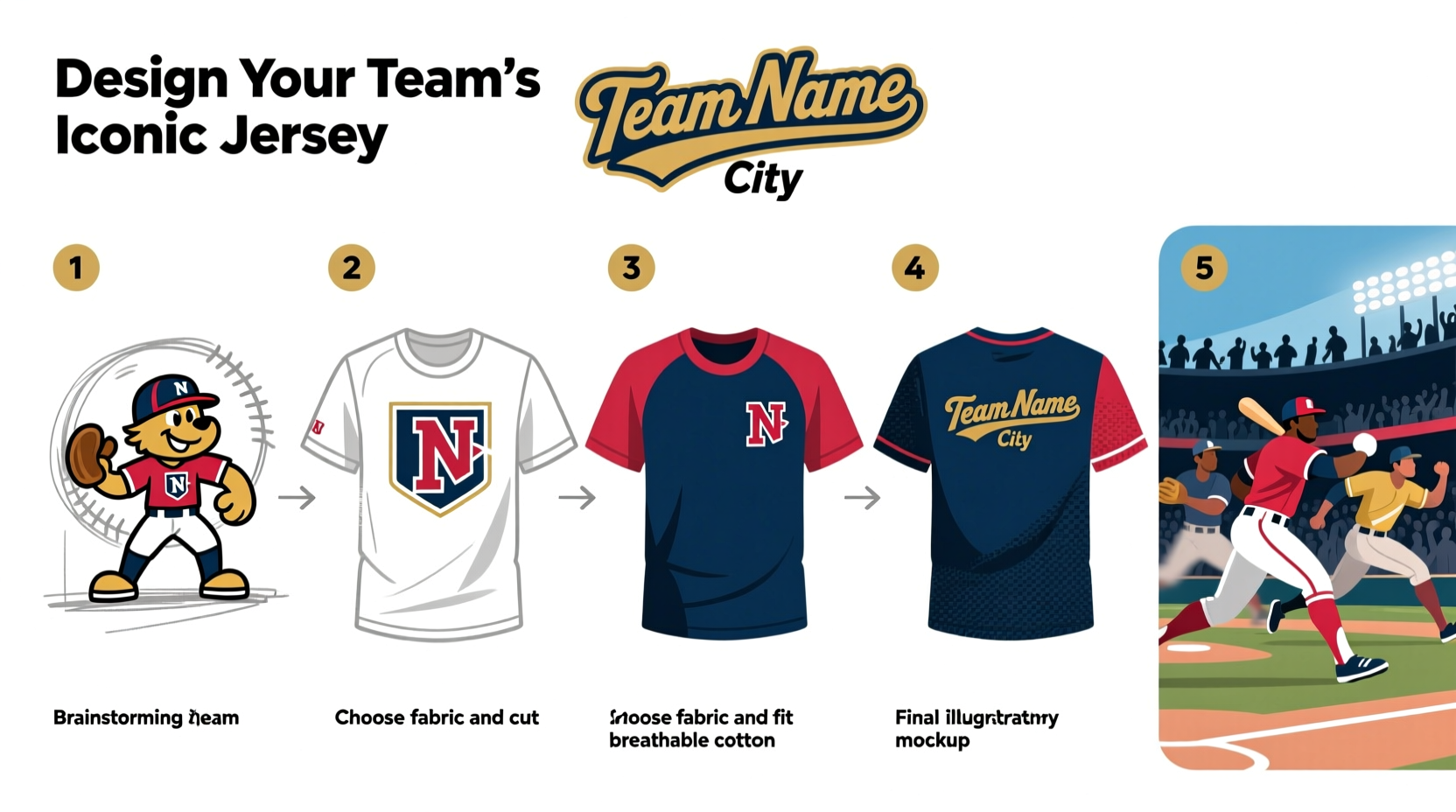
Follow this structured process to move from concept to final design:
- Research inspiration: Look at professional teams, college uniforms, and even non-baseball apparel for fresh ideas. Save images of layouts, placements, and styles you like.
- Create a mood board: Compile colors, fonts, graphics, and phrases that reflect your team’s vibe. Tools like Canva or Pinterest help organize visual direction.
- Draft initial sketches: Use paper or digital tools (e.g., Adobe Illustrator, Figma) to sketch multiple versions of front, back, and sleeve designs.
- Select key elements: Decide on placement of the team name, logo, player names, numbers, and any slogans or symbols.
- Digital refinement: Convert your best sketch into a high-resolution digital file using vector software for scalability.
- Review with the team: Share 2–3 options for feedback. Vote as a group to build ownership and unity.
- Finalize and prepare for print: Confirm sizing, color codes (PMS or RGB), and file formats (typically .AI, .EPS, or high-res .PNG).
Understand Printing Methods and Fabric Choices
The longevity and appearance of your t-shirts depend heavily on fabric and printing technique. Not all materials handle all print types equally.
| Printing Method | Best For | Pros | Cons |
|---|---|---|---|
| Screen Printing | Simple designs, large batches | Durable, vibrant colors, cost-effective | Limited detail, higher setup cost for small runs |
| DTG (Direct-to-Garment) | Complex artwork, photos, small orders | High detail, no setup fees | Less durable over time, higher per-unit cost |
| Heat Transfer Vinyl | Names, numbers, small text | Precise edges, good for letters | Can crack after repeated washing |
| Sublimation | Full-color all-over prints | No fading, seamless look | Only works on polyester blends |
Fabric selection matters too. 100% cotton is breathable but prone to shrinking. Cotton-polyester blends offer durability and moisture-wicking properties—ideal for active wear. Consider performance fabrics if shirts will be worn during games.
Tip: Order one sample shirt before full production. Test washability, fit, and print quality under real conditions.Real Example: The Pine Ridge Hawks’ Comeback Design
The Pine Ridge Hawks, a semi-pro summer league team, struggled with low turnout and weak team cohesion. When leadership decided to redesign their uniforms, they involved every player in the process. They hosted a weekend retreat focused on team values: resilience, community, and excellence.
From that session emerged a phoenix rising from home plate—a symbol of renewal and strength. The color palette shifted from bland gray to deep crimson and gold. Players voted on a bold stencil font for last names, with each jersey featuring a small quote on the inside neck tag: “Rise with the sun.”
Sales of replica shirts doubled within a month, and attendance at practices improved significantly. As captain Jordan Mills said, “When you put on that shirt, you feel like part of something bigger.”
Checklist: Designing Your Baseball T-Shirt
- ✅ Define your team name, values, and target audience
- ✅ Choose 2–3 primary colors and confirm contrast ratios
- ✅ Select readable, thematic fonts for different text elements
- ✅ Sketch at least three design variations (front, back, sleeves)
- ✅ Create a digital version using vector-based software
- ✅ Gather team feedback and finalize one design
- ✅ Confirm printing method based on budget and complexity
- ✅ Order a sample garment to test quality and fit
- ✅ Approve final files and place bulk order with vendor
- ✅ Plan a team reveal event to maximize engagement
Frequently Asked Questions
How much does it cost to design and print custom baseball t-shirts?
Costs vary widely. Design can be free if done in-house or $100–$500 for a professional designer. Printing ranges from $8–$15 per shirt depending on method, quantity, and fabric. Ordering 25+ units typically reduces per-unit cost.
Can we include player names and numbers?
Absolutely. Names and numbers enhance personalization and professionalism. Just ensure consistent formatting—use the same font, size, and alignment across all jerseys. Numbers should be large enough to read from the stands.
What file format should I provide to the printer?
Always deliver vector files (.AI, .EPS, or .SVG) for logos and text to ensure scalability. If using DTG printing, high-resolution PNGs (300 DPI) are acceptable. Confirm requirements with your specific vendor.
Conclusion: Turn Fabric Into Legacy
A baseball t-shirt is more than clothing—it’s a banner your team wears with pride. By investing time in intentional design, collaborative input, and quality production, you create more than a uniform. You create identity. You build tradition. You give players something tangible to rally behind.
Start today. Gather your team, define your vision, and begin sketching. Whether it’s a weekend league or a competitive travel team, your unique story deserves to be told—one stitch at a time.
💬 Designed a standout team shirt? Share your story in the comments—your journey might inspire another team to step up to the plate.








