
For urban commuters looking to cut through traffic and reduce travel time, the choice between a standing scooter and an electric bike is more than just personal preference—it’s about efficiency, comfort, and practicality. Both are popular last-mile solutions, but when it comes to getting to work faster, subtle differences in performance, infrastructure compatibility, and rider dynamics make one option more effective depending on your route and environment.
This comparison dives into real-world factors like average speed, acceleration, terrain adaptability, legal restrictions, and rider endurance to determine which mode of transport truly wins the race to the office.
Average Speed and Real-World Travel Time
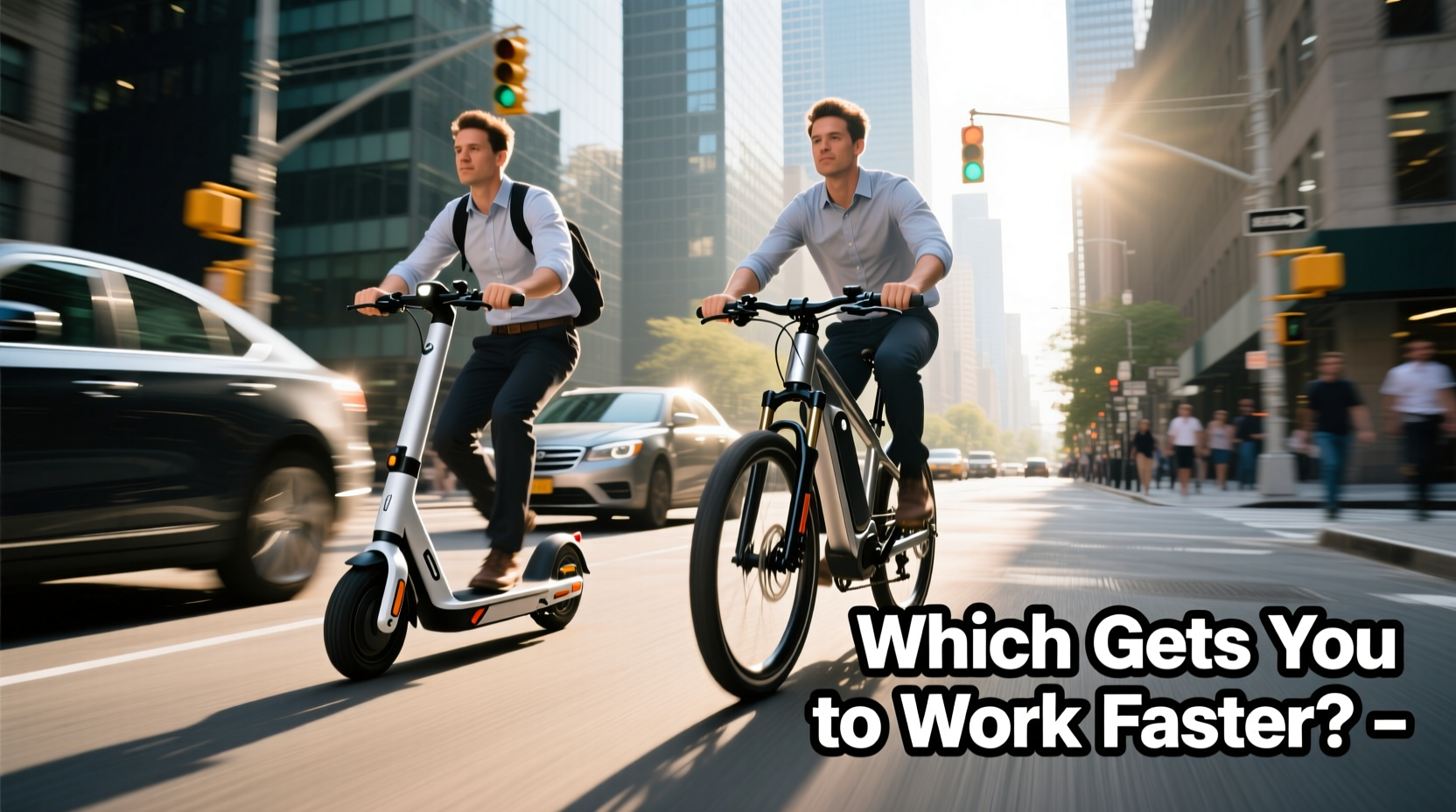
Theoretical top speeds can be misleading. Many electric scooters claim 25 mph (40 km/h), and e-bikes often reach 20–28 mph (32–45 km/h) with pedal assist. However, actual commute speeds depend on road conditions, traffic flow, and local regulations.
In dense city environments, stop-and-go traffic favors quicker acceleration and tighter maneuverability. Standing scooters typically accelerate faster from a standstill due to lighter weight and responsive throttles. On short blocks with frequent stops—like navigating between traffic lights or crossing intersections—a scooter can gain and lose speed more efficiently than a bulkier e-bike.
But over longer distances (beyond 3 miles / 5 km), e-bikes maintain higher average speeds. Their larger wheels handle uneven pavement better, reducing the need to slow down for potholes or curbs. Additionally, e-bike riders can sustain effort with pedal input, allowing consistent momentum even on slight inclines where scooters may struggle.
Tip: For commutes under 2 miles in congested downtown areas, scooters often outperform e-bikes due to superior agility and parking convenience.Terrain and Road Condition Performance
Urban infrastructure varies widely—even within the same city. A smooth bike lane might give way to cracked sidewalks or gravel shoulders. How each vehicle handles these transitions directly affects travel time.
Electric scooters, especially compact models, have small wheels (typically 8–10 inches). These respond poorly to bumps, cracks, and wet surfaces, forcing riders to reduce speed for safety. In rainy conditions or on cobblestone streets, this can add significant delays.
E-bikes, by contrast, usually feature 26- to 29-inch tires with suspension systems (front or full). They glide over rough patches with minimal disruption, maintaining pace without constant braking. This stability allows riders to keep moving at optimal speeds, particularly outside well-maintained downtown cores.
Hills are another critical factor. While some high-end scooters offer dual motors and hill-climb modes, most standard models lose power and speed on gradients above 5%. E-bikes equipped with mid-drive motors excel here, using gear ratios to manage inclines efficiently. A rider on an e-bike can ascend a 10% grade at 12–15 mph, while a typical scooter might drop to 6–8 mph—or stall entirely.
“On mixed terrain with elevation changes, e-bikes consistently deliver shorter door-to-door commute times.” — Dr. Lena Torres, Urban Mobility Researcher, MIT Transit Lab
Legal Access and Route Flexibility
Speed isn’t only determined by mechanics—it’s constrained by law. Where you’re allowed to ride shapes your fastest possible path.
In many cities, standing scooters are restricted to bike lanes and roads under 25 mph, but prohibited on sidewalks. Some municipalities cap scooter speeds at 15 mph regardless of model capability. E-bikes, classified as bicycles in most U.S. states and EU countries (Class 1 and 2), enjoy broader access: they can use protected bike lanes, multi-use trails, and sometimes even public transit during off-peak hours.
This expanded route network enables e-bike riders to take shortcuts unavailable to scooter users. For example, a dedicated bike path through a park might save five minutes compared to a detour around it. Over weekly commutes, that adds up to nearly two extra workdays saved per year.
Moreover, e-bikes are increasingly permitted indoors in office buildings and bike-sharing hubs, making final-leg navigation easier. Scooters, while portable, often require outdoor locking—leading to longer walks from secure parking spots.
Head-to-Head Comparison Table
| Feature | Standing Electric Scooter | Electric Bike |
|---|---|---|
| Avg. Commute Speed (Urban) | 10–14 mph | 14–18 mph |
| Top Speed (Legal Limit) | 15–25 mph (varies by region) | 20–28 mph (pedal-assist) |
| Range per Charge | 15–30 miles | 40–80 miles |
| Hill Climbing Ability | Moderate (struggles >5%) | Strong (handles 10%+ easily) |
| Road Surface Tolerance | Poor (small wheels) | Excellent (large tires, suspension) |
| Lane Usage Rights | Bike lanes only, no trails | Bike lanes, trails, shared paths |
| Portability | High (foldable, ~30 lbs) | Low to Medium (~50–70 lbs) |
| Indoor Storage Allowed? | Sometimes (depends on policy) | Frequently permitted |
Energy Efficiency and Rider Fatigue
While both vehicles are motorized, rider input plays a role in sustained speed. On long commutes, fatigue impacts decision-making and pacing.
Standing scooters require constant balance. Even on flat ground, micro-adjustments in posture and grip tension accumulate over time, leading to leg strain and reduced concentration. After 20–30 minutes, many riders subconsciously slow down to conserve energy.
E-bikes provide a seated position with ergonomic handlebars, distributing body weight evenly. Pedaling—even lightly—engages muscles rhythmically, improving blood flow and reducing stiffness. This physical support allows riders to maintain higher speeds for longer durations without discomfort.
Battery efficiency also differs. Due to heavier frames and motors, e-bikes consume more energy per mile. However, their greater range means fewer charging interruptions. A commuter traveling 15 miles daily may need to recharge a scooter every other day, risking downtime if forgotten. E-bikes often last 3–5 days between charges under similar use.
Mini Case Study: Two Commuters, Same Route
Consider Alex and Jordan, both living 4.5 miles from their downtown office. Their route includes two hills (one 7%, one 4%), a mix of bike lanes and shared roads, and passes through a pedestrian-heavy zone near a university campus.
Alex uses a premium electric scooter (15 mph max, 10-inch tires, dual suspension). They start strong, weaving through early traffic with ease. But halfway, they hit a construction zone with loose gravel. Forced to dismount and walk the scooter across, they lose three minutes. The uphill climb slows them to 7 mph, and wind resistance increases fatigue. Total commute time: 28 minutes.
Jordan rides a Class 3 e-bike (28 mph pedal-assist, fender protection, rear rack). Though slower to start, the bike maintains 16 mph on flat sections and holds 12 mph uphill. It bypasses the construction detour via a connected trail closed to scooters. No dismounting needed. Total commute time: 21 minutes.
Jordan arrives seven minutes earlier, less fatigued, and able to store the bike inside the building. Over a month, that’s nearly 3 hours saved—and no exposure to weather during parking.
Step-by-Step: Choosing the Faster Option for Your Commute
- Map your exact route. Use Google Maps or Strava to trace from home to workplace, noting street types, elevation changes, and traffic patterns.
- Identify legal pathways. Check local ordinances: Are scooters banned from certain roads? Are e-bikes allowed on trails?
- Measure total distance and elevation gain. If your route exceeds 3 miles or gains over 150 feet in elevation, lean toward an e-bike.
- Assess surface quality. Frequent potholes, gravel, or railroad crossings favor e-bikes with larger wheels.
- Time a test run (if possible). Borrow or rent both options during rush hour to compare real-world performance.
- Evaluate end-of-trip logistics. Can you carry the scooter upstairs? Is indoor bike storage available?
Checklist: Which Vehicle Fits Your Fast-Commute Needs?
- ✅ Commute under 3 miles? → Scooter may suffice
- ✅ Mostly flat terrain? → Scooter viable
- ✅ Smooth, predictable roads? → Scooter competitive
- ✅ Multiple hills or long distances? → E-bike recommended
- ✅ Need to carry device indoors? → Scooter has portability edge
- ✅ Want consistent speed over varied surfaces? → E-bike superior
- ✅ Prefer seated riding? → E-bike enhances endurance
- ✅ Have access to secure outdoor storage? → E-bike feasible
Frequently Asked Questions
Can I go faster than 20 mph on an e-bike legally?
In most U.S. states and EU countries, Class 3 e-bikes are limited to 28 mph (45 km/h) with pedal assist, but only on roads where such speeds are permitted. Throttle-only operation typically cuts out at 20 mph. Always verify local laws—some cities restrict high-speed e-bikes from bike paths.
Do scooters really get stolen more often?
Data suggests yes. Due to smaller size and outdoor parking requirements, scooters are targeted more frequently. A 2022 study in Seattle found scooter theft rates were 2.3 times higher than e-bikes when locked with standard U-locks. Using GPS trackers and secondary cables improves recovery odds.
Are e-bikes worth the extra cost for commuting?
If you commute more than 3 miles daily or face variable weather and terrain, yes. The increased speed, comfort, and reliability translate into measurable time savings and reduced fatigue. Over a year, arriving 5–10 minutes earlier each day equals 20–40 additional productive hours.
Final Verdict: Which Gets You to Work Faster?
The answer depends on context—but overall, **electric bikes win for most real-world commutes**. While scooters offer unmatched portability and quick bursts in gridlock, their limitations on hills, rough roads, and longer distances reduce average speed. E-bikes maintain momentum, access more routes, and support rider endurance, delivering faster, more reliable arrival times—especially beyond short urban hops.
That said, if your journey is under two miles, entirely flat, and ends in a building where carrying a 30-pound scooter is manageable, then a high-performance scooter can beat an e-bike by leveraging agility and instant stops.
Ultimately, speed isn’t just about velocity—it’s about consistency, accessibility, and sustainability. An e-bike may not always feel faster in the moment, but its ability to maintain pace across diverse conditions makes it the superior tool for efficient, dependable commuting.
“The fastest commute isn’t the one with the highest top speed—it’s the one with the fewest disruptions.” — Marcus Lin, Senior Analyst, Urban Transport Institute
Take Action Today
Don’t guess which vehicle will shorten your morning trip—test the data. Map your route, calculate elevation, and simulate both options. Rent a scooter and borrow an e-bike for a week. Track your times, energy levels, and stress. You might be surprised how much difference wheel size and seating position make over time.
Whether you choose a nimble scooter or a powerful e-bike, the goal remains the same: reclaim your time, avoid traffic, and arrive ready to work. Make the choice that aligns with your route, lifestyle, and long-term habits—not just the flashiest specs.
💬 Which gets you to work faster—your scooter or e-bike? Share your commute experience, tips, or lessons learned in the comments below!








