
For runners, choosing the right shoe isn’t just about brand or cushioning—it’s about biomechanics. The debate between stability and neutral running shoes has fueled countless conversations in running communities, specialty stores, and physical therapy clinics. Many assume that if they overpronate or have flat feet, they automatically need stability shoes. But is that always true? And more importantly, are you potentially doing more harm than good by wearing a shoe that doesn’t match your actual needs?
The truth is, advancements in footwear design and research into running mechanics have shifted our understanding. What was once standard advice—“flat feet = stability shoes”—is now being challenged. Let’s break down the differences, explore who truly benefits from stability features, and help you make an informed decision without relying on myths or marketing.
Understanding Pronation and Foot Types
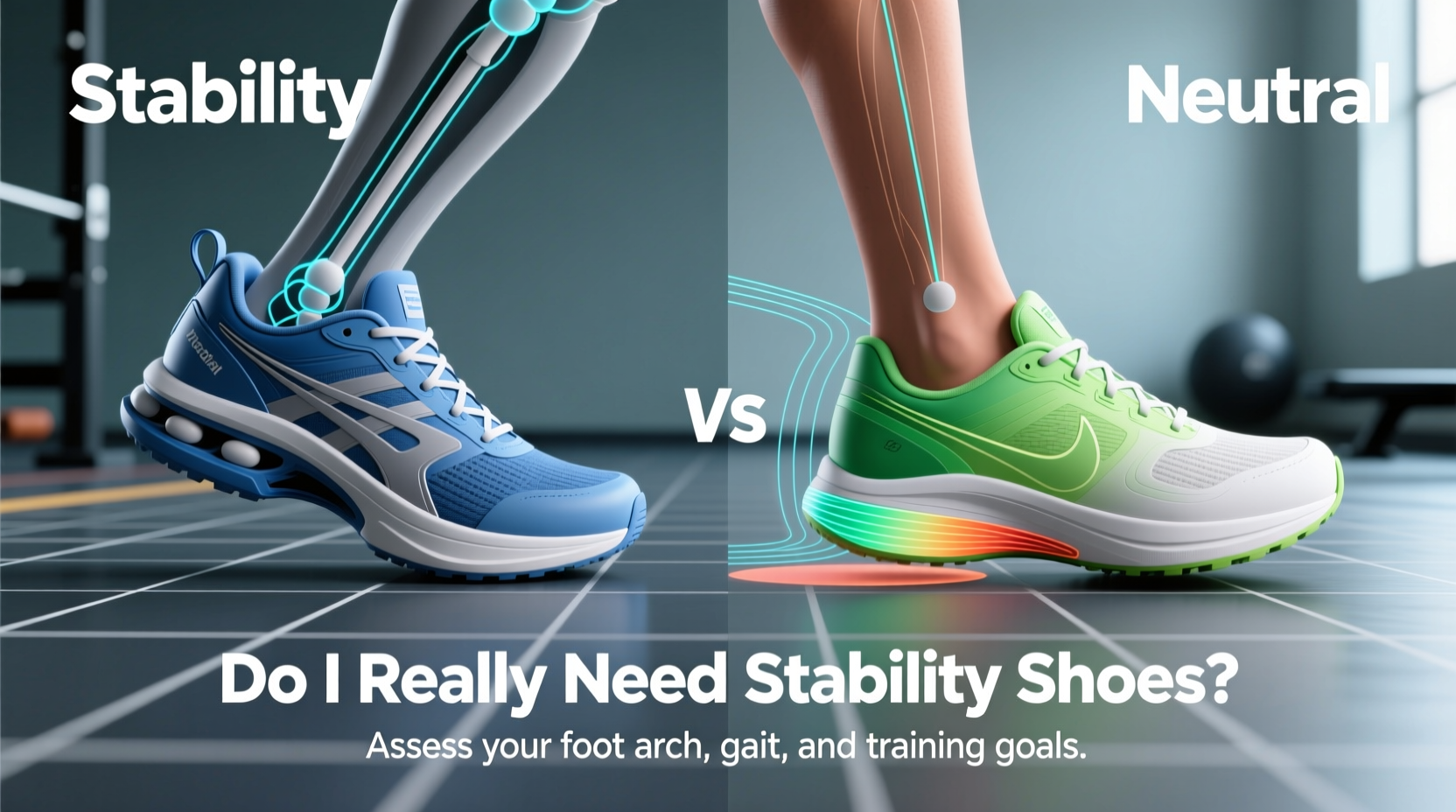
Pronation is the natural inward roll of the foot during the gait cycle. It helps absorb impact and adapt to surfaces. However, excessive or insufficient pronation can influence injury risk and performance.
- Neutral pronation: The foot rolls inward slightly (about 15%) after heel strike, evenly distributing force.
- Overpronation: The foot rolls inward too much, often causing the arch to collapse excessively. Common in people with flat feet.
- Underpronation (supination): The foot rolls outward, placing extra stress on the outer edge. Typical in high-arched runners.
Historically, overpronators were directed toward stability shoes, while those with neutral or supinated gaits got neutral or cushioned models. But recent studies suggest that forcing correction through footwear may not reduce injury rates—and could even interfere with natural shock absorption.
“The body adapts to load best when allowed to move naturally. Over-correcting motion with rigid support can disrupt proprioception and increase strain elsewhere.” — Dr. Irene Davis, Harvard Medical School, Biomechanics Researcher
Stability vs Neutral Shoes: Key Differences
The primary distinction lies in structural support and midsole design.
| Feature | Stability Shoes | Neutral Shoes |
|---|---|---|
| Midsole Density | Denser foam on the inner side (medial post) to resist overpronation | Uniform density throughout for balanced cushioning |
| Arch Support | Higher, firmer arch structure | Minimal built-in arch support |
| Weight | Slightly heavier due to added materials | Generally lighter |
| Flexibility | Less flexible, especially medially | More flexible and adaptive |
| Best For | Runners with moderate overpronation and history of related injuries | Neutral runners, supinators, or those preferring natural motion |
Modern stability shoes also use guide rails or dual-density foams instead of rigid posts, offering dynamic support without restricting movement. This evolution blurs the line between categories, making personal feel and feedback more important than labels.
Tip: Don’t rely solely on foot shape. A gait analysis at a specialty running store or physical therapist’s office provides far more insight than looking at wet footprints.Do You Really Need Stability Shoes?
Not everyone with flat feet or overpronation requires stability shoes. In fact, many runners adapt well to neutral shoes, especially if they have strong intrinsic foot muscles and no history of injury.
A 2020 study published in the British Journal of Sports Medicine found that assigning shoes based on foot type did not reduce injury rates compared to letting runners choose freely. The researchers concluded that comfort and individual preference were better predictors of injury prevention than static biomechanical categorization.
This suggests that your body knows more than we think. If you’re injury-free, enjoy your current shoes, and feel efficient during runs, there’s little reason to switch—regardless of what a sales chart says about your arch height.
However, if you’ve experienced recurring issues like plantar fasciitis, shin splints, or knee pain linked to overpronation, trying a stability model under professional guidance may help.
When Stability Shoes Make Sense
- You’ve been diagnosed with excessive overpronation affecting joint alignment
- You’re returning from an overuse injury related to poor foot control
- You log high mileage and need structured support to manage fatigue
- You feel instability or rolling inward during long runs
When Neutral Shoes Are Better
- You run with a neutral or supinated gait
- You prefer lightweight, responsive shoes for speedwork or racing
- You’re building foot strength and want minimal interference
- You’ve had discomfort in stability shoes (e.g., pressure on the big toe joint)
Step-by-Step Guide to Choosing the Right Shoe
- Assess Your Injury History: Have you had repeated lower limb injuries? Note patterns—knee pain on downhill runs, Achilles irritation, etc.
- Get a Gait Analysis: Visit a running specialty store or physical therapist. Avoid treadmill-only video assessments; ask for functional movement screening too.
- Test Run Multiple Models: Try both neutral and mild stability options. Run at least 10–15 minutes on varied terrain if possible.
- Evaluate Comfort: Does the shoe feel secure but not restrictive? Is there heel slippage or pinching? Trust feel over specs.
- Monitor for Two Weeks: Wear your top choice on easy runs. Track any changes in soreness, stride efficiency, or fatigue.
- Reassess Regularly: Your needs change with fitness, mileage, and strength. Revisit your shoe choice every 6–12 months.
Real Runner Example: Sarah’s Transition
Sarah, a 34-year-old recreational runner with flat feet, had worn stability shoes for years because she was told she “needed” them. Despite this, she struggled with persistent plantar fasciitis and felt sluggish on long runs.
After consulting a sports physiotherapist, she learned her calf tightness and weak glutes—not just foot motion—were contributing to her pain. She began a strength program and trialed a neutral shoe with excellent cushioning and a wide toe box.
To her surprise, her foot pain decreased within weeks. The neutral shoe allowed her foot to function more naturally, and combined with targeted exercises, her overall mechanics improved. She now rotates between neutral and light-stability shoes depending on distance and fatigue.
Sarah’s case illustrates that shoes alone don’t fix problems—and sometimes, less support leads to better outcomes when paired with proper training.
Frequently Asked Questions
Can neutral shoes cause injuries if I overpronate?
Not necessarily. Many overpronators run injury-free in neutral shoes. The key is gradual adaptation and ensuring adequate leg and foot strength. Sudden increases in mileage or intensity pose a greater injury risk than shoe type alone.
Are stability shoes bad for neutral runners?
Yes, potentially. Wearing stability shoes when you don’t need them can restrict natural motion, alter joint loading, and lead to inefficiency or discomfort. They may also accelerate wear on the outer edge of the sole due to unnatural contact patterns.
How do I know if my shoes are working for me?
You should feel supported but not constrained. There should be no hot spots, blisters, or joint pain after runs. Your stride should feel smooth, and recovery time shouldn’t increase. Most importantly: you look forward to lacing up.
Checklist: Choosing Between Stability and Neutral Shoes
- ☐ I’ve reviewed my injury history and identified patterns
- ☐ I’ve had a professional gait assessment (not just a footprint test)
- ☐ I’ve tested at least two neutral and two stability shoes
- ☐ I paid attention to comfort, not just brand or appearance
- ☐ I started with short runs to evaluate performance
- ☐ I’m open to changing shoes as my body and goals evolve
Conclusion: Listen to Your Body, Not Just the Label
The question isn’t whether stability shoes are “better” than neutral ones—it’s whether a particular shoe serves your unique biomechanics and running goals. Labels like “stability” or “motion control” are starting points, not prescriptions.
Advances in research show that comfort and self-selection are powerful tools in injury prevention. If you’re running consistently without pain, your current shoes are likely doing their job—even if they don’t match outdated assumptions about your foot type.
🚀 Ready to find your perfect fit? Visit a specialty running store, try on options, and trust how they feel over how they’re labeled. Share your experience with others—your journey might help someone else stop chasing stability that wasn’t needed.








