Spirit-based cleaning solutions—primarily those containing ethanol (e.g., high-proof vodka, grain alcohol) or isopropyl alcohol (IPA)—have surged in popularity as “natural” disinfectants and streak-free glass cleaners. Social media tutorials tout vodka for mirror shine, rubbing alcohol for keyboard sanitization, and homemade alcohol sprays for countertops. But behind the convenience lies a nuanced reality: these solutions are highly effective against microbes and grease *in specific contexts*, yet they can silently degrade finishes, discolor textiles, and compromise structural integrity across common household surfaces. This isn’t about banning alcohol-based cleaners—it’s about deploying them with precision, understanding their biochemical behavior, and recognizing when their volatility becomes a liability rather than an asset.
How Spirit-Based Cleaners Work—and Why Their Strength Is Double-Edged
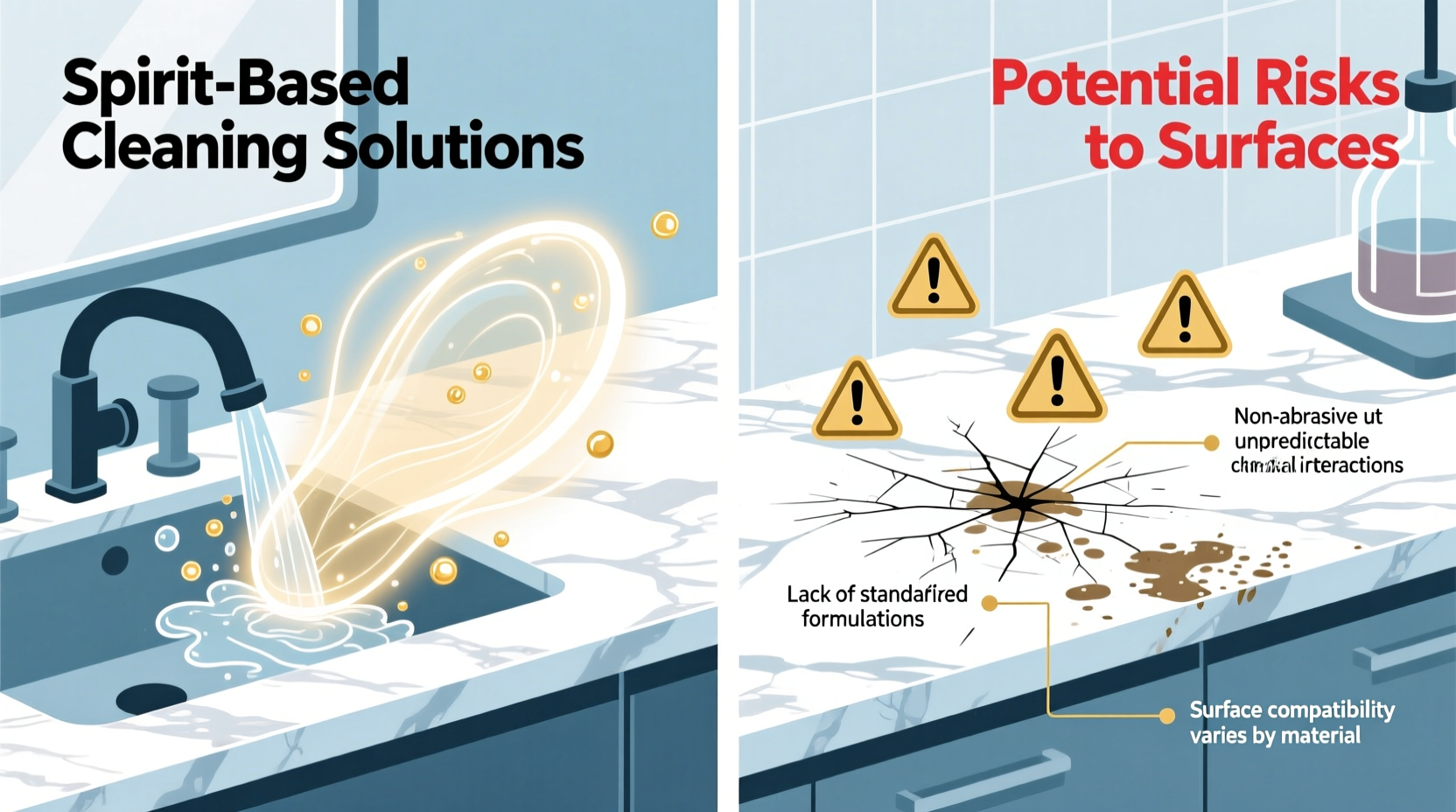
Alcohols like ethanol and isopropyl alcohol function as solvents and denaturants. At concentrations between 60–90%, they disrupt lipid membranes of bacteria and enveloped viruses, effectively killing pathogens on contact. They evaporate rapidly, leaving no residue—ideal for electronics, stainless steel, or glass where water spots or film buildup are undesirable. However, this same volatility creates risk: rapid evaporation reduces dwell time, limiting efficacy against stubborn biofilms or non-enveloped viruses like norovirus. More critically, alcohols dissolve organic binders, plasticizers, and resins found in many modern surface coatings.
For example, acrylic sealants on natural stone, polyurethane topcoats on hardwood floors, and even the dye-fixatives in some upholstery fabrics contain components soluble in alcohol. Repeated exposure doesn’t just dull sheen—it weakens molecular bonds, accelerating micro-cracking, hazing, or color leaching. A 2023 study published in the Journal of Surface Science and Engineering documented measurable polymer chain degradation in matte-finish laminate after just five weekly applications of 70% IPA—visible only under cross-polarized light, yet predictive of long-term delamination.
Tip: Never use undiluted isopropyl alcohol (>70%) on painted, lacquered, or varnished wood surfaces—even a single pass can lift fine finish layers. Always test in an inconspicuous area first, and wait 24 hours before assessing for clouding or softening.Surface-by-Surface Risk Assessment: What Holds Up—and What Doesn’t
Effectiveness and risk depend less on the spirit itself and more on the substrate’s chemistry and age. Below is a comparative overview of common household surfaces, ranked by compatibility with typical spirit-based solutions (70% isopropyl alcohol or 40%+ ethanol, applied with a lint-free cloth and immediate buffing).
| Surface Type | Effectiveness Against Germs/Grime | Risk Level | Key Considerations |
|---|---|---|---|
| Glass & Mirrors | ★★★★★ | Low | Excellent for streak-free shine; avoid ammonia-alcohol mixes which can etch anti-reflective coatings. |
| Stainless Steel Appliances | ★★★★☆ | Low–Moderate | Effective for fingerprints and grease; never use on brushed finishes with directional grain—alcohol can disrupt protective oil layers, increasing fingerprint retention over time. |
| Hardwood Floors (Polyurethane-Finished) | ★★☆☆☆ | High | Can dry out and cloud finish; repeated use degrades UV inhibitors. Not recommended for routine cleaning. |
| Engineered Stone (Quartz, Granite) | ★★★☆☆ | Moderate | Safe on sealed surfaces, but may dull honed or matte finishes. Avoid on resin-rich quartz if sealant is compromised. |
| Plastic Electronics Casings (ABS, Polycarbonate) | ★★★★☆ | Moderate | Effective for sanitizing; prolonged saturation may cause stress cracking or haze. Use 70% IPA—not 91%—and never soak. |
| Upholstery (Cotton, Linen, Polyester) | ★★☆☆☆ | High | May remove dyes, shrink fibers, or leave water-alcohol rings. Never use on silk, acetate, or leather upholstery. |
| Painted Drywall or Trim | ★☆☆☆☆ | Very High | Can dissolve latex paint binders, causing chalkiness, gloss loss, or peeling—especially on older or low-VOC paints. |
A Real-World Example: When “Natural” Backfired in a Home Office
In early 2023, a freelance graphic designer in Portland began using a DIY spray—1 part vodka (40% ethanol), 1 part distilled water, and 3 drops of tea tree oil—to clean her dual-monitor setup, mechanical keyboard, and matte-finish desk surface daily. Within six weeks, the anti-glare coating on her secondary monitor developed permanent rainbow-like iridescence under LED lighting. Her keyboard’s PBT keycaps showed faint white etching around legends. Most alarmingly, the matte polyurethane on her reclaimed oak desk developed a localized patch of uneven sheen near her mousepad—where repeated swipes had concentrated alcohol exposure. A certified wood conservator confirmed the damage was irreversible: ethanol had partially dissolved the urethane’s cross-linking agents, creating micro-variations in light refraction. The fix? Light sanding and re-coating—a $320 professional service. Her takeaway: “I thought ‘alcohol = safe because it’s in hand sanitizer.’ I didn’t realize my desk wasn’t skin.”
Step-by-Step: Using Spirit-Based Cleaners Safely—When You Must
There are legitimate, high-value uses for spirit-based cleaners—disinfecting medical tools, sanitizing phone screens, removing adhesive residue, or prepping surfaces for painting. But safety hinges on strict protocol, not improvisation. Follow this sequence precisely:
- Identify the exact surface material—consult manufacturer guidelines or perform a finish test (see Tip above).
- Select concentration deliberately: Use 70% isopropyl alcohol for disinfection (not 91% or 99%, which evaporate too fast); dilute food-grade ethanol to ≤50% for delicate tasks like lens cleaning.
- Apply via cloth—not spray: Spraying creates airborne mist that can settle on adjacent vulnerable surfaces (e.g., nearby artwork, book spines, or fabric chairs).
- Use one-directional strokes: Avoid circular motions that generate heat and increase solvent penetration into porous edges.
- Buff immediately with dry microfiber: Do not let alcohol air-dry; residual evaporation draws moisture from substrates and leaves microscopic residue.
- Limit frequency: No more than once weekly on resilient surfaces; never more than once monthly on semi-porous or coated materials.
“Alcohol is a precision tool—not a universal cleaner. Its greatest danger isn’t toxicity, but its invisibility: you won’t see the chemical damage until months later, when the finish fails catastrophically.” — Dr. Lena Torres, Materials Chemist, NSF International Surface Safety Division
Smarter Alternatives: When to Skip Alcohol Altogether
For most everyday cleaning, spirit-based solutions are overkill—and often counterproductive. Safer, equally effective alternatives exist for nearly every common task:
- For glass and mirrors: A 1:1 mix of white vinegar and distilled water, applied with crumpled newspaper (the lignin acts as a gentle abrasive) leaves zero streaks and neutralizes alkaline residues better than alcohol.
- For stainless steel: Diluted castile soap (1 tsp per cup of warm water) followed by immediate drying with a soft cotton cloth preserves protective oils without smearing.
- For electronics: Pre-moistened 70% IPA wipes designed for electronics (e.g., those meeting IPC-A-610 standards) ensure controlled delivery and avoid oversaturation.
- For sticky residue removal: A tiny dab of olive oil or peanut butter massaged gently with a cotton swab dissolves adhesives without harming plastics or finishes—then wipe clean with mild soap.
- For disinfecting high-touch surfaces: EPA-registered hydrogen peroxide cleaners (3–5%) offer broad-spectrum kill with zero surface degradation and no volatile organic compounds (VOCs).
FAQ: Addressing Common Concerns
Can I use vodka instead of rubbing alcohol for cleaning?
Vodka (typically 40% ethanol) is weaker than standard 70% isopropyl alcohol and lacks the surfactant properties needed for grease cutting. While it works for light dusting or polishing silver (ethanol helps dissolve tarnish compounds), it’s ineffective for disinfection—pathogen kill requires ≥60% alcohol concentration and adequate contact time. Cheap “cleaning vodka” sold online is often diluted further and contains impurities that leave residue.
Will rubbing alcohol damage my granite countertops?
On properly sealed granite, occasional use of 70% isopropyl alcohol poses minimal risk—but it’s unnecessary. Granite is naturally antimicrobial, and alcohol offers no cleaning advantage over pH-neutral stone soap. If your granite feels gritty or darkens when wet, the sealant is failing; alcohol will accelerate sealer breakdown. Re-seal first, then stick to stone-specific cleaners.
Is it safe to clean leather furniture with alcohol wipes?
No—never. Alcohol rapidly dehydrates leather’s natural oils and dissolves aniline dyes and acrylic topcoats. Even “gentle” alcohol wipes cause cumulative embrittlement. Use a pH-balanced leather cleaner (pH 5.0–5.5) and follow with a conditioner containing lanolin or beeswax. One upholstery restorer reported a 40% rise in alcohol-related leather cracking repairs since 2020.
Conclusion
Spirit-based cleaning solutions occupy a narrow but valuable niche in home maintenance—not as all-purpose standbys, but as targeted interventions for specific, well-understood challenges. Their power is real, but so are their limits. Choosing alcohol over gentler alternatives isn’t a sign of savvy cleaning; it’s often a shortcut that trades short-term convenience for long-term surface compromise. True effectiveness lies not in the strength of the solvent, but in the intelligence of its application: matching chemistry to substrate, respecting dwell time and concentration, and prioritizing preservation alongside cleanliness. Start today by auditing your current cleaning arsenal. Identify one surface you’ve been treating with alcohol unnecessarily—your hardwood floor, your painted trim, your favorite armchair—and replace that bottle with a purpose-built alternative. Your surfaces won’t thank you now, but in five years, their integrity will speak volumes.
💬 Have you experienced unexpected damage—or surprising success—with spirit-based cleaners? Share your story, surface type, and solution used in the comments. Real-world experiences help us all refine our approach.








