Walk into any high-end cocktail bar, and you’ll likely see a single, crystal-clear ice sphere slowly melting in a glass of bourbon or Japanese whisky. It’s elegant, cinematic even—like a jewel suspended in amber. At home, most of us still rely on standard plastic trays that produce jagged cubes, sometimes cloudy, often cracking as they chill our drinks. But with sphere ice molds now widely available online and in kitchen stores, the question arises: are these stylish ice balls actually better—or just a gimmick?
The answer isn’t just about looks. It comes down to science, drink preservation, usability, and personal preference. Let’s break down the real differences between sphere ice molds and traditional ice cube trays to determine whether upgrading your freezing game is worth the investment.
Why Shape Matters: The Science of Melting Ice
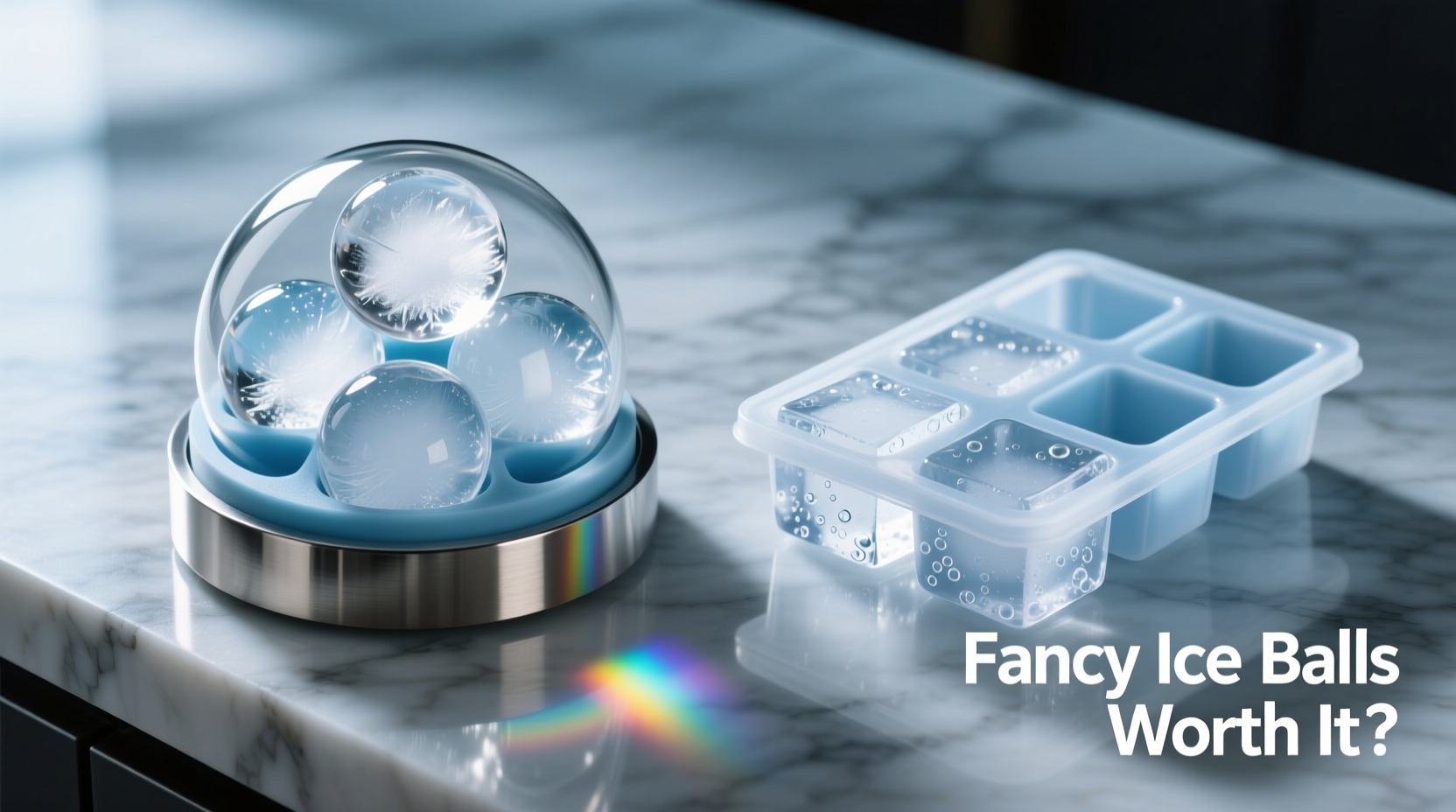
Ice doesn’t just cool—it dilutes. And how quickly it melts depends largely on its surface area relative to its volume. A sphere has the smallest possible surface area for a given volume of any shape. This means it exposes less of itself to the surrounding liquid, slowing the rate of melting.
In contrast, standard ice cubes have more edges and corners, increasing their surface area. Those sharp points melt faster, leading to quicker dilution. For spirits served neat or on the rocks, where preserving flavor integrity is key, slower melting can be a major advantage.
“Spherical ice isn’t just aesthetic—it’s functional. By minimizing surface exposure, it cools without overwhelming the spirit.” — Daniel Kim, Mixologist & Beverage Consultant
This principle is why bartenders at premium lounges prefer large-format ice. Whether it's a sphere, cube, or cylinder, larger size and reduced surface area mean longer-lasting chill with less wateriness.
Performance Comparison: Sphere vs Cube
To understand the practical impact, consider how each type performs across several key categories:
| Feature | Sphere Ice (2.5 inch) | Regular Ice Cube (1 inch) |
|---|---|---|
| Melting Time (in whiskey, room temp) | ~25–35 minutes | ~10–15 minutes |
| Dilution Rate | Low – gradual release | High – rapid early melt |
| Cooling Efficiency | Moderate but sustained | Fast initial drop, then fades |
| Fits Standard Glass? | Only wide-mouth tumblers | Yes, universally |
| Clunkiness in Drink | Can dominate small glasses | Flexible placement |
| Storage & Stackability | Bulky, irregular shapes | Compact, stackable trays |
While spheres excel in longevity and elegance, they aren’t always practical. Their size limits compatibility with narrow glasses, and they require more freezer space both during freezing and storage.
Tip: If using sphere ice at home, choose lowball glasses with wide openings (like Old Fashioned or rocks glasses) to ensure proper fit and drinking comfort.Practical Considerations: Usability and Maintenance
Even if sphere ice performs better in theory, real-world usability matters. Here’s what users report after switching from traditional trays:
- Freezing time: Spheres take longer—up to 12–18 hours depending on mold material and freezer temperature.
- Removal difficulty: Silicone molds help, but some struggle with extracting perfect spheres without cracking.
- Water quality: Cloudy ice often results from impurities or rapid freezing. For crystal-clear spheres, use boiled or filtered water and freeze slowly (some recommend insulated containers).
- Cost: Basic silicone sphere molds start around $15–$25, while multi-cube trays cost under $10. Higher-end models with insulation or metal casings exceed $40.
- Capacity: Most sphere molds make only one or two balls per batch, limiting utility for parties or frequent drinkers.
In contrast, standard trays are efficient, durable, and easy to refill. Many modern versions snap shut or come with lids to prevent odor absorption. They also allow customization—crushed ice, half-cubes for cocktails, or mini cubes for iced coffee.
When Sphere Ice Makes Sense: A Real Example
Take James, a finance professional who enjoys a nightly dram of single malt Scotch after work. He used to pour his whisky over three standard cubes, but found the drink became watery within ten minutes, dulling the finish.
After reading about slow-melt ice, he invested in a two-sphere silicone mold. Using distilled water and a slow-freeze method (placing the filled mold in a cooler inside the freezer), he began producing clear, dense spheres.
Result? His 2 oz pour stayed chilled for nearly 30 minutes with minimal dilution. The ritual felt elevated—more intentional. “It’s not just about taste,” he says. “It feels like a moment of pause in my day.”
For James, the upgrade was worth it—not because the ice transformed the whisky chemically, but because it enhanced the experience holistically.
Step-by-Step Guide to Making High-Quality Sphere Ice at Home
If you're ready to try spherical ice, follow this proven method for best results:
- Gather supplies: Silicone sphere mold, filtered or boiled water, freezer-safe container (optional).
- Purify water: Boil tap water once, let cool, then reboil. This reduces dissolved gases and minerals that cause cloudiness.
- Fill mold slowly: Pour water gently to avoid bubbles. Overfill slightly to compensate for shrinkage.
- Freeze gradually: Place the mold in a sealed container or insulated cooler inside the freezer. This mimics directional freezing, pushing impurities outward.
- Wait 12–18 hours: Don’t rush. Fully frozen spheres should feel solid and sound hollow when tapped.
- Release carefully: Run the outside of the mold under warm water for 5–10 seconds. Gently flex to pop out the sphere.
- Store properly: Keep in an airtight container or ziplock bag to prevent odor absorption.
FAQ: Common Questions About Sphere Ice
Do sphere ice molds really keep drinks colder longer?
Yes, but with nuance. They don’t cool faster—they cool more slowly and steadily. Because they melt slower due to lower surface-to-volume ratio, they maintain temperature over time with less dilution. Ideal for sipping strong spirits, less critical for mixed drinks already diluted with soda or juice.
Can I use regular ice trays to make better ice?
Absolutely. Even with standard trays, using filtered water and freezing slowly (e.g., in an insulated bin) produces clearer, denser, longer-lasting cubes. Some people drill holes in their trays to enable directional freezing, mimicking commercial systems.
Are large ice cubes as good as spheres?
Almost. Large cubes (2-inch+) perform similarly to spheres in terms of melt rate. While they have slightly more surface area, the difference is negligible compared to multiple small cubes. Many professionals prefer large cubes for ease of production and versatility.
Final Verdict: Are Fancy Ice Balls Worth It?
The truth is, sphere ice molds aren’t essential—but they can elevate a ritual. If you value presentation, enjoy sipping premium spirits slowly, and appreciate craftsmanship in everyday details, then yes, they’re worth trying.
However, if you’re making iced coffee, batch cocktails, or need ice quickly and efficiently, traditional trays remain the smarter choice. They’re cheaper, faster, more versatile, and easier to store.
Ultimately, the \"best\" ice depends on context. Spheres win in ceremony and controlled sipping scenarios. Cubes dominate in practicality and flexibility.
“The right ice isn’t about luxury—it’s about matching form to function.” — Lila Tran, Bar Director at Ember & Oak
Ready to Upgrade Your Ice Game?
Start small. Try a single silicone sphere mold. Experiment with boiling your water and freezing it slowly. See how it changes your favorite drink. You might discover it’s not about impressing others—it’s about creating a more deliberate, enjoyable moment in your day.
💬 Have you tried sphere ice at home? Share your experience—what worked, what didn’t—and help others decide if the upgrade is right for them.








