
For outdoor enthusiasts, staying connected—even when miles from the nearest outlet—has become a necessity. Whether you're tracking your route with GPS, capturing memories on your smartphone, or relying on a headlamp during extended hikes, battery life can make or break a camping trip. Enter the solar powered power bank: a compact device promising renewable energy under open skies. But beyond the marketing claims, do these gadgets deliver in real-world conditions?
The answer isn't a simple yes or no. Solar power banks can be effective for camping, but their usefulness depends heavily on design, environment, user expectations, and how they’re used. Understanding their capabilities—and limitations—is essential before trusting one to keep your devices alive in the backcountry.
How Solar Powered Power Banks Work
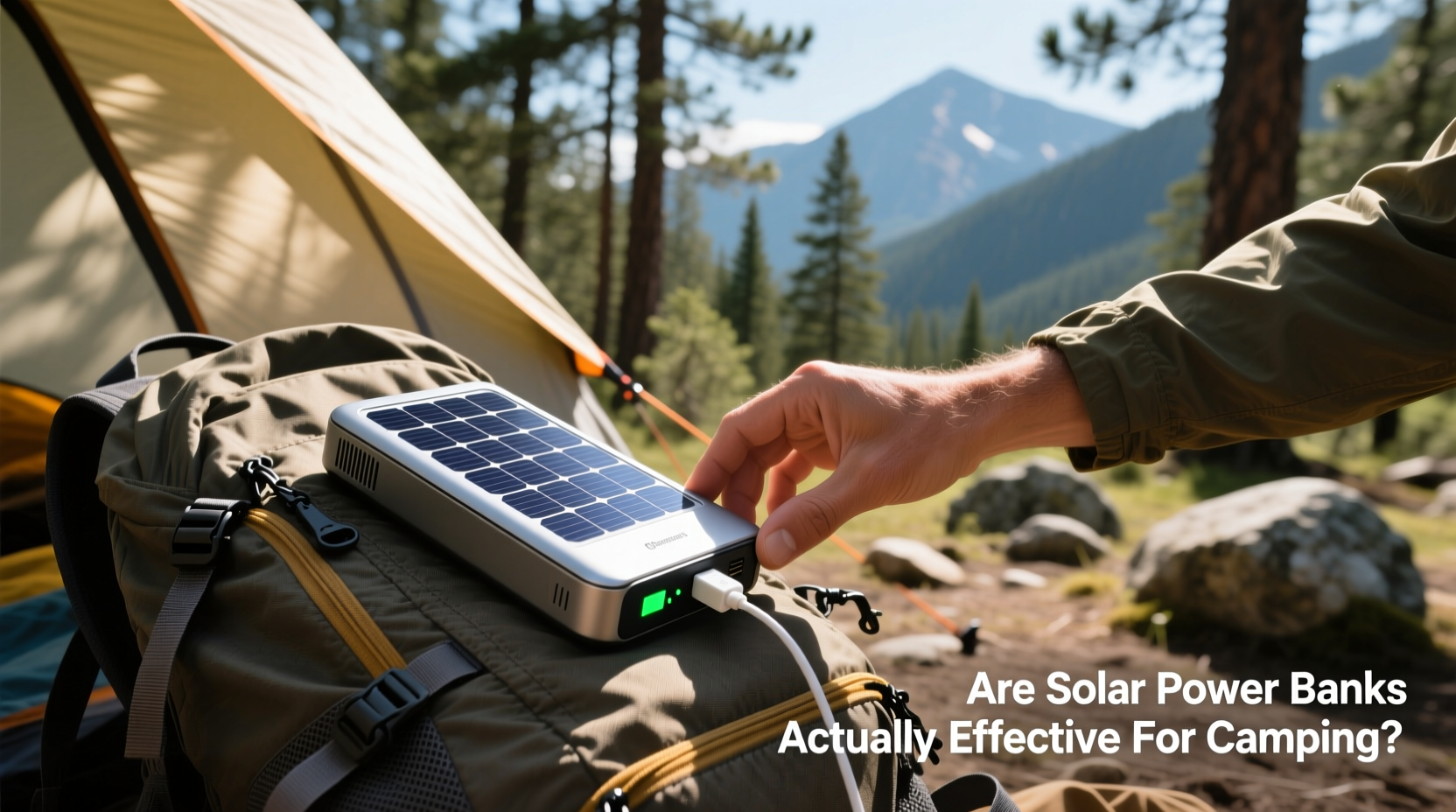
Solar powered power banks combine two core components: a built-in rechargeable battery and one or more photovoltaic (PV) solar panels. During daylight hours, sunlight hits the solar cells, generating electricity that charges the internal battery. Once stored, this energy can then be transferred to your phone, GPS unit, camera, or other USB-powered devices via standard output ports.
Most models range from 5,000mAh to 20,000mAh in capacity—similar to conventional power banks—but differ in how they replenish that charge. While traditional power banks require wall outlets or car chargers, solar versions aim to eliminate that dependency by harnessing sunlight.
However, efficiency varies dramatically. Small integrated solar panels often produce only 1–5 watts of power, meaning full recharges from empty can take anywhere from 20 to 50 hours of direct sun exposure. This reality contrasts sharply with promotional images showing quick top-ups after just an hour outdoors.
Tip: Don’t rely solely on solar charging mid-trip. Pre-charge your power bank fully before heading out.Pros and Cons in Real Camping Conditions
Camping environments introduce variables that directly impact solar performance. Dense tree cover, overcast skies, high latitudes, and seasonal changes all affect sunlight intensity. A device that works well in Arizona may struggle in the Pacific Northwest rainforest.
Advantages of Solar Power Banks for Campers
- Off-grid independence: No need to return to civilization for charging.
- Emergency backup: Can slowly recharge even without access to electricity.
- Dual functionality: Acts as both a battery pack and solar collector.
- Eco-friendly operation: Uses renewable energy with zero emissions.
- Lightweight options available: Some models weigh under 10 ounces, ideal for backpacking.
Limitations and Challenges
- Slow charging speed: Requires prolonged exposure to bright sunlight.
- Inconsistent output: Cloudy days reduce efficiency by up to 80%.
- Panel degradation: Flexible solar surfaces can crack or delaminate over time.
- Angle dependency: Must be positioned optimally toward the sun.
- Bulkier designs: Larger panels needed for faster charging add size and weight.
“Solar power banks are best viewed as supplemental tools, not primary power sources. They shine in emergencies or extended trips where resupply isn’t possible.” — Dr. Alan Reyes, Renewable Energy Researcher at Mountain Ridge Institute
Performance Comparison: Solar vs. Traditional Power Banks
| Feature | Solar Powered Power Bank | Traditional Power Bank |
|---|---|---|
| Recharge Method | Sunlight + optional USB input | Wall outlet / USB port only |
| Charging Speed (Full Recharge) | 20–50 hours (sun-dependent) | 4–8 hours (stable) |
| Weight Range | 8–16 oz (with panel) | 6–12 oz |
| Durability | Moderate (panels prone to wear) | High (no exposed components) |
| Best Use Case | Multi-day backpacking, emergency kits | Weekend trips, festivals, daily use |
| Lifespan | 2–4 years (panel + battery decay) | 3–5 years |
The data shows a clear trade-off: solar models offer autonomy at the cost of speed and reliability. For weekend campers returning home every few days, a traditional power bank charged nightly is far more practical. However, for thru-hikers or remote adventurers, even slow solar gain can mean the difference between a dead phone and one with enough juice to call for help.
A Real Example: Testing Solar Charging on the Appalachian Trail
Consider Sarah Lin, a long-distance hiker who completed a 45-day section of the Appalachian Trail last summer. She carried a 15,000mAh solar power bank with dual 5W monocrystalline panels. Her goal was to keep her GPS tracker and smartphone functional throughout the journey without resupply stops.
During sunny stretches in Virginia and Tennessee, she clipped the power bank to her backpack’s shoulder strap each morning. With six to eight hours of partial sun (due to forest canopy), she averaged a 30–40% daily charge gain. Over three days, this allowed a full recharge of her phone. On cloudy days in North Carolina, however, gains dropped to under 10%, forcing her to conserve power.
When her phone died unexpectedly due to cold weather drain, the power bank still had 60% remaining—enough to reboot the device and navigate safely to the next shelter. “It wasn’t fast,” she noted later, “but knowing I could trickle-charge it gave me peace of mind.”
This case illustrates the true value of solar power banks: not as high-performance chargers, but as resilience tools that extend digital endurance in unpredictable conditions.
Choosing the Right Model: What to Look For
Not all solar power banks are created equal. To maximize effectiveness, focus on key technical and design features:
- Solar Panel Type: Monocrystalline panels are more efficient than polycrystalline or amorphous types, especially in low-light conditions.
- Output Wattage: Aim for at least 5W per panel. Higher wattage means faster charging, though it increases size.
- Battery Capacity: 10,000–20,000mAh balances portability and utility for multi-device users.
- Weather Resistance: Look for IPX4 or higher ratings to withstand splashes and light rain.
- Dual Input Options: Choose models with both solar and USB-C input so you can pre-charge at home.
- Pass-Through Charging: Allows you to charge the bank and your device simultaneously—a rare but useful feature.
- Portability: Foldable or rollable designs save space and allow better sun alignment.
Step-by-Step Guide to Maximizing Solar Charging While Camping
To get the most from your solar power bank in the field, follow this practical routine:
- Pre-Charge Before Departure: Fully charge the unit using a wall outlet the night before your trip.
- Position Panels Early: Set up the power bank in direct sunlight as soon as you wake—ideally on a south-facing rock or tent flap.
- Optimize Angle: Tilt the panel toward the sun. At noon, aim perpendicular to the sun’s rays; in morning/evening, angle lower.
- Avoid Shade: Even partial shadow from trees or gear can cut output by half. Move it periodically as shadows shift.
- Use During Peak Sun: Between 10 a.m. and 2 p.m., solar generation peaks. Prioritize charging then.
- Minimize Self-Discharge: Turn off the power bank when not in use to prevent internal drain.
- Monitor Battery Level: Use built-in LED indicators to track charge status and avoid deep discharge.
- Supplement When Possible: If passing a ranger station or café, plug into USB to boost reserves quickly.
Expert Tips for Long-Term Reliability
Solar power banks face harsh conditions—moisture, temperature swings, physical stress. To extend their lifespan:
- Store indoors when not in use; UV exposure degrades plastic and adhesive layers.
- Keep connectors dry and clean with a cotton swab if dirt accumulates.
- Recharge every 3–4 months even if unused to maintain battery health.
- Avoid extreme temperatures; lithium batteries degrade faster above 104°F or below 32°F.
“The weakest link in most solar power banks isn’t the technology—it’s the expectation. Manage your usage, and they’ll serve you well.” — Lena Torres, Outdoor Gear Engineer at TrailVolt Systems
Frequently Asked Questions
Can a solar power bank charge my phone in the shade?
Only minimally. Diffuse light in shaded areas generates very little power—often less than 0.5W. While some charge may accumulate over many hours, it's unreliable. Direct sunlight is required for meaningful input.
How long does it take to charge a solar power bank?
Under ideal conditions (direct sun, optimal angle), a 10,000mAh unit with a 5W panel takes roughly 20–25 hours to go from empty to full. Realistically, expect 30+ hours due to variable conditions. Pre-charging eliminates this wait.
Are foldable solar panels better than built-in ones?
Often, yes. Detachable or foldable solar panels typically offer higher wattage (10W–20W), faster charging, and better durability than fixed units. They can also be positioned independently of your gear. However, they add complexity and cost.
Final Thoughts: Are They Worth It?
Solar powered power banks are not magic solutions, but they are valuable tools when used appropriately. For casual campers taking short trips near roads or parks, a standard power bank remains simpler and more reliable. But for those venturing deep into the wilderness, crossing mountain passes, or embarking on week-long expeditions, the ability to harvest even a small amount of energy from the sun adds a critical layer of safety and self-sufficiency.
Their true effectiveness lies not in speed, but in redundancy. When storms delay travel, batteries die faster in cold weather, or navigation becomes crucial, having a secondary source of power—even a slow one—can prevent isolation or danger.
Choose wisely: prioritize quality panels, adequate capacity, and realistic expectations. Pair your solar bank with conservative power management—using airplane mode, lowering screen brightness, and carrying a lightweight cable—and you’ll significantly extend your digital reach in nature.
🚀 Ready to test solar power on your next adventure? Pick a reputable model, charge it fully, and bring it on your upcoming trip. Share your experience—how much did you gain, and when did it matter most?








