When you're deep in the wilderness, a dead phone can mean more than just missing photos—it could mean losing navigation, emergency communication, or weather updates. Carrying a reliable power source is no longer optional for serious hikers. But choosing between a solar powered phone charger and a traditional power bank isn’t straightforward. Each has strengths and limitations that depend heavily on your hiking style, route, duration, and environmental conditions.
This guide breaks down both options with real-world insights, compares their performance across key metrics, and helps you make an informed decision based on actual trail experience—not marketing claims.
How They Work: Core Differences
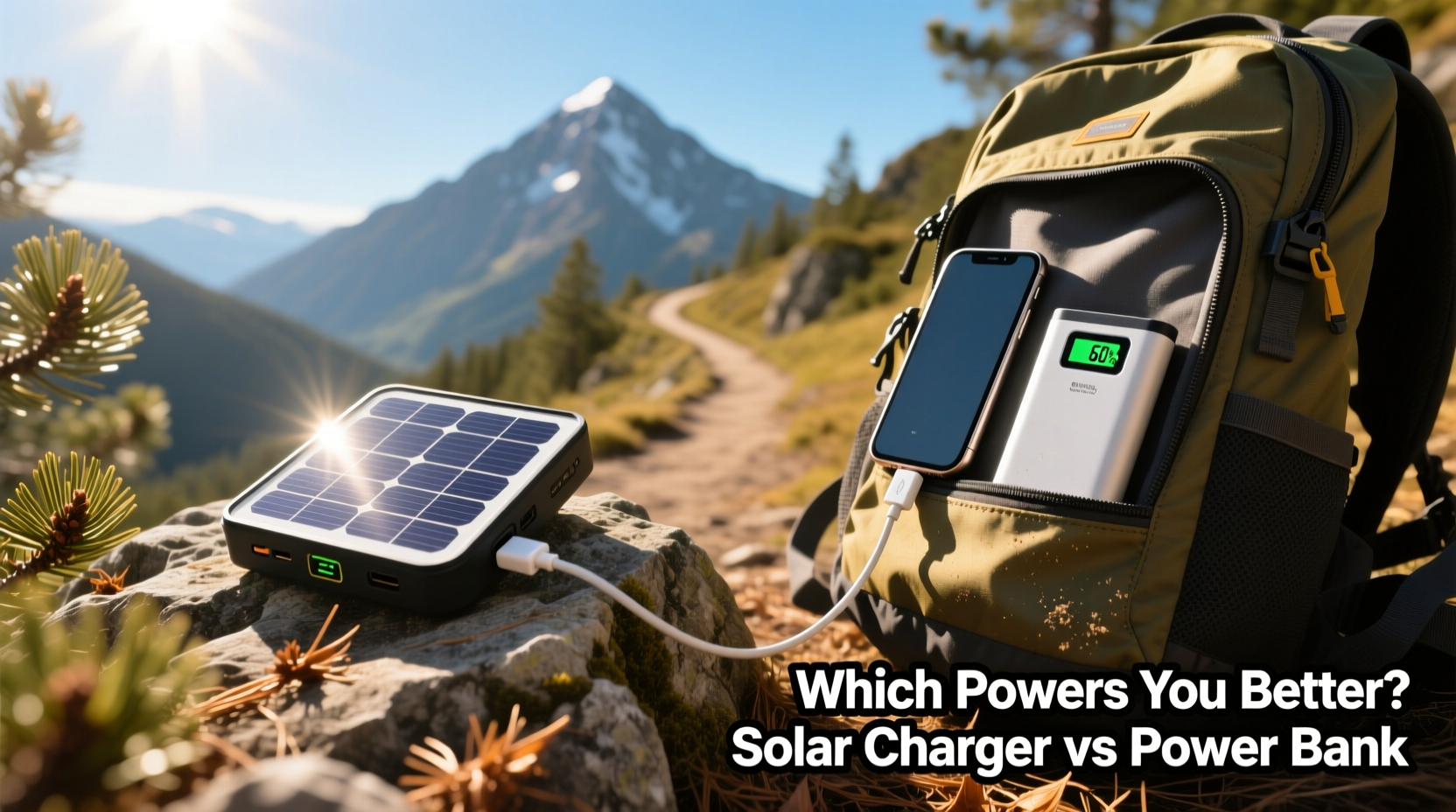
A **power bank** is essentially a portable battery pack. You charge it at home or via a wall outlet before your hike, then use it to recharge your devices on the trail. Most modern power banks range from 5,000mAh to 30,000mAh capacity and support fast charging via USB-C or wireless tech.
A **solar powered phone charger**, on the other hand, converts sunlight into electricity using photovoltaic cells. These come in two forms: foldable solar panels (often paired with a small built-in battery) or standalone solar mats designed to charge devices directly—or charge a separate power bank.
The fundamental difference lies in energy sourcing: one stores energy upfront; the other generates it continuously—if conditions allow.
Tip: Never rely solely on solar unless you’re on a multi-day trek with consistent sun exposure. Always carry backup power if safety depends on device functionality.Performance Comparison: Key Factors for Hikers
To determine which option performs better, consider these five critical factors every hiker faces in the field.
1. Charging Reliability
Power banks deliver consistent output regardless of weather. As long as the internal battery holds a charge, you can top up your phone anytime—day or night, rain or shine.
Solar chargers are highly dependent on sunlight intensity and duration. On overcast days or under dense forest canopy, charging slows dramatically or stops altogether. Even high-efficiency models rarely exceed 70% of rated output in real-world conditions.
“On a recent 7-day traverse through the Sierra Nevada, our team found that solar panels generated only about 40% of expected daily power due to morning fog and afternoon thunderstorms.” — Daniel Reeves, Wilderness Guide & Outdoor Tech Tester
2. Weight and Packability
For ultralight backpackers, every ounce matters. A standard 10,000mAh power bank weighs around 200–250 grams and fits easily in a side pocket. High-capacity models (20,000mAh+) may reach 400g but still remain compact.
Foldable solar panels typically weigh between 300g and 600g, depending on size and efficiency. While they can be strapped externally to a backpack, wind resistance and snag risks increase. Smaller 10W models are manageable, but anything larger becomes cumbersome on narrow trails.
3. Charging Speed and Efficiency
Most quality power banks offer 18W–30W fast charging, capable of delivering a 50% boost to a smartphone in under 30 minutes when conditions are optimal.
Solar chargers usually max out at 10W–20W, but actual delivery is often half that due to suboptimal angles, shadows, or low light. It’s not uncommon for a solar panel to take 6–8 hours of direct sun to fully charge a single phone—time most hikers spend moving, not waiting.
4. Durability and Environmental Resistance
Power banks are sealed units, many with IP67 ratings for dust and water resistance. They withstand drops, moisture, and temperature swings well—especially those designed for outdoor use.
Solar panels, particularly foldable types, have exposed hinges, thin PVC layers, and fragile junction boxes. Prolonged exposure to UV rays degrades their surface over time. Sand, snow, and heavy rain can damage connections or reduce efficiency permanently.
5. Long-Term Versatility
Power banks double as emergency chargers at home, during blackouts, or while traveling. Their utility extends far beyond hiking.
Solar chargers are niche tools. Outside of extended off-grid expeditions or preparedness scenarios, they see limited use. However, for thru-hikers or expedition leaders, the ability to regenerate power indefinitely offers unmatched strategic value.
Detailed Comparison Table
| Feature | Power Bank | Solar Powered Charger |
|---|---|---|
| Pre-trip charging required? | Yes | No (but recommended) |
| Charging speed (real-world avg.) | Fast (18–30W) | Slow to moderate (3–10W effective) |
| Weather dependency | None | High (needs direct sunlight) |
| Weight (typical) | 200–400g | 300–600g |
| Durability | High (sealed electronics) | Moderate (hinges, fabric wear) |
| Lifespan (cycles/years) | 3–5 years / 500+ cycles | 2–4 years (UV degradation) |
| Best for | Day hikes, weekend trips, urban use | Thru-hikes, remote treks, base camps |
Real-World Scenario: The John Muir Trail Test
In summer 2023, two hikers attempted the 211-mile John Muir Trail with identical gear except for their charging systems. One carried a 20,000mAh power bank; the other used a 20W foldable solar panel with a 5,000mAh buffer battery.
The power bank user charged his GPS, camera, and phone twice over the 14-day journey. He conserved power by switching to airplane mode at night and turning off background apps. His device never dropped below 20%, even after full navigation use each day.
The solar user struggled initially. The first three days included heavy cloud cover above 10,000 feet, yielding less than 20 minutes of usable sun per day. By day four, his phone was at 8%. He resorted to “sun chasing”—stopping mid-hike to set up the panel on rocks, delaying progress. Once skies cleared, he regained ground, charging his phone nearly every day—but only during lunch breaks or camp downtime.
Verdict: The power bank provided peace of mind and consistency. The solar setup worked—but required behavioral changes, extra time, and favorable weather.
Tip: If using solar, pair it with a small power bank to store collected energy. This decouples collection from usage and improves flexibility.Smart Strategy: Combine Both Systems
The best approach for most hikers isn’t choosing one over the other—it’s combining them strategically.
Use a mid-sized power bank (10,000–15,000mAh) as your primary source. Charge it fully before departure. Then bring a lightweight solar panel (6W–10W) to top it up during rest days, summit pauses, or extended lunches in open terrain.
This hybrid model gives you:
- Immediate access to stored power
- Extended runtime through regeneration
- Reduced reliance on perfect weather
- Greater margin for emergencies
Many experienced long-distance hikers adopt this method. They treat solar not as a primary charger, but as a supplemental tool—one that adds resilience without compromising mobility.
Step-by-Step: Choosing Your Ideal Setup
- Evaluate your trip length: For hikes under 3 days, a power bank alone suffices. For 5+ days off-grid, consider adding solar.
- Assess terrain and climate: Forested routes, alpine zones with frequent clouds, or monsoon seasons reduce solar viability.
- Calculate total device consumption: A typical smartphone uses ~2,500mAh per full charge. Add GPS, cameras, headlamps, etc., and multiply by days.
- Select capacity accordingly: Carry 1.5x your estimated need. Example: 7,500mAh needed → choose 10,000mAh power bank.
- Test before you go: Simulate your charging routine at home. Run devices down and recharge using your chosen method.
- Optimize placement: If using solar, clip it to the top or side of your pack where it faces upward, not backward.
Checklist: What to Look for When Buying
Whether you choose a power bank, solar charger, or both, use this checklist to ensure quality and suitability:
- ✔️ Check output specs: At least 18W USB-C PD for fast charging
- ✔️ Verify capacity (mAh) matches your needs
- ✔️ Look for rugged casing and water resistance (IP65 or higher)
- ✔️ Prefer brands with replaceable cables or integrated cords
- ✔️ For solar: Choose monocrystalline panels—they’re 20–30% more efficient than polycrystalline
- ✔️ Ensure compatibility with your devices (iPhone, Android, Garmin, etc.)
- ✔️ Read verified reviews focused on real-world trail performance
FAQ: Common Questions Answered
Can I charge my phone directly from a solar panel while hiking?
Technically yes, but inefficiently. Movement causes shifting angles, shadows, and inconsistent exposure. Most charging occurs during static periods—like lunch or camp. For practical purposes, expect minimal gain while walking.
Do solar chargers work on cloudy days?
They generate *some* power—about 10–25% of maximum output—but not enough for meaningful charging. Thin clouds may allow trickle charging; thick storm fronts stop production entirely.
Is it worth repairing a damaged solar panel?
Rarely. Repair kits exist for minor tears, but delamination or cell damage compromises efficiency permanently. Given the cost of patches versus new units, replacement is often smarter.
Final Verdict: Which Works Better on Hikes?
For the vast majority of hikers—weekend adventurers, peak baggers, and even week-long backpackers—a **high-quality power bank** is the superior choice. It’s lighter, faster, more reliable, and easier to use. Its performance doesn’t fluctuate with the weather, and it requires no behavior change.
Solar powered chargers excel only in specific contexts: long-duration treks (10+ days), remote regions without resupply, or situations where minimizing carried weight over time outweighs initial complexity. Even then, pairing solar with a small buffer battery yields better results than relying on direct charging.
Ultimately, the goal isn't to pick the \"best\" technology—it's to ensure your devices stay powered when it matters most. That means matching your gear to your environment, your habits, and your risk tolerance.
“The most reliable power system is the one you actually use correctly. Over-engineering with solar won’t help if you forget to unfold it in the sun.” — Lena Torres, Gear Editor at *Trailline Magazine*
Take Action: Build Your Reliable Power Plan
Don’t wait until your next hike to test your charging strategy. Start today:
- Inventory your electronic devices and calculate daily power draw.
- Choose a power bank that covers 1.5x your estimated need.
- If planning extended trips, add a compact solar panel (6W–10W) as a backup regenerator.
- Practice setting it up during backyard camping or local park visits.
- Label your cables and protect connectors from dirt and moisture.
Your phone is a lifeline in the backcountry. Treat its power supply with the same seriousness as your first aid kit or map and compass. With the right combination of preparation and realistic expectations, you’ll never face a black screen at a critical moment again.
💬 Have a story about power failure—or success—on the trail? Share your experience below and help fellow hikers avoid the same mistakes.








