The release of \"Smile 2\" has reignited conversations about horror film ratings and what exactly earns an R from the Motion Picture Association. For parents navigating whether this sequel is suitable for their teens, understanding the reasoning behind the R rating is essential. Unlike vague warnings, the classification reflects specific elements—particularly psychological intensity and graphic violence—that can impact younger viewers. This guide breaks down the factors contributing to the film’s R rating, examines the nature of its gore, and offers practical advice for families deciding whether to watch it together.
What Does an R Rating Mean?
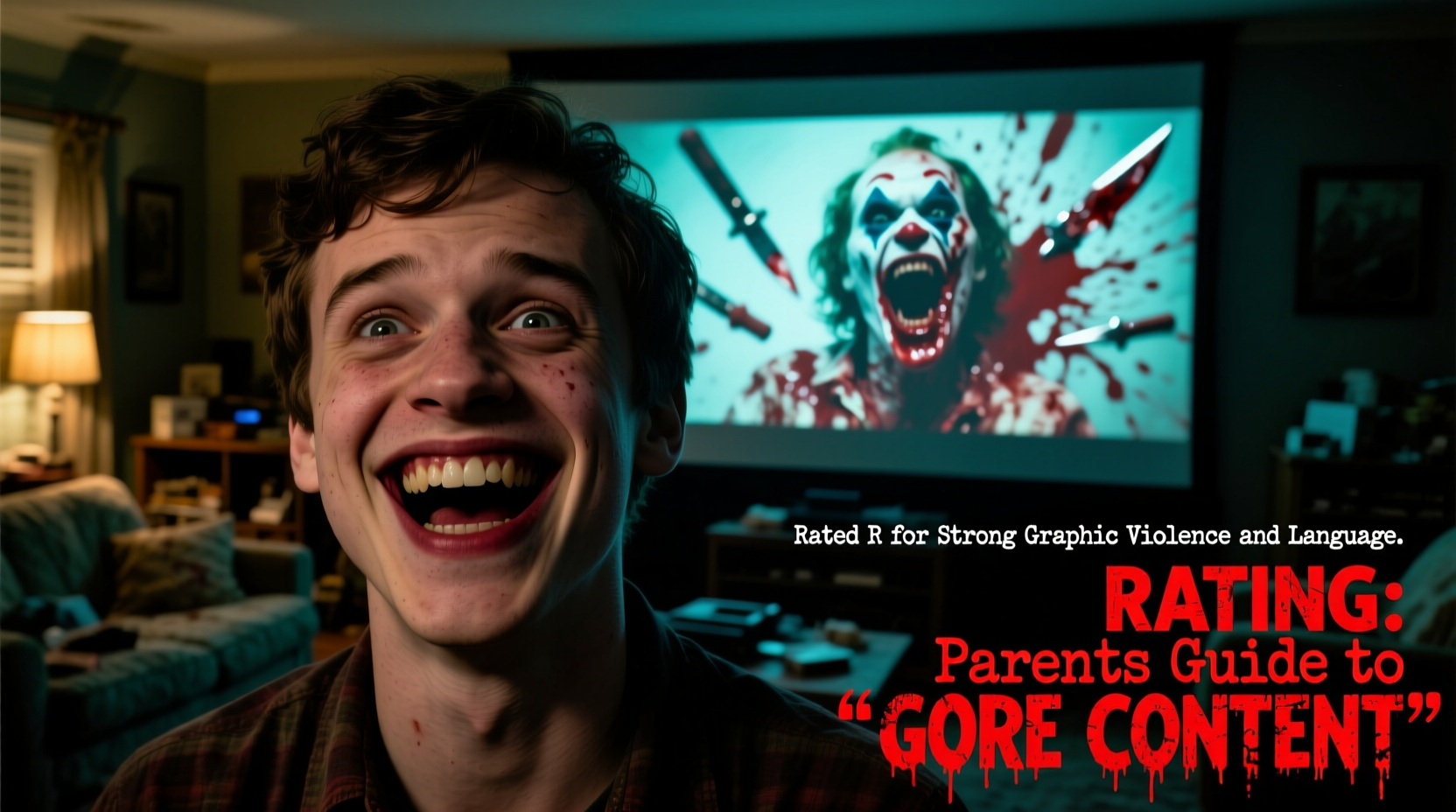
An R rating indicates that the film contains material potentially inappropriate for children under 17 without parental accompaniment. The MPAA assigns this rating based on criteria including strong language, sexual content, drug use, and, most relevantly for \"Smile 2,\" violence and horror imagery. While not a ban, it serves as a cautionary signal. In the case of \"Smile 2,\" the R is specifically tied to \"disturbing violent content, pervasive terror, and some gore.\"
This isn’t arbitrary. Horror sequels often escalate stakes and visuals, and \"Smile 2\" pushes further into psychological and physical horror than its predecessor. The filmmakers leaned into body horror, self-harm depictions, and surreal sequences that blur reality and delusion—elements that contribute heavily to the rating.
Why \"Smile 2\" Earned Its R
The original \"Smile\" (2022) was already rated R, but the sequel amplifies nearly every disturbing aspect. According to the Classification and Ratings Administration (CARA), the decision stems from:
- Extended scenes of psychological torment portrayed through hallucinations
- Graphic depictions of self-inflicted injuries, including facial mutilation
- Disturbing imagery involving corpses and unexplained supernatural phenomena
- Prolonged tension with minimal relief, creating sustained anxiety
Unlike jump-scare-driven horror, \"Smile 2\" relies on dread and emotional erosion. The protagonist experiences a breakdown in reality, and the audience is immersed in her deteriorating mental state. This immersive technique, while artistically effective, increases the film’s intensity beyond typical teen horror fare.
Tip: If your teen is sensitive to themes of mental illness or self-harm, even fictional portrayals, \"Smile 2\" may be too intense regardless of age.Understanding the Gore: What Parents Should Know
Gore in \"Smile 2\" isn’t just blood—it’s visceral, symbolic, and often intertwined with psychological horror. The film uses practical effects and digital enhancements to depict wounds that feel unnervingly real. Scenes include:
- Close-ups of facial contortions and self-lacerations
- Blood-soaked environments suggesting prolonged suffering
- Imagery implying suicide and violent death without explicit full nudity
What separates this from mere shock value is context. The gore illustrates the protagonist’s internal struggle—her fear of losing control manifests physically. However, younger viewers may not interpret symbolism and instead absorb the images at face value, leading to nightmares or anxiety.
“Horror films like 'Smile 2' exploit the vulnerability of the mind. When gore is tied to mental collapse, it can resonate more deeply—and traumatically—in adolescents still forming emotional regulation skills.” — Dr. Lena Patel, Clinical Psychologist specializing in media effects
Comparing Horror Ratings: Where \"Smile 2\" Stands
| Film | MPAA Rating | Primary Reasons for Rating | Suitable for Ages |
|---|---|---|---|
| Smile 2 (2024) | R | Disturbing violent content, pervasive terror, gore | 17+ or mature 15–16 with parental guidance |
| Insidious: The Red Door | PG-13 | Violence, terror, thematic elements | 13+ with caution |
| The Conjuring 3 | R | Violence, terror, some gore | 16+ |
| Hereditary | R | Disturbing violent content, some gore, brief language | 17+ |
As shown, \"Smile 2\" aligns with other R-rated psychological horrors in terms of intensity. It’s notably more graphic than PG-13 horror, which tends to imply violence rather than show it. Parents should treat the R rating seriously—not as a marketing tool, but as a reflection of genuinely unsettling content.
How to Decide If It’s Right for Your Teen
Age alone isn’t the best indicator. Emotional maturity, sensitivity to horror, and prior exposure to intense media matter more. Consider these factors before allowing a teen to watch:
- History of Anxiety or Trauma: Teens with anxiety disorders or past trauma may find the film’s themes of helplessness and paranoia triggering.
- Reaction to the First Film: If your child found the original \"Smile\" too scary, the sequel will likely be worse.
- Media Literacy: Can they distinguish fiction from reality? Do they understand symbolic storytelling?
- Viewing Context: Watching alone vs. with a parent changes the experience significantly. Shared viewing allows for discussion and reassurance.
Real Example: A Parent’s Dilemma
Mark, a father of two in Austin, Texas, allowed his 15-year-old daughter to see \"Smile 2\" after she insisted it was “just another horror movie.” She had watched PG-13 thrillers before without issue. But within 30 minutes, she asked to leave the theater. That night, she had nightmares and avoided mirrors for days. “I didn’t realize how much the self-harm imagery would stick with her,” Mark said. “Just because a kid is tall or looks mature doesn’t mean they’re ready for this stuff.”
This scenario underscores the importance of looking beyond surface-level readiness. Horror films like \"Smile 2\" don’t just scare—they linger.
Tip: Watch a trailer *with* your teen and pause to discuss reactions. Ask, “Does this make you feel anxious?” Their answer may reveal more than any rating ever could.Parental Guidance Checklist
If you're considering letting your teen watch \"Smile 2,\" follow this checklist to make an informed decision:
- ✅ Watch the official trailer together and gauge emotional reaction
- ✅ Review MPAA’s detailed rating explanation online
- ✅ Discuss the film’s themes (mental health, isolation, fear) beforehand
- ✅ Set a rule: no watching alone, especially at night
- ✅ Plan time afterward to talk about the movie—was anything upsetting?
- ✅ Have an exit strategy: agree they can stop watching if overwhelmed
Frequently Asked Questions
Is there nudity in \"Smile 2\"?
No, the film does not contain nudity. The R rating is due to violence, terror, and gore, not sexual content.
Can a mature 14-year-old handle \"Smile 2\"?
Possibly, but only with parental supervision. Many 14-year-olds lack the emotional tools to process the film’s intense psychological and visual content. Proceed with caution and prioritize open dialogue.
How does \"Smile 2\" compare to other R-rated horrors like \"Hereditary\" or \"The Exorcist\"?
It shares thematic DNA with \"Hereditary\" in its focus on inherited trauma and psychological unraveling. However, \"Smile 2\" is less slow-burn and more relentlessly tense. It doesn’t reach the religious horror extremity of \"The Exorcist,\" but its modern take on mental health makes it feel more relatable—and thus, for some, more disturbing.
Conclusion: Making Informed Choices Matters
The R rating for \"Smile 2\" exists for clear, well-documented reasons. It’s not a label to dismiss lightly, especially when teens are involved. Horror can be a powerful genre, offering catharsis and commentary on real fears—but only when consumed at the right developmental stage. As a parent, your role isn’t to shield your child from all discomfort, but to guide them through media that challenges their emotions and worldview.
Take the time to research, discuss, and reflect. Whether you decide to watch \"Smile 2\" together or wait until your teen is older, the act of making a thoughtful choice strengthens trust and media literacy. That’s a far greater win than any box office record.
💬 Have you seen \"Smile 2\" with your family? Share your experience and advice for other parents in the comments below.