For decades, bartenders relied on the “glance-and-guess” method: tilting a bottle to estimate remaining volume, eyeballing pour consistency, or relying on memory after dozens of service shifts. In high-volume bars, restaurants, and even home bars where premium spirits represent significant investment, this guesswork leads to real consequences—over-pouring, stockouts mid-shift, wasted product, and frustrated customers waiting for a refill that never arrives. Enter smart bottle caps: unassuming hardware devices embedded with ultrasonic sensors, Bluetooth connectivity, and cloud-based analytics that transform inert glass bottles into intelligent inventory nodes. These aren’t novelty gadgets—they’re operational tools solving tangible problems in hospitality, retail, and personal consumption. Unlike bulk inventory systems requiring shelf scanners or RFID tagging, smart caps operate at the point of use, delivering real-time data without workflow disruption.
How Smart Bottle Caps Actually Work (Beyond the Hype)
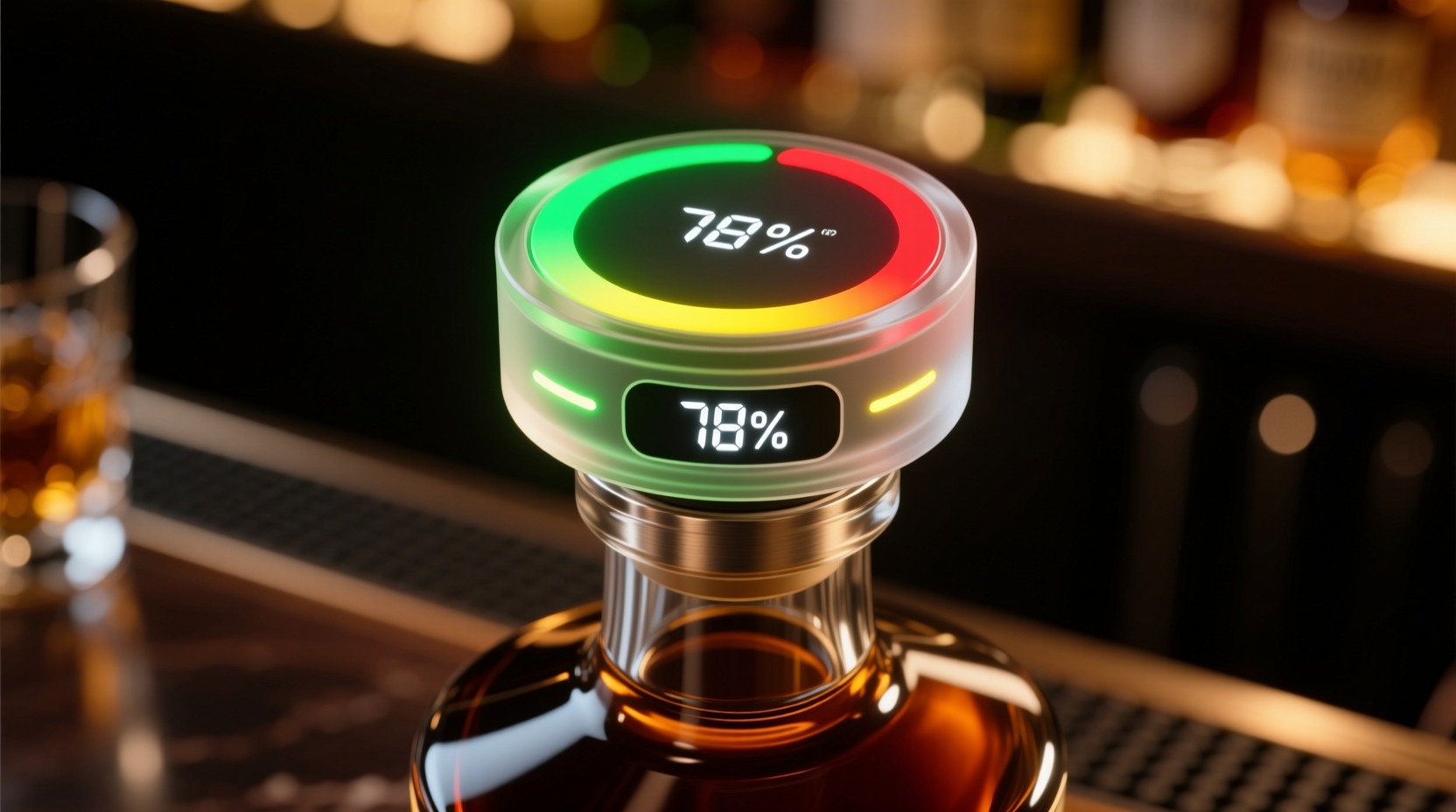
At their core, smart bottle caps function as miniature IoT endpoints. Most commercial-grade models—such as those from PourPoint, BarSense, and LiquiLock—use ultrasonic time-of-flight measurement. A small transducer emits high-frequency sound waves downward through the neck of the bottle; the waves reflect off the liquid surface and return to the sensor. By calculating the precise time difference between emission and echo return, the device determines the distance to the liquid level—and, using the known internal geometry of standard spirit bottles (750 mL, 1L, etc.), converts that distance into milliliters remaining. This reading updates every 3–5 seconds during active pouring and every 30–60 seconds in standby mode.
Data travels wirelessly via Bluetooth Low Energy (BLE) to a nearby gateway—often a dedicated hub mounted behind the bar or integrated into a tablet or POS system. From there, it syncs to a secure cloud dashboard where managers view live inventory levels across all monitored bottles, set customizable low-stock thresholds (e.g., “alert me when Tanqueray drops below 200 mL”), and generate usage reports by shift, bartender, or drink type. Importantly, calibration is not user-dependent: manufacturers pre-load bottle profiles for common formats (e.g., Bombay Sapphire’s tapered 750 mL, Macallan 12’s wide-shouldered 750 mL), eliminating manual setup errors.
Tip: For accurate readings, ensure caps are tightened to manufacturer-specified torque (usually 12–15 Nm). Under-tightening causes air gaps that distort ultrasonic reflection; over-tightening may compress internal gaskets and compromise seal integrity.Real-World Impact: A Mini Case Study from The Oak & Ember
The Oak & Ember, a 92-seat craft cocktail bar in Portland, Oregon, installed smart caps on its top 12 spirit SKUs in early 2023—including premium tequilas, aged rums, and small-batch bourbons. Before implementation, bar managers estimated liquor loss at 18–22% per month due to over-pouring, spillage, and undocumented staff sampling. Inventory audits required two hours weekly and still missed discrepancies until bottles ran dry mid-service.
Within four weeks of deployment, the bar reduced over-pouring by 31%, measured by comparing actual pour counts against theoretical yield (based on bottle volume and standard 1.5 oz pours). More critically, the system flagged inconsistent usage patterns: one bartender consistently poured 1.8 oz shots of Mezcal when the spec called for 1.5 oz—a $1.42 margin loss per drink at $14 retail. After gentle coaching, that variance dropped to 0.1 oz. Stockout incidents fell from 6.2 per week to 0.7. “We used to rush-order at 9 p.m. on Fridays because we’d run out of reposado,” says co-owner Lena Ruiz. “Now our low-stock alerts trigger at 300 mL, giving us time to pull from backstock or adjust the menu before guests notice.” The ROI was realized in 11 weeks—not from tech savings, but from reclaimed margin, labor efficiency, and fewer customer complaints.
What to Look for: Comparison Table of Leading Smart Cap Systems
| Feature | PourPoint Pro | BarSense Core | LiquiLock Elite |
|---|---|---|---|
| Battery Life | 18 months (replaceable CR2450) | 14 months (non-replaceable) | 22 months (user-replaceable AA) |
| Accuracy | ±3 mL at 750 mL | ±5 mL at 750 mL | ±2 mL at 750 mL |
| POS Integration | Direct API for Toast, Square, Micros | Webhook-only (requires developer setup) | Native plugins for Clover, Lightspeed, Upserve |
| Alert Methods | Push, SMS, email, in-app dashboard | Push and email only | Push, SMS, Slack, custom webhook |
| Per-Cap Cost (MSRP) | $42.99 | $34.50 | $49.95 |
Note: All three systems support standard 28 mm and 38 mm neck threads—the industry norm for 750 mL spirit bottles. None require modification to bottles or labels, and all maintain full FDA-compliant food-grade seals. Battery life figures assume average pour frequency (120 pours/day); heavy-use environments (e.g., nightclubs) may see 10–15% reduction.
Step-by-Step: Installing and Calibrating Your First Smart Cap
- Select your target bottle: Start with a high-turnover, high-margin spirit (e.g., Hendrick’s Gin or Bulleit Rye) to maximize early ROI visibility.
- Clean and dry the bottle neck: Wipe away any residue, oil, or moisture with a lint-free cloth. Even microscopic film interferes with ultrasonic coupling.
- Install the cap: Align the cap’s orientation mark (usually a small dot or arrow) with the bottle’s label seam. Hand-tighten firmly, then use a calibrated torque wrench to reach the specified setting (check your model’s manual—typically 12–15 Nm).
- Pair with the app: Open the companion app, enable Bluetooth, and select “Add New Cap.” Hold the cap near your phone while pressing its sync button (usually recessed on the underside) for 3 seconds until LED blinks blue.
- Assign bottle profile: Choose from the app’s library (e.g., “Jack Daniel’s Old No. 7, 750 mL”) or manually enter dimensions if using a rare or custom vessel. Confirm fill level matches reality (e.g., “This bottle is currently at 620 mL”).
- Set alerts and permissions: Define low-stock threshold (recommended: 250 mL for 750 mL bottles), assign notification recipients, and link to your POS if integration is available.
- Validate with a test pour: Pour one standard 1.5 oz shot and verify the app registers a 44 mL decrease within 5 seconds. If deviation exceeds ±5 mL, recheck torque and cleanliness.
Expert Insight: The Operational Shift Behind the Sensor
“The real value isn’t in knowing when a bottle is low—it’s in understanding *why* it’s low. Smart caps turn anecdotal observation into auditable data: who poured what, when, and how much. That transparency reshapes training, accountability, and menu engineering. We’ve seen bars reduce liquor cost percentage from 28% to 22% in under three months—not by cutting portions, but by aligning behavior with specs.” — Marcus Bellweather, Director of Operations, National Bar Management Group
Bellweather’s point underscores a critical nuance: these devices don’t replace human judgment—they expose misalignment between intention and execution. When a manager sees that the same bottle of Aperol is depleted 40% faster on Thursday nights versus Sunday brunch, they investigate: Is the Negroni special driving volume? Are servers upselling incorrectly? Is there unauthorized use? Data doesn’t assign blame; it directs inquiry.
Practical Tips for Home Enthusiasts and Small Bars
- Start small, scale intentionally: Don’t cap every bottle on day one. Begin with your three most expensive or frequently used spirits. Expand only after validating accuracy and workflow fit.
- Respect thermal limits: Avoid installing caps on bottles stored below 4°C (40°F) or above 35°C (95°F). Extreme cold thickens ethanol, altering acoustic velocity; heat expands vapor space, skewing baseline readings.
- Maintain firmware: Check for app updates monthly. Firmware patches often improve battery efficiency and refine pour-detection algorithms—especially for viscous liquids like amari or aged rum.
- Use alerts proactively: Set SMS alerts to go to your purchasing manager 48 hours before projected depletion—not just when stock hits zero. This enables planned restocking, avoiding emergency markups.
- Verify with physical count quarterly: Run a manual bottle audit every 90 days. Discrepancies >5% warrant checking cap torque, sensor cleanliness, or bottle geometry assumptions.
FAQ
Do smart caps work with all types of liquor—especially thick or cloudy ones like Campari or mezcal?
Yes—with caveats. Ultrasonic sensors perform reliably across clear spirits (vodka, gin, whiskey), liqueurs (Cointreau, Grand Marnier), and bitters. For highly viscous or particulate-heavy liquids (e.g., some barrel-aged rums with sediment, or unfiltered agave nectars), accuracy may drop to ±8 mL. Manufacturers recommend using them primarily for base spirits and verified liqueurs; reserve manual checks for niche or artisanal products.
Can I reuse a smart cap on different bottles?
Absolutely—and this is a key cost-saving advantage. Caps retain no bottle-specific data once unpaired. Simply unscrew, clean the sealing surface, pair with a new bottle profile in the app, and reinstall. Just ensure the new bottle uses the same thread size (28 mm or 38 mm) and falls within the supported height/diameter range (most cover 300–1000 mL formats).
Are there privacy or security concerns with cloud-connected caps?
Reputable vendors use end-to-end encryption (AES-256) for data in transit and at rest. No personally identifiable information is collected—only anonymized pour timestamps, volumes, and device IDs. Local gateways do not store historical data; raw metrics are aggregated and purged after 90 days unless exported. Always review the vendor’s GDPR/CCPA compliance documentation before deployment.
Conclusion: Intelligence Starts at the Bottle
Smart bottle caps are more than a convenience—they represent a quiet but profound shift in how beverage professionals manage value. Liquor isn’t just inventory; it’s margin, reputation, and guest experience distilled into glass. When a $45 bottle of single-barrel bourbon runs dry during a busy service, the cost isn’t just the $12 lost pour—it’s the delayed order, the disappointed guest, the rushed substitution, and the erosion of trust in your expertise. Smart caps eliminate that friction not by adding complexity, but by removing uncertainty. They ask no questions, judge no behavior, and deliver facts—consistently, quietly, and accurately. Whether you manage a 200-seat restaurant group or curate a personal collection of Japanese whiskies, the question isn’t whether you can afford to adopt this technology—but whether you can afford to keep operating without real-time visibility into your most valuable liquid assets.
💬 Have you deployed smart caps—or hit a roadblock during setup? Share your experience, lessons learned, or specific questions in the comments. Let’s build collective knowledge around smarter, more sustainable beverage operations.








