
It’s a common question from active individuals who own a pair of durable skate shoes and wonder if they can double as running footwear. After all, both are athletic shoes designed for movement. But beneath their similar appearances lie fundamental differences in design, function, and biomechanics. Wearing skate shoes for running might seem convenient, but doing so can compromise comfort, efficiency, and even long-term joint health. Understanding the distinctions between these two types of footwear is essential for making informed choices about what to wear on your feet—especially when it comes to high-impact activities like running.
The Core Purpose Behind Each Shoe Type
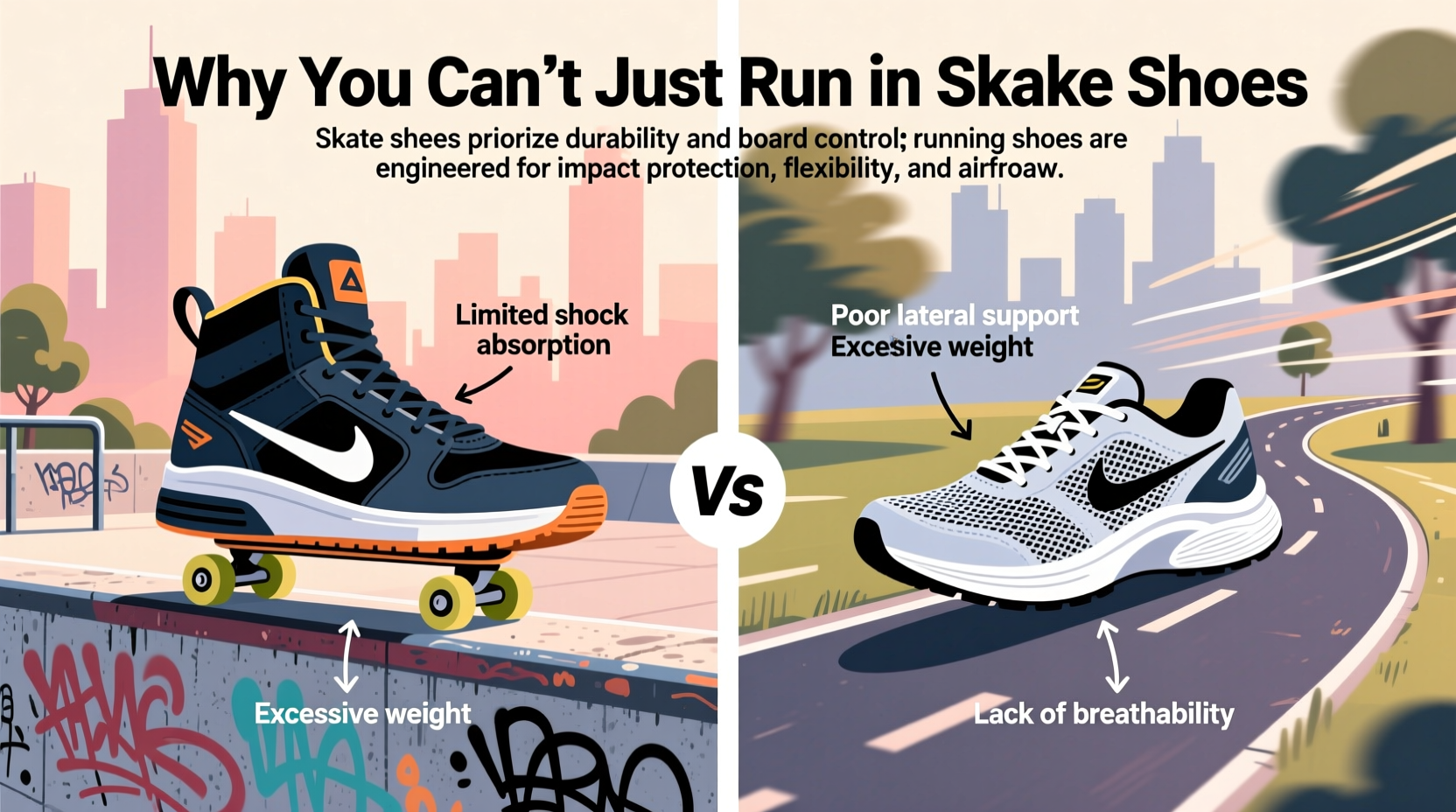
At first glance, skate shoes and running shoes may look interchangeable. Both are low-cut, flexible, and made with synthetic or canvas uppers. However, their intended use shapes every aspect of their construction.
Skate shoes are built for precision, control, and durability during tricks and street skating. They prioritize flat, grippy outsoles for board feel, reinforced stitching in high-wear zones (like the ollie area), and padded collars to absorb impact from landing jumps. The midsole is often minimal—sometimes just a thin layer of foam—to keep the skater close to the board for better responsiveness.
Running shoes, on the other hand, are engineered to manage repetitive forward motion and high-impact forces. Every stride generates 2–3 times your body weight in ground reaction force. To counteract this, running shoes feature thick, compressible midsoles with advanced cushioning systems (like EVA foam, gel, or nitrogen-filled pods) that absorb shock and return energy. The heel-to-toe drop is also carefully calibrated to support natural gait cycles.
Tip: Never assume athletic shoes are universally interchangeable—each category solves specific physical challenges.Anatomy of Support: Midsole, Outsole, and Heel Design
The structural differences between skate and running shoes become most apparent when comparing key components:
| Feature | Skate Shoes | Running Shoes |
|---|---|---|
| Midsole | Thin, firm, minimal cushioning for board control | Thick, layered foam with dynamic compression |
| Outsole | Flat, gum rubber for grip on boards and pavement | Textured, segmented for traction and flexibility |
| Heel Counter | Soft or absent; focused on ankle mobility | Rigid; stabilizes rearfoot during heel strike |
| Cushioning Technology | Basic padding for landings | Advanced systems (e.g., Boost, React, Zoom Air) |
| Weight | Lightweight for flip tricks | Slightly heavier due to cushioning layers |
This contrast explains why runners wearing skate shoes quickly report sore knees, shin splints, or plantar discomfort. Without adequate midsole rebound and arch support, each footfall transfers more stress directly into joints and soft tissues.
“Using non-running footwear for jogging is like driving a sports car off-road—you’re asking a precision tool to perform beyond its design limits.” — Dr. Lena Torres, Sports Biomechanist at Boulder Movement Lab
Biomechanical Mismatch: How Foot Strike Differs
Running involves a predictable sequence: heel or midfoot strike, loading response, midstance, propulsion. This cycle repeats thousands of times per mile. Running shoes are tuned to guide and protect the foot through each phase.
Skate shoes lack this functional progression. Their flat profile encourages a neutral stance ideal for balancing on a board, not for propelling forward efficiently. When used for running, they fail to:
- Absorb repeated heel impacts
- Guide pronation (natural inward roll of the foot)
- Provide toe-off propulsion via forefoot flex grooves
- Maintain stability over uneven surfaces
Over time, this mismatch increases fatigue and injury risk. A study published in the Journal of Sports Science & Medicine found that participants wearing minimalist or non-specialized shoes during treadmill runs exhibited higher rates of tibial stress and altered gait patterns compared to those in proper running footwear.
Real-World Example: Alex’s 5K Experiment
Alex, a 28-year-old graphic designer and casual skater, decided to test his favorite skate shoes—a well-worn pair of black-and-white vulcanized sneakers—on a local 5K run. Confident in their durability and comfort around town, he expected no issues.
By the second kilometer, discomfort set in. His heels began to ache with each step, and his arches felt unsupported. By the finish line, he was limping. The next day, he experienced sharp pain in his left Achilles tendon. A visit to a physiotherapist revealed early signs of tendonitis likely caused by insufficient heel cushioning and poor shock absorption.
After switching to a proper pair of running shoes with moderate cushioning and a 8mm heel drop, Alex completed the same route without pain. “I didn’t realize how much protection I was missing,” he said. “Now I wouldn’t dream of running in my skate shoes again.”
When It Might Seem Okay (And Why It Isn’t)
Some people argue that short jogs, sprint intervals, or gym workouts make skate shoes acceptable substitutes. While brief, low-mileage activity may not cause immediate harm, cumulative microtrauma still occurs.
Even light running imposes forces far beyond walking or casual skating. Without proper midsole geometry and energy return, muscles and tendons compensate by working harder. Over weeks or months, this leads to overuse injuries such as:
- Plantar fasciitis
- Shin splints (medial tibial stress syndrome)
- Iliotibial (IT) band friction syndrome
- Persistent joint inflammation
Additionally, skate shoe outsoles wear down rapidly on asphalt or concrete when used for running. What starts as subtle tread loss becomes compromised traction and reduced lateral stability—increasing fall risk.
Tip: If you're tempted to run in skate shoes because they're comfortable for daily wear, consider investing in lifestyle sneakers with mild cushioning instead—ones designed for walking, not sport-specific performance.Checklist: Choosing the Right Shoe for the Job
Use this checklist before lacing up:
- Ask yourself the primary activity: Am I running, skating, or just walking?
- Check the midsole thickness: Is there visible cushioning under the heel?
- Look at the heel counter: Does it feel firm and supportive, or floppy?
- Test flexibility: Can you bend the shoe easily at the ball of the foot? (Good for skating, less ideal for long runs.)
- Evaluate tread pattern: Is it designed for grip during forward motion or multidirectional board control?
- Consider duration: Will I be moving continuously for more than 20 minutes?
If most answers point toward running, choose running shoes—even if your skate shoes are more stylish.
Frequently Asked Questions
Can I run short distances in skate shoes safely?
Occasional short sprints or quick dashes (under 0.5 miles) are unlikely to cause immediate injury, especially if you're healthy and have strong lower limbs. However, even brief runs add up over time. For consistent training, always opt for proper running shoes.
Are there hybrid shoes that work for both skating and running?
Currently, no major brand offers a true hybrid that performs well in both disciplines. Some lifestyle models (like certain Adidas Sambas or Nike Court Legacy lifts) offer slight cushioning but still lack the dynamic support needed for serious running. Specialization remains key for performance and safety.
Why do skate shoes hurt my feet when I run?
The pain typically stems from inadequate shock absorption, lack of arch support, and excessive pressure on the heel and ball of the foot. Unlike running shoes, skate shoes don’t distribute impact forces effectively, leading to localized stress and inflammation.
Final Thoughts: Respect the Design, Protect Your Body
Footwear specialization exists for a reason: human movement is complex, and different activities demand different solutions. Skate shoes excel at providing board control, durability, and aesthetic flair. Running shoes are optimized for endurance, protection, and efficiency across pavement, trails, and tracks.
While it might seem economical or convenient to use one pair for multiple purposes, doing so sacrifices performance and invites preventable injury. Your feet, knees, and back will thank you for respecting the engineering behind purpose-built shoes.
💬 Have you tried running in skate shoes? Did you notice a difference? Share your experience in the comments—your story could help others avoid the same mistake.








