
Walking into the gym wearing your favorite pair of skate shoes might feel natural—especially if you've just come from a session at the skatepark. But are skateboarding kicks really suitable for weightlifting, cardio, or functional training? While they may look stylish and offer solid board feel, using skate shoes for gym workouts comes with trade-offs that could affect performance, safety, and long-term joint health.
This article breaks down the structural differences between skate shoes and running shoes, evaluates their suitability for various gym activities, and helps you decide whether it’s practical—or risky—to train in skateboarding footwear.
Key Differences: Skate Shoes vs Running Shoes
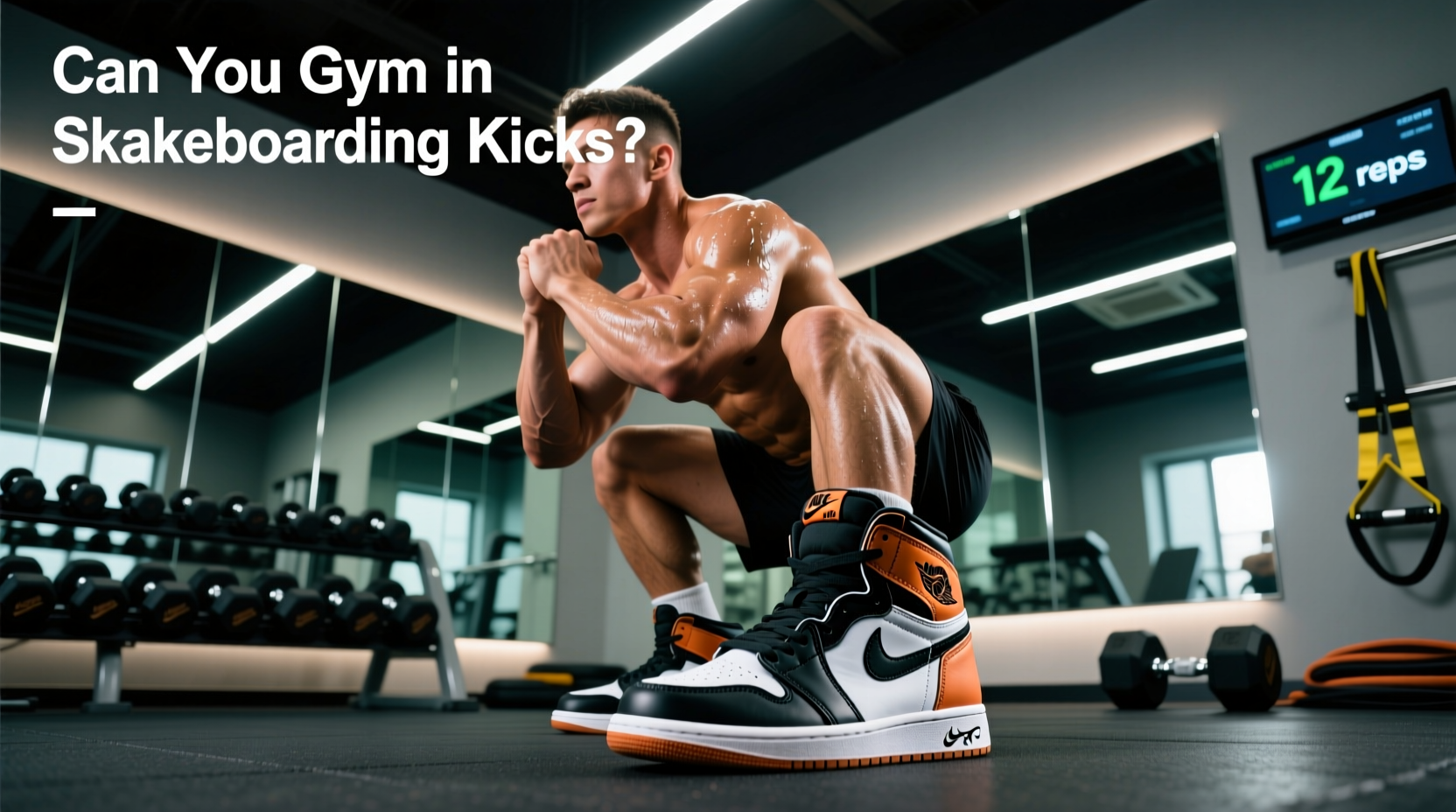
At first glance, both types of shoes serve athletic purposes, but their design philosophies diverge significantly based on intended use.
Skate shoes are built for precision, durability, and grip on a skateboard deck. They prioritize flat soles, reinforced stitching, and abrasion-resistant uppers (often suede or canvas) to withstand repeated friction from concrete grinds and flip tricks. The outsoles are made from sticky rubber compounds optimized for board control—not cushioning or impact absorption.
Running shoes, by contrast, are engineered to absorb repetitive high-impact forces generated during foot strikes. They feature thick midsoles with EVA foam or gel inserts, heel-to-toe drop (typically 8–12mm), and dynamic flexibility to support forward motion. Breathability, shock dispersion, and pronation control are central to their design.
| Feature | Skate Shoes | Running Shoes |
|---|---|---|
| Sole Thickness | Thin, flat | Thick, cushioned |
| Heel Drop | 0–4mm (minimal) | 8–12mm (moderate to high) |
| Shock Absorption | Low | High |
| Flexibility | Limited (rigid for board feel) | High (articulated forefoot) |
| Purpose | Board control, durability | Impact protection, stride efficiency |
| Durability Focus | Upper & sole abrasion resistance | Middlesole compression longevity |
When Skate Shoes Work in the Gym
Not all gym activities demand maximal cushioning. In fact, certain exercises benefit from the minimalism and ground feedback provided by skate shoes.
Strength Training: A Viable Option
For compound lifts like squats, deadlifts, and overhead presses, stability matters more than bounce. The flat, low-profile sole of a skate shoe allows better force transfer from foot to floor, improving balance and proprioception.
Powerlifters often prefer minimalist footwear or even bare feet for this reason. While not as rigid as dedicated lifting shoes (which have elevated heels for ankle mobility), skate shoes sit flatter than running shoes and avoid compressible midsoles that can wobble under load.
“Footwear with excessive cushioning can reduce stability during heavy lifts. A firm, flat sole gives lifters better feedback and connection to the ground.” — Dr. Lena Torres, Sports Biomechanist
Bodyweight Circuits and Functional Movements
Routine bodyweight exercises—push-ups, lunges, planks, box step-ups—are generally safe in skate shoes. Since these movements generate lower impact, the lack of cushioning isn’t a major liability. However, prolonged jumping or plyometric drills (like jump squats or burpees) increase stress on joints, making skate shoes less ideal over time.
Where Skate Shoes Fall Short
Despite their utility in strength zones, skate shoes struggle in environments involving sustained cardiovascular effort or repetitive impact.
Running and Treadmill Use
Using skate shoes on a treadmill—even for short intervals—is strongly discouraged. Without adequate midsole cushioning, each foot strike transmits greater force through the knees, hips, and spine. Over time, this increases the risk of shin splints, plantar fasciitis, and joint inflammation.
The stiff construction also limits natural foot flexion, altering gait mechanics. Runners rely on shoes that guide the foot through heel-strike, midstance, and toe-off phases smoothly. Skate shoes don't support this transition, leading to inefficient movement patterns and potential strain.
High-Intensity Interval Training (HIIT)
Workouts involving rapid directional changes, lateral shuffles, or explosive jumps place extra demands on footwear. Skate shoes may provide decent lateral support due to snug fits and padded collars, but their thin soles lack energy return and shock dispersion needed for repeated landings.
In HIIT sessions lasting 20+ minutes, fatigue sets in faster when muscles compensate for poor impact management. This compromises form and raises injury risk—especially in beginners or those with prior joint issues.
Real-World Scenario: Alex’s Hybrid Routine
Alex, a 26-year-old graphic designer and avid skater, commutes to work via board and hits the gym three times a week. He wears his trusted pair of black-and-white skate shoes daily, including during workouts.
His routine includes 10 minutes of treadmill warm-up, followed by barbell squats, bench press, and kettlebell swings. After six weeks, he begins experiencing discomfort behind his kneecap after leg days. His trainer notices he lands heavily during kettlebell swings and lacks proper arch engagement.
Upon reviewing his footwear, the trainer suggests switching to cross-trainers for cardio and dynamic lifts, reserving skate shoes only for static strength exercises. Within two weeks, knee pain subsides, and Alex reports improved endurance during circuits.
This case illustrates how mixing shoe types based on activity—not convenience—can enhance performance and prevent overuse injuries.
Expert Recommendations: What Footwear Should You Use?
Fitness professionals emphasize matching footwear to movement type rather than aesthetics or comfort alone.
- Lifting weights? Skate shoes are acceptable, especially for flat-footed lifts. Consider minimalist trainers or dedicated weightlifting shoes for optimal results.
- Cardio or endurance training? Stick to running shoes or cross-trainers designed for multidirectional impact.
- CrossFit or hybrid workouts? Choose cross-training shoes with balanced cushioning and lateral support—neither pure skate nor pure running shoes suffice here.
Checklist: Can You Use Skate Shoes in the Gym?
- Are you doing heavy squats or deadlifts? → Yes? Acceptable.
- Will you run more than 5 minutes continuously? → Yes? Switch to running shoes.
- Are you performing jump-based or plyometric moves? → Yes? Avoid skate shoes.
- Do your feet or joints ache post-workout? → Yes? Likely footwear mismatch.
- Is your skate shoe worn down or flattened? → Yes? Replace immediately—loss of grip increases slip risk.
Comparing Alternatives: Cross-Trainers vs Dual Use
If you're looking for a single shoe that bridges both worlds, consider cross-training shoes. Brands like Nike Metcon, Reebok Nano, and NOBULL Studio offer models with:
- Flat, stable heels for lifting
- Moderate cushioning for light cardio
- Durable uppers resistant to abrasion
- Lateral support for side-to-side motions
These are far more versatile than either skate or running shoes for mixed routines. While they won’t replace a premium skate shoe’s board feel or a marathon shoe’s energy return, they strike a functional balance.
Trying to make skate shoes “do everything” leads to compromised performance. Purpose-built gear exists for a reason: specialization enhances safety and effectiveness.
Frequently Asked Questions
Can I wear skate shoes for light cardio?
You can—but not without consequences. Short walks or slow jogs (under 10 minutes) may be tolerable, but anything longer increases joint loading. For consistent cardio, invest in proper footwear.
Are skate shoes bad for my knees?
Not inherently. During low-impact or static exercises, they pose little risk. However, repeated high-impact activities in unsupportive shoes contribute to cumulative joint stress, potentially accelerating wear and tear over time.
What’s the best way to protect my skate shoes if I must use them in the gym?
Limit their use to non-cardio portions of your workout. Wipe off sweat and chalk after use, store them in a ventilated area, and rotate with another pair. Moisture buildup from gym floors can degrade glue and lining faster than street wear.
Final Verdict: Know Your Limits
So, can you gym in skateboarding kicks? Yes—but selectively.
For pure strength training, particularly barbell work, skate shoes offer a stable platform and direct ground feel that some lifters appreciate. Their flat profile beats overly cushioned running shoes in this context. However, once movement becomes dynamic, rhythmic, or impact-heavy, the absence of shock absorption becomes a liability.
Running shoes, while excellent for linear motion and endurance, fail in stability during lifting due to soft, sloped midsoles. Neither shoe type excels across all domains. That’s why cross-trainers exist: to fill the gap between disciplines.
The bottom line? Respect the engineering behind athletic footwear. Just because you *can* do something doesn’t mean you *should*. Prioritize function over fashion when your body is on the line.
💬 Have you trained in skate shoes? Did they hold up—or did you switch? Share your experience below and help others find the right fit for their fitness journey.








