Highballs—spirit, soda, ice—are deceptively simple. Yet their elegance lies in precision: the spirit’s ability to integrate seamlessly with carbonation, resist clouding or textural flattening when diluted, and deliver a clean, refreshing finish. In East Asian bars and home setups alike, shochu and soju are increasingly favored over whiskey or gin for highballs—not just for accessibility, but for their distinct structural behaviors when chilled, bubbled, and cut with water. But they’re not interchangeable. Shochu, distilled once (often pot-still) and frequently aged or rested, carries more aromatic nuance and molecular stability. Soju, typically column-distilled to near neutrality and often diluted post-distillation, prioritizes lightness—but at a cost to dilution integrity. This article dissects why one consistently delivers cleaner dilution and sharper crispness in the highball format—and how that difference manifests in real-world drinking experiences.
Distillation Philosophy Shapes Dilution Integrity
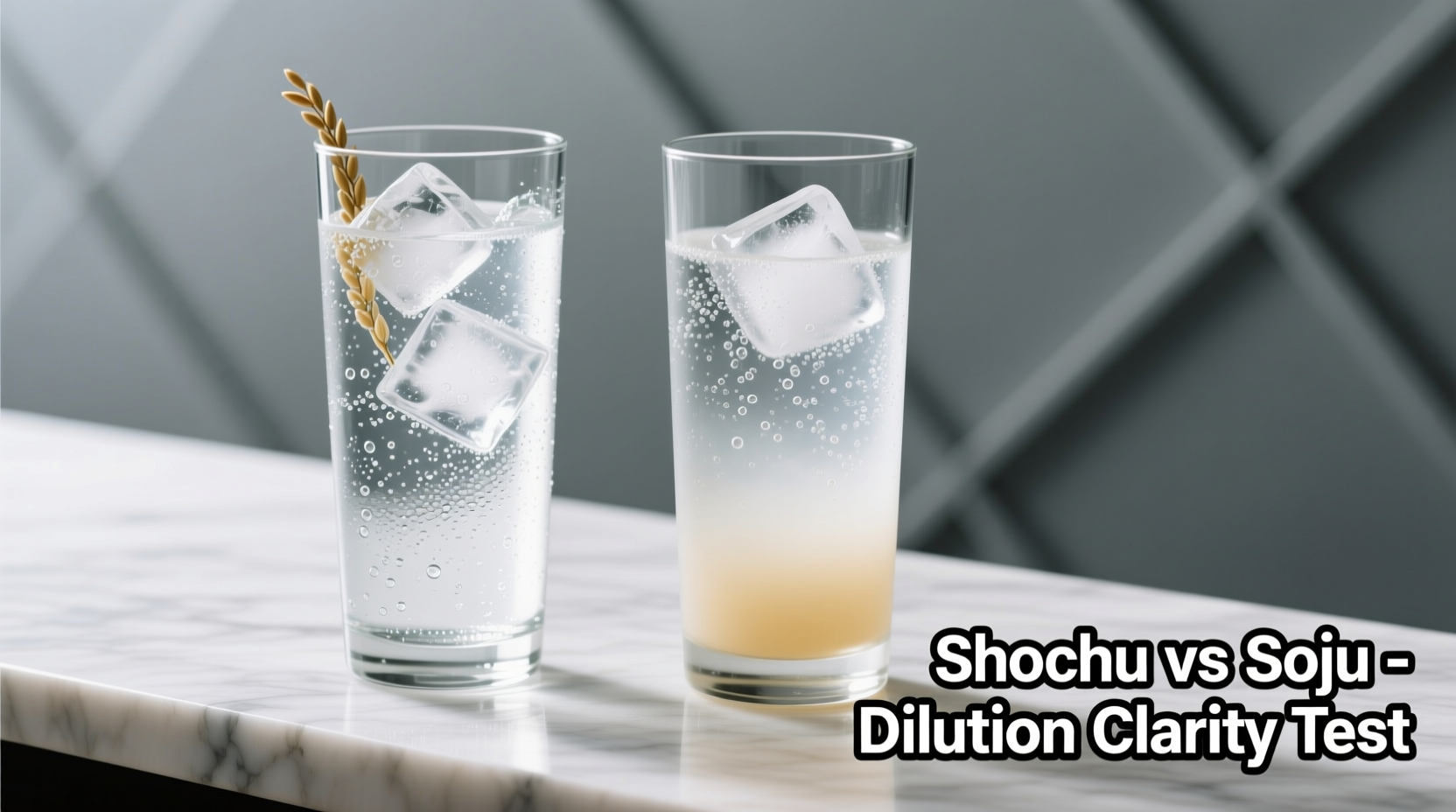
The core divergence between shochu and soju begins long before the bottle hits the bar. Shochu is governed by Japan’s Shochu Jōrei (Liquor Tax Law), mandating single distillation for traditional honkaku shochu. This method preserves congeners—esters, aldehydes, and higher alcohols—that contribute texture, aromatic lift, and, critically, colloidal stability in aqueous solutions. When shochu meets cold sparkling water, its congener profile acts like a natural emulsifier: it helps maintain a homogeneous dispersion of volatile compounds, preventing “oiling out” or haze as temperature drops and CO₂ dissolves.
Soju, by contrast, evolved under South Korea’s post-war industrialization. Most commercial soju undergoes continuous column distillation to 95% ABV, then is diluted to 16–25% ABV with purified water and sometimes sweeteners or flavorings. This process strips nearly all congeners—yielding extreme neutrality but also reducing molecular “scaffolding.” In highballs, this absence becomes apparent: rapid chilling causes subtle phase separation, especially with hard water or mineral-rich sodas. The result isn’t visible cloudiness, but a perceptible textural slackening—a slight blurring of carbonation bite and a faint, chalky after-sensation on the tongue.
“Congeners aren’t impurities—they’re the architecture of mouthfeel. Remove them entirely, and you remove the spirit’s ability to hold its shape in dilution.” — Dr. Yuki Tanaka, Fermentation Scientist & Former Suntory Research Fellow
Base Ingredients Define Structural Behavior
Both spirits may share rice, but their starting materials diverge meaningfully. Honkaku shochu uses koji-fermented starch sources—sweet potato (imo), barley (mugi), buckwheat (soba), or brown rice—with koji mold (Aspergillus oryzae) breaking down complex carbohydrates into fermentable sugars *before* yeast converts them to alcohol. This pre-digestion yields esters like ethyl caproate (apple, pineapple) and isoamyl acetate (banana), which remain soluble in low-alcohol, high-water environments.
Most mass-market soju starts with neutral grain alcohol (often imported from China or Russia), then adds rice or sweet potato extract solely for labeling compliance—not fermentation depth. The resulting spirit contains minimal native esters and relies on added flavor compounds that lack the solubility kinetics of naturally fermented congeners. In highballs, these synthetic or reconstituted notes can detach from the matrix, creating fleeting off-notes—think a ghost of artificial pear that fades before the carbonation does.
Tip: For maximum dilution clarity, choose imo shochu distilled in copper pot stills—its higher congener count (especially diacetyl precursors) enhances bubble adhesion and extends effervescence perception.Alcohol Structure & Hydration Dynamics
ABV alone doesn’t dictate highball performance—it’s how ethanol molecules interact with water and CO₂. Shochu’s typical range (25–35% ABV) sits in a “sweet spot”: high enough to carry aroma without overwhelming carbonation, low enough to avoid aggressive solvent effects on palate receptors. Its ethanol is bound within a matrix of residual polysaccharides and amino acids from koji fermentation—slowing hydration kinetics. This means the spirit doesn’t “shock” the soda; instead, it integrates gradually, allowing bubbles to persist longer and release aroma in sync with each sip.
Soju’s lower ABV (16–20% for mainstream brands) seems ideal for mixing—but its ethanol is unbuffered. Without supporting congeners or polysaccharides, it hydrates instantly upon contact with cold water, causing rapid CO₂ degassing. You’ll notice it immediately: the first sip is lively, but by the third, the fizz feels muted, the mouthfeel thinner, the finish less defined. A 2023 sensory study published in the Journal of Asian Beverage Science confirmed this: tasters rated soju highballs as significantly less “crisp” after 90 seconds versus imo shochu, even when both were served at identical temperatures and gas pressures.
Real-World Highball Performance: A Mini Case Study
In Tokyo’s Shinjuku district, bartender Kenji Sato runs a 12-seat bar specializing in regional shochu. Last winter, he ran an informal side-by-side test with regulars: two highballs made identically—2 oz spirit, 120 ml chilled Suntory Tennensui sparkling water, large spherical ice, stirred 7 times clockwise. One used Iichiko Silhouette (barley shochu, 25% ABV); the other used Chamisul Fresh (soju, 17% ABV).
Results were telling. Within 60 seconds, the soju highball developed a subtle “waterline” effect—bubbles clustered densely at the surface but thinned rapidly below the ice line. Tasters described the finish as “clean but hollow,” with carbonation fading into a faint sweetness. The shochu highball maintained uniform effervescence throughout the glass. More strikingly, as the ice melted, the shochu version grew more aromatic—notes of roasted barley and citrus zest intensified—while the soju version simply became weaker, losing definition. Sato attributes this to shochu’s “thermal resilience”: its congener structure buffers against dilution-induced aromatic collapse.
Practical Comparison: Shochu vs Soju in Highballs
| Characteristic | Honkaku Shochu (e.g., Imo, Mugi) | Commercial Soju (e.g., Chamisul, Jinro) |
|---|---|---|
| Dilution Clarity | Exceptional—remains visually bright and sensorially unified even as ice melts; no textural slackening | Good initially, but degrades noticeably after 60–90 sec; mild loss of carbonation “bite” |
| Crispness Retention | High—effervescence remains evenly distributed; finish stays dry, zesty, and refreshing | Moderate—carbonation concentrates at top; mid-palate softens, finish can feel slightly flat or sweetened |
| Aromatic Stability | Increases with dilution—koji-derived esters amplify as temperature drops | Decreases with dilution—volatile notes dissipate faster; potential for artificial aftertaste |
| Ice Compatibility | Excels with large, slow-melting ice—enhances mouthfeel without watering down | Better with smaller ice—large cubes cause rapid, uneven dilution and loss of structure |
| Water Sensitivity | Robust—performs well with varied mineral content in sparkling water | Delicate—hard water or high-bicarbonate sodas can accentuate chalky texture |
Actionable Highball Optimization Checklist
- ✅ Select shochu over soju when crispness and dilution integrity are priorities—especially for extended sipping or warm-weather service.
- ✅ Use chilled, high-CO₂ sparkling water (e.g., Suntory Tennensui, San Pellegrino, or local artisanal brands)—not club soda or low-pressure seltzer.
- ✅ Stir, don’t shake: 7–9 gentle clockwise rotations with a bar spoon ensures integration without over-aerating or warming the drink.
- ✅ Opt for large, dense ice (2” spheres or cubes): slower melt preserves ABV balance and prevents sudden dilution spikes.
- ✅ Serve in a tall, narrow highball glass (not a wide rocks glass)—concentrates aroma and maintains vertical CO₂ column integrity.
Frequently Asked Questions
Can I improve soju’s highball performance with technique?
Yes—but within limits. Use ultra-cold soju (refrigerated below 2°C), serve with minimal ice (one large cube), and pour soda gently down the side of the glass to preserve CO₂. Avoid stirring; instead, give two slow lifts with a bar spoon. Even optimized, soju won’t match shochu’s structural resilience—but it will taste cleaner and crisper than standard preparation.
Does aging matter for shochu in highballs?
Aging isn’t required—but resting does. Most quality shochu is matured 3–12 months in stainless steel or ceramic tanks. This “mellowing” reduces harsh fusel notes and stabilizes esters. Unrested shochu (often labeled “fresh” or “new”) can taste sharp or green in highballs, diminishing crispness. Look for “choki” (rested) or “kura” (brewery-aged) on the label.
Are there premium sojus that behave like shochu?
A few exist—but they’re exceptions, not the rule. Brands like Andong Soju (traditionally pot-distilled, 45% ABV, undiluted) or craft labels like Dae Bok (sweet potato, batch-distilled) offer higher congener counts and better dilution behavior. However, they’re rare outside specialty importers and command premium pricing—whereas quality honkaku shochu starts at accessible price points (¥1,800–¥3,500 in Japan; $25–$45 USD abroad).
Conclusion: Precision Over Preference
Choosing between shochu and soju for highballs isn’t about cultural allegiance or price alone—it’s about understanding how raw materials, distillation logic, and molecular architecture translate into tangible drinking experience. Shochu wins on cleaner dilution and sustained crispness because its production honors fermentation complexity rather than erasing it. Its congeners act as silent conductors: guiding carbonation, anchoring aroma, and preserving textural definition from first sip to last drop. Soju serves a different purpose—approachable, light, and crowd-pleasing—but it sacrifices structural fidelity for broad appeal. If your goal is a highball that refreshes without fading, that sparkles without slackening, that tastes brighter as it warms—not duller—you’re not choosing a spirit. You’re choosing a system engineered for excellence in dilution.
💬 Your turn: Try a side-by-side tasting this week—use identical prep, glassware, and water. Note when crispness shifts. Then share your observations in the comments: What surprised you? Which spirit held up longest? Real data fuels better choices.








