The clash between Shaolin kung fu and ninjutsu captures the imagination—temple monks with decades of disciplined training versus shadowy operatives trained in stealth, sabotage, and survival. But beyond cinematic drama, a deeper question emerges: which system holds greater effectiveness in real-world combat and self-defense? The answer isn’t as simple as declaring a winner. Effectiveness depends on context—combat environment, goals, physical conditioning, and training methodology. To assess this fairly, we must examine their origins, philosophies, techniques, and practical applications.
Origins and Philosophical Foundations
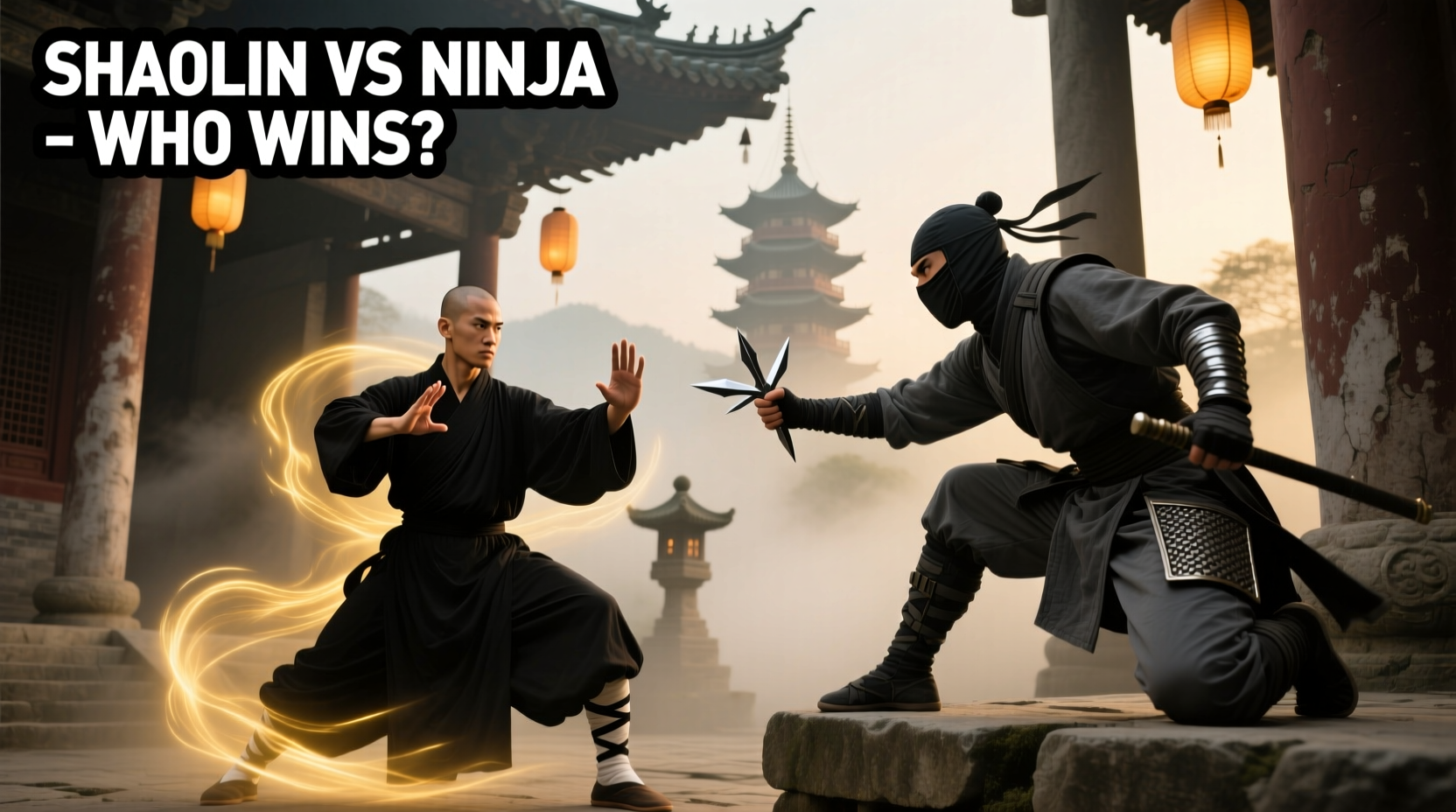
Shaolin kung fu traces its roots to the Shaolin Monastery in Henan Province, China, dating back over 1,500 years. It evolved from Indian Buddhist traditions fused with indigenous Chinese martial practices. The monks developed a system emphasizing internal energy (qi), fluid movement, and spiritual cultivation. Training was rigorous, combining meditation, acrobatics, and forms (katas) designed to build strength, flexibility, and mental focus.
In contrast, ninjutsu originated in feudal Japan among clans like the Iga and Kōga who served as spies, scouts, and covert operatives. Unlike the public-facing discipline of the samurai, ninjas operated outside conventional warfare rules. Their training focused on evasion, intelligence gathering, disguise, and unconventional tactics. Ninjutsu wasn't just about fighting—it was about surviving and completing missions under extreme conditions.
“Martial effectiveness isn’t measured by flashiness, but by adaptability under pressure.” — Master Deng Fei, Shaolin Martial Arts Historian
Combat Techniques Compared
Shaolin kung fu emphasizes structured forms, powerful strikes, joint locks, throws, and weapon mastery. Practitioners train extensively in hand techniques like palm strikes, finger jabs, and tiger claw motions, as well as kicks that range from low sweeps to high spinning attacks. The style integrates both hard (external) and soft (internal) elements, allowing for explosive power and fluid redirection of force.
Ninjutsu, particularly as preserved in schools like Togakure-ryū, teaches a broader spectrum of skills. While it includes striking and grappling, its core lies in evasion, misdirection, and using the environment. Ninjas were trained to escape restraints, move silently, use terrain to their advantage, and employ weapons like shuriken, kunai, and the ninjatō not for duels, but for disruption and escape.
Tip: Effectiveness in combat often comes from unpredictability and control of distance—not just technical skill.Key Differences in Approach
- Objective: Shaolin aims at mastery through repetition and moral development; ninjutsu prioritizes mission success and survival.
- Training Focus: Shaolin builds physical excellence and internal harmony; ninjutsu emphasizes situational awareness and deception.
- Environment: Shaolin techniques assume open space and direct engagement; ninjutsu prepares for confined spaces, darkness, and surprise.
Effectiveness in Modern Contexts
In a controlled sparring match or sport setting, Shaolin practitioners often demonstrate superior balance, coordination, and striking precision. Their extensive conditioning gives them an edge in stand-up exchanges. However, modern mixed martial arts (MMA) has shown that pure traditional styles often struggle against integrated systems like Brazilian jiu-jitsu or Muay Thai unless adapted.
Ninjutsu’s relevance today lies less in head-on confrontation and more in personal security, situational awareness, and de-escalation. Its principles align closely with modern combatives and close-quarters defense used by military and law enforcement. For example, the emphasis on escaping rather than winning a fight mirrors contemporary self-defense doctrine.
Real-World Example: Urban Self-Defense Scenario
Imagine walking home at night when two individuals approach aggressively. A Shaolin-trained individual might attempt to create distance with a strong front kick or use evasive footwork to disengage. If cornered, they could rely on joint manipulation or pressure point strikes. However, if outnumbered or caught off guard, their formal techniques may be difficult to execute under stress.
A ninja-trained person would likely avoid detection altogether, use environmental cover, or create distractions to escape. If forced to engage, they’d aim to disable quickly—perhaps targeting eyes or throat—and flee immediately, avoiding prolonged conflict. In this scenario, the ninja’s mindset proves more aligned with survival logic.
Detailed Comparison Table
| Aspect | Shaolin Kung Fu | Ninjutsu |
|---|---|---|
| Primary Goal | Spiritual & physical mastery | Mission completion & survival |
| Combat Style | Direct engagement, structured forms | Stealth, evasion, asymmetrical tactics |
| Weapons Training | Staff, spear, sword, chain whip | Shuriken, kunai, smoke bombs, garrote |
| Physical Conditioning | High – acrobatics, endurance, strength | Moderate – agility, stealth, stamina |
| Modern Applicability | Self-defense, performance, fitness | Security, surveillance, tactical evasion |
| Weakness | Vulnerable to surprise attacks, rigid forms | Limited stand-up fighting depth, niche tools |
Expert Insight: Bridging Tradition and Reality
Dr. Hiro Tanaka, a researcher in Japanese martial traditions at Kyoto University, notes: “The myth of the ninja as a super-soldier is exaggerated, but their psychological training and adaptability remain unmatched. Ninjutsu isn’t about winning fights—it’s about never needing to fight at all.”
Similarly, Grandmaster Wong Li of the International Kung Fu Federation states: “Shaolin teaches you to face fear with stillness. That kind of presence can defuse violence before it starts. But without cross-training, even the most skilled monk may fall to a street fighter’s dirty tactics.”
Practical Checklist: Evaluating Martial Art Effectiveness
When assessing whether Shaolin or ninjutsu suits your needs, consider these criteria:
- Define your goal: self-defense, fitness, spiritual growth, or tactical preparedness?
- Evaluate the school’s curriculum: does it include live sparring, pressure testing, and scenario drills?
- Assess instructor credentials: are they lineage holders or certified through recognized organizations?
- Observe class dynamics: is there a balance of tradition and practical application?
- Test your progress: can you apply techniques under stress, fatigue, or surprise?
Step-by-Step: Building Real Combat Readiness
Regardless of style, true effectiveness requires going beyond forms. Follow this progression:
- Foundation (Months 1–6): Learn basic stances, strikes, footwork, and breathing. Build core strength and flexibility.
- Application (Months 6–12): Practice partner drills, light sparring, and technique breakdowns. Begin scenario-based training.
- Pressure Testing (Year 1+): Engage in full-speed drills, blindfolded reactions, and simulated ambushes.
- Cross-Training (Ongoing): Supplement with grappling, boxing, or modern combatives to fill gaps.
- Mindset Development: Train situational awareness, de-escalation, and legal understanding of self-defense.
Frequently Asked Questions
Can Shaolin fighters beat ninjas in a real fight?
It depends on the individuals and circumstances. A highly trained Shaolin master with sparring experience might dominate in a stand-up fight. But a ninja trained in surprise attacks, environmental use, and rapid disengagement could win by avoiding direct confrontation altogether. Real combat rarely follows predictable patterns.
Is ninjutsu still taught authentically today?
Authentic lineages exist, such as those under the Bujinkan organization, though some critics argue modern practice leans more toward demonstration than battlefield readiness. True ninjutsu requires years of specialized training in stealth, psychology, and survival—not just martial techniques.
Which martial art is better for self-defense?
For most civilians, ninjutsu’s philosophy of avoidance and escape is more aligned with self-defense principles. However, Shaolin provides excellent physical conditioning and striking fundamentals. The best choice combines elements of both: awareness from ninjutsu, and striking/grappling skills from systems like kung fu or Krav Maga.
Conclusion: Effectiveness Is Contextual
Declaring Shaolin or ninja martial arts “more effective” misses the point. Each evolved for different purposes—Shaolin for discipline and mastery within a monastic framework, ninjutsu for survival in hostile, unpredictable environments. In a tournament, Shaolin may shine. In a dark alley or hostage situation, ninja tactics offer distinct advantages.
The most effective martial artist isn’t the one who knows the most forms or throws the fastest punch—it’s the one who stays calm, assesses danger accurately, and chooses the smartest response. Whether you study kung fu, ninjutsu, or another discipline, prioritize adaptability, realistic training, and mental resilience.
🚀 Ready to test your martial knowledge? Share your thoughts on Shaolin vs. Ninja in the comments—what would you choose, and why?








