In recent years, a quiet revolution has reshaped the running shoe market. What was once dominated by plush foams and soft landings now sees elite racers and weekend warriors alike chasing milliseconds with stiff, springy soles powered by carbon fiber plates. These high-performance shoes—often called “super shoes”—promise faster times, reduced fatigue, and a propulsive ride. But do they live up to the marketing? And how do they stack up against time-tested, traditionally cushioned models that have carried runners through marathons and daily jogs for decades?
The answer isn’t simple. While carbon-plated shoes have redefined what’s possible in racing, they aren’t universally better. For some runners, they’re transformative. For others, they may cause discomfort or even injury. Understanding the differences—and knowing your own running style—is key to making an informed choice.
The Science Behind the Spring: How Carbon Plates Work
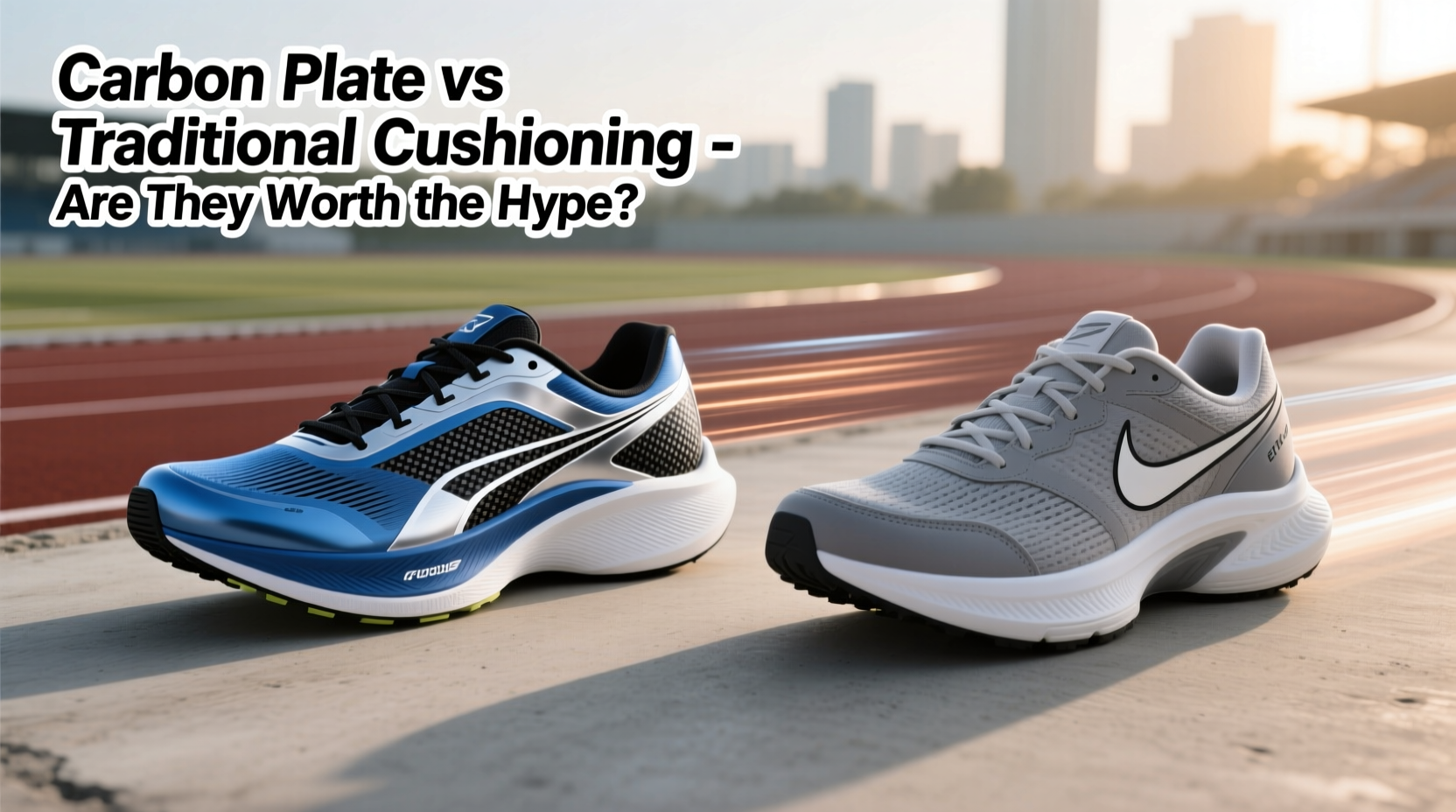
At the heart of the super shoe phenomenon is a thin, rigid sheet of carbon fiber embedded within the midsole, typically arched from heel to forefoot. This plate doesn’t absorb impact like foam—it redirects energy. When your foot strikes the ground, the plate bends slightly, storing kinetic energy. As you push off, it snaps back, acting like a springboard to propel you forward.
This mechanism reduces the metabolic cost of running, meaning you use less energy at the same pace. A landmark 2017 study published in *Sports Medicine* found that runners wearing carbon-plated shoes used 4–6% less energy compared to traditional footwear—a significant advantage over 26.2 miles.
The plate works in tandem with ultra-responsive, lightweight foams such as Pebax or EVA derivatives (like Nike’s ZoomX). These materials compress deeply but rebound quickly, amplifying the plate’s effect. The result is a shoe that feels bouncy, fast, and efficient—especially at race pace.
“Carbon plates change the biomechanics of running by increasing ankle joint work and reducing calf muscle effort. That’s why runners feel ‘pushed’ forward.” — Dr. Iain Hunter, Biomechanics Researcher, Brigham Young University
Traditional Cushioning: The Enduring Appeal of Soft Landings
Before the era of carbon fiber, running shoe innovation focused on protection and comfort. Brands prioritized thick midsoles, gel inserts, air pockets, and dual-density foams to soften impact and support various foot types. These shoes excel in shock absorption, making them ideal for long recovery runs, high-mileage training, or runners prone to joint pain.
Traditional cushioned shoes often feature:
- Softer, more compressible midsoles
- Greater heel-to-toe drop (8–12mm)
- Broad, stable platforms
- No rigid internal plates
They encourage a natural gait cycle, allowing feet to flex and muscles to engage fully. Many podiatrists and physical therapists still recommend these shoes for beginners, heavier runners, or those with a history of Achilles or plantar fasciitis issues.
While they don’t offer the energetic return of carbon-plated models, their durability and versatility make them reliable companions across diverse terrains and paces.
Tip: If you run primarily for health and enjoyment—not competition—traditional cushioned shoes may serve you better in the long run.Head-to-Head Comparison: Performance, Comfort, and Cost
To understand the trade-offs, consider how carbon-plated and traditional shoes differ across key categories.
| Feature | Carbon-Plated Shoes | Traditional Cushioned Shoes |
|---|---|---|
| Energy Return | High – designed to reduce effort and improve efficiency | Moderate – absorbs energy rather than returning it |
| Cushioning | Firm yet deep – responsive but less forgiving on slow days | Soft and plush – ideal for impact reduction |
| Weight | Light (180–250g) – built for speed | Heavier (250–350g) – added material increases durability |
| Durability | Lower – advanced foams degrade faster; average 200–300 miles | Higher – can last 400–600+ miles with proper care |
| Price | Premium ($200–$275) | Moderate ($100–$160) |
| Best Use Case | Races, tempo runs, goal-oriented training | Easy runs, recovery, long distances, daily training |
The data shows a clear divide: carbon-plated shoes optimize performance at the expense of longevity and versatility. Traditional shoes prioritize resilience and comfort, sacrificing some speed potential.
Who Should Consider Carbon-Plated Shoes?
Not every runner benefits from a carbon plate. These shoes shine under specific conditions:
- You're training for a race – especially a half-marathon or marathon where pacing and efficiency matter.
- You maintain a consistent, moderate-to-fast pace – carbon plates work best above 8:00 min/mile; slower runners may not load the plate enough to benefit.
- You have strong calves and achilles tendons – the rigid plate shifts workload to the lower leg, which can strain unconditioned muscles.
- You already log substantial mileage – experienced runners adapt more easily to the altered mechanics.
Conversely, beginners, walkers, or those with a history of posterior chain injuries should approach with caution. The aggressive rocker geometry and stiff sole can increase strain on the Achilles and plantar fascia if the body isn’t prepared.
“We’ve seen a spike in Achilles tendinopathy since 2020, coinciding with the rise of super shoes. They’re not inherently bad—but they demand respect and preparation.” — Dr. Jordan Metzl, Sports Medicine Physician, Hospital for Special Surgery
Real Runner, Real Results: A Mini Case Study
Take Sarah K., a recreational runner from Portland who’d completed three marathons in traditional stability shoes. Her personal best was 3:48. Entering her fourth marathon, she invested in a pair of carbon-plated racers after reading about their performance gains.
She wore them only during long runs at goal pace and reserved her older trainers for easy days. On race day, she felt the difference immediately: a snappy transition and less perceived effort at 8:30/mile. She finished in 3:29—nearly 20 minutes faster.
But the win came with a cost. Two weeks later, she developed tightness in her left Achilles. After physiotherapy, she realized she hadn’t adequately strengthened her calves or phased in the new shoes gradually. Now, she rotates between carbon-plated racers and softer trainers, using each for its intended purpose.
Sarah’s story illustrates a crucial lesson: carbon-plated shoes can elevate performance, but only when integrated wisely into a balanced training plan.
How to Choose: A Step-by-Step Decision Guide
If you're unsure whether to switch, follow this practical timeline:
- Assess Your Goals: Are you aiming to race faster, or simply stay active? Super shoes suit competitive goals.
- Evaluate Your Weekly Mileage: Runners logging less than 20 miles/week may not benefit enough to justify the cost.
- Check Your Running Form: A gait analysis at a specialty store can reveal if you’re a candidate for stiff, low-drop shoes.
- Start with One Pair: Don’t replace your entire rotation. Try carbon-plated shoes only for speedwork or races.
- Break Them In Gradually: Begin with 2–3 mile intervals. Increase distance slowly over 3–4 weeks.
- Listen to Your Body: Note any calf soreness, shin pain, or joint stiffness. Stop if discomfort persists.
- Rotate With Traditional Shoes: Preserve both shoe life and muscle balance by alternating models.
Common Myths About Carbon Plates Debunked
Despite their popularity, several misconceptions persist:
- Myth: They make you faster automatically.
Reality: They enhance efficiency, but fitness, form, and training remain the primary drivers of speed. - Myth: All carbon-plated shoes are the same.
Reality: Geometry, plate shape, foam type, and fit vary widely between brands and models. - Myth: They’re only for elites.
Reality: Recreational runners benefit too—especially those targeting a PR. - Myth: You need them for every run.
Reality: Overuse increases injury risk and wears them out faster. Reserve for key sessions.
FAQ: Your Top Questions Answered
Can I use carbon-plated shoes for daily training?
It’s possible, but not recommended for most runners. Their limited durability and specialized design make them poor candidates for high-mileage daily use. Save them for workouts and races to maximize value and lifespan.
Do carbon plates help with injury prevention?
Not necessarily. While they reduce certain loads (like knee stress), they increase others (Achilles and calf tension). For some, they may reduce injury risk; for others, they introduce new risks. Individual biomechanics matter more than the shoe alone.
Are traditional shoes becoming obsolete?
No. Just as race bikes didn’t eliminate hybrid bicycles, super shoes won’t replace traditional trainers. There’s still a vital place for durable, comfortable shoes in most runners’ arsenals—especially for recovery, walking, or non-competitive running.
Final Checklist Before You Buy
Before investing in a pair of carbon-plated shoes, ask yourself:
- ✅ Am I training for a race where every second counts?
- ✅ Do I run consistently at a pace below 8:00 min/mile?
- ✅ Have I built sufficient calf and ankle strength?
- ✅ Am I willing to rotate shoes and avoid overuse?
- ✅ Can I afford $200+ for a shoe with ~300-mile lifespan?
If you answered yes to most, a carbon-plated model could be a smart addition. If not, a well-cushioned traditional shoe may deliver better long-term value.
Conclusion: Worth the Hype—With Caveats
Carbon-plated running shoes are not a gimmick. They represent a legitimate leap in footwear technology, backed by science and proven in elite and amateur races alike. For runners seeking peak performance, they offer measurable advantages in speed, efficiency, and race-day confidence.
But they are tools, not magic. Their benefits come with trade-offs: higher cost, shorter lifespan, and increased risk of overuse injuries if misused. Meanwhile, traditional cushioned shoes remain excellent choices for everyday comfort, durability, and joint protection.
The smartest approach isn’t choosing one over the other—it’s using both. Build your shoe rotation around your needs. Let carbon-plated shoes carry you through your fastest efforts, and trust traditional models to support your recovery and base-building. Balance performance with sustainability, and you’ll run faster, longer, and healthier.
🚀 Ready to optimize your shoe rotation? Assess your next race goal, then pick one upgrade to try—whether it’s a carbon-plated racer or a max-cushioned trainer. Share your experience with your running community and see how small changes lead to big results.








