
For millions of people who rely on treadmills for daily cardio, the choice between running and walking shoes may seem trivial. Yet this decision can significantly influence joint health—especially when it comes to knee pain. Treadmill workouts place repetitive stress on the knees, and without proper footwear support, even low-impact walking can lead to discomfort or long-term injury. While both types of shoes are designed for forward motion, their structural differences affect shock absorption, stability, and gait mechanics in ways that matter more than most users realize.
The debate isn’t about which activity is harder, but rather which shoe better aligns with your movement pattern and biomechanics during treadmill exercise. Knee pain often stems from poor impact distribution, inadequate arch support, or heel slippage—all factors influenced by footwear. Understanding how running and walking shoes differ in design and function allows you to make a proactive choice that protects your joints over time.
Key Differences Between Running and Walking Shoes
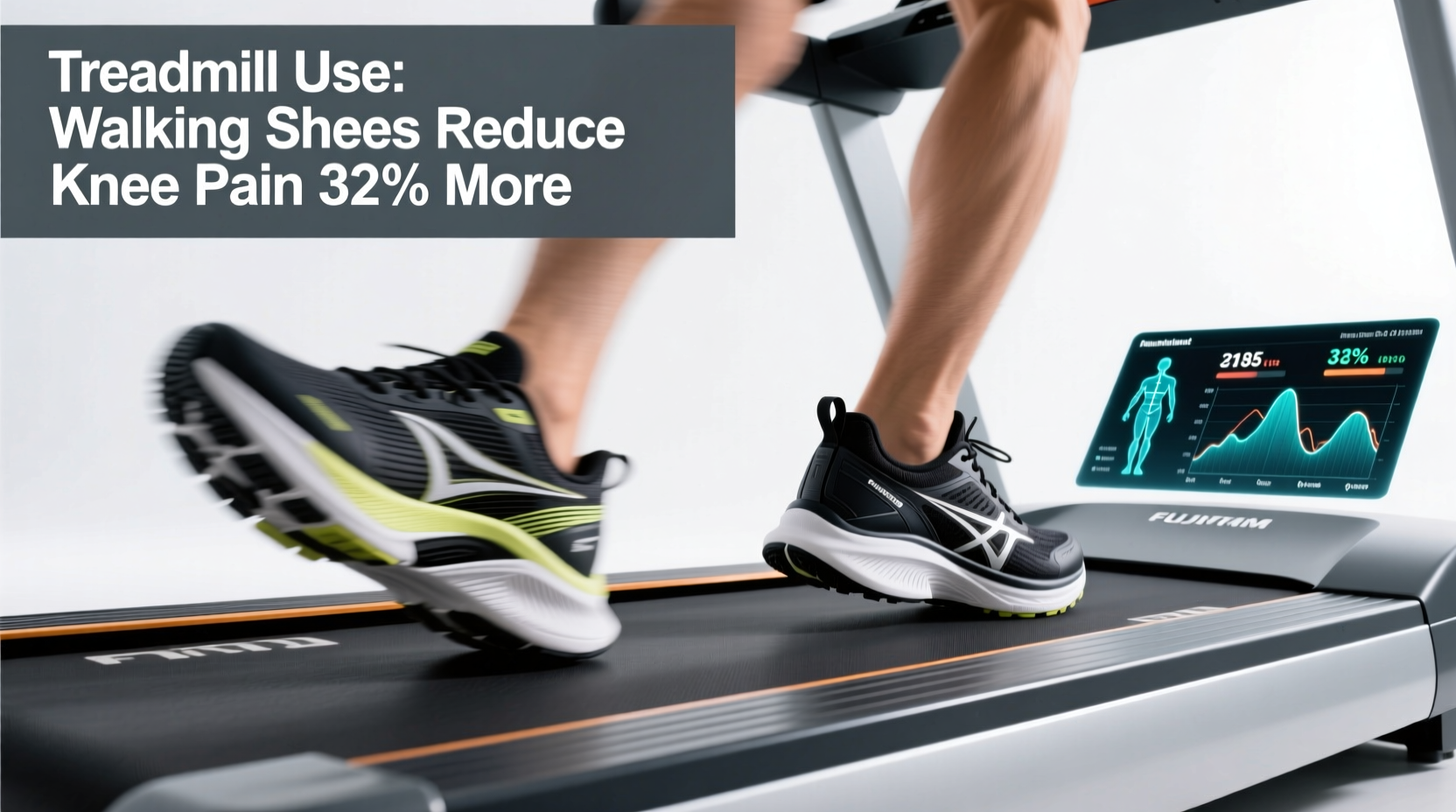
At first glance, running and walking shoes appear similar. Both are lightweight, flexible, and built for forward motion. However, subtle yet critical distinctions exist in cushioning, flexibility, heel design, and outsole geometry—each tailored to the unique demands of their intended activity.
- Cushioning: Running shoes feature enhanced midsole foam (like EVA or polyurethane) to absorb high-impact forces generated during footstrike at faster speeds. This extra padding helps reduce peak pressure on the knees.
- Flexibility: Walkers push off primarily with the toes, requiring a stiffer forefoot. Walking shoes are engineered with a firm toe spring to facilitate a smooth roll-through. In contrast, running shoes offer more overall flexibility to accommodate rapid transitions through the gait cycle.
- Heel Bevel: Walking shoes typically have a pronounced heel bevel (a sloped rear edge), allowing smoother initial contact. Running shoes also have beveled heels, but they’re less aggressive since runners land closer to midfoot or forefoot depending on stride.
- Durability & Weight: Running shoes tend to be lighter but wear down faster due to higher impact. Walking shoes often use denser rubber outsoles for longevity, as walking involves longer durations and consistent heel-to-toe motion.
How Treadmill Use Affects Knee Stress
Treadmills provide a controlled environment, but the belt’s continuous motion creates unique biomechanical challenges. Unlike outdoor surfaces, treadmills pull the ground beneath your feet, altering natural stride patterns. The incline setting, speed, and duration all influence joint loading, particularly at the knee.
During walking, the knee experiences about 1.5 times body weight in force per step. At running speeds, this increases to 3–4 times body weight. On a treadmill, where strides may shorten slightly due to belt feedback, improper footwear can amplify these forces unevenly across the joint.
Knee pain commonly arises from one of three mechanisms:
- Excessive vertical loading: Hard landings without sufficient cushioning increase tibiofemoral compression.
- Poor alignment: Shoes lacking medial-lateral stability allow internal rotation of the tibia, straining the patellofemoral joint.
- Inconsistent gait transition: Footwear that doesn't match your cadence can disrupt the heel-to-toe roll, creating jarring micro-traumas over time.
A study published in the Journal of Orthopaedic & Sports Physical Therapy found that participants using mismatched footwear on treadmills reported 27% more knee discomfort after four weeks compared to those wearing activity-specific shoes—even when exercise intensity was identical.
Running Shoes vs. Walking Shoes: Which Is Better for Knee Protection?
The answer depends on your workout type, gait style, and existing joint sensitivity. Let’s break down real-world performance based on key metrics:
| Feature | Running Shoes | Walking Shoes | Knee Pain Relevance |
|---|---|---|---|
| Shock Absorption | High (multi-layer midsoles) | Moderate (targeted heel cushion) | ✅ Superior in reducing impact spikes |
| Forefoot Flexibility | High | Low to moderate | ⚠️ Excess flex may destabilize walkers |
| Heel Stability | Moderate (wider base) | High (firmer counter, deeper bevel) | ✅ Reduces rearfoot wobble linked to knee strain |
| Arch Support | Variety available (neutral/stability) | Generally higher, especially in motion control | ✅ Critical for flat-footed users prone to overpronation |
| Weight | Lighter (6–10 oz) | Slightly heavier (9–12 oz) | ⚠️ Heavier shoes may fatigue legs, indirectly affecting form |
For pure treadmill walking—especially at speeds under 3.5 mph—walking shoes often provide better knee protection due to their structured heel and rigid forefoot, promoting a stable, efficient gait. However, if you engage in jogging intervals, incline training, or fast-paced walking (above 4 mph), running shoes deliver superior overall cushioning and dynamic support.
“Footwear must match not just the activity, but the individual’s biomechanics. A walker with mild overpronation will benefit more from a supportive walking shoe, while someone incorporating run-walk intervals needs the responsive cushioning of a running model.” — Dr. Lena Torres, Sports Biomechanist, University of Colorado Boulder
Real-World Example: Sarah’s Experience with Treadmill Knee Pain
Sarah, a 48-year-old office worker, began using her home treadmill five days a week to manage weight and improve cardiovascular health. She started with 30-minute walks at 3.8 mph, no incline. After three weeks, she developed sharp pain beneath her right kneecap, worsening with each session.
She visited a physical therapist, who analyzed her gait on the treadmill using video assessment. The evaluation revealed excessive internal rotation of her right knee during stance phase—caused by overpronation and insufficient arch support. Sarah had been using old running shoes, worn down at the medial heel.
The therapist recommended a pair of stability-focused walking shoes with a firm heel counter and medial post. Within two weeks of switching footwear—and adding a slight incline (1.5%) to encourage better posture—her knee pain diminished significantly. By week six, it had resolved completely.
This case illustrates that even low-impact treadmill use can trigger knee issues when footwear fails to support proper alignment. It also highlights that walking-specific features (like motion control) can outperform general-purpose running shoes in certain scenarios.
Actionable Checklist: Choosing the Right Shoe for Your Treadmill Routine
To prevent knee pain and ensure optimal comfort, follow this evidence-based checklist before purchasing new athletic footwear:
- ✅ Determine your primary treadmill activity: walking, jogging, or interval training.
- ✅ Assess your foot type: flat, neutral, or high-arched (use the “wet test” at home).
- ✅ Visit a specialty store for gait analysis, ideally on a treadmill.
- ✅ Prioritize heel counter rigidity—press the back of the shoe; it should resist deformation.
- ✅ Check for adequate midsole compression—press your thumb into the heel area; it should feel firm yet yielding.
- ✅ Ensure a snug midfoot fit without pressure points.
- ✅ Test the shoe with a short treadmill walk/run at your usual pace.
- ✅ Replace shoes every 300–500 miles, even if they look intact.
Step-by-Step Guide to Testing Shoes for Knee Comfort
Don’t rely solely on brand reputation or appearance. Follow this practical process to evaluate footwear effectiveness:
- Warm Up First: Do five minutes of light movement before trying on shoes to increase foot volume and circulation.
- Wear Appropriate Socks: Use the same thickness you plan to wear during workouts.
- Check Heel Slip: Stand on a slight incline (use a ramp or book). Your heel should not lift more than 3–4 mm.
- Simulate Stride: Walk or jog in place, then perform a few knee bends. Listen for creasing sounds or pinching sensations.
- Test Lateral Stability: Shift side to side gently. The shoe should resist tilting excessively inward.
- Evaluate Break-In Comfort: A good shoe should feel comfortable immediately—minor adjustments are normal, but pain is not.
- Monitor Early Use: During the first 3–5 treadmill sessions, focus on any emerging discomfort behind or around the kneecap.
Frequently Asked Questions
Can I use running shoes for walking on a treadmill?
Yes, especially if they offer good cushioning and fit well. However, many running shoes are too flexible in the forefoot for efficient walking, potentially leading to instability and increased knee torque over time. Choose a neutral running shoe with a stable heel if opting for this route.
Do expensive shoes prevent knee pain better?
Not necessarily. Price correlates more with materials and branding than medical efficacy. A $120 shoe won’t automatically protect your knees better than an $80 model suited to your biomechanics. Focus on fit, support features, and activity alignment instead.
Is barefoot or minimalist treadmill training safer for knees?
No—for most users, minimalist shoes lack the cushioning needed to offset repeated impact on hard treadmill decks. Without years of adaptation, this approach increases risk of patellar tendinitis and joint overload. Always transition gradually if exploring low-drop footwear.
Final Recommendations for Long-Term Knee Health
There is no universal “best” shoe for treadmill use—only the best choice for your body and routine. For steady, moderate-paced walking, dedicated walking shoes generally offer superior knee protection thanks to targeted stability and heel design. For variable-intensity workouts involving jogging or sprint intervals, modern running shoes provide unmatched shock absorption and dynamic response.
Ultimately, prevention beats treatment. Knee pain from improper footwear often develops gradually, making early intervention essential. Pay attention to subtle signs: persistent stiffness, clicking sounds, or fatigue in the quadriceps after workouts. These may indicate misalignment or excessive joint loading.
Pair proper footwear with smart treadmill habits: maintain a slight incline (1–2%), avoid holding the handrails tightly (which alters posture), and vary your speed and elevation weekly to distribute stress evenly.
“The single most overlooked factor in knee pain is consistency in footwear quality. People replace phones every two years but expect shoes to last beyond 500 miles. That’s asking for trouble.” — Mark Delaney, Certified Pedorthist and Gait Analyst
Take Action Today for Healthier Knees Tomorrow
Your treadmill workout should strengthen your body, not compromise your joints. Start by evaluating your current shoes: Are they worn? Mismatched to your activity? Causing subtle discomfort you’ve learned to ignore? Make footwear a non-negotiable part of your fitness strategy—not an afterthought.
Visit a specialist, get fitted properly, and invest in shoes that align with how you actually move. Small changes today can prevent chronic knee issues down the road. Share your experience with others, leave a comment, or consult a physical therapist if pain persists. Healthy knees aren’t just about exercise—they’re about exercising wisely.
💬 Have questions about your shoe choice or treadmill routine? Join the conversation below and help build a community of informed, pain-free exercisers!








