
Every day, millions of people step out their front doors to run errands—picking up groceries, dropping off packages, meeting friends for coffee. These trips may seem minor, but they often involve hours of standing, walking on hard surfaces, and navigating uneven sidewalks. The right footwear can make the difference between arriving home with energized feet or throbbing arches. While both running and walking shoes are designed for foot motion, they serve different biomechanical purposes. Understanding these differences is essential when choosing what to wear for daily errands.
Despite their similarities in appearance, running and walking shoes are engineered with distinct priorities: one built for high-impact propulsion, the other for consistent heel-to-toe efficiency. Choosing the wrong shoe for prolonged walking could lead to fatigue, joint strain, or even long-term foot issues. This article breaks down the structural, functional, and comfort-based differences between running and walking shoes to help you determine which provides superior support during routine daily activities.
Biomechanics of Walking vs Running: Why Shoe Design Matters
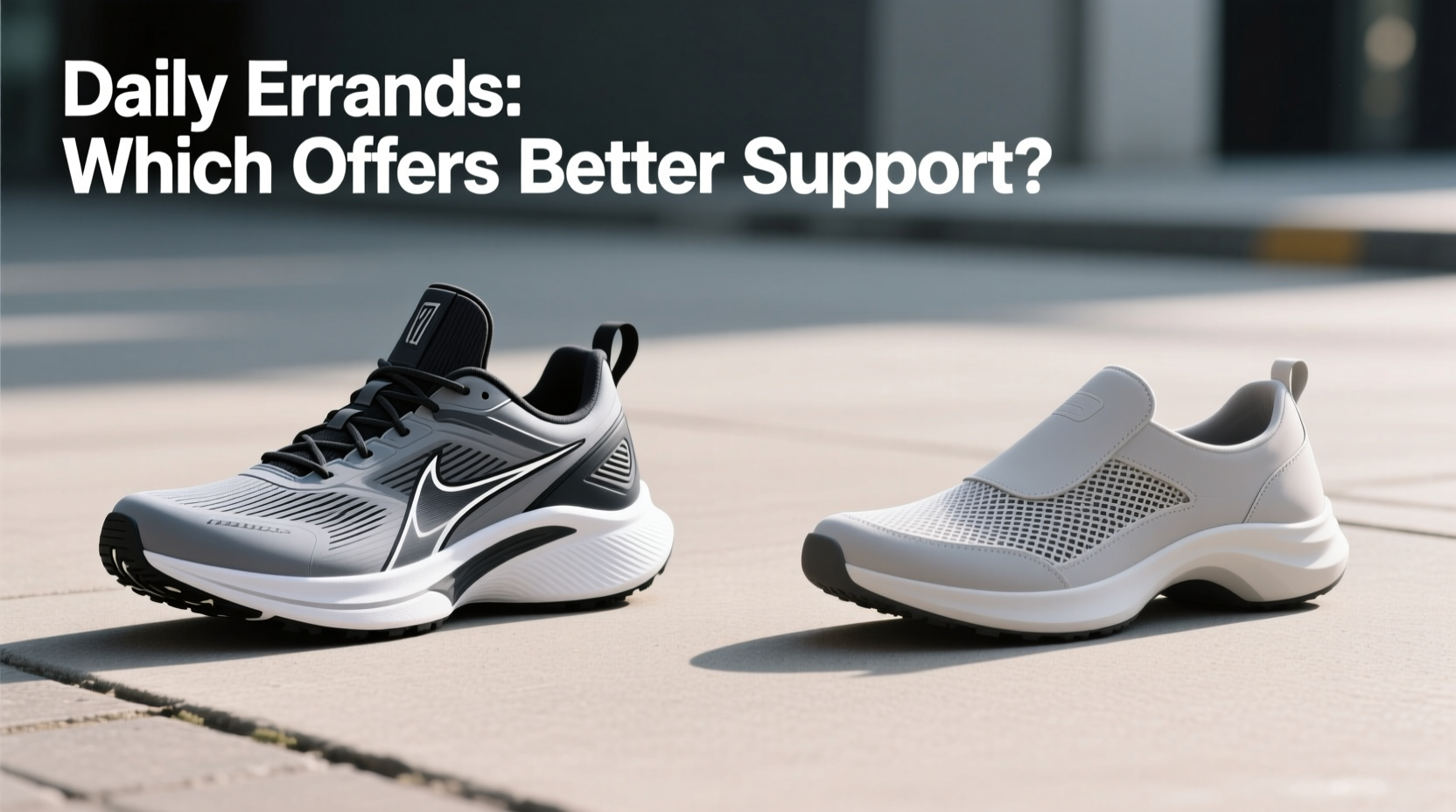
The human gait changes significantly between walking and running. In walking, one foot is always in contact with the ground. The heel strikes first, followed by a smooth roll through the midfoot and push-off from the toes. This motion is low-impact and predictable, placing consistent pressure along the sole. Running, however, involves a flight phase where both feet leave the ground. Each footstrike absorbs two to three times body weight in force, requiring greater shock absorption and dynamic stability.
Because of this, running shoes are constructed with deep cushioning in the heel and forefoot to dissipate impact forces. They often feature flexible midsoles that allow rapid transitions during strides. Walking shoes, on the other hand, prioritize a firm, stable platform that supports the heel-strike and promotes an efficient forward roll. Excessive cushioning in a running shoe can actually destabilize a walker’s gait, leading to overpronation or lateral ankle strain during slow, controlled movement.
“Walking generates less peak force than running, but it creates longer ground contact time. Shoes need to support sustained pressure, not just absorb sudden impacts.” — Dr. Lena Torres, Podiatrist & Gait Specialist
Support Features Compared: Cushioning, Stability, and Fit
When evaluating support, consider more than just softness underfoot. True support includes structure, motion control, arch compatibility, and durability. Below is a comparison of key features between running and walking shoes as they relate to daily errands.
| Feature | Running Shoes | Walking Shoes |
|---|---|---|
| Cushioning Level | High, especially in heel and forefoot | Moderate, evenly distributed |
| Heel Counter | Firm, designed for impact stabilization | Very firm, prevents slippage during heel strike |
| Midsole Flexibility | High (encourages quick toe-off) | Controlled (supports natural roll, not snap) |
| Arch Support | Varies widely; often neutral or moderate | Typically higher and more structured |
| Outsole Durability | Good, but optimized for forward motion | Excellent, with reinforced heel and ball areas |
| Weight | Lighter (for speed and agility) | Slightly heavier (for stability) |
For daily errands involving extended periods of standing or walking on pavement, the structured support and durable outsoles of walking shoes often provide better long-term comfort. Running shoes, while comfortable initially, may compress too quickly during slow, repetitive steps, reducing their effectiveness over several hours.
Tip: If you're primarily walking on concrete or tile floors (like in malls or grocery stores), opt for a shoe with a firmer midsole to prevent excessive sinking and muscle fatigue.Real-World Use Case: A Day in the Life of Two Commuters
Consider two individuals who each walk approximately 5 miles per day during errands and commutes.
Sarah, 34, wears her lightweight running shoes every day. She loves how soft they feel at first, but by mid-afternoon, she notices her arches begin to ache. Her shoes compress deeply with each step, and because the heel is so cushioned, her foot rolls inward slightly more than intended. Over time, she develops mild plantar fasciitis.
James, 41, chooses dedicated walking shoes with firm heel counters and moderate arch support. Though they don’t feel as plush out of the box, he finds they maintain consistent support throughout the day. After six months of regular use, he reports no foot pain and appreciates the even wear pattern on the soles.
This contrast illustrates a critical point: initial comfort doesn't always equal long-term support. For non-athletic, steady-paced activity like errands, the stability and balanced construction of walking shoes often prove more beneficial than the reactive cushioning of running models.
How to Choose the Right Shoe for Your Errand Routine
Selecting the best shoe depends on your specific habits, foot type, and terrain. Follow this step-by-step guide to make an informed decision.
- Assess your daily walking volume. If you walk less than 2 miles per day, either shoe type may suffice. Beyond 3 miles, walking-specific support becomes increasingly important.
- Evaluate your foot mechanics. Do you overpronate (roll inward)? Supinate (roll outward)? Those with flat feet or overpronation typically benefit more from the structured midfoot support in walking shoes.
- Consider the surfaces you walk on. Concrete, asphalt, and tile are unforgiving. Shoes with durable rubber outsoles and shock-absorbing yet firm midsoles handle these best.
- Test the heel-to-toe transition. Walk naturally in the store. A good walking shoe should promote a smooth roll from heel to toe without excessive flex in the middle.
- Check the upper fit. Look for breathable mesh with secure lacing. Avoid shoes that pinch the forefoot—common in narrow running models.
- Replace based on mileage. Walking shoes last 500–700 miles; running shoes 300–500. Even if worn only for errands, replace them before visible wear sets in.
Checklist: Signs You Need Walking-Specific Shoes
- You spend more than 2 hours per day on your feet
- You frequently walk on hard urban surfaces
- You experience arch or heel pain after walking
- Your current shoes show uneven wear on the inner heel
- You have diagnosed overpronation or flat feet
- You carry shopping bags or strollers regularly
Can Running Shoes Work for Walking Errands?
Yes—but with caveats. Many people successfully use running shoes for daily walking, especially if the model has ample support and isn’t overly cushioned. Modern running shoes vary widely; some are built for maximalist cushioning (like Hoka), while others emphasize responsiveness (like Brooks Ghost or Nike Pegasus). The latter tend to work better for walking due to their balanced geometry.
However, there are trade-offs. Deeply cushioned running shoes can cause instability during slow walking because the foot sinks too far into the foam, disrupting natural alignment. Additionally, the flexible forefoot encourages a quicker stride than typical walking requires, potentially leading to inefficient gait patterns over time.
If you prefer running shoes for errands, look for models labeled “daily trainer” or “neutral support” with a lower heel drop (8mm or less). Avoid super-cushioned or racing-oriented designs. Pair them with supportive insoles if needed, and monitor for signs of fatigue or discomfort.
Tip: Try on shoes later in the day when your feet are slightly swollen—it mimics real-world conditions during extended errands.Frequently Asked Questions
Can I use my running shoes for walking around town?
Yes, many running shoes offer adequate comfort for light walking. However, for prolonged use—especially over 3 miles per day—walking shoes provide better structural support and durability. If using running shoes, choose models with moderate cushioning and good heel stability.
Do walking shoes look outdated compared to running shoes?
Not anymore. Major brands like New Balance, Skechers, and ECCO now design walking shoes with sleek, modern aesthetics suitable for casual wear. Many models resemble athletic sneakers and come in versatile colors.
Is it harmful to wear running shoes for walking every day?
It’s not inherently harmful, but it may contribute to inefficiency or discomfort over time. Excessive cushioning can destabilize your gait, and faster-wearing outsoles may reduce traction on smooth surfaces. If you experience foot, knee, or hip pain, consider switching to a walking-specific design.
Final Recommendation: Walking Shoes Win for Daily Errands
While running shoes excel in absorbing high-impact forces during jogging or sprinting, they are over-engineered for the steady, low-impact nature of daily errands. Walking shoes, by contrast, are purpose-built for the biomechanics of pedestrian movement: heel strike, midstance stability, and smooth toe-off. Their firmer cushioning, reinforced heels, and structured arch support align more closely with the demands of standing in lines, navigating sidewalks, and carrying loads.
That said, individual needs vary. Someone with high arches and supination might find extra cushioning in a running shoe beneficial. Others with plantar fasciitis or flat feet will likely gain more relief from the targeted support of a quality walking shoe. The key is matching shoe design to your actual activity—not just assuming all athletic footwear is interchangeable.
“The best shoe is the one that matches your gait, not the brand or trend.” — Dr. Alan Zhou, Sports Medicine Physician
Take Action: Optimize Your Footwear for Everyday Comfort
Your feet carry you through life—one step at a time. Don’t underestimate the impact of your daily shoe choice. Whether you’re picking up prescriptions, browsing farmers markets, or commuting across town, proper support reduces fatigue and protects long-term joint health. Visit a specialty footwear store for a gait analysis, try on both running and walking models, and pay attention to how your feet feel after 20 minutes of walking—not just 20 seconds.
Upgrade your errand game with footwear that works *with* your body, not against it. Your feet will thank you tomorrow—and years down the road.
💬 Have a favorite shoe for daily walks? Share your go-to model and why it works for you in the comments below.








