For runners who log miles on city sidewalks, choosing the right footwear is about more than comfort—it's about long-term joint health, injury prevention, and efficient movement. While both running shoes and trail shoes are engineered for motion and impact absorption, their design philosophies diverge significantly. One is built for predictable, flat surfaces; the other for unpredictable, rugged terrain. But when it comes to daily use on concrete and asphalt, which shoe truly delivers superior support?
The answer isn’t as straightforward as “stick to road shoes.” Urban environments present unique challenges: uneven pavement, sudden elevation changes, metal grates, cracked sidewalks, and wet surfaces. These factors blur the line between road and trail conditions. As a result, many runners find themselves questioning whether traditional running shoes are still the best choice—or if trail shoes, with their rugged construction, offer unexpected advantages in the city.
Understanding Support: What It Really Means for Runners
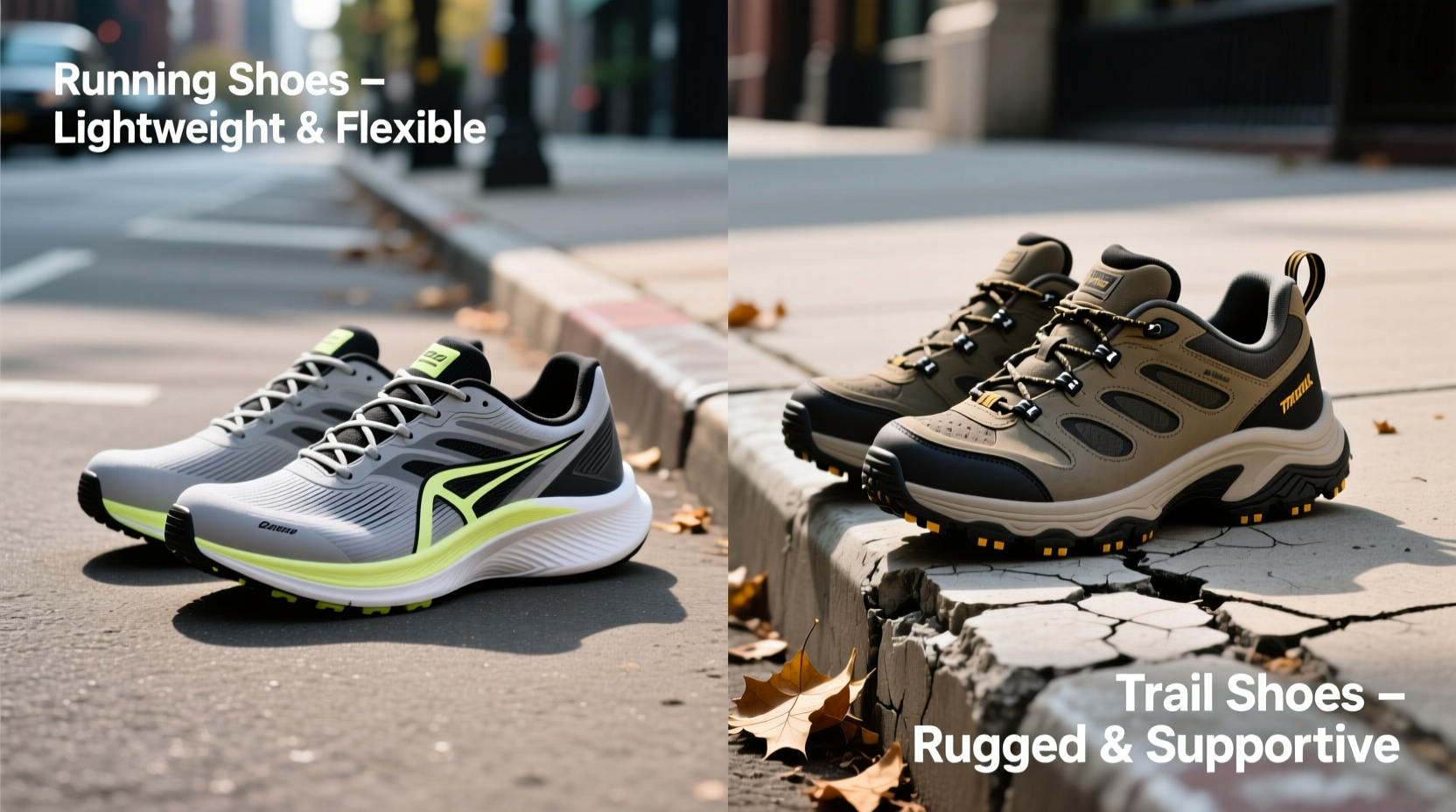
Support in running footwear refers to how well a shoe stabilizes the foot during impact and propulsion. It includes arch support, heel counter rigidity, midfoot containment, torsional stability, and cushioning response. However, support isn't just structural—it's also functional. A shoe may have excellent medial posting or a firm midsole, but if it doesn’t align with your gait pattern or foot strike, it can do more harm than good.
On city sidewalks, support becomes especially critical due to the unforgiving nature of hard surfaces. Concrete transmits up to 3–5 times more impact force to joints compared to softer trails or tracks. Over time, inadequate shock absorption or poor alignment can lead to plantar fasciitis, shin splints, or knee pain. Therefore, the ideal shoe must balance cushioning, stability, and responsiveness.
“Urban running demands a hybrid approach—protection from repetitive impact without sacrificing agility or feedback from the ground.” — Dr. Lena Torres, Sports Biomechanist at Metro Movement Lab
Trail shoes often feature rock plates, deeper lugs, and stiffer soles designed to protect feet from roots and stones. But these same features can alter stride mechanics on flat surfaces. Conversely, running shoes prioritize lightweight cushioning and smooth transitions, yet may lack durability or lateral stability when navigating broken pavement or slick crosswalks.
Key Differences Between Running and Trail Shoes
To determine which shoe offers better support on sidewalks, it’s essential to compare core design elements. The following table outlines critical differences across five key categories:
| Feature | Running Shoes (Road) | Trail Shoes |
|---|---|---|
| Cushioning | Soft, responsive foam optimized for repeated impact on flat surfaces | Firmer, protective underfoot with rock plates; less rebound-focused |
| Outsole Traction | Siped rubber patterns for grip on dry/wet pavement; minimal lug depth | Deep, aggressive lugs for mud/loose terrain; overkill on smooth concrete |
| Durability | Moderate; upper and sole wear faster on abrasive surfaces | High; reinforced uppers, abrasion-resistant toe caps, thicker outsoles |
| Stability & Support | Engineered for neutral or overpronation control via medial posts or dual-density foam | Natural stability from wider base and stiffer chassis; less targeted biomechanical correction |
| Weight | Lightweight (7–10 oz average); promotes speed and efficiency | Heavier (9–13 oz average); added materials increase inertia |
While this comparison highlights general trends, there’s growing overlap in modern designs. Some “hybrid” models now blend road-friendly cushioning with trail-inspired durability. Still, most runners must decide whether they prioritize performance efficiency or protective robustness.
Tip: If you frequently run near parks, river paths, or construction zones where sidewalk quality varies, consider a trail shoe with moderate lugs and flexible rock plates—they offer protection without excessive stiffness.When Trail Shoes Outperform on Sidewalks
Despite being designed for off-road use, trail shoes can offer tangible benefits in certain urban contexts. Their structural reinforcements often translate into greater overall support, particularly for runners with previous injuries or those logging high weekly mileage.
One major advantage lies in durability. City sidewalks are far from uniform. Cracks, raised slabs, expansion joints, and debris create micro-impacts that degrade standard running shoe outsoles within months. Trail shoes, built with carbon rubber compounds and reinforced mesh, resist abrasion far longer. This longevity means consistent support over time—no sudden loss of traction or midsole compression due to wear.
Additionally, trail shoes typically have a wider platform and higher stack height, improving lateral stability. For runners prone to ankle rolls—especially when stepping off curbs or hitting uneven seams—this added base provides meaningful protection. The rigid heel counters and secure midfoot wraps common in trail models also enhance lockdown, reducing internal foot slippage that can cause blisters or strain.
Consider Maria, a 38-year-old runner in Chicago who commutes by foot and logs 25 miles weekly on downtown sidewalks. After developing chronic metatarsal pain from her lightweight racing flats, she switched to a trail model with a full-length rock plate and moderate cushioning. Within three weeks, her forefoot discomfort decreased significantly. “I realized I wasn’t running on perfect asphalt,” she said. “There were potholes, snowmelt damage, steel plates over construction sites—I was essentially doing low-grade trail running every day.” Her new shoes absorbed irregular impacts more effectively, providing consistent support where her road shoes had failed.
Why Running Shoes Still Dominate for Most City Runners
Despite the durability and protection offered by trail shoes, conventional running shoes remain the optimal choice for the majority of urban runners. Their design aligns precisely with the biomechanics of road running: smooth heel-to-toe transitions, energy return, and lightweight responsiveness.
Trail shoes often sacrifice flexibility for protection. Many feature stiff midsoles that limit natural foot splay and reduce proprioception—the body’s ability to sense foot position. On predictable surfaces like sidewalks, this reduced feedback forces muscles to work harder to stabilize each step, increasing fatigue over time. In contrast, running shoes allow subtle adjustments with each stride, promoting efficient form.
Cushioning is another area where road shoes excel. Modern foams like PWRRUN PB, Boost, and ZoomX deliver soft landings while maintaining bounce-back. This combination reduces joint stress and supports endurance. Trail shoes, while protective, tend to feel “dead” or unresponsive on hard surfaces because their cushioning prioritizes impact dispersion over rebound.
A step-by-step guide to determining the best shoe for your urban runs:
- Evaluate your route consistency. Are sidewalks generally even and clear, or do they frequently include gravel patches, grass detours, or damaged sections?
- Assess your injury history. Have you experienced shin splints, plantar fasciitis, or ankle instability? Chronic issues may benefit from trail shoe protection.
- Measure weekly mileage. High-mileage runners (30+ miles/week) may appreciate the extended durability of trail models.
- Test transition speed. Try walking briskly in both types—if the trail shoe feels sluggish or clunky, it may hinder performance.
- Check tread wear after two weeks. Excessive wear on a road shoe’s outer edges may signal need for a more durable option.
“Runners often underestimate how much sidewalk imperfections affect their biomechanics. But switching to trail shoes isn’t always the fix—sometimes a stability-focused road shoe with enhanced durability is the smarter compromise.” — Jordan Kim, Certified Pedorthist and Gait Analyst
Action Plan: Choosing the Right Shoe for Your Urban Environment
Instead of treating the decision as binary, think in terms of context-specific solutions. Use the following checklist to make an informed choice based on your actual running conditions:
- ✅ Do you regularly encounter puddles, mud patches, or grassy shortcuts? → Consider trail shoes for water resistance and grip.
- ✅ Are your routes consistently paved, clean, and flat? → Stick with performance-oriented running shoes.
- ✅ Do you experience foot fatigue or joint pain after short runs? → Evaluate cushioning depth and midsole resilience.
- ✅ Is shoe lifespan under six months due to outsole wear? → Upgrade to a trail or hybrid model for durability.
- ✅ Do you value speed and agility over rugged protection? → Prioritize lightweight road shoes.
- ✅ Are you training for races on roads? → Train primarily in road shoes to match race-day conditions.
Hybrid options—such as the Hoka Speedgoat Series, Saucony Peregrine Street, or Altra Lone Peak All-Wheather—are increasingly popular among city dwellers. These models blend trail-ready outsoles with road-comfortable midsoles, offering a middle ground. They provide extra protection without the weight penalty of full trail builds.
Tip: Rotate between two pairs—one road-focused, one trail-capable—to vary stress on your feet and extend the life of both shoes.Frequently Asked Questions
Can I use trail shoes for daily commuting walks on sidewalks?
Yes, especially if your commute involves variable terrain or weather. Trail shoes offer excellent durability and slip resistance. However, prolonged walking in stiff-soled models may cause calf or Achilles tightness for some users. Break them in gradually.
Do trail shoes increase injury risk on flat surfaces?
Potentially. The elevated heel drop and reduced flexibility in many trail shoes can alter gait mechanics, leading to overstriding or reduced cadence. Runners transitioning from road shoes should start with shorter distances and focus on maintaining quick turnover.
Are running shoes less supportive because they wear out faster?
Not inherently. Support diminishes as cushioning compresses and materials degrade. However, most road shoes maintain effective support for 300–500 miles. Monitoring wear patterns and replacing shoes proactively ensures consistent performance.
Final Verdict: Match the Shoe to the Street
So, which offers better support on city sidewalks—running shoes or trail shoes? The answer depends on your environment, biomechanics, and goals. For most runners on consistent, well-maintained pavement, traditional running shoes deliver superior support through optimized cushioning, natural motion guidance, and lightweight efficiency.
However, in cities with aging infrastructure, frequent construction, or mixed-surface routes, trail shoes can provide unmatched durability and protection. Their robust build absorbs irregular impacts, shields against sharp debris, and enhances stability on compromised surfaces.
Rather than defaulting to convention, assess your actual running conditions. Take note of sidewalk quality, weather exposure, and personal comfort. The best-supported run isn’t defined by shoe category, but by thoughtful alignment between footwear and function.
💬 Have you switched from road to trail shoes—or vice versa—for city running? Share your experience and help others navigate the urban shoe dilemma. Your insight could be the tip someone needs to stay injury-free.








