
For runners at every level, the debate between treadmill and outdoor running often centers on convenience, motivation, and terrain. But one persistent concern rises above the rest: knee health. Many runners believe that pounding the pavement damages their joints over time, while others assume treadmills are inherently safer. The truth is more nuanced. Surface type, biomechanics, training habits, and individual physiology all play a role in how your knees respond to different running environments.
This article examines the real impact of pavement versus treadmill running on knee joints, dispels common myths, and provides actionable insights to help you run smarter—wherever you choose to lace up.
The Biomechanics of Running: How Surfaces Affect Your Knees
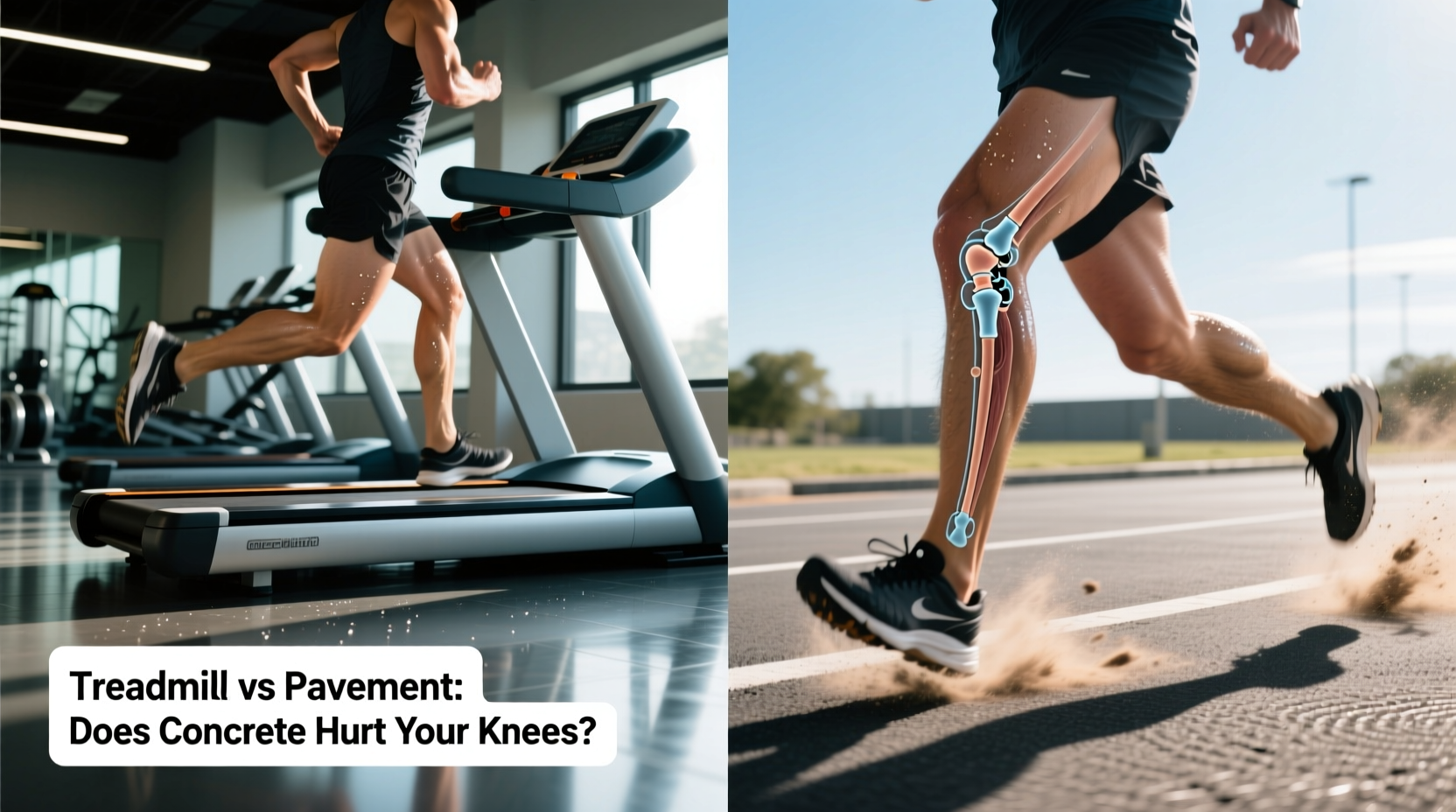
When your foot strikes the ground during running, forces travel up through your lower limbs, absorbed primarily by muscles, tendons, and joints—including the knees. The magnitude and distribution of these forces depend heavily on the surface's stiffness and energy return.
Pavement is rigid. Concrete and asphalt offer minimal give, meaning more shock is transmitted back into the body with each step. In contrast, treadmills feature cushioned belts designed to absorb impact, reducing peak force on joints. Studies show that treadmill running typically results in 10–15% lower ground reaction forces compared to concrete surfaces.
However, lower impact doesn’t automatically mean less stress. Treadmill belts propel your feet backward, altering stride mechanics. Runners often shorten their stride and increase cadence slightly, which can shift load patterns across the knee joint. Over time, this subtle change may benefit some runners but cause discomfort for others, especially those with pre-existing biomechanical imbalances.
“Surface stiffness matters, but so does how you adapt to it. The same runner might experience less knee pain on a treadmill not because it’s ‘softer,’ but because their gait becomes more efficient under consistent conditions.” — Dr. Lena Torres, Sports Biomechanist at Boulder Movement Lab
Comparing Impact: Pavement, Treadmill, and Other Surfaces
To understand how different surfaces influence knee stress, consider both objective data and subjective experience. While pavement delivers higher initial impact, variables like footwear, running form, and pace modulate the actual strain on the joint.
| Surface Type | Relative Impact Force | Knee Joint Load | Pros | Cons |
|---|---|---|---|---|
| Concrete Pavement | High (100%) | Moderate to High | Durable, predictable path | High shock transmission, monotony increases overuse risk |
| Asphalt | Moderate-High (90%) | Moderate | Slightly more give than concrete | Still rigid; uneven sections can cause instability |
| Treadmill Belt | Moderate (75–85%) | Low to Moderate | Cushioned, consistent, weatherproof | Altered gait mechanics; limited natural terrain variation |
| Grass or Trail | Low-Moderate (60–70%) | Variable | Natural cushioning, engages stabilizing muscles | Uneven terrain increases ankle sprain risk if unprepared |
| Track (Synthetic) | Low-Moderate (70%) | Low | Engineered for performance and safety | Less accessible; repetitive circular motion may create imbalance |
The data suggests that while pavement generates the highest impact, knee pain isn't inevitable. Many lifelong road runners maintain healthy joints through proper training progression, footwear selection, and strength conditioning. Conversely, some treadmill users develop patellofemoral pain due to repetitive motion without adequate hip and glute engagement.
Does Pavement Actually Damage Knees Over Time?
The idea that pavement “wears out” knees is widespread but oversimplified. Osteoarthritis and other degenerative joint conditions are multifactorial. Long-term studies have not found conclusive evidence that recreational running on hard surfaces increases the risk of knee osteoarthritis in healthy individuals. In fact, regular running—even on roads—may support joint health by improving cartilage nutrition and muscular stability.
A landmark study published in *Medicine & Science in Sports & Exercise* followed over 74,000 runners and walkers for nearly eight years. The researchers found that runners had a significantly lower incidence of knee osteoarthritis and hip replacements than walkers, despite covering greater mileage on average. The key factor wasn’t surface—it was movement consistency and cardiovascular fitness.
That said, acute knee pain such as patellar tendinitis, iliotibial (IT) band syndrome, or meniscus irritation can flare up more quickly on unforgiving surfaces, especially when combined with sudden increases in volume or intensity. For runners recovering from injury or managing chronic joint sensitivity, reducing pavement exposure temporarily may aid recovery.
Tip: If you're experiencing knee discomfort on pavement, try alternating days with treadmill or trail runs to reduce cumulative impact while maintaining aerobic fitness.Optimizing Your Running Strategy: A Balanced Approach
Rather than treating treadmill and outdoor running as opposites, think of them as complementary tools. Each offers unique advantages that, when used strategically, can enhance performance and protect joint health.
Outdoor running builds environmental awareness, improves balance, and exposes the body to variable pacing and terrain—key elements for functional strength. Treadmills provide controlled conditions ideal for interval training, pacing accuracy, and consistency during inclement weather.
Step-by-Step Guide to Minimizing Knee Stress Across Surfaces
- Assess your current knee health. If you have existing pain or a history of injury, consult a physical therapist before making major changes to your routine.
- Limit abrupt transitions. Avoid switching entirely from treadmill to pavement (or vice versa) overnight. Allow 2–3 weeks of gradual adaptation.
- Incorporate surface rotation. Alternate between treadmill, asphalt, and softer surfaces like packed dirt trails to distribute mechanical stress.
- Focus on form cues outdoors. On pavement, consciously engage your core, land midfoot, and avoid overstriding to reduce braking forces on the knee.
- Use appropriate footwear. Replace running shoes every 300–500 miles. Choose models with sufficient cushioning for pavement and ensure proper fit to prevent compensatory movements.
- Strengthen supporting musculature. Include weekly exercises targeting glutes, hips, quads, and calves to improve joint stability.
- Monitor recovery signals. Persistent knee soreness lasting beyond 24 hours post-run may indicate overload—scale back volume or modify surface use.
Checklist: Protecting Your Knees Regardless of Running Surface
- ✅ Warm up with dynamic stretches before every run
- ✅ Wear well-cushioned, properly fitted running shoes
- ✅ Limit weekly mileage increases to no more than 10%
- ✅ Incorporate strength training 2x per week
- ✅ Rotate running surfaces to vary impact patterns
- ✅ Cool down with gentle stretching, focusing on quads, hamstrings, and IT band
- ✅ Listen to your body—don’t ignore persistent joint pain
Real Runner Example: Managing Knee Sensitivity Through Smart Surface Use
Jamal, a 38-year-old recreational runner training for his first marathon, began experiencing anterior knee pain after increasing his long runs on city sidewalks. He initially assumed he needed to stop running altogether. Instead, he consulted a sports physiotherapist who recommended a three-pronged approach: reduce pavement running by 50%, incorporate two weekly treadmill sessions with incline (1–2%) to simulate outdoor effort, and begin a targeted glute and quad strengthening program.
Within four weeks, Jamal’s knee discomfort diminished significantly. He continued mixing surfaces throughout his training, using the treadmill for speed work and recovery runs, and reserving pavement for shorter, easier outings. On race day, he completed the marathon without knee issues and now maintains a balanced routine year-round.
His experience underscores an important principle: surface choice should be adaptive, not absolute. The goal isn’t to eliminate pavement, but to integrate it intelligently within a broader strategy focused on load management and joint resilience.
Frequently Asked Questions
Is running on pavement guaranteed to damage my knees?
No. There is no strong evidence that running on pavement causes long-term knee damage in healthy individuals. Joint health depends more on training volume, recovery, biomechanics, and overall fitness than surface alone. Many elite and recreational runners log thousands of miles on roads without developing arthritis.
Should I switch to a treadmill if my knees hurt?
A temporary shift to treadmill running can help reduce impact and allow irritated tissues to recover. However, addressing the root cause—such as weak hip muscles, poor footwear, or rapid mileage increases—is essential for long-term relief. Use the treadmill as a tool, not a permanent fix.
Does incline on a treadmill make it more like outdoor running?
Yes. Setting your treadmill to a 1–2% incline offsets the lack of wind resistance and forward propulsion found outdoors, making energy expenditure and muscle activation more comparable to outdoor running. This adjustment also slightly alters knee flexion angles, potentially reducing strain during prolonged use.
Conclusion: Run Smarter, Not Just Softer
The question isn’t whether pavement is worse for your knees than a treadmill—it’s whether your body is prepared for the demands of your chosen surface. Both environments carry trade-offs. Pavement delivers higher impact but fosters natural running dynamics. Treadmills reduce shock but may encourage repetitive strain if used exclusively.
The most knee-friendly running plan isn’t defined by surface, but by variety, preparation, and attention to biomechanics. By rotating where you run, strengthening key muscle groups, and respecting your body’s feedback, you can maintain joint health for years to come—whether you're logging miles on city streets or basement treadmills.
💬 What’s your go-to running surface, and how do your knees respond? Share your experience in the comments and help build a community of informed, resilient runners.








