In recent years, athletic footwear has undergone a quiet revolution. Traditional laces, long the standard for securing running shoes, are increasingly being replaced by innovative closure systems—most notably rotating dials and push-button mechanisms. Brands like Nike, Adidas, and On have introduced models featuring these technologies, promising faster fit adjustments, improved lockdown, and a sleeker aesthetic. But with change comes skepticism: Are dial-in and rotating button shoes truly better than classic lace-ups? Or are they just another tech-driven trend without lasting value?
This article examines the real differences between rotating button shoes, dial-based systems, and traditional lace-up running shoes. From performance to practicality, we’ll explore who benefits most from each system—and whether the latest innovations justify their premium price tags.
The Evolution of Shoe Closures
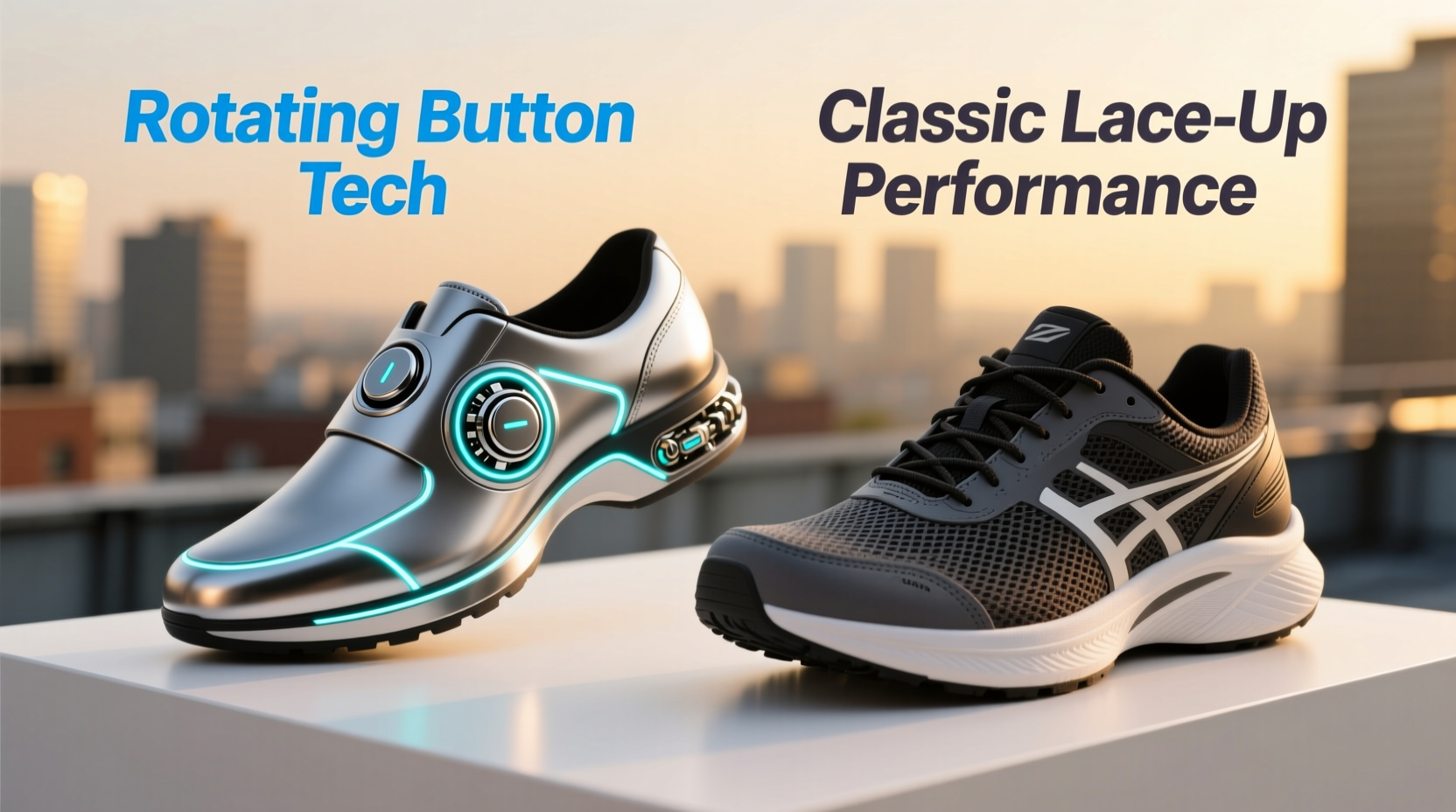
Laces have dominated shoe design for over a century. Their simplicity, adjustability, and low cost made them the default choice across sports and casual wear. But as athletes demanded more precision in fit and manufacturers sought differentiation, alternative closure systems emerged.
Boa Technology, launched in 2001, pioneered the use of micro-adjustable dials in snowboard boots. The system uses thin steel cables tightened via a dial, allowing millimeter-level tension control. This technology eventually migrated to cycling shoes and, more recently, running footwear. Meanwhile, brands like Puma introduced “Fit System” buttons that lock laces in place with a twist, offering a hybrid approach between manual lacing and mechanical tightening.
These innovations aim to solve common issues with traditional laces: slippage, inconsistent tension, and time spent tying knots. But do they deliver on these promises during daily runs or long-distance training?
Performance Comparison: Fit, Comfort, and Efficiency
The core advantage of dial-in and rotating button systems lies in precise, consistent fit. Unlike laces, which can loosen mid-run or create pressure points if tied unevenly, mechanical closures distribute tension evenly across the foot’s midsection.
Tip: If you frequently experience heel slippage or forefoot tightness, a dial system may offer more reliable micro-adjustments than laces.Runners with high arches or narrow heels often benefit from the customizable snugness provided by Boa dials. A quick turn clockwise increases tension; a pull of the dial releases it instantly—no untying required. This is particularly useful during races when transitions matter, such as triathlons.
However, rotating button systems, while faster than traditional lacing, don’t offer the same level of fine-tuning. They typically lock pre-threaded laces into position but lack incremental adjustment. Once set, modifying tension on the fly isn’t feasible without disengaging the mechanism entirely.
“Precision fit reduces foot movement inside the shoe, lowering the risk of blisters and improving energy transfer.” — Dr. Lena Torres, Sports Biomechanist at Boulder Motion Lab
Durability and Real-World Reliability
Mechanical closures introduce moving parts where none existed before. While modern designs are engineered for durability, they remain more vulnerable to damage than simple eyelets and laces.
Dial systems rely on stainless steel cables housed in protective sleeves. These can fray over time, especially if the shoe is frequently compressed in tight spaces (like under airplane seats). If the cable breaks or the dial jams, the entire system becomes unusable until repaired—a process that often requires manufacturer service.
In contrast, laces are easily replaceable. A frayed lace takes seconds to swap out; a broken dial mechanism can render an otherwise pristine shoe unwearable.
Rotating button systems fall somewhere in between. The buttons themselves are generally robust, but repeated twisting can degrade internal springs or clips over months of use. One user reported that after six months of daily commuting, the left-side button on their Puma model stopped engaging properly, forcing reliance on backup laces.
Comparison Table: Closure Systems at a Glance
| Feature | Lace-Up Shoes | Dial-In Shoes | Rotating Button Shoes |
|---|---|---|---|
| Adjustability | High (manual) | Very High (micro-dial) | Moderate (preset tension) |
| Speed of Entry/Exit | Slow (tying knots) | Fast (dial release) | Faster than laces |
| Durability | Excellent (replaceable parts) | Good (vulnerable to cable/dial failure) | Fair to Good (mechanical wear possible) |
| Repairability | Easy (swap laces) | Low (requires specialized repair) | Moderate (parts may not be user-replaceable) |
| Average Price Premium | $0 | $30–$50+ | $15–$25 |
Real Runner Experience: A Mini Case Study
Jessica M., a recreational marathoner from Portland, switched to a pair of On Cloudmonster shoes with dual Boa dials for her half-marathon training. She had struggled with lace slippage during long runs, often needing to stop and re-tie mid-route.
“The first time I used the dials, I was skeptical,” she said. “But after two weeks, I couldn’t go back. I could tighten the fit slightly as my feet swelled around mile 8, which never happened with laces. And no more stopping to fix loose ends.”
However, after five months of regular use, one of the dials developed resistance. “It wasn’t broken, but turning it felt gritty. I emailed customer support, and they sent a prepaid label for repair. It took three weeks to get the shoes back.”
For Jessica, the trade-off was worth it—but only because she prioritized performance over convenience of maintenance.
Who Should Consider Dial-In or Button Systems?
Not every runner will benefit equally from advanced closure systems. Here’s a checklist to help determine if upgrading makes sense for your needs:
- You participate in timed events (e.g., triathlons) where fast transitions matter.
- You have difficulty tying laces due to arthritis, injury, or mobility limitations.
- You frequently experience heel slip or pressure points with traditional lacing.
- You’re willing to pay more upfront and accept potential repair delays.
- You prioritize cutting-edge tech and clean aesthetics in your gear.
Frequently Asked Questions
Can I run ultramarathons in dial-in shoes?
Yes, many experienced ultra-runners use Boa-equipped shoes successfully. However, always test them thoroughly in training. Carry backup laces or a repair kit if racing remotely, as field repairs can be challenging.
Are rotating button shoes easier to put on than laced ones?
Generally, yes. Most rotating button systems allow you to widen the opening significantly before stepping in, then secure with a twist. They’re faster than tying knots but not as seamless as fully automatic systems.
Do dial systems add noticeable weight?
Minimal. Modern Boa setups add approximately 10–15 grams per shoe—less than a standard shoelace. For most runners, the difference is imperceptible during runs.
Final Verdict: Worth the Hype?
Dial-in and rotating button shoes are not merely marketing gimmicks—they offer measurable improvements in fit consistency, ease of use, and transition speed. For competitive athletes, people with physical limitations, or those seeking a premium unboxing experience, these innovations deliver tangible value.
Yet, they come with trade-offs: higher cost, reduced repairability, and potential mechanical failure. Traditional laces remain unmatched in simplicity, accessibility, and resilience. For casual runners or budget-conscious buyers, there’s no compelling reason to abandon them.
The real answer lies in matching the technology to your lifestyle. If you value precision and speed over longevity and simplicity, dial-in shoes may be worth the investment. But if reliability and ease of maintenance top your list, classic laces continue to earn their place in every runner’s rotation.
💬 Have you tried dial-in or button-fastened running shoes? Share your experience below—what worked, what didn’t, and whether you’d buy again.








