In a world where digital note-taking dominates, there's still something deeply satisfying about putting pen to paper. Whether jotting down ideas, signing documents, or journaling thoughts, the right pen can elevate the experience. Among the most popular choices today are rollerball and gel pens—both praised for their smooth writing and vibrant ink. But with so much buzz around gel pens, it’s fair to ask: are they really worth the hype? To answer that, we need to look beyond marketing claims and compare these two styles on performance, cost, durability, and personal preference.
How Rollerball and Gel Pens Work
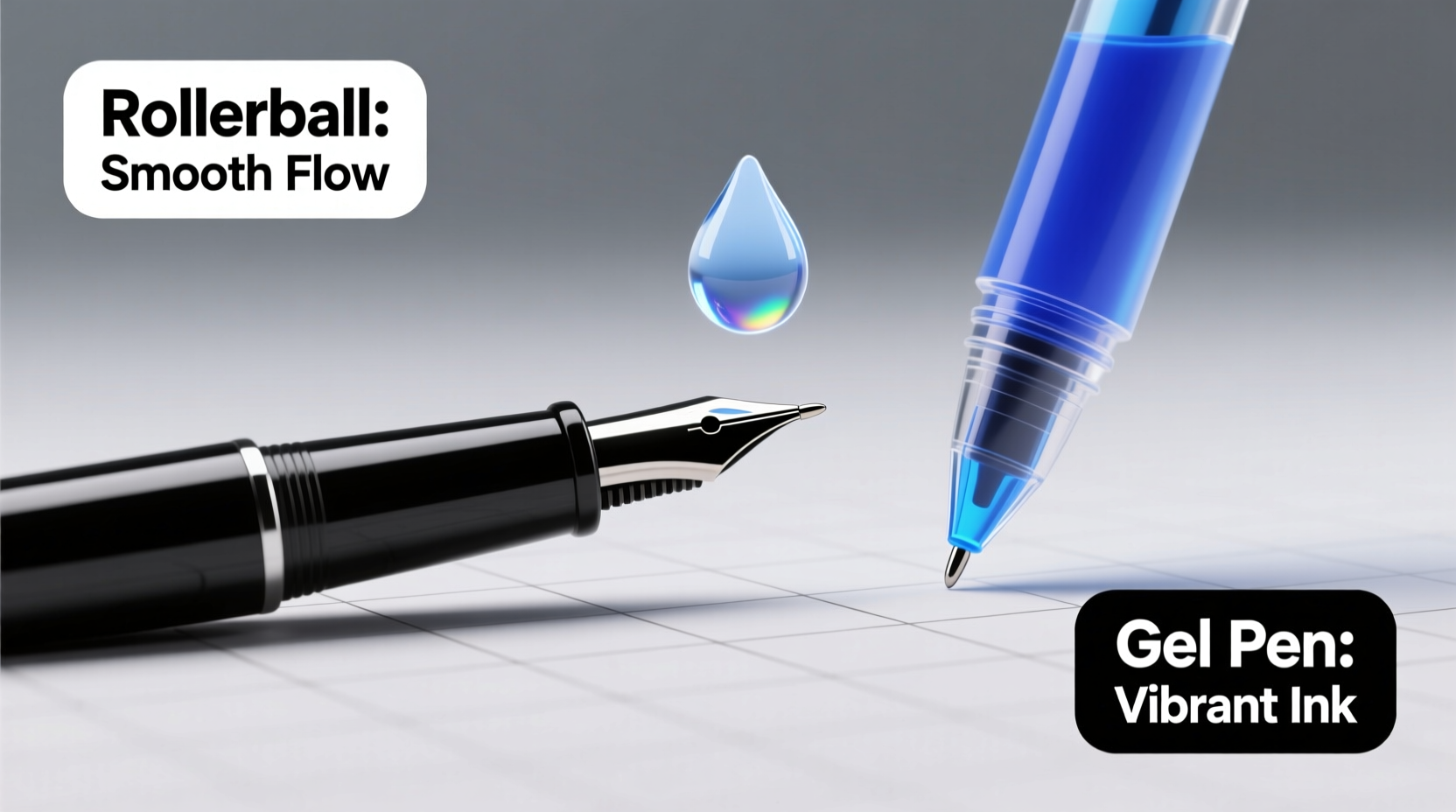
Understanding the mechanics behind each pen type is key to appreciating their differences. Both fall under the broader category of liquid-ink pens, but their delivery systems and ink compositions vary significantly.
Rollerball pens use water-based or hybrid inks that flow freely through a small rotating ball at the tip. The ink is thin, similar to fountain pen ink, which allows for a wet, expressive line. Because of this fluidity, rollerballs offer excellent shading and a luxurious feel on paper—but at the cost of slower drying times and potential bleed-through on lower-quality paper.
Gel pens, on the other hand, use a thicker, water-resistant gel-based ink suspended in water. This formulation allows manufacturers to incorporate pigments and even glitter, resulting in bolder colors and special effects. The gel ink flows smoothly without the feathering often seen in rollerballs, and it dries faster, reducing smudging. The trade-off? Slightly more resistance during writing and occasional skipping if the pen isn’t stored properly.
Tip: Store gel pens tip-down occasionally to prevent air bubbles from forming in the ink tube, which can cause skipping.Performance Comparison: Writing Experience and Use Cases
The real test of any pen lies in how it performs during everyday use. Let’s break down the key factors that influence your writing experience.
| Feature | Rollerball | Gel Pen |
|---|---|---|
| Ink Flow | Very smooth, wet line | Smooth, consistent, slightly less wet |
| Drying Time | Slower (3–5 seconds) | Faster (1–2 seconds) |
| Bleed-Through | Common on thin paper | Rare, especially with quality paper |
| Color Range | Limited, mostly standard inks | Extensive, including metallics and neons |
| Line Precision | Good, but may feather | Excellent, sharp lines |
| Skip Resistance | High | Moderate (depends on brand) |
For tasks like signing documents or taking quick notes, rollerballs deliver elegance and effortless glide. However, left-handed writers or those who write quickly may find the longer drying time frustrating. Gel pens, by contrast, are ideal for bullet journaling, coloring, or detailed work where precision and fast drying matter. Their vibrant pigments also make them favorites among artists and planners.
“Gel pens have revolutionized expressive writing. You’re not just writing—you’re creating.” — Daniel Park, Stationery Designer and Journal Enthusiast
Cost, Longevity, and Value Over Time
Pricing is another critical factor. While entry-level versions of both types are similarly priced, premium models diverge significantly. High-end rollerballs like the Pilot Precise V5 or Uni-ball Vision Elite retail between $2 and $4 each. Premium gel pens such as the Pentel Energel or Uni-ball Signo can range from $3 to $6 per pen.
But price isn’t everything. Consider longevity. Gel pens typically last longer due to their thicker ink and controlled flow. A single gel refill can outlast a rollerball by hundreds of meters of writing. Additionally, many gel pens come in retractable designs, eliminating the need for caps and reducing the risk of drying out.
Rollerballs, especially non-retractable ones, are prone to drying if left uncapped. Even capped models can evaporate over time due to their water-based ink. This makes them less ideal for infrequent users or backup pens kept in drawers.
When Each Pen Type Offers the Best Value
- Choose rollerballs if you prioritize a fountain-pen-like feel and write on high-quality paper regularly.
- Opt for gel pens if you want long-lasting, smudge-resistant ink with bold color options and don’t mind slight initial resistance.
Real-World Example: A Teacher’s Daily Carry
Sarah Lin, a middle school English teacher in Portland, uses both pen types throughout her day. In the morning, she grades essays with a black rollerball for its smooth flow and professional appearance. But by afternoon, when she’s filling out student behavior logs or planning lessons in her bullet journal, she switches to a set of pastel gel pens.
\"The rollerball feels elegant, but I can’t use it during class—it smudges too easily when students pass papers around,\" she explains. \"My gel pens, though? I can write, close my planner, and toss it in my bag without worrying. Plus, the colors help me organize my thoughts better.\"
Sarah’s experience reflects a growing trend: using each pen for its strengths rather than treating them as interchangeable.
Step-by-Step Guide: Choosing the Right Pen for Your Needs
Follow this practical sequence to determine which pen suits your lifestyle best:
- Assess your primary use: Are you signing documents, journaling, sketching, or taking fast notes?
- Evaluate your paper type: Do you use thin notebook paper, thick cardstock, or mixed media?
- Consider your writing speed: Fast writers benefit from quick-drying gel ink; slow, deliberate writers may prefer rollerball fluidity.
- Test for hand comfort: Hold sample pens. Gel pens tend to be heavier; rollerballs lighter and more balanced.
- Try before you buy: Purchase one of each type in your preferred color and use them for a week. Note smudging, skipping, and fatigue.
FAQ: Common Questions About Rollerball vs Gel Pens
Do gel pens dry out faster than rollerballs?
No—actually, the opposite is true. Gel pens use a thicker, more stable ink formula that resists evaporation. Rollerballs, especially those with water-based ink, are more prone to drying out if left uncapped or unused for weeks.
Can I use gel pens on carbonless copy paper (like NCR forms)?
Generally, yes. Gel ink transfers well to carbonless paper, making them suitable for multi-part forms. Rollerballs can also work, but their wetter ink may cause blurring or bleeding through multiple layers.
Are gel pens safe for archival documents?
Only if labeled as acid-free and fade-resistant. Most standard gel pens contain dyes that may degrade over time. For legal or archival use, opt for pigment-based gel inks (like the Uni-ball Signo UM-151) or stick with rollerballs designed for permanence.
Final Verdict: Are Gel Pens Worth the Hype?
The hype around gel pens isn’t unfounded—but it’s also not universal. They excel in specific areas: color variety, smudge resistance, longevity, and versatility across paper types. For creative professionals, students, and detail-oriented writers, gel pens offer tangible advantages that justify their popularity and often higher price point.
Rollerballs, meanwhile, retain a loyal following for their unmatched writing fluidity and classic appeal. They’re not obsolete; they’re specialized. Think of them as the fine wine of pens—best enjoyed in the right setting.
The truth is, neither pen is objectively “better.” The choice depends on your habits, environment, and expectations. Many people—including stationery experts—maintain a rotation of both, selecting the tool that fits the task.
“The right pen isn’t about trends. It’s about matching function with feeling.” — Marcus Reed, Founder of InkTrail Review
Take Action: Build Your Ideal Pen Collection
Don’t settle for one-size-fits-all solutions. Start building a personalized toolkit. Keep a gel pen in your work bag for daily notes, a rollerball on your desk for signatures, and a colorful gel set in your planner for creative projects. Test different brands, nib sizes, and ink types. Your perfect writing experience is out there—and it might require more than one pen to achieve.
🚀 Ready to upgrade your writing game? Try a side-by-side test this week: use a rollerball for one day, a gel pen the next. Notice the differences in comfort, speed, and satisfaction. Share your findings in the comments—we’d love to hear what works for you.








