Cleaning stairs is one of the most overlooked yet essential household chores. Often narrow, uneven, and high-traffic, staircases accumulate dust, pet hair, and debris faster than any other area in the home. With the rise of smart home devices, many homeowners now face a practical dilemma: should they rely on a robot vacuum or a handheld vacuum to keep their stairs clean?
The answer isn’t as straightforward as it seems. While robot vacuums promise automation and convenience, they come with physical limitations. Handheld vacuums offer portability and power but demand manual effort. This article dives deep into how each type performs when tackling stairs, helping you decide which tool best suits your needs based on real-world functionality, design constraints, and user experience.
Understanding the Design Limitations
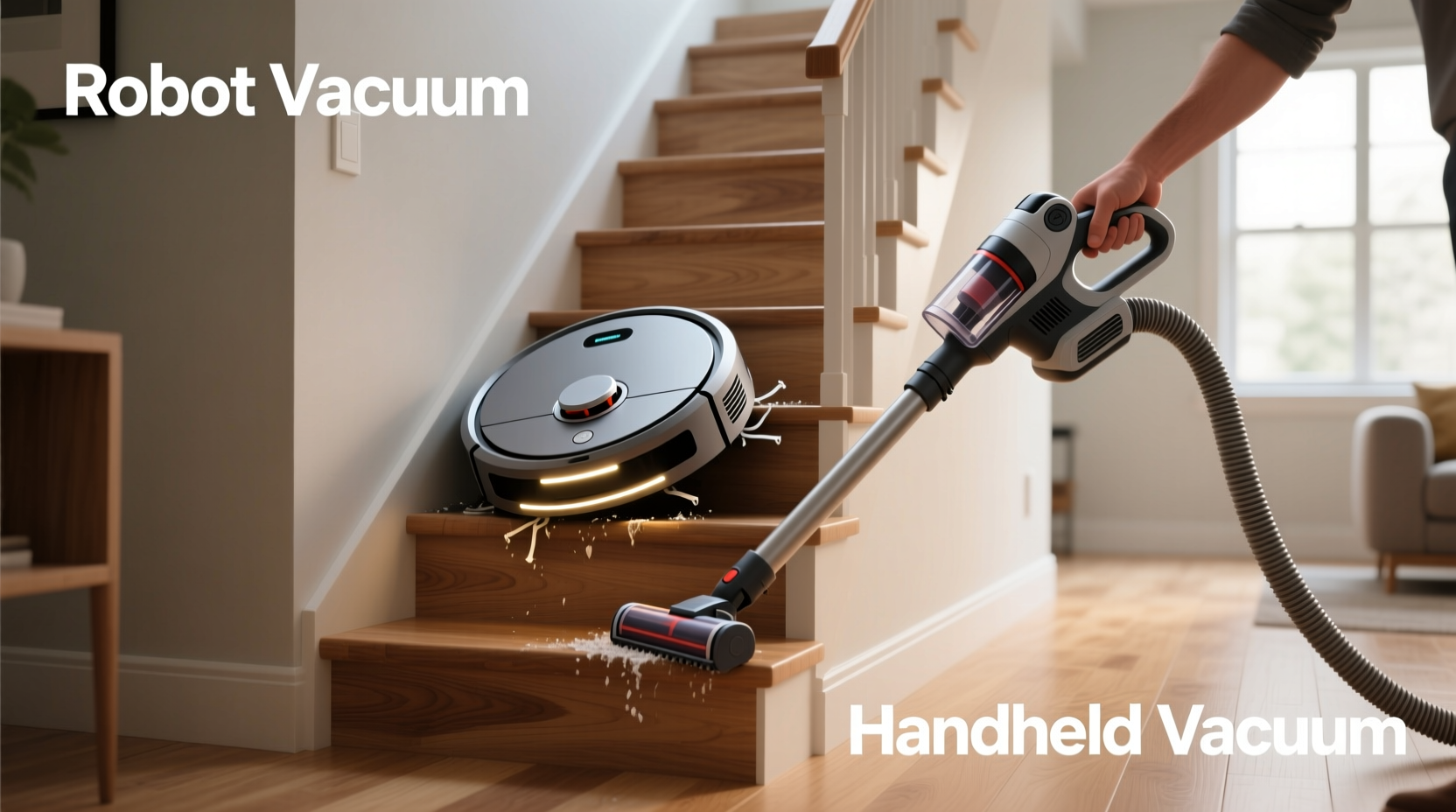
Before comparing performance, it’s crucial to understand the inherent design differences between robot and handheld vacuums—and how these affect their ability to handle stairs.
Robot vacuums are engineered for flat, continuous surfaces. Most models use infrared sensors or cliff detection technology to avoid falling down stairs. This safety feature, while necessary, prevents them from ascending or descending steps. As a result, robot vacuums typically stop at the edge of a staircase, leaving multiple levels untouched unless manually relocated.
In contrast, handheld vacuums are built for mobility. Lightweight, cordless, and often equipped with crevice tools, they’re designed to go wherever dirt accumulates—including tight corners, under furniture, and yes, stairs. Their compact size allows users to carry them up and down flights with minimal effort, making them inherently more adaptable to multi-level homes.
Tip: Never attempt to modify a robot vacuum’s sensors to climb stairs—this can damage the unit and create safety hazards.Performance Comparison: Key Factors
To determine which vacuum handles stairs more effectively, several performance aspects must be evaluated: suction power, maneuverability, cleaning coverage, battery life, and maintenance requirements.
| Feature | Robot Vacuum | Handheld Vacuum |
|---|---|---|
| Suction Power | Moderate (optimized for floors) | High (especially near motors) |
| Stair Accessibility | Limited (cannot climb/descend autonomously) | Full access (portable by design) |
| Cleaning Coverage | Only landing areas if placed manually | Entire staircase, treads, risers, edges |
| Battery Life | 60–120 minutes (auto-recharge capable) | 15–40 minutes (varies by model) |
| User Effort Required | Minimal (if used on landings only) | Moderate to high (manual operation) |
| Dustbin Capacity | Small to medium | Small (requires frequent emptying) |
While robot vacuums excel in hands-off operation across open floor plans, their inability to navigate stairs independently severely limits their usefulness in multi-story homes. Handheld vacuums, though requiring active involvement, provide direct control over every step, allowing thorough spot-cleaning and targeted suction where needed most.
Real-World Use Case: A Two-Story Home with Pets
Consider Sarah, a homeowner with two cats and a three-flight wooden staircase connecting her basement, main floor, and upstairs bedrooms. Her robot vacuum efficiently cleans the main level but consistently avoids the top and bottom steps due to its cliff-detection system. Over time, she notices a buildup of cat hair and tracked-in dirt along the carpeted treads.
Frustrated, Sarah purchases a cordless handheld vacuum with a motorized pet tool. Within ten minutes per week, she clears all three flights, reaching into corners and along banister bases where fur accumulates. She finds that although the task requires effort, the results are immediate and visible. The handheld device fits easily in a closet near the stairs, enabling quick cleanups after pets track mud indoors.
This scenario illustrates a common reality: robot vacuums maintain cleanliness on accessible floors, but stair hygiene still depends on manual intervention. For households with pets, children, or high foot traffic, handheld vacuums remain indispensable for comprehensive cleaning.
“While automation has transformed floor care, stairs represent a persistent challenge. No current robot vacuum can safely or reliably navigate steps without human assistance.” — Dr. Lena Torres, Robotics Engineer at HomeTech Labs
When Robot Vacuums Can Help (Indirectly)
Despite their limitations, robot vacuums aren’t entirely useless in stair-heavy environments. They play a supportive role in overall home cleanliness, reducing the amount of debris that eventually migrates onto stair treads.
For example, a robot vacuum running daily on the upper and lower landings prevents dust and crumbs from being kicked up onto adjacent steps. Some advanced models even allow zone cleaning, letting users schedule focused sessions near stair entrances. By keeping transitional areas clean, robot vacuums indirectly reduce the workload on stairs themselves.
Moreover, certain hybrid strategies exist. Tech-savvy users sometimes place their robot vacuum on a mid-level landing and restrict its movement using virtual walls. While this enables limited cleaning of flat areas connected to stairs, it still doesn’t address vertical surfaces or individual treads. This workaround requires constant supervision and repositioning, negating much of the convenience robots offer.
Step-by-Step Guide: Cleaning Stairs Effectively with a Handheld Vacuum
If you're committed to maintaining clean stairs, follow this efficient process using a handheld vacuum:
- Prepare your tools: Ensure the handheld vacuum is charged and equipped with a brush or crevice attachment.
- Remove loose items: Clear shoes, rugs, or toys from the staircase to allow full access.
- Start from the top: Begin at the highest step to prevent tracking dirt back down as you clean.
- Vacuum tread and riser: Run the nozzle along the edge where the horizontal tread meets the vertical riser—this joint traps the most debris.
- Focus on edges and corners: Use the crevice tool to extract dust from baseboards and along handrail supports.
- Empty the bin mid-clean if needed: Small bins fill quickly; emptying ensures consistent suction.
- Wipe down if necessary: For sticky spills or smudges, follow up with a damp cloth after vacuuming.
This routine takes less than 15 minutes weekly and significantly improves indoor air quality and appearance. Unlike robot vacuums, which cannot replicate this precision, handheld models give you complete control over the cleaning path.
Tip: Store your handheld vacuum on a wall mount near the staircase for instant access and faster response to messes.Expert Recommendations and Long-Term Value
Home cleaning experts agree that no single device currently replaces the need for manual stair maintenance. However, combining both technologies offers the best outcome.
According to interior hygiene consultant Marcus Reed, “The ideal setup includes a robot vacuum handling day-to-day floor maintenance and a high-performance handheld for detailed tasks like stairs, upholstery, and car interiors. Think of them as complementary tools, not competitors.”
From a cost-benefit perspective, investing in a quality handheld vacuum often yields quicker returns in terms of visible cleanliness. Models priced between $80 and $150 typically offer strong suction, lithium-ion batteries, and tool attachments suitable for stairs. In contrast, premium robot vacuums costing upwards of $700 may deliver excellent floor cleaning but add little value for stair maintenance unless paired with additional effort.
Checklist: Choosing the Right Tool for Your Stairs
- ✅ Assess your home layout: How many flights of stairs do you have?
- ✅ Determine frequency of use: Do stairs get heavy foot traffic?
- ✅ Consider flooring type: Carpeted stairs trap more debris than hardwood.
- ✅ Evaluate existing tools: Does your robot vacuum reach landing areas?
- ✅ Prioritize convenience vs. control: Want automation or precision?
- ✅ Budget for both: A robot + handheld combo may be optimal long-term.
Frequently Asked Questions
Can any robot vacuum climb stairs?
No commercially available robot vacuum can safely and reliably climb stairs. While prototypes exist in research labs (such as those developed by Samsung and LG), none are sold to consumers due to safety, durability, and navigation challenges. Current models are designed to detect drop-offs and retreat to avoid falls.
Are handheld vacuums powerful enough for carpeted stairs?
Yes, especially models with motorized brush rolls or turbo modes. Look for handheld vacuums labeled “pet” or “upholstery” cleaners—they typically feature enhanced suction and rotating brushes ideal for lifting embedded dirt from carpet fibers. Regular maintenance, such as clearing tangled hair from brushes, ensures sustained performance.
How often should I clean my stairs with a handheld vacuum?
For homes with pets or children, cleaning once a week is recommended. In low-traffic homes, biweekly cleaning suffices. High-pile carpets or dark-colored treads may require more frequent attention to prevent visible buildup.
Final Verdict: Which Is Better for Stairs?
When it comes to cleaning stairs, the handheld vacuum is the clear winner. Its portability, targeted suction, and ability to access every inch of a staircase make it uniquely suited for the task. Robot vacuums, while valuable for maintaining surrounding floor areas, cannot overcome their fundamental limitation: they don’t climb stairs.
That said, dismissing robot vacuums entirely would be shortsighted. In a holistic cleaning strategy, they reduce ambient dust and extend the time between deep cleans. But for actual stair maintenance—removing crumbs from between treads, eliminating pet hair from corners, or clearing tracked-in soil—a handheld vacuum remains unmatched in effectiveness.
The future may bring robotic solutions capable of navigating stairs, but until then, homeowners seeking truly clean staircases must rely on manual tools. Investing in a durable, well-designed handheld vacuum isn’t just practical—it’s essential for complete home hygiene.
🚀 Ready to conquer your stairs? Pick up a reliable handheld vacuum today and experience the difference targeted cleaning makes. Share your favorite model or stair-cleaning hack in the comments below!








