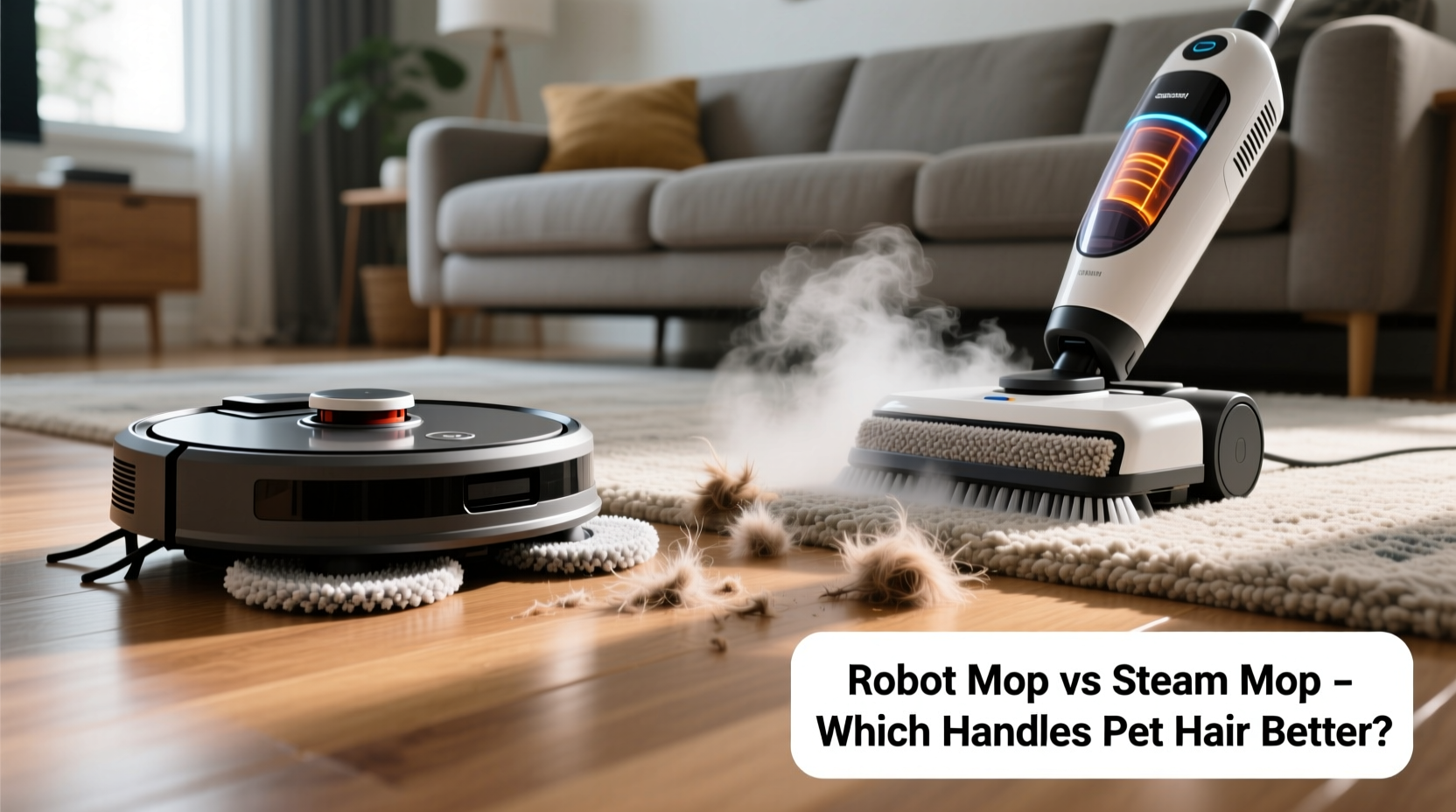
For pet owners, managing pet hair on hard floors is an ongoing challenge. While vacuuming helps, mopping plays a crucial role in removing the fine debris that clings to hardwood, tile, and laminate surfaces—especially when pet hair mixes with dust, dander, and tracked-in dirt. Two popular solutions dominate the modern cleaning landscape: robot mops and steam mops. Both promise cleaner floors with less effort, but when it comes to tackling pet hair, they perform very differently. Understanding their strengths, limitations, and real-world functionality can help you choose the right tool for your home.
How Pet Hair Affects Floor Cleaning
Pet hair isn’t just unsightly—it’s surprisingly sticky. Static electricity causes it to cling to flooring surfaces, especially in dry environments. On hard floors like tile or hardwood, hair often accumulates along baseboards, under furniture, and in corners where airflow creates mini vortexes. Over time, hair combines with dust and moisture to form stubborn clumps that resist casual sweeping.
Effective cleaning requires both mechanical removal (lifting and trapping) and thorough surface sanitization. Mopping alone may push hair around rather than eliminate it. That’s why choosing between a robot mop and a steam mop hinges not only on convenience but on how each system interacts with pet hair at different stages of the cleaning process.
Tip: Pre-vacuuming significantly improves the effectiveness of any mopping method when dealing with heavy pet hair.Robot Mops: Automation Meets Limitations
Robot mops are designed for hands-free operation. They navigate rooms autonomously, using sensors and mapping technology to avoid obstacles and cover floor areas systematically. Most models combine light scrubbing with damp microfiber pads to lift surface grime. Some higher-end versions even have self-cleaning stations and dual-chamber tanks to separate clean and dirty water.
When it comes to pet hair, however, robot mops face several challenges:
- Limited suction power: Unlike robot vacuums with dedicated brushes and strong suction, most robot mops lack the ability to pick up loose hair before mopping.
- Pads attract but don’t contain: Wet microfiber pads can temporarily trap hair, but as the pad becomes saturated, hair begins to smear or redeposit on the floor.
- Navigational issues: Long strands of pet hair can tangle around wheels or side brushes, causing jams or navigation errors.
- No deep cleaning: Robot mops typically apply light pressure and minimal scrubbing action, making them ineffective against embedded hair-dust composites.
Some hybrid robot vacuums with mopping functions offer improved performance by vacuuming first, then mopping. However, the mopping module remains secondary and often delivers inconsistent moisture control, leaving streaks or puddles where hair can regroup.
“Robot mops excel at maintenance cleaning but struggle with high-pile debris like pet hair unless paired with robust pre-cleaning.” — Dr. Lena Torres, Home Robotics Researcher at MIT Living Systems Lab
Steam Mops: Power and Precision Against Hair Buildup
Steam mops use heated water vapor to sanitize and loosen grime from hard surfaces. The high temperature (typically 212°F/100°C or higher) breaks down organic matter and kills bacteria, dust mites, and allergens. More importantly, the burst of steam helps dislodge stuck-on particles—including pet hair—that damp cloths alone might miss.
Key advantages for pet owners include:
- Pre-lifting action: Steam softens the bond between hair and floor, making it easier to wipe away with the attached microfiber cloth.
- Strong mechanical control: Users can apply pressure and directional strokes to guide hair into concentrated piles for disposal.
- Sanitization benefit: Eliminates odors and allergens trapped in hair residue, which is critical for homes with shedding pets.
- No reliance on automation: Direct user control ensures no missed spots or tangled components.
However, steam mops aren’t without drawbacks. They require manual operation, need refilling, and aren’t suitable for all floor types—especially unsealed wood or waxed surfaces. Additionally, if not used correctly, excess moisture can warp flooring or push hair into crevices instead of collecting it.
Best Practices for Using a Steam Mop on Pet Hair
- Sweep or vacuum thoroughly before steaming to remove loose hair.
- Use a fresh microfiber pad—reusable ones should be lint-free and tightly woven.
- Start in one corner and work backward to avoid stepping on cleaned areas.
- Make overlapping passes with firm, forward pressure to gather hair ahead of the mop head.
- After mopping, collect clumped hair with a dry cloth or vacuum to prevent redistribution.
Direct Comparison: Robot Mop vs Steam Mop for Pet Hair
| Feature | Robot Mop | Steam Mop |
|---|---|---|
| Pet Hair Pickup Efficiency | Low to moderate; depends on pre-cleaning and pad quality | High; steam loosens hair, allowing effective wiping |
| User Effort Required | Minimal after setup | Moderate to high; manual operation needed |
| Floor Coverage Consistency | High; uses mapping for full coverage | Variable; depends on user technique |
| Hair Tangle Risk | Medium; wheels and brushes can snag long hair | Low; no moving parts near floor surface |
| Cleaning Speed | Slow; multiple passes over hours | Fast; room cleaned in 10–20 minutes |
| Allergen Reduction | Low; limited sanitization | High; heat kills bacteria, dust mites, and dander |
| Floor Type Compatibility | Broad; avoids carpets, works on sealed floors | Limited; avoid unsealed wood, laminates sensitive to moisture |
| Maintenance Needs | Regular pad washing, tank cleaning, sensor checks | Descaling, pad washing, water refill |
Real-World Example: The Smith Family’s Shedding Labrador
The Smiths adopted a two-year-old Labrador Retriever named Max. Within weeks, his thick double coat left a constant trail of golden fur across their engineered hardwood floors. Initially, they invested in a mid-tier robot mop hoping for a “set it and forget it” solution. While the device kept floors visually damp-cleaned, they noticed persistent hair buildup along edges and behind furniture.
After three months, they switched to a handheld steam mop. By first vacuuming with a pet-focused upright vacuum, then using short bursts of steam followed by deliberate wiping motions, they achieved visibly cleaner results. Hair no longer clung in corners, and foot traffic didn’t leave dusty paw prints. They now use the robot mop only once a week for maintenance, reserving the steam mop for bi-weekly deep cleans.
“We realized the robot was spreading the problem,” said Sarah Smith. “It would glide over a patch of hair, wet it slightly, and leave it smeared. The steam mop actually gets rid of it.”
Choosing the Right Tool: A Practical Checklist
Deciding between a robot mop and a steam mop doesn’t have to be absolute. Many households benefit from using both strategically. Use this checklist to determine your ideal approach:
- ✅ Do you have multiple shedding pets? → Prioritize steam mop for deep cleaning.
- ✅ Is daily maintenance important? → Robot mop adds value between deep cleans.
- ✅ Are your floors moisture-sensitive? → Avoid steam; opt for dry robot vacuum-mop combos.
- ✅ Do you dislike manual cleaning? → Invest in a high-suction robot vacuum with mopping add-on.
- ✅ Are allergies a concern? → Steam mopping offers superior allergen reduction.
- ✅ Do you have large open spaces? → Robot mops handle broad coverage well.
- ✅ Is hair accumulation worst in corners and edges? → Steam mops allow targeted attention.
Frequently Asked Questions
Can a robot mop pick up pet hair on its own?
Most robot mops cannot effectively pick up pet hair without prior vacuuming. Their mopping pads may trap some hair temporarily, but without suction, hair tends to be pushed around or left behind. Models that combine vacuuming and mopping in one pass perform better but still require regular maintenance to prevent clogs.
Is steam mopping safe for homes with pets?
Yes, steam mopping is safe as long as pets are not present during cleaning. The high heat and moisture can startle animals or cause discomfort if they walk on wet floors immediately. Always allow floors to dry completely before letting pets back into the area. Also, avoid using chemical additives—plain water is sufficient and safer for pet paws.
Which mop reduces pet odors better?
Steam mops are superior for reducing pet-related odors because the high-temperature vapor penetrates microscopic pores in flooring where odor-causing bacteria and dander reside. Robot mops typically only clean the surface and may even trap smells in reusable pads if not washed frequently.
Final Recommendation: Combine Strengths for Best Results
Neither robot mops nor steam mops are universally superior when it comes to pet hair—but each has a role. For homes with heavy shedding, a steam mop provides unmatched cleaning power and hygiene. It physically removes hair, sanitizes surfaces, and prevents allergen buildup. However, its manual nature makes frequent use impractical for many.
This is where robot mops shine as maintenance tools. When used between deep steam mopping sessions, they help keep floors fresh and reduce the accumulation of dust that binds with hair. The optimal strategy is a hybrid approach: use a steam mop weekly or bi-weekly for thorough pet hair removal, and deploy a robot mop on other days to maintain cleanliness.
Ultimately, the best choice depends on your lifestyle, flooring type, and tolerance for manual effort. But if pet hair is a primary concern, prioritize cleaning power and allergen control—both of which favor the steam mop as the more effective standalone solution.
🚀 Ready to reclaim your floors from pet hair? Start with a steam mop deep clean this week, then schedule a robot mop for daily upkeep. Share your experience or ask questions in the comments below—we’re building a smarter cleaning community together.








