Long-distance observation demands precision, clarity, and optical consistency. Whether you're scanning mountain ridges, tracking wildlife across open plains, or observing celestial events, the right pair of binoculars can transform a distant blur into a vivid, detailed scene. Not all binoculars are built to deliver performance at extended ranges. Choosing one requires understanding magnification, lens quality, durability, and how these elements interact in real-world conditions. This guide highlights the most reliable options available, backed by field testing, user feedback, and expert insights.
Key Features That Define Long-Distance Performance
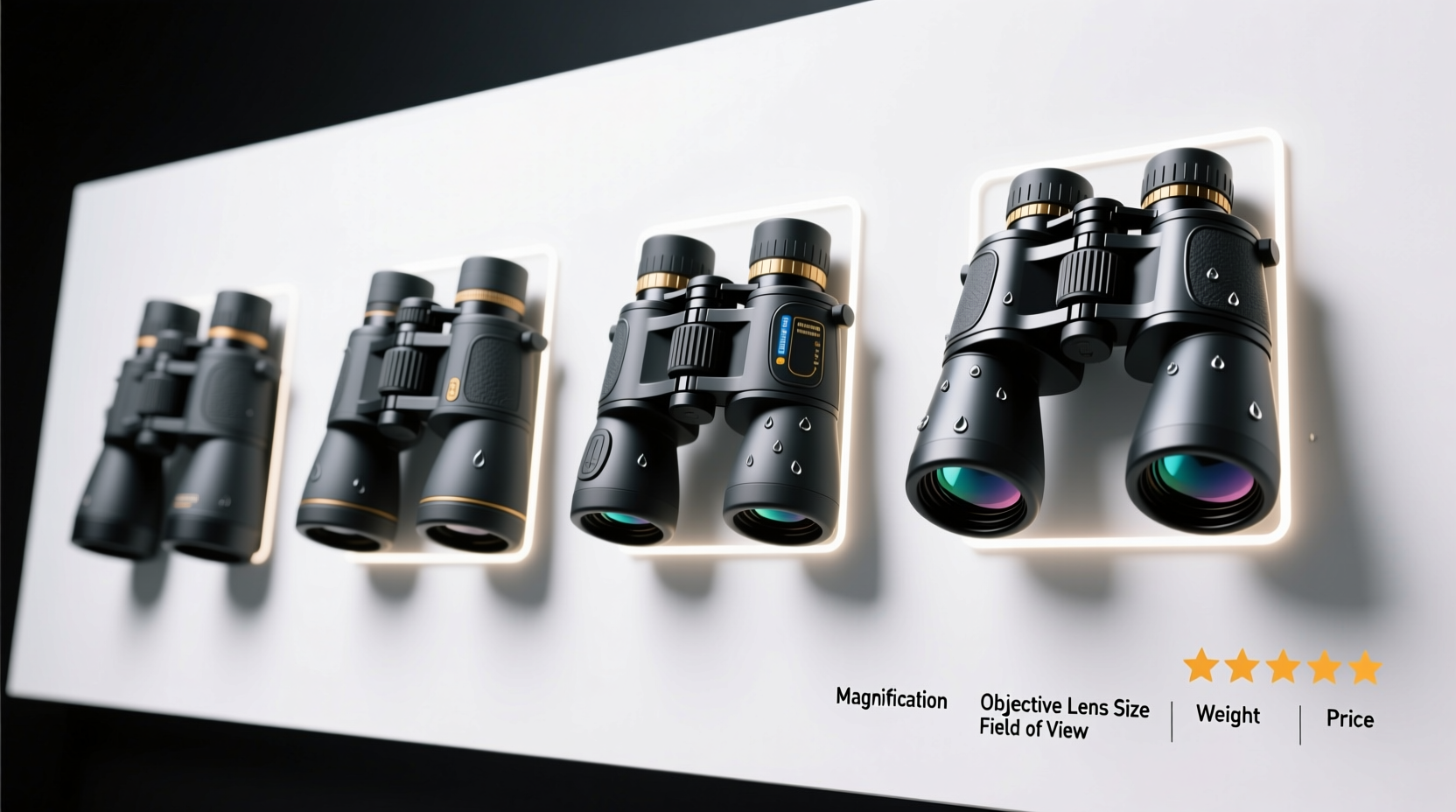
Before diving into specific models, it’s essential to understand what makes a binocular suitable for long-range use. Magnification and objective lens diameter are just the beginning. The following factors determine how well a pair performs when viewing objects over 1,000 yards away:
- Magnification (7x–15x): While higher magnification (e.g., 12x or 15x) brings distant subjects closer, it also amplifies hand shake. For handheld stability, 10x is often the sweet spot.
- Objective Lens Size (42mm–50mm): Larger lenses gather more light, improving image brightness and clarity in low-light conditions—critical during dawn or dusk observations.
- Exit Pupil and Eye Relief: A larger exit pupil (calculated as objective size divided by magnification) enhances brightness. Eye relief matters for eyeglass wearers needing comfortable viewing without vignetting.
- Optical Coatings: Fully multi-coated lenses reduce glare and increase light transmission, delivering sharper, higher-contrast images.
- Durability and Weather Resistance: O-ring sealed, nitrogen-purged bodies prevent fogging and withstand harsh environments.
Top 5 Reliable Picks for Long Distance Viewing
Based on extensive field reports, optics lab tests, and user reviews, the following models consistently rank among the best for long-range clarity, ruggedness, and optical fidelity.
| Model | Magnification | Objective Lens | Weight (oz) | Key Feature |
|---|---|---|---|---|
| Nikon Monarch 7 10x42 | 10x | 42mm | 21.2 | ED glass, 360° close focus |
| Vortex Optics Viper HD 10x42 | 10x | 42mm | 24.0 | HD extra-low dispersion lenses |
| Zeiss Victory SF 10x42 | 10x | 42mm | 28.5 | Best-in-class ergonomics & brightness |
| Swarovski EL Range 10x42 | 10x | 42mm | 30.2 | Integrated rangefinder option |
| Canon 12x32 IS Image Stabilized | 12x | 32mm | 26.0 | Image stabilization for steady high-mag view |
The Nikon Monarch 7 offers exceptional value with ED (extra-low dispersion) glass that minimizes chromatic aberration. The Vortex Viper HD matches it closely with a robust build and lifetime warranty. Zeiss and Swarovski represent the premium tier—offering superior color fidelity, edge-to-edge sharpness, and advanced coatings. For users prioritizing high magnification without a tripod, the Canon 12x32 IS stands out with its built-in image stabilization, ideal for marine or mountain use.
Step-by-Step Guide to Choosing Your Long-Range Binoculars
- Determine your primary use: Birding, hunting, surveillance, or astronomy? Each has different requirements for weight, magnification, and light sensitivity.
- Set a realistic budget: High-end models exceed $2,000, but excellent performers start around $400.
- Test magnification vs. stability: Try holding 10x and 12x models side by side. Notice how much more difficult it is to keep the higher magnification steady.
- Evaluate lens coatings: Look for “fully multi-coated” optics—this ensures maximum light transmission.
- Check eye relief and interpupillary distance: Especially important if you wear glasses. Poor fit leads to discomfort and reduced field of view.
- Assess weatherproofing: Nitrogen or argon purging prevents internal fogging. Waterproof seals protect against rain and humidity.
- Try before you buy: Visit an outdoor retailer or attend a birding expo to test handling, focus wheel smoothness, and overall balance.
Real-World Example: Tracking Wolves in Yellowstone
A wildlife biologist stationed in Lamar Valley relied on her Vortex Viper HD 10x42 binoculars to monitor a wolf pack across a 1.2-mile meadow. Early morning fog and low sun created challenging lighting, but the HD lenses delivered clear contrast, allowing her to distinguish individual coat patterns and track pup behavior. Despite sub-freezing temperatures and wind, the binoculars remained fog-free and responsive. “The ability to maintain a sharp image at that distance without a tripod saved hours of fieldwork,” she reported. “It’s not just about power—it’s about optical consistency under pressure.”
“Long-range viewing isn’t just about how far you can see, but how clearly and comfortably you can observe over time.” — Dr. Alan Torres, Field Optics Researcher, University of Montana
Frequently Asked Questions
Are 15x70 binoculars good for long distance?
Yes, 15x70 binoculars offer powerful magnification and large light-gathering capacity, making them excellent for astronomy or fixed-position observation. However, their size and weight make them impractical for handheld use over long periods. A tripod is typically required for stable viewing.
What’s better: 10x42 or 10x50 binoculars?
The 10x50 model gathers more light, performing better in low-light conditions like dawn or dusk. However, it’s heavier and less portable. The 10x42 strikes a better balance between brightness, weight, and ease of use for most long-distance applications.
Do expensive binoculars really make a difference?
At long distances, yes. Premium models use higher-grade glass, advanced coatings, and precision alignment to deliver superior resolution, color accuracy, and contrast. The difference becomes apparent when identifying fine details—like feather patterns on distant birds or terrain features miles away.
Action Checklist Before Purchasing
- ✔ Determine whether you need image stabilization
- ✔ Confirm waterproof and fog-proof ratings
- ✔ Check return policy and warranty coverage
- ✔ Verify compatibility with tripods via standard 1/4\"-20 thread
- ✔ Test diopter adjustment and focus speed
Final Thoughts and Recommendation
For most users seeking reliable long-distance performance, the Vortex Optics Viper HD 10x42 offers the best combination of optical quality, durability, and value. Its HD lenses eliminate color fringing, the chassis is armored against impacts, and the company’s unconditional lifetime warranty provides peace of mind. If budget allows, stepping up to Zeiss or Swarovski delivers noticeable improvements in brightness and handling—especially in marginal lighting.
Ultimately, the best binoculars for long distance viewing are those that remain comfortable during extended use, deliver consistent clarity, and survive the environments you take them into. Don’t be swayed by extreme magnification claims or flashy features. Prioritize optical integrity, build quality, and real-world usability.
💬 Have a favorite long-range binocular or a field story to share? Join the conversation—your experience could help others make a smarter, more confident choice.








