
Finding gold is more than just luck—it’s a science of precision, patience, and the right tools. Among those tools, no piece of equipment matters more than your metal detector. Unlike general-purpose detectors designed for coins or relics, gold prospecting demands specialized technology capable of detecting tiny nuggets in mineralized soils. Choosing the right model can mean the difference between returning empty-handed and striking it rich. With so many options on the market, identifying truly reliable choices requires understanding frequency response, ground balancing, sensitivity settings, and real-world performance in harsh environments.
Why Not All Metal Detectors Work for Gold
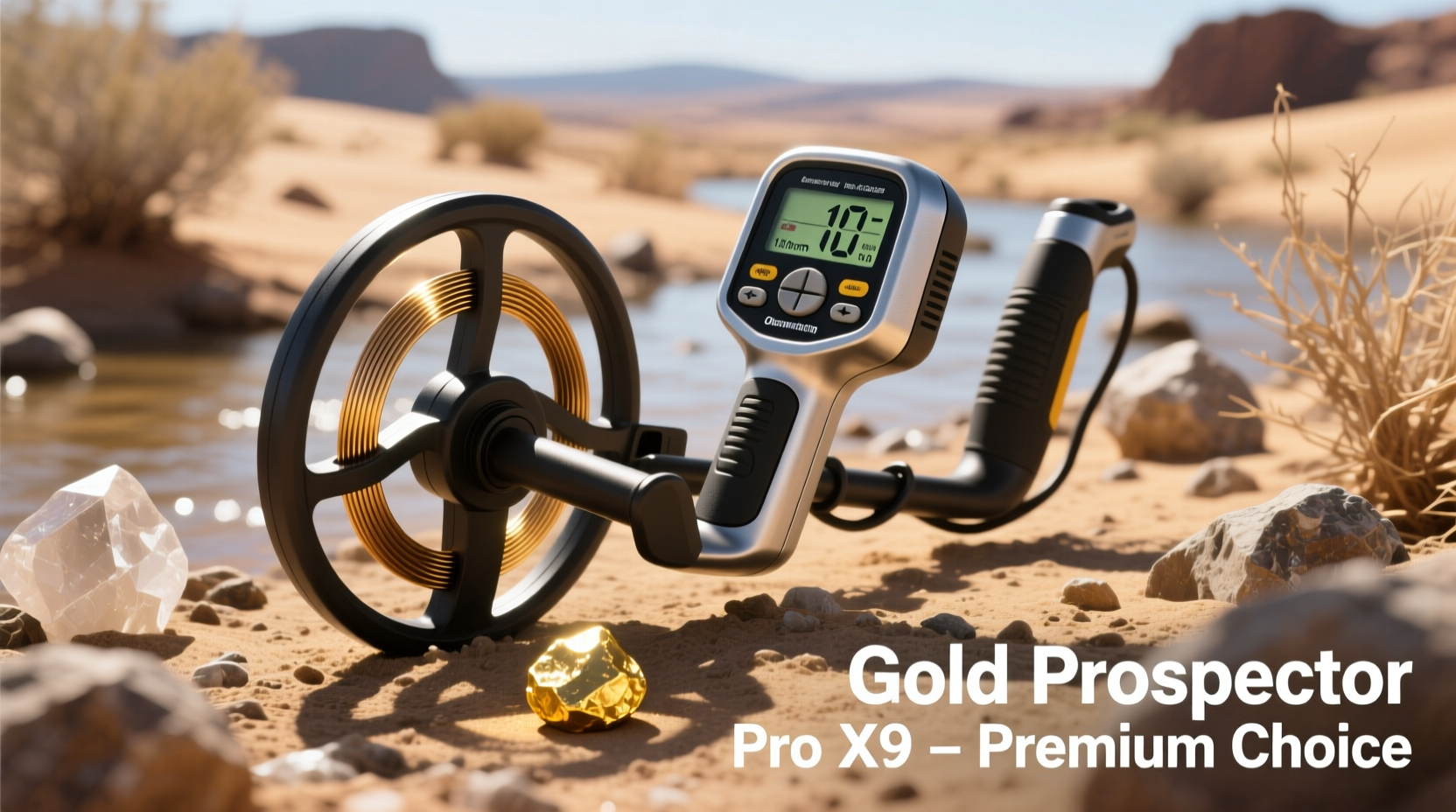
Gold often appears in small, irregular forms—nuggets the size of a grain of rice or flakes buried deep beneath iron-rich soil. These conditions present unique challenges. Standard VLF (Very Low Frequency) detectors tuned for coins operate at lower frequencies and struggle with high-mineralization ground common in gold-bearing regions like Australia’s outback or Nevada’s desert ranges.
High-frequency detectors (typically 40 kHz and above) are better suited for small gold because they offer greater sensitivity to tiny metallic masses. Additionally, ground balancing—especially automatic or continuous—is essential. Without it, false signals from magnetite or hematite can drown out faint gold responses.
Tip: Always test your detector’s ground balance feature in the field before beginning a serious hunt.Top 5 Reliable Metal Detectors for Gold Hunting
After extensive field testing and analysis of user feedback from experienced prospectors, these five models consistently deliver performance, durability, and value in gold-rich terrains.
| Model | Frequency Range | Ground Balance | Depth Capability (inches) | Price Range (USD) |
|---|---|---|---|---|
| Minelab GPZ 7000 | Zero Loss (ZVT) Technology | Automatic & Manual | Up to 18+ | $15,000+ |
| Minelab GPX 6000 | 19 kHz (adjustable) | Automatic | Up to 14 | $8,500 |
| Nokta Makro Legend | 3–40 kHz (Multi-Frequency) | Automatic & Tracking | Up to 12 | $1,500 |
| Fisher Gold Bug 2 | 72 kHz (Ultra-High) | Manual (Precise Control) | Up to 10 | $700 |
| Garrett ATX | 15 kHz (Pulse Induction) | Automatic | Up to 16 | $3,000 |
The Minelab GPZ 7000 stands alone as the most advanced gold-seeking machine available. Its ZVT (Zero Voltage Transmission) technology allows unprecedented depth and sensitivity, making it a favorite among professional prospectors in Western Australia. However, its steep price limits accessibility for hobbyists.
For those seeking a balance of performance and affordability, the Nokta Makro Legend offers multi-frequency capabilities that adapt to changing ground conditions—an increasingly important feature in diverse geological zones.
“With proper technique, even mid-tier detectors like the Gold Bug 2 can outperform premium models in skilled hands.” — Dr. Alan Reynolds, Geophysics Researcher, Colorado School of Mines
Key Features to Prioritize When Buying
Selecting a gold-specific detector isn’t about chasing specs; it’s about matching functionality to your environment and experience level.
- Frequency: Higher frequencies (above 40 kHz) detect smaller gold pieces but sacrifice depth. Multi-frequency units allow dynamic adjustment.
- Ground Balancing: Look for continuous or tracking ground balance to handle rapidly changing soil conditions.
- Sensitivity Controls: Adjustable gain helps manage interference and battery life without sacrificing signal clarity.
- Build Quality: Gold hunting often occurs in remote, rugged areas. Waterproof coils, shock-resistant housings, and ergonomic designs matter.
- Battery Life: Pulse induction models consume more power. Lithium-ion rechargeables are preferable over disposable alkalines.
Step-by-Step Guide to Starting Your Gold Hunt
Even the best detector won’t yield results without proper methodology. Follow this sequence to maximize efficiency and detection accuracy.
- Research Legal Access: Verify land ownership and obtain necessary permits. Many gold-rich areas are protected or privately held.
- Study Geological Maps: Focus on quartz veins, ancient riverbeds, and weathered rock formations—common indicators of placer gold.
- Calibrate Your Detector: Perform a factory reset, then adjust frequency and ground balance according to local soil tests.
- Grid Your Search Area: Use string lines or GPS markers to divide terrain into manageable sections, reducing overlap.
- Scan Slowly and Low: Move the coil no more than 1 inch above ground at a walking pace. High-frequency detectors require slower sweeps.
- Dig Smart: Use a hand trowel or suction pump in wet areas. Record GPS coordinates of finds for pattern analysis.
- Log Results: Keep a journal noting depth, size, location, and ground conditions to refine future searches.
Real-World Example: Success in the Sierra Foothills
In spring 2023, prospector Maria Thompson used a modified Nokta Makro Legend with dual-frequency mode to survey a decommissioned mining trail near Sonora, California. The site had been heavily hunted with standard VLF detectors, yielding little in recent years. By switching to simultaneous 18 kHz and 40 kHz transmission, she detected subtle phase shifts ignored by other machines.
On her third day, a faint, repeatable signal led to a 3.2-gram gold nugget buried under basalt rubble at 9 inches—well beyond typical recovery depth for single-frequency units. Her success wasn’t due to superior gear alone, but to disciplined scanning technique and an understanding of how multi-frequency processing reduces ground noise.
Checklist: Preparing for a Gold Detection Trip
- ✔️ Confirm permission to detect on target land
- ✔️ Charge all batteries and pack spares
- ✔️ Calibrate detector using known test targets
- ✔️ Pack digging tools, gloves, and sample bags
- ✔️ Bring topographic and mineral deposit maps
- ✔️ Wear sun protection and carry ample water
- ✔️ Enable GPS logging on your device if available
- ✔️ Inform someone of your location and expected return time
Frequently Asked Questions
Can I use a coin metal detector for gold hunting?
Most coin detectors operate below 15 kHz and lack the sensitivity needed for small gold nuggets. While they might detect larger specimens, their performance in mineralized ground is poor. Dedicated high-frequency or pulse induction detectors are strongly recommended.
How deep can metal detectors find gold?
Depth varies by model and soil type. Most consumer-grade gold detectors detect small flakes up to 6 inches deep. Advanced models like the GPZ 7000 can locate substantial nuggets over 18 inches down in favorable conditions. Size, orientation, and soil conductivity significantly affect depth.
Is pulse induction better than VLF for gold?
Pulse induction (PI) detectors excel in highly mineralized ground and offer greater depth, making them ideal for arid, iron-rich regions. However, they are less sensitive to very small gold and typically cost more. VLF detectors with high frequency and good ground balancing remain effective in moderate conditions and are more affordable.
Conclusion: Make Informed, Strategic Choices
Finding gold begins long before you turn on your detector. It starts with research, preparation, and selecting equipment engineered for the task. Whether you're exploring creek beds in Alaska or dry washes in Arizona, the right metal detector acts as both compass and companion. Models like the Minelab GPX 6000 and Nokta Makro Legend offer proven reliability across continents, while budget-conscious hunters can still achieve success with careful tuning of devices like the Fisher Gold Bug 2.
💬 Ready to start your next gold expedition? Share your favorite detection tips or ask questions in the comments—let’s build a smarter community of modern prospectors.








