When you're deep in the wilderness, far from cell towers and Wi-Fi signals, staying connected isn't a luxury—it's a necessity. Whether you're hiking through rugged terrain, managing a family camping trip, or coordinating a search-and-rescue effort, a dependable communication tool can mean the difference between a minor inconvenience and a serious emergency. That’s where the best camping walkie talkie comes in: a rugged, simple, and effective way to maintain contact when modern infrastructure fails.
Unlike smartphones, which rely on networks and drain batteries quickly, walkie talkies operate independently using radio frequencies. They provide instant voice communication over short to moderate distances, making them ideal for group coordination in remote areas. But not all models are created equal. Choosing the right one involves understanding range, durability, battery life, and ease of use under real outdoor conditions.
Key Features of the Best Camping Walkie Talkie
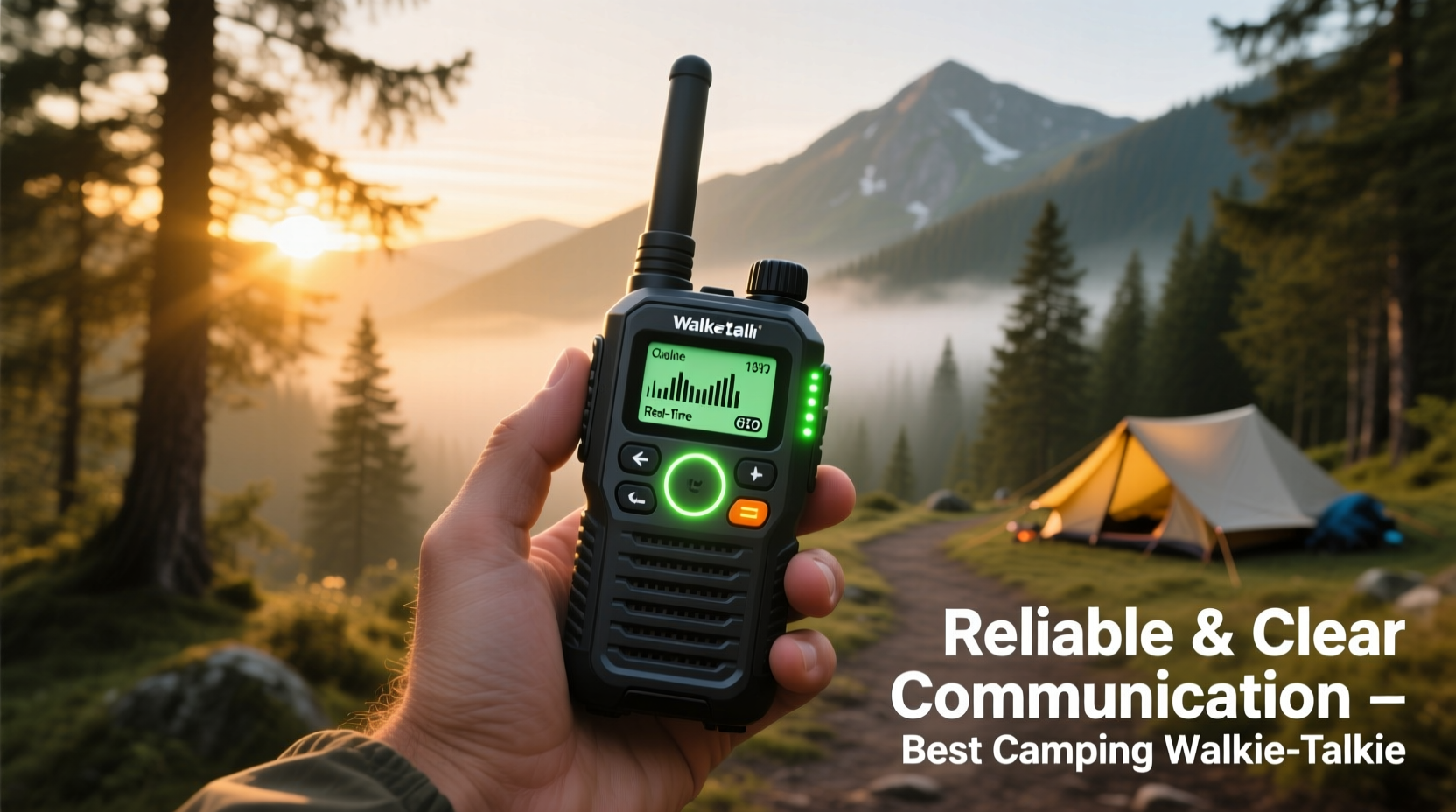
The most reliable walkie talkies for camping balance performance with practicality. While marketing may emphasize maximum range, real-world performance depends on terrain, weather, and interference. Instead of focusing solely on advertised numbers, consider these essential features:
- Effective Range: Look for models rated between 5–10 miles in open terrain. In forests or mountainous regions, expect half that distance due to obstructions.
- Weather Resistance: An IPX7 rating or higher ensures protection against rain, splashes, and accidental submersion.
- Battery Life: Opt for units offering at least 12–16 hours of continuous use. Rechargeable lithium-ion batteries are preferable to disposable alkalines for sustainability.
- Channel Capacity: At least 22 channels with privacy codes (CTCSS/DCS) reduce interference from other users nearby.
- Ergonomic Design: Lightweight, glove-friendly buttons, and loud, clear audio are crucial during high-wind or noisy conditions.
How Terrain Affects Communication Clarity
Radio signals travel differently depending on the environment. Understanding this helps set realistic expectations for your walkie talkie’s performance.
| Terrain Type | Signal Range | Communication Tips |
|---|---|---|
| Open Field / Desert | Up to 10+ miles | Use lower channels to minimize static; keep antennas upright. |
| Dense Forest | 1–3 miles | Move to higher ground; avoid thick tree cover blocking signals. |
| Mountainous Area | 2–5 miles (line-of-sight critical) | Stay on ridgelines; relay messages via intermediaries if needed. |
| Urban or Canyon Zones | Less than 1 mile | Multipath interference common; switch channels frequently. |
In heavily wooded or valley-filled areas, signal bounce and absorption significantly reduce clarity. Elevating your position—even by climbing a small hill—can dramatically improve transmission quality. Similarly, holding the unit vertically ensures optimal antenna alignment.
“Many campers overestimate range because they test devices in cities or flatlands. True reliability is proven in the backcountry.” — David Lin, Outdoor Communications Specialist, National Park Service
Step-by-Step Guide to Setting Up Your Walkie Talkie System
Proper setup ensures seamless communication from the start. Follow this timeline before hitting the trail:
- Day Before Departure: Fully charge all units and test each one with a partner at home.
- Assign Roles: Designate a primary communicator (e.g., group leader) and backup contacts.
- Select Channels: Choose two shared channels—one primary, one backup—and ensure everyone programs their device accordingly.
- Set Privacy Codes: Use CTCSS tones to filter out public chatter without sacrificing compatibility.
- Conduct a Field Test: On arrival at campsite, perform a range check between key locations (e.g., base camp and trailhead).
- Establish Check-In Times: Agree on regular voice updates every 30–60 minutes during movement.
- Create Emergency Protocol: Define a distress signal (e.g., three rapid presses) and response procedure.
Real-World Example: Lost Hiker Recovery in the Sierra Nevada
In August 2022, a four-person hiking team ventured into the John Muir Wilderness. Two members split off to explore a side ridge while the others remained at the main trail junction. After an hour, the pair failed to return. With no cell service, the group relied on their Motorola T600 walkie talkies to coordinate.
The lead hiker used Channel 8 with a privacy code of 146.5 Hz to call the missing duo. Though initial attempts failed due to a rocky ravine blocking signals, one member climbed 100 feet up a slope and successfully established contact. The lost hikers were disoriented but unharmed. Using guided verbal directions relayed over the radios, they retraced their steps and rejoined the group within 40 minutes.
This incident highlights how even basic FRS/GMRS radios, when used correctly, can serve as lifelines. The key factors were pre-trip channel agreement, disciplined calling procedures, and strategic repositioning to regain signal.
Checklist: Pre-Camping Walkie Talkie Preparation
Before every trip, verify the following:
- ✅ All units fully charged or equipped with fresh batteries
- ✅ Shared channel and privacy code programmed on each device
- ✅ Volume, squelch, and backlight settings adjusted for usability
- ✅ Belt clips and lanyards securely attached
- ✅ Waterproof cases or protective pouches packed
- ✅ Emergency phrasebook reviewed (e.g., “I’m stuck at the river crossing”)
- ✅ Silent mode disabled; alert tones enabled
Frequently Asked Questions
Do I need a license to use camping walkie talkies?
It depends on the type. FRS (Family Radio Service) channels require no license and are suitable for most recreational uses. GMRS (General Mobile Radio Service) offers greater power and range but requires an FCC license in the U.S., costing $35 for 10 years. Many dual-mode radios include both FRS and GMRS capabilities.
Can walkie talkies work through trees and mountains?
They can, but effectiveness drops significantly. Dense foliage absorbs signals, and solid rock formations block them entirely. For better penetration, use lower frequency bands (around 462 MHz for FRS), stay mobile to find clearer lines of sight, and consider repeater-equipped models if operating in large parks.
How do I extend battery life during extended trips?
Turn on power-saving modes, lower screen brightness, and use VOX (voice-activated transmission) only when necessary. Avoid constant monitoring—instead, schedule periodic check-ins. Carrying extra batteries or a solar charger adds redundancy without bulk.
Conclusion: Stay Connected, Stay Safe
Reliable and clear communication with the best camping walkie talkie isn’t about having the fanciest gadget—it’s about ensuring peace of mind when adventure takes you beyond reach of conventional networks. From choosing durable, well-designed units to practicing disciplined communication protocols, every step contributes to safer, more coordinated outdoor experiences.
Whether you’re guiding children through their first overnight hike or navigating technical trails with seasoned companions, equipping your group with functional radios transforms uncertainty into confidence. Technology may evolve, but the value of a clear voice over static remains timeless.
💬 Have a story where a walkie talkie made a difference? Share your experience below and help others prepare smarter for their next journey.








