
Kayak fishing offers a quiet, eco-friendly way to access remote waters and target species that larger boats can't reach. But without the advantage of speed or long-range scanning, kayak anglers rely heavily on precision tools—especially fishfinders—to locate structure, monitor depth, and detect underwater activity. The right fishfinder can transform guesswork into strategy. For budget-conscious paddlers, the challenge lies in finding a device that balances performance, durability, and price. Fortunately, several reliable and affordable models now meet the unique demands of kayak anglers—compact size, low power draw, and ease of use.
Why Fishfinders Matter for Kayak Anglers
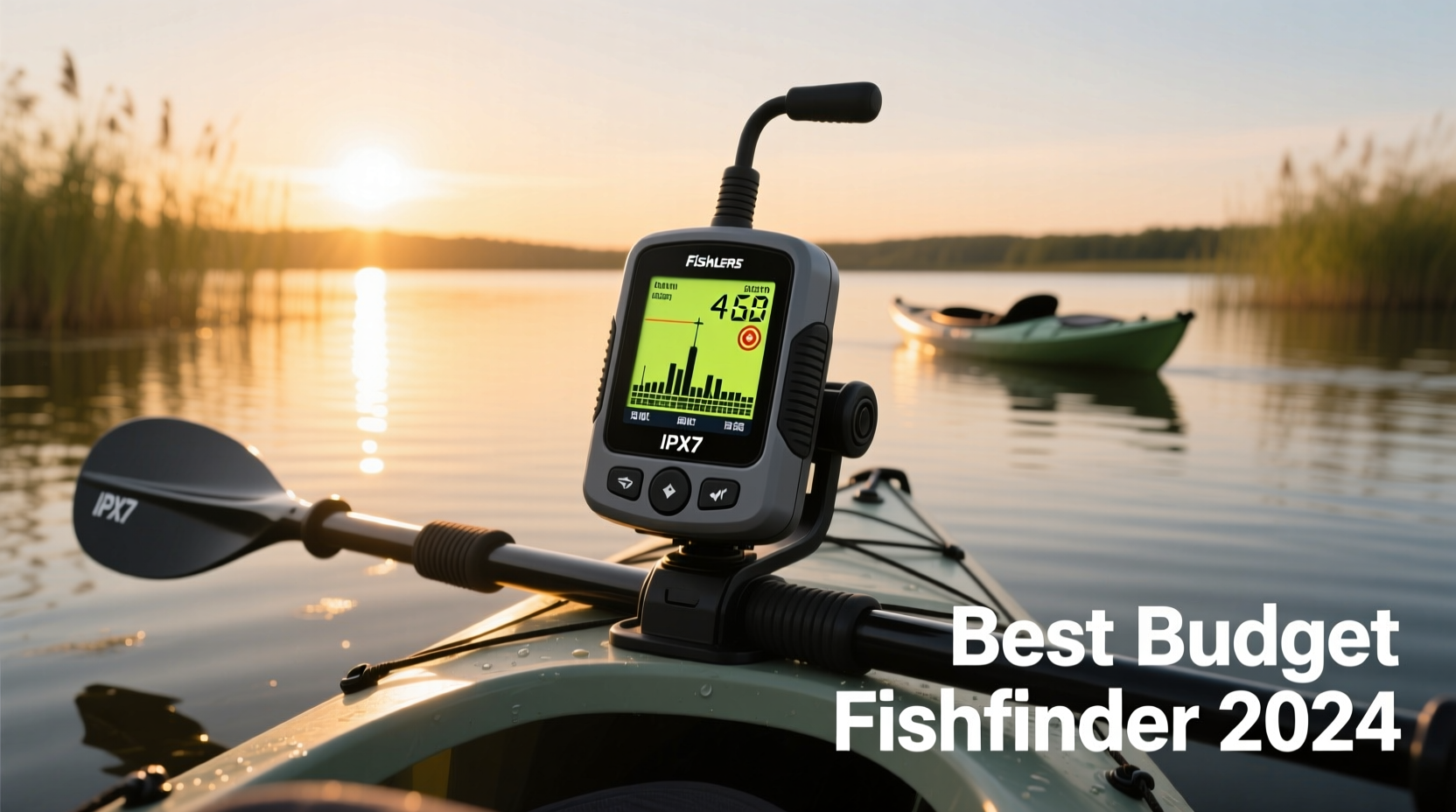
Fishing from a kayak limits mobility and casting range. Unlike motorized boats, kayaks move slowly and cover less ground. This makes efficient navigation and targeted fishing essential. A fishfinder helps you avoid wasting time in unproductive zones by revealing underwater contours, thermoclines, vegetation beds, and fish presence in real time.
Modern sonar technology has become more accessible, allowing even entry-level devices to deliver clear imaging and accurate depth readings. For kayak anglers, this means better decisions: where to stop, where to cast, and when to move on. With proper setup, a modestly priced fishfinder can significantly increase catch rates while enhancing safety through accurate depth awareness.
Tip: Always mount your transducer away from paddle splash zones to reduce signal interference and ensure consistent readings.Key Features to Look for in a Kayak Fishfinder
Not all fishfinders are suited for small craft. When selecting a unit for kayak use, prioritize compactness, battery efficiency, and simple operation. Here are the most important features:
- Size and Weight: Compact units (under 5 inches display) fit easily on limited deck space.
- Power Consumption: Low-wattage models preserve battery life during full-day trips.
- Transducer Mounting: Look for trolling motor mounts, hull mounts, or universal transom brackets compatible with kayak rails or scupper holes.
- Waterproof Rating: Minimum IPX7 rating ensures resistance to splashes and rain.
- Sonar Type: CHIRP sonar provides clearer target separation than traditional 2D, even at lower price points.
- Battery Option: Built-in rechargeable batteries or compatibility with external power banks add convenience.
“Even basic fishfinders today offer enough clarity to identify fish arches and bottom hardness—critical intel when fishing structure-heavy zones.” — Mark Reynolds, Marine Electronics Technician
Top Affordable and Reliable Fishfinder Models
The following models consistently receive high marks from kayak anglers for value, reliability, and ease of installation. All are priced under $300 and designed with portability in mind.
| Model | Display Size | Key Features | Price Range | Kayak Suitability |
|---|---|---|---|---|
| Garmin Striker 4 | 3.5” | CHIRP sonar, built-in GPS, Quickdraw Contours | $180–$220 | Excellent – compact, GPS-enabled, easy mount |
| Lowrance Hook Reveal 4x | 4.3” | Split-screen view, CHIRP, Broadband Sounder option | $200–$250 | Very Good – slightly larger but powerful sonar |
| Raymarine Dragonfly 4 Pro | 4.3” | RealVision Sonar, Wi-Fi connectivity, crisp display | $250–$290 | Excellent – best screen quality in class |
| Deeper PRO+ (Castable) | Smartphone App | Casts up to 150ft, works without boat mounting | $220–$260 | Outstanding – no permanent install needed |
| Garmin Livescope Ultra Mini (add-on) | Requires Chartplotter | Near real-time imaging, ultra-compact transducer | $500+ (transducer only) | Premium upgrade – not standalone |
Among these, the Garmin Striker 4 stands out as the most balanced option for beginners and intermediate users. It combines GPS mapping with dependable CHIRP sonar and integrates seamlessly with the ActiveCaptain app for software updates and waypoint sharing.
For those who prefer not to mount hardware, the Deeper PRO+ offers a revolutionary approach: cast the sonar device ahead of the kayak and retrieve data wirelessly via smartphone. This eliminates drilling, wiring, and permanent modifications—ideal for rental or shared kayaks.
Installation and Setup Tips for Kayak Use
Proper installation ensures optimal performance and longevity. Follow this step-by-step guide to set up your fishfinder efficiently.
- Choose a Mounting Location: Select a spot within easy view but protected from direct sun and paddle strikes. Flush-mount or use a RAM-style bracket.
- Secure the Transducer: Attach using a scupper mount, transom clamp, or trolling motor bracket. Ensure it’s fully submerged when the kayak is loaded.
- Route Wires Neatly: Use zip ties and protective sleeves to prevent snagging. Avoid running cables near VHF antennas or power inverters.
- Connect Power Source: Use a dedicated 12V marine battery or USB power bank (with voltage regulator if needed). Never draw power from your phone or GPS device.
- Test Before Launching: Turn on the unit on land first to confirm display function, then test in water to calibrate depth and sensitivity.
Mini Case Study: Improving Bass Success on Lake Norman
Daniel, an avid kayak angler from North Carolina, struggled to locate largemouth bass during summer months on Lake Norman. He relied on visible structure like docks and weed lines but often fished barren spots. After mounting a Garmin Striker 4 with a scupper-mounted transducer, he began identifying submerged humps and drop-offs invisible from the surface.
Within three weekends, Daniel adjusted his pattern to target 8–12 foot depths near rocky transitions. The fishfinder revealed suspended baitfish and occasional deep arches indicating active predators. His catch rate increased from one or two fish per trip to six or more. “I was fishing blind before,” he said. “Now I know when I’m over good water—even if it looks empty.”
Essential Checklist Before Buying
Use this checklist to evaluate whether a fishfinder meets your kayak fishing needs:
- ✅ Display is readable in direct sunlight
- ✅ Unit weighs less than 1 lb (including mount)
- ✅ Transducer can be mounted without hull modification
- ✅ Power draw is under 2 amps at full brightness
- ✅ Includes basic CHIRP or down imaging capability
- ✅ Offers at least 5-hour runtime on internal battery (if applicable)
- ✅ Backed by manufacturer warranty (minimum 1 year)
Frequently Asked Questions
Can I use a fishfinder without a battery?
Some portable models, like the Deeper series, run directly from your smartphone's Bluetooth connection and require no separate battery. However, onboard units typically need a 12V source. Consider a small lithium power bank (e.g., 5–10Ah) for extended trips.
Do I need GPS on my kayak fishfinder?
GPS is highly recommended. It allows you to mark productive spots, track your path, and return to hot zones later. Units like the Garmin Striker 4 include GPS at no extra cost, making them ideal for mapping unknown waters.
Are castable sonars as accurate as fixed units?
Castable sonars like Deeper provide excellent real-time data but lack continuous scanning while moving. They’re best for spot-checking depth and fish presence. Fixed units offer constant monitoring, which is better for covering large areas or tracking structure while paddling.
Final Thoughts and Next Steps
Reliable fishfinding technology no longer requires a big investment or a large vessel. Today’s affordable options empower kayak anglers with insights once reserved for offshore captains. Whether you choose a compact Garmin Striker, a versatile Lowrance Hook, or a wireless Deeper sensor, the key is consistency—using the tool regularly to build underwater knowledge and refine your approach.
Start with a model that fits your budget and installation comfort level. Learn its settings, experiment with sensitivity and zoom, and pair it with a waterproof phone case for navigation. Over time, your fishfinder will become an indispensable part of your gear lineup—helping you find fish faster, stay safe in deep water, and make every paddle count.
🚀 Ready to upgrade your kayak setup? Pick one model from this list, install it on your next outing, and log what you learn. Share your experience with fellow anglers—your insight could help someone else find their next trophy catch.








