The moment a new gadget arrives—its sleek packaging intact, sealed with anticipation—it’s not just about what’s inside. For millions, it’s about capturing that first reveal and sharing it with the world. On TikTok, unboxing videos have evolved from niche tech rituals into a cultural phenomenon. From smartphones to smartwatches, AirPods to AI-powered gadgets, users don’t just open their purchases—they stage them. But why? What drives someone to film something as mundane as peeling off plastic wrap or sliding out a charging cable? The answer lies deep within human psychology: curiosity, ritual, identity, and the need for connection.
The Ritual of Anticipation
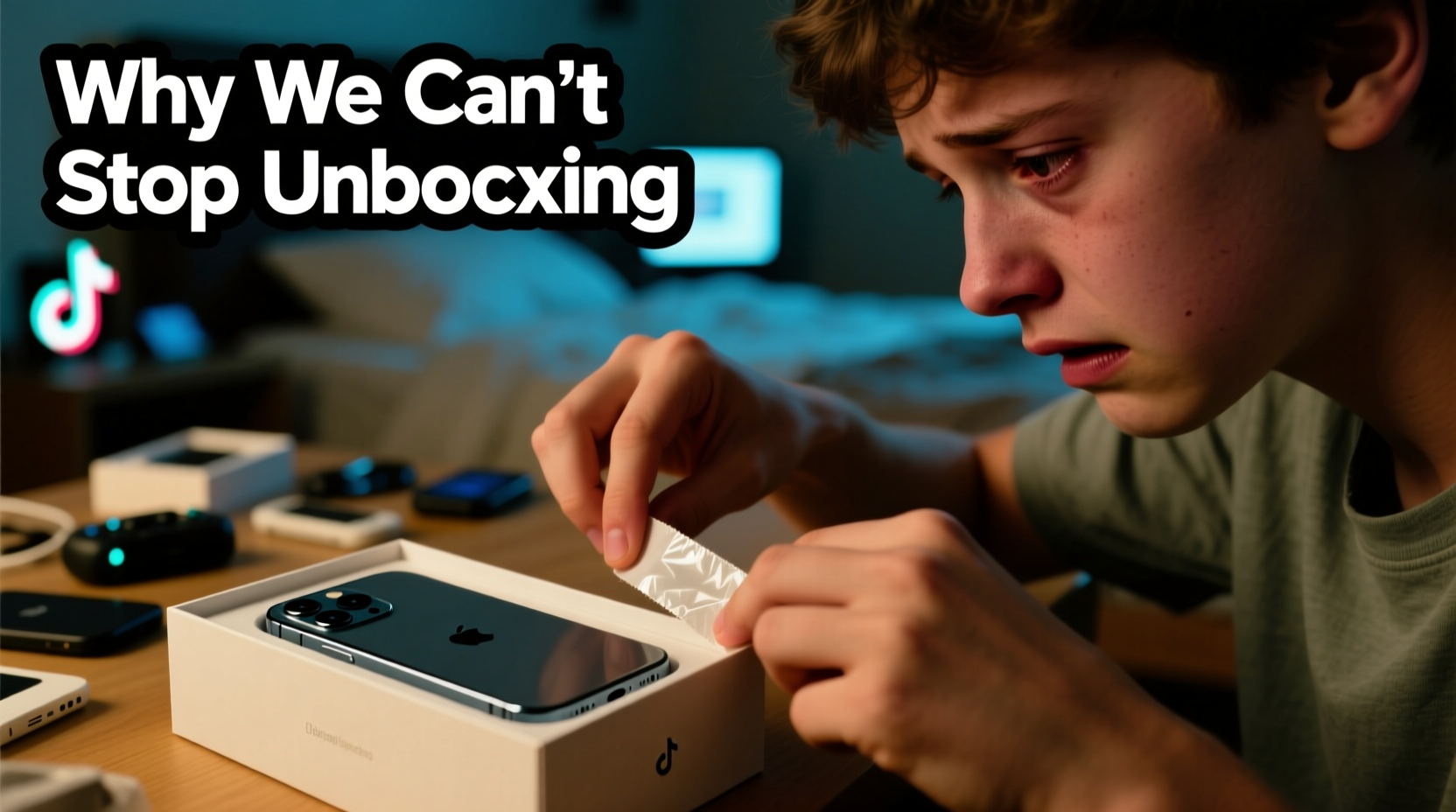
Unboxing is not simply an act of opening a box; it’s a ritual steeped in emotional weight. Long before the product is in hand, desire has been cultivated through marketing, reviews, and social influence. When the package finally arrives, the physical interaction becomes a sensory experience—the weight of the box, the texture of the packaging, the quiet snap of a seal breaking. This ritual marks a transition: from wanting to having, from potential to possession.
Psychologists refer to this as “anticipatory consumption”—the pleasure derived not from using a product, but from the build-up to its acquisition. A 2020 study published in the Journal of Consumer Psychology found that people often enjoy the wait more than the actual use of a product. Unboxing videos extend this pleasure by transforming private moments into shared narratives. By filming, creators prolong the anticipation, relive the excitement, and invite others to participate in their joy.
Tip: To maximize viewer engagement, emphasize the tactile details—crinkling paper, magnetic closures, smooth surfaces—these sensory cues trigger vicarious satisfaction.The Role of Curiosity and Social Learning
Humans are naturally curious. We want to know what’s inside, how things work, and whether they live up to the hype. Unboxing videos satisfy this curiosity without requiring ownership. Viewers can explore a product’s design, layout, and included accessories—all from the comfort of their screen. This form of passive exploration is especially powerful in the age of information overload, where decisions are influenced by peer experiences more than advertisements.
On TikTok, short-form video excels at delivering quick, digestible insights. A 30-second clip can show the entire unboxing process, highlighting key features like packaging quality, included cables, or even the smell of a new device (a sensation many viewers report missing). This aligns with the concept of “observational learning,” a theory proposed by psychologist Albert Bandura, which suggests people learn by watching others. When someone films a gadget opening, they become a guide, helping others evaluate products before purchase.
This dynamic creates a feedback loop: creators gain followers for providing useful content, while viewers feel more confident in their buying decisions. In fact, a 2023 survey by GlobalWebIndex found that 68% of consumers aged 18–34 watch unboxing videos before purchasing electronics—proof that these clips aren’t just entertainment; they’re research tools.
The Performance of Identity and Belonging
Filming an unboxing isn’t neutral. It’s a performance—one that communicates taste, status, and technological fluency. Choosing to unbox the latest iPhone or a limited-edition gaming console signals membership in a community of early adopters and tech enthusiasts. On TikTok, where personal branding is paramount, these videos function as identity markers.
Social media platforms reward visibility, and unboxing provides a low-barrier entry point into content creation. Unlike tutorials or reviews, which require expertise, unboxing only demands access to a new product and a smartphone. Yet, even this simple act carries symbolic value. As Dr. Sarah Chan, a digital culture researcher at the University of Edinburgh, explains:
“Unboxing videos are less about the object and more about the self. They say: *I am someone who gets new things. I am in the know. I belong.* In a world where material success is closely tied to social validation, opening a box becomes a way to perform competence and desirability.” — Dr. Sarah Chan, Digital Culture Researcher
This performance is amplified by TikTok’s algorithm, which favors novelty, authenticity, and high engagement. A well-timed unboxing of a trending gadget can go viral overnight, turning an ordinary user into a micro-influencer. The result? More followers, brand collaborations, and even career opportunities in tech reviewing or content creation.
Why TikTok? The Platform’s Psychological Edge
TikTok isn’t just another social network—it’s engineered to exploit psychological triggers. Its full-screen, auto-playing feed minimizes friction, making it easy to fall into endless scrolling. The platform thrives on immediacy, emotion, and surprise—all of which unboxing videos deliver in spades.
Consider the structure of a typical TikTok unboxing:
- Hook (0–3 seconds): Close-up of hands holding a branded box.
- Rising tension (3–15 seconds): Slow reveal of contents, often with ASMR-like sounds.
- Climax (15–25 seconds): First power-on or feature demonstration.
- Resolution (25–30 seconds): Final thoughts, rating, or call-to-action (“Should I do a review next?”).
This narrative arc mirrors classic storytelling principles, creating emotional investment in under 30 seconds. Moreover, TikTok’s sound-centric design allows creators to enhance mood with music or voiceover, further deepening viewer immersion.
But beyond format, TikTok fosters a sense of intimacy. Unlike polished YouTube videos shot in studios, TikTok unboxings often happen on beds, desks, or kitchen tables—spaces associated with privacy and authenticity. This “bedroom aesthetic” makes viewers feel like they’re witnessing something real, not staged. And in a digital landscape saturated with ads, perceived authenticity is currency.
Step-by-Step: How to Create a Psychologically Engaging Unboxing Video
Understanding the psychology is one thing; applying it is another. Here’s a practical timeline for crafting an unboxing video that resonates emotionally and performs well on TikTok:
- Preparation (Before Opening): Charge your phone, clean your filming space, and choose ambient lighting. Natural light works best for showing true colors.
- Opening Shot (0–3 sec): Start with a tight close-up of the unopened box. Let the brand logo fill the frame. Silence or soft music builds suspense.
- The Reveal (3–12 sec): Slowly open the package. Focus on textures—cardboard, foam inserts, magnetic lids. Narrate sparingly: “Okay, let’s see what’s inside…”
- Item-by-Item Showcase (12–22 sec): Pull out each component with deliberate care. Highlight small details: serial numbers, color variations, included accessories.
- First Activation (22–27 sec): Turn on the device. Capture the boot-up screen. React genuinely—laughter, surprise, or awe enhances authenticity.
- Closing (27–30 sec): Share a quick verdict: “So far, I’m obsessed with the matte finish.” End with a question to boost comments: “Would you buy this?”
Checklist: Elements of a High-Engagement Unboxing
To ensure your video taps into the core psychological drivers, follow this checklist:
- ✅ Film in landscape or vertical mode optimized for TikTok (9:16 ratio)
- ✅ Include close-ups of textures and materials
- ✅ Capture natural reactions—don’t over-rehearse
- ✅ Use subtle background music that matches the mood
- ✅ Add text overlays for product specs or standout features
- ✅ Encourage interaction: ask a question in the caption
- ✅ Post within 24 hours of receiving the product for maximum relevance
Mini Case Study: From Viewer to Creator
Jess Lin, a 22-year-old university student from Vancouver, never considered herself a content creator. But when she bought her first pair of premium noise-canceling earbuds, she noticed dozens of TikTok videos comparing models. Curious, she filmed her own unboxing—simple, handheld, shot on her bed.
The video gained 180,000 views in 48 hours. Comments poured in: “You made me buy these!” and “Your reaction was so real.” Within three months, Jess had 75,000 followers and was invited to preview unreleased gadgets from a Canadian tech distributor.
“I didn’t set out to be an influencer,” she said in an interview. “I just wanted to share how excited I was. Turns out, people love seeing genuine reactions. It helps them decide without feeling sold to.”
Jess’s story illustrates how unboxing bridges personal experience and public utility. Her authenticity wasn’t curated—it was accidental. And that’s precisely what made it compelling.
Do’s and Don’ts of Gadget Unboxing on TikTok
| Do’s | Don’ts |
|---|---|
| Highlight unique packaging elements (e.g., hidden drawers, eco-friendly materials) | Don’t rush the reveal—viewers want suspense |
| Show the full context: box, manual, cables, stickers | Avoid excessive branding or scripted lines that feel salesy |
| React naturally—even disappointment can be engaging | Don’t damage or modify the product during filming (e.g., scratching screens) |
| Use hashtags like #TechTok, #Unboxing, #NewGadget | Never misrepresent what’s included (e.g., fake “free gift” claims) |
| Respond to comments to build community | Don’t ignore accessibility—add captions when possible |
FAQ: Common Questions About Unboxing Psychology
Why do people feel satisfied watching someone else unbox a product?
Watching an unboxing activates mirror neurons in the brain—neural circuits that fire both when we perform an action and when we observe someone else doing it. This creates a sense of vicarious participation, allowing viewers to mentally simulate the experience. Combined with ASMR-like audio (crinkling, clicking), the effect can be deeply satisfying, even relaxing.
Is filming unboxings just about showing off?
While status signaling plays a role, most creators emphasize discovery and sharing. Many viewers aren’t wealthy; they’re budget-conscious individuals seeking honest opinions. A 2022 Pew Research study found that 54% of unboxing viewers watch to “see if something is worth the price,” not to admire luxury goods.
Can unboxing videos influence brand perception?
Absolutely. A single viral unboxing can shape public opinion faster than traditional advertising. Positive videos enhance trust, while negative ones—especially those revealing poor packaging or misleading claims—can damage reputations. Brands now monitor TikTok unboxings as part of their customer sentiment strategy.
Conclusion: The Box Is Just the Beginning
The psychology of unboxing reveals a deeper truth about modern consumer behavior: we don’t just buy products—we buy experiences, stories, and identities. Filming a gadget opening on TikTok transforms a private moment into a shared ritual, blending curiosity, community, and self-expression. It’s not merely about the device inside the box, but about the meaning we assign to its arrival.
Whether you’re a casual viewer or an aspiring creator, understanding this psychology empowers you to engage more thoughtfully—with content, with brands, and with yourself. The next time you see a tape being peeled back in slow motion, remember: you’re not just watching a box open. You’re witnessing a digital-age rite of passage.
💬 Have you ever filmed or watched a gadget unboxing? What made it memorable? Share your thoughts in the comments—your experience might help someone decide their next tech purchase.








