
When planning a camping trip, staying powered up can mean the difference between comfort and inconvenience. Whether you're charging a phone, running a small fridge, or keeping a camera battery full, reliable off-grid electricity is essential. Two popular options dominate the market: portable power stations and solar chargers. While both serve the purpose of providing energy in remote locations, they differ significantly in capacity, functionality, and practicality. Understanding these differences helps campers choose the best solution based on their needs, duration of travel, and environmental conditions.
Understanding the Core Differences
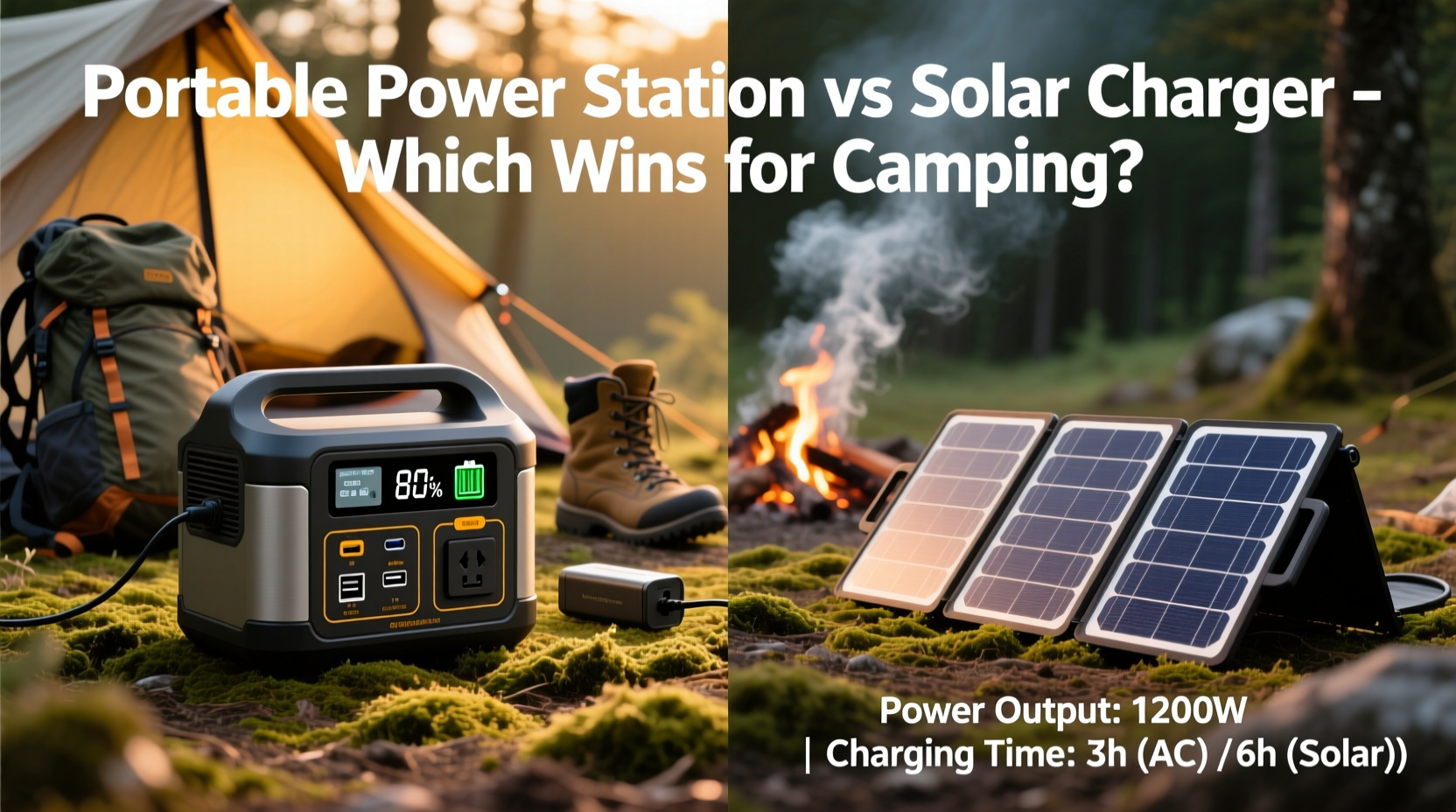
At first glance, portable power stations and solar chargers may seem interchangeable. However, their design philosophies diverge fundamentally. A portable power station is essentially a large-capacity battery with built-in outlets—AC, USB, DC, and sometimes even wireless charging. These units store energy internally and can power multiple devices simultaneously. In contrast, a solar charger is typically a lightweight panel (or set of panels) that converts sunlight into electricity, either to charge devices directly or to feed into smaller batteries.
The key distinction lies in energy storage and output capability. Power stations come pre-charged or can be charged via wall outlets, carports, or solar panels. Once charged, they act as mobile power hubs. Solar chargers, especially standalone ones without integrated batteries, generate power only when exposed to sunlight and deliver lower wattage outputs. This makes them ideal for trickle-charging phones or GPS units but less suited for high-demand appliances.
“Many campers assume solar means freedom from outlets, but without sufficient storage, intermittent sun exposure limits real usability.” — Jordan Hale, Outdoor Electronics Specialist
Capacity and Power Output: What Can Each Actually Run?
One of the most critical factors in choosing between these systems is what devices you plan to power. Let’s break down typical use cases:
- Smartphones and tablets: Require 5–20 watts per charge. Both solutions handle this easily.
- Lights and headlamps: LED lights consume 1–10 watts. Easily supported by either option.
- Camping fans or CPAP machines: Draw 30–80 watts. Only power stations can sustain these over multiple hours.
- Mini fridges or electric kettles: Need 50–100+ watts continuously. Feasible only with larger power stations (300Wh+).
Portable power stations are rated in watt-hours (Wh), indicating total stored energy. For example, a 500Wh unit can theoretically run a 50-watt device for 10 hours. Most mid-range models (200–600Wh) support AC outlets, allowing standard appliances to operate off-grid. Solar chargers, unless paired with an external battery pack, rarely exceed 30W in output and lack the surge capacity needed for motors or compressors.
Tip: Always check the continuous and peak wattage ratings of your devices. Some equipment, like refrigerators, require a brief surge of double the rated power during startup.Portability and Setup Considerations
Backpackers and minimalist campers prioritize weight and compactness. Here, solar chargers have a clear advantage. Foldable solar panels often weigh under 2 pounds and pack down to the size of a water bottle. They can be strapped to a backpack for passive charging while hiking. In contrast, even small power stations start around 5–7 pounds, with larger models exceeding 20 pounds.
However, setup complexity favors power stations. Plug in your devices, and you’re ready—no need to angle panels toward the sun or wait for optimal light conditions. Solar chargers demand active management: positioning, repositioning, and protection from wind or shade. Cloudy days reduce efficiency by up to 80%, making consistent power delivery unreliable.
For car campers or base camps where gear stays in one place for several days, the extra weight of a power station becomes negligible compared to the convenience it offers. But for thru-hikers or ultralight adventurers, every ounce counts, and solar-only setups remain more practical.
Charging Speed and Recharge Options
How quickly can each system replenish its energy? And how flexible are the charging methods?
Power stations offer multiple input options: wall outlet (fastest), 12V car socket, and solar panels (slowest). A 500Wh station might recharge fully in 4–6 hours from a wall outlet, or 6–10 hours via compatible solar panels under ideal conditions. Some advanced models support dual-input charging (e.g., solar + car), reducing downtime.
Solar chargers depend entirely on sunlight intensity and panel orientation. A 60-watt solar panel generates about 250–300 watt-hours per day in full sun—enough to refill a small power bank twice, but barely enough to charge a medium-sized power station in two full days. Without battery buffering, solar chargers cannot store excess energy, meaning any unused afternoon sun is wasted.
| Feature | Portable Power Station | Solar Charger (Standalone) |
|---|---|---|
| Typical Weight | 5–30 lbs | 0.5–3 lbs |
| Energy Storage | Yes (built-in battery) | No (unless paired with power bank) |
| Output Ports | AC, USB, DC, sometimes wireless | USB only (usually) |
| Max Output (Continuous) | 300W–2000W+ | 10W–60W |
| Recharge Time (Wall) | 4–8 hours | N/A |
| Recharge Time (Solar) | 6–12 hours (with compatible panel) | Depends on connected battery |
| Best For | Base camps, group trips, appliance use | Hiking, emergency backup, phone charging |
Real-World Example: A Weekend Family Camping Trip
Consider the Smith family’s three-day camping trip in the Rocky Mountains. They bring two smartphones, a drone, a GoPro, a 40-quart electric cooler, LED string lights, and a CPAP machine for the father. Their daily power needs total approximately 450 watt-hours.
A single 500Wh portable power station meets all demands effortlessly. It runs the cooler overnight, powers the CPAP for 6 hours, and charges all electronics by morning. The unit was pre-charged at home and topped up using a 100W solar panel during daylight hours. No manual intervention beyond initial setup was required.
If they relied solely on a 30W foldable solar charger, results would differ drastically. Even with perfect sun exposure, the panel produces about 150Wh per day—only a third of their daily usage. Devices would compete for limited power, forcing trade-offs. The cooler might run intermittently, and the CPAP could drain the system before sunrise. Without a buffer battery, nighttime charging wouldn’t be possible.
This scenario illustrates that while solar chargers are valuable supplements, they rarely serve as primary power sources for anything beyond basic communication devices.
Hybrid Approach: Combining Both Systems
The smartest strategy for many campers isn’t choosing one over the other—but integrating both. A mid-sized power station (300–600Wh) serves as the central hub, storing energy for round-the-clock use. One or two solar panels (60–100W) recharge the station during the day, enabling multi-day independence from grid power.
This hybrid model balances reliability with sustainability. You gain the instant availability of stored energy while extending runtime through renewable input. Many modern power stations include MPPT charge controllers, optimizing solar input for faster, more efficient charging.
“We see increasing demand for ‘solar-ready’ power stations. Customers want the flexibility to go fully off-grid after initial charge.” — Lena Torres, Product Manager at TrailVolt Energy
Cost and Long-Term Value
Upfront cost influences many purchasing decisions. Entry-level solar chargers start at $30–$50, making them accessible for occasional users. High-efficiency models with USB-C PD and rugged builds range from $80–$150. However, to achieve meaningful power delivery, you’ll likely need to add a separate power bank ($50–$100), increasing total investment.
Portable power stations begin around $200 for 200Wh models and scale rapidly. A quality 500Wh unit costs $400–$600, while premium 1000Wh+ stations exceed $1,000. Though pricier, these units often last 5–7 years with proper care and support hundreds of charge cycles.
When evaluating value, consider total usable energy delivered over time. A $120 solar charger may suffice for weekend hikes but won’t scale for longer expeditions. A $500 power station, used regularly over five years, averages less than $100 per year—an affordable cost for consistent, versatile power.
Step-by-Step Guide: Choosing the Right Option for Your Trip
- Assess your power needs: List all devices, their wattage, and estimated usage time. Sum total daily watt-hour consumption.
- Determine trip duration: Multi-day trips without resupply favor higher-capacity systems.
- Evaluate mobility requirements: Are you backpacking or driving to a fixed site?
- Check weather patterns: Frequent clouds or short daylight reduce solar effectiveness.
- Decide on budget: Factor in long-term use, not just immediate cost.
- Choose configuration:
- Minimalist hiking → Lightweight solar charger + power bank
- Car camping → Portable power station (300–600Wh)
- Extended off-grid adventure → Power station + solar panel(s)
- Test before departure: Charge all components, simulate usage, and ensure compatibility.
FAQ
Can I use a solar charger to recharge a portable power station?
Yes, most portable power stations accept solar input via MC4 or Anderson connectors. Ensure voltage and current compatibility between the panel and station to avoid damage. Look for models with MPPT controllers for optimal efficiency.
Are portable power stations safe to use inside a tent?
Lithium iron phosphate (LiFePO4) models are generally safe due to thermal stability and built-in protections. Avoid sealed spaces with poor ventilation and never overload the unit. Keep away from flammable materials.
Do solar chargers work on cloudy days?
They still generate power, but output drops significantly—typically to 10–25% of rated capacity. A 60W panel may produce only 6–15 watts under heavy cloud cover, making charging very slow.
Checklist: What to Verify Before Buying
- ✔ Total watt-hour capacity matches your daily needs
- ✔ Includes necessary output ports (AC, USB-C PD, 12V)
- ✔ Supports solar charging if off-grid longevity is important
- ✔ Weight and dimensions fit your transport method
- ✔ Battery chemistry: LiFePO4 lasts longer and is safer than NMC
- ✔ Warranty period (2+ years preferred)
- ✔ Noise level: Pure sine wave inverters operate silently
Final Verdict: Which Is Better?
There is no universal answer—only the right tool for your specific situation.
For casual campers, hikers, or those needing only to keep a phone alive, a solar charger is sufficient, lightweight, and economical. It’s an excellent emergency backup and promotes sustainable energy habits.
For serious outdoor enthusiasts, families, or anyone relying on medical devices, refrigeration, or extended electronics use, a portable power station delivers unmatched reliability and versatility. Its ability to provide stable, high-output power regardless of weather makes it indispensable.
The future of camping power lies not in choosing between the two, but in combining them intelligently. A power station ensures availability; solar panels extend autonomy. Together, they create a resilient, eco-conscious energy ecosystem for the modern camper.
🚀 Ready to upgrade your camping power setup? Assess your next trip’s needs, invest in the right combination, and enjoy uninterrupted energy—even deep in the wilderness. Share your experience or ask questions in the comments below!








