
When planning a camping trip, reliable power is essential—whether you're charging phones, running a mini-fridge, or powering lights. But choosing between a portable power station and a traditional generator isn't just about capacity and fuel. One of the most overlooked yet critical factors is noise. In the stillness of nature, nothing disrupts peace faster than a roaring engine. So, which option truly offers a quieter experience in the wild?
The short answer: portable power stations are significantly quieter than conventional generators. But understanding why—and how that difference impacts your camping experience—requires a deeper look at design, technology, use cases, and real-world trade-offs.
How Noise Affects the Camping Experience
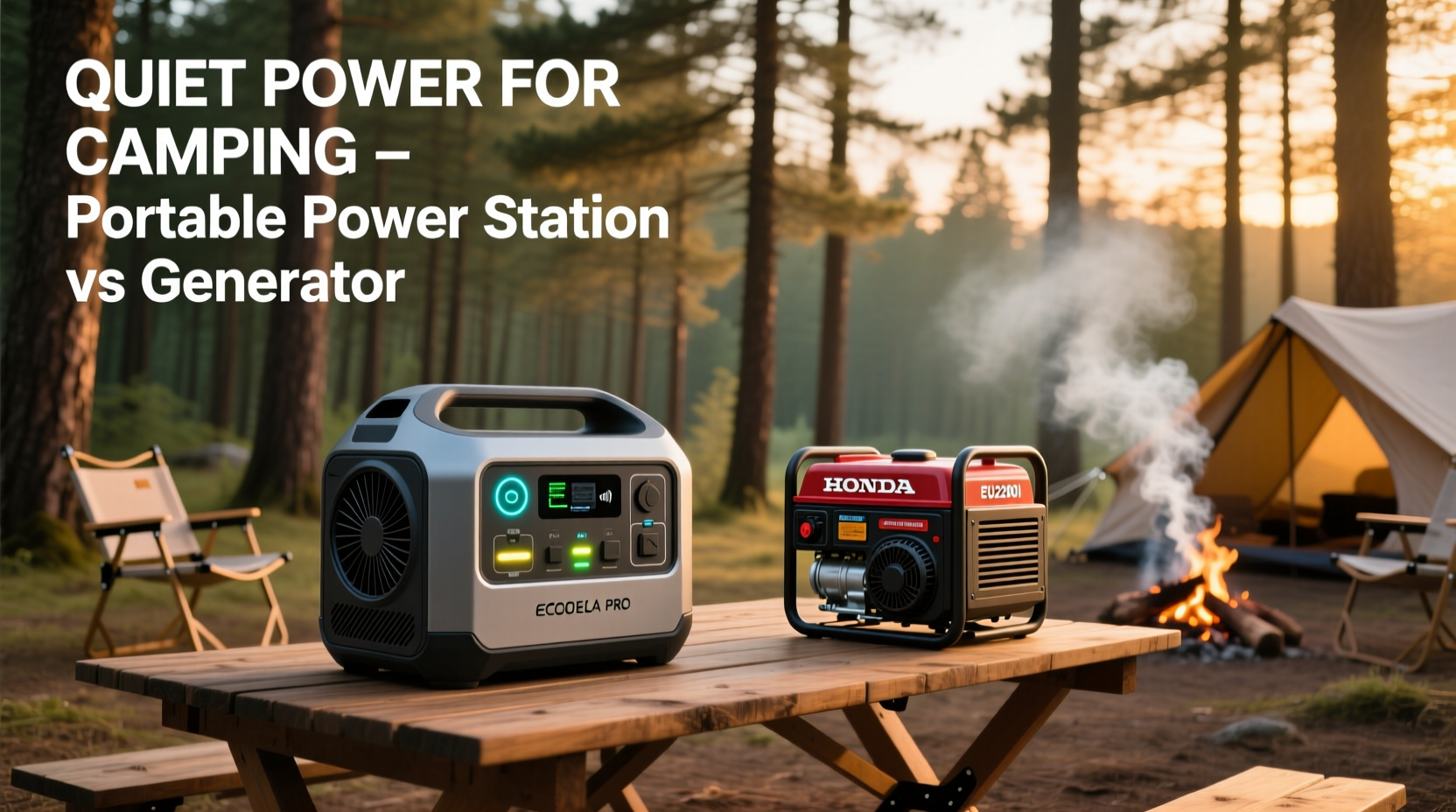
Camping is often about disconnecting from urban chaos and reconnecting with nature. The sounds of rustling leaves, flowing streams, and distant bird calls contribute to relaxation and mindfulness. Introducing loud mechanical noise breaks that immersion and can be disruptive not only to you but also to fellow campers and wildlife.
Noise pollution at campsites has become such a concern that many parks now enforce decibel limits, especially during quiet hours. A typical gas-powered generator can produce 65–75 decibels (dB) at close range—comparable to a vacuum cleaner or busy street traffic. In contrast, portable power stations operate at less than 30 dB, essentially silent to human ears under normal conditions.
“Peace and quiet are part of the wilderness experience. Excessive noise from power sources undermines that.” — Dr. Alan Reyes, Outdoor Recreation Researcher, National Park ServiceTip: Always check your campsite’s noise regulations before bringing any power equipment. Some parks ban gas generators entirely.
Understanding the Technology: Why Power Stations Are Quieter
The fundamental reason behind the noise difference lies in how each device generates electricity.
Generators: Combustion Creates Noise
Traditional camping generators run on gasoline, propane, or diesel. They use an internal combustion engine to spin an alternator, producing AC power. This mechanical process inherently produces noise through:
- Engine combustion cycles
- Moving pistons and crankshafts
- Fan cooling systems
- Vibrations transmitted through the frame
Even \"quiet\" inverter generators—marketed as low-noise models—typically emit 50–60 dB. While this is a significant improvement over older models, it's still audible across a campground and noticeable inside a tent.
Portable Power Stations: Silent Electronics
Portable power stations, also known as solar generators or battery generators, store energy in lithium-ion (or sometimes LiFePO4) batteries. When you draw power, an inverter converts DC battery power to AC without any moving parts. Since there’s no combustion or spinning engine, the only potential sound comes from a small cooling fan—but even that activates only under heavy load and runs quietly.
Most high-quality units remain completely silent under light loads (e.g., charging devices, running LED lights). Even under full load, they rarely exceed 35 dB, making them ideal for noise-sensitive environments.
Comparative Analysis: Noise Levels and Real-World Performance
| Feature | Portable Power Station | Gas-Powered Generator |
|---|---|---|
| Average Noise Level | 25–35 dB (near silent) | 50–75 dB (moderate to loud) |
| Noise Source | Occasional fan only | Engine combustion, exhaust, cooling fan |
| Best Used For | Tents, RVs, quiet zones, family camping | Rugged off-grid sites, construction, high-power tools |
| Impact on Wildlife | Negligible | Potentially disruptive |
| Indoor Use Safety | Safe (no emissions) | Dangerous (carbon monoxide risk) |
This comparison highlights more than just volume—it reflects broader implications for comfort, safety, and environmental responsibility. If your goal is a serene, eco-friendly camping experience, the portable power station clearly wins on noise alone.
Real-World Example: A Weekend in Yosemite
Consider Sarah and Mark, who recently camped at Upper Pines in Yosemite National Park. They brought a mid-sized gas generator to power their CPAP machine, phone chargers, and a small electric cooler. While the generator met their power needs, they quickly noticed issues:
- Their neighbors gave disapproving looks when they started the unit at 7 a.m.
- They couldn’t run it at night without disturbing their own sleep.
- Park rangers reminded them twice about noise ordinances after 10 p.m.
On their next trip, they switched to a 1000Wh portable power station charged via solar panels during the day. The change was transformative:
- They recharged all devices overnight with zero noise.
- They used the station inside their RV without ventilation concerns.
- They enjoyed uninterrupted stargazing and conversation around the fire.
Sarah later commented, “We didn’t realize how much the generator ruined the vibe until we tried the silent alternative. It made the whole trip feel more peaceful.”
Choosing the Right Option: A Practical Guide
While noise is a major factor, it shouldn’t be the only one. Your choice depends on power needs, duration, portability, and budget. Here’s a step-by-step guide to help you decide:
- Assess your total wattage needs: List all devices you plan to power and their running and surge watts. A CPAP machine uses ~50W; a blender may need 800W surge.
- Determine runtime requirements: Will you camp for two days or two weeks? Power stations have fixed capacity; generators can refuel indefinitely.
- Evaluate recharging options: Do you have access to solar, car charging, or shore power? Generators don’t need recharging but require fuel.
- Consider location and regulations: Are you in a national park with noise restrictions? Is your site vehicle-accessible?
- Compare weight and portability: A 1000Wh power station weighs 20–30 lbs; a comparable generator can be heavier and harder to transport.
- Budget for long-term costs: Generators are cheaper upfront but incur ongoing fuel and maintenance expenses. Power stations cost more initially but save money and hassle over time.
Key Advantages Beyond Quiet Operation
While silence is a standout benefit, portable power stations offer several other advantages over traditional generators:
- No fumes: Safe for indoor or enclosed space use (e.g., inside tents, RVs, or cabins).
- Low maintenance: No oil changes, spark plug replacements, or carburetor cleaning.
- Clean energy compatibility: Can be charged via solar, wind, or grid power, reducing environmental impact.
- Instant readiness: No pull-starting or priming required—just press a button.
- Multiple output ports: USB-A/C, 12V carports, AC outlets, and DC inputs allow versatile device support.
In contrast, generators, while powerful and fuel-reliable, come with operational hassles: fuel storage, cold starts, exhaust management, and regular servicing. For casual campers and families, these drawbacks often outweigh the higher upfront cost of a quality power station.
When a Generator Might Still Be the Better Choice
Despite their noise, gas generators aren’t obsolete. They remain practical in specific scenarios:
- Extended off-grid expeditions: When solar charging isn’t feasible and resupply is limited.
- High-power demands: Running air conditioners, large refrigerators, or power tools continuously.
- Emergency backup: In remote locations where battery failure could be dangerous.
- Cold weather camping: Lithium batteries lose efficiency below freezing; generators perform more reliably in extreme cold.
If you must use a generator, consider noise-reduction strategies:
- Place it at least 50 feet from your tent, behind natural barriers like rocks or trees.
- Use a DIY sound baffle (wooden box lined with acoustic foam).
- Run it only during daylight hours to minimize disturbance.
- Invest in a model with eco-mode, which reduces engine speed during low-load operation.
FAQ: Common Questions About Noise and Camping Power
Are all portable power stations completely silent?
Most operate silently under light loads. However, some models activate internal cooling fans under heavy or prolonged use, producing a faint hum (under 35 dB). This is still much quieter than any generator.
Can I use a generator in a national park?
Many U.S. national parks restrict or prohibit gas generators, especially during quiet hours (usually 10 p.m. to 6 a.m.). Always check the specific rules of your destination. Portable power stations are generally allowed and encouraged.
Do quiet generators exist?
Yes—“inverter generators” are designed to be quieter, with noise levels as low as 50 dB. Brands like Honda (EU2200i) and Yamaha (EF2000iSv2) are known for their quiet operation. However, even these are significantly louder than battery-based power stations.
Final Checklist Before You Buy
- ✅ Determine your total power needs (watt-hours per day).
- ✅ Confirm if your campsite allows generators.
- ✅ Decide on recharging method: solar, car, wall outlet.
- ✅ Compare noise ratings: aim for under 40 dB if silence matters.
- ✅ Check weight and portability for your setup.
- ✅ Look for MPPT solar charge controllers for faster solar input.
- ✅ Read user reviews focusing on real-world noise and reliability.
Conclusion: Prioritize Peace Without Sacrificing Power
The shift toward quieter, cleaner energy solutions is transforming the camping experience. Portable power stations offer a compelling advantage: reliable electricity without the roar. For most recreational campers, van lifers, and outdoor enthusiasts, they represent the future of mobile power—silent, safe, and sustainable.
While generators still hold value in extreme or high-demand situations, their noise makes them increasingly incompatible with the ethos of respectful, low-impact camping. By choosing a portable power station, you’re not just investing in convenience—you’re preserving the tranquility that draws people into the wild in the first place.
💬 Have a favorite quiet power solution for camping? Share your experience or ask questions in the comments—your insights could help others enjoy a quieter, more peaceful adventure.








