
When planning a camping trip, reliable power can make the difference between a comfortable experience and an unplanned return home. Whether you're charging phones, running a mini-fridge, or powering lights and a coffee maker, choosing the right energy source is crucial. Two popular options dominate the market: portable power stations and gas generators. While both deliver electricity off-grid, they differ significantly in noise levels, environmental impact, portability, and usability. Understanding these differences helps campers make informed decisions that align with their values—especially when seeking quiet, clean energy solutions.
How Portable Power Stations Work
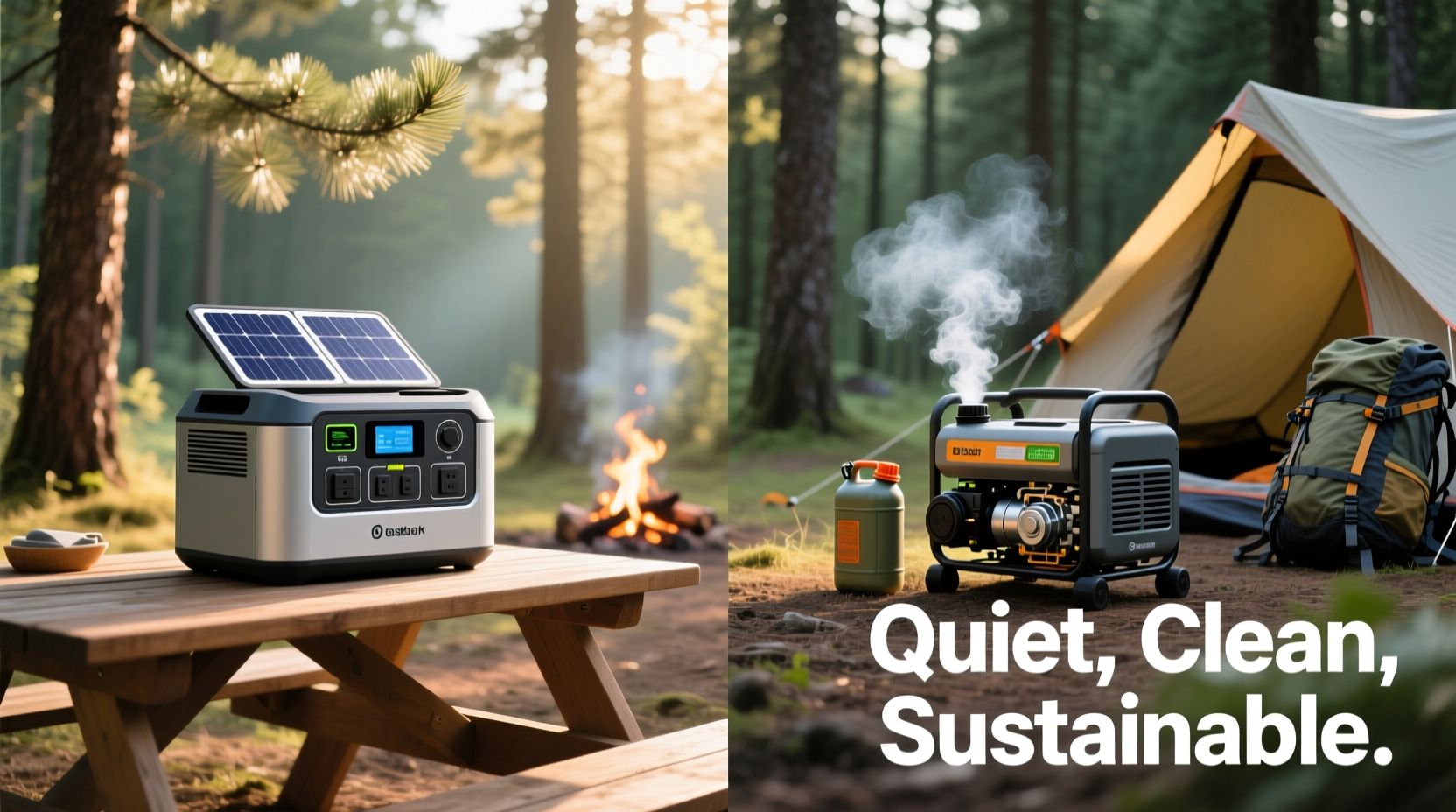
Portable power stations are battery-based systems that store electrical energy for later use. They are charged via wall outlets, solar panels, car chargers, or even some renewable sources like wind turbines. Once charged, they output AC, DC, and USB power to run devices ranging from smartphones to small appliances. Most models today use lithium-ion or lithium iron phosphate (LiFePO4) batteries, offering high energy density, long cycle life, and stable performance across temperatures.
These units are designed for silent operation. Since there’s no internal combustion engine, they produce zero noise during discharge—making them ideal for tent camping, night-time use, or any environment where peace matters. They also emit no fumes, allowing safe indoor or enclosed-space use, such as inside RVs or near sleeping areas.
Tip: Pair your portable power station with foldable solar panels for sustainable, off-grid recharging during multi-day trips.How Gas Generators Deliver Power
Gas-powered generators rely on internal combustion engines fueled by gasoline, propane, or diesel to generate electricity. As the engine runs, it spins an alternator that produces alternating current (AC). These units have been the go-to solution for decades due to their high wattage output, fuel availability, and ability to run continuously with refueling.
However, their operation comes at a cost. Most conventional gas generators produce noise levels between 65–85 decibels—comparable to a vacuum cleaner or busy street traffic. This disrupts natural surroundings, violates campground noise ordinances, and diminishes the tranquility many seek while camping. Additionally, they emit carbon monoxide, nitrogen oxides, and other pollutants, posing health risks if used improperly near tents or enclosed spaces.
“Traditional gas generators create more than just noise—they compromise air quality and detract from the immersive outdoor experience.” — Dr. Alan Torres, Environmental Engineer and Outdoor Recreation Researcher
Key Differences: A Side-by-Side Comparison
| Feature | Portable Power Station | Gas Generator |
|---|---|---|
| Noise Level | Silent (0 dB) | 65–85 dB (loud) |
| Emissions | Zero during use | CO, NOx, hydrocarbons |
| Fuel Source | Electricity / Solar | Gasoline, Propane, Diesel |
| Portability | Lightweight, compact (5–60 lbs) | Bulkier, heavier (30–100+ lbs) |
| Runtime | Limited by battery capacity (4–12 hrs typical) | Extended with fuel refills (indefinite with fuel) |
| Maintenance | Minimal (battery care) | Regular oil changes, spark plug checks, carburetor cleaning |
| Indoor Use | Safe | Dangerous (carbon monoxide risk) |
| Start-Up Time | Instant | Manual pull-start or electric start required |
When to Choose a Portable Power Station
For most modern campers prioritizing silence, safety, and sustainability, portable power stations are the superior choice. They excel in scenarios where:
- You’re camping in close proximity to others (e.g., established campgrounds).
- Quiet hours are enforced, typically after 10 PM.
- You want to power electronics like laptops, cameras, CPAP machines, or LED lighting without disturbance.
- Environmental responsibility is important—no fossil fuels burned, no emissions released.
- You value low maintenance and hassle-free setup.
Models like the Jackery Explorer 1000, EcoFlow Delta 2, or Bluetti AC200P offer capacities between 500Wh and 2000Wh, sufficient to run a mini-fridge for 8+ hours, charge a phone over 50 times, or power a 60W laptop for 15 hours. With built-in MPPT solar charge controllers, they integrate seamlessly with solar setups, enabling true off-grid independence.
When a Gas Generator Makes Sense
Despite their drawbacks, gas generators still serve a purpose in specific situations. Consider one if:
- You need sustained high-wattage power (e.g., air conditioners, large power tools, multiple appliances).
- Your trip lasts longer than what your battery can support, and solar recharging isn’t feasible.
- You're in remote locations without access to electricity for recharging.
- You already own a reliable generator and prioritize raw output over noise and emissions.
Modern inverter generators like the Honda EU2200i or Champion 3800 reduce noise through advanced mufflers and engine tuning, operating around 53–59 dB at quarter load—quieter than older models but still audible. Even so, they require ventilation, regular maintenance, and careful fuel storage, adding complexity to outdoor trips.
Real Example: Family Camping Trip in the Rockies
The Thompson family planned a week-long camping trip in Colorado’s Rocky Mountain National Park. They wanted to keep their phones charged, run a small fridge for perishables, and power a CPAP machine each night. Initially, they considered renting a gas generator for its long runtime. However, after researching local regulations, they discovered that noise restrictions banned generators after 8 PM—and their campsite was only 20 feet from neighboring tents.
Instead, they invested in a 1,000Wh portable power station and two 200W foldable solar panels. During the day, the panels recharged the unit while hiking. At night, the station powered all their devices silently. “We didn’t wake up once to engine noise,” said Mark Thompson. “And knowing we weren’t polluting the air made the trip feel more authentic.” The system met all their needs without violating park rules or disturbing others.
Step-by-Step Guide to Choosing Your Camp Power Solution
- Assess Your Power Needs: List all devices you plan to run and their wattage. Multiply wattage by hours of daily use to get total watt-hours needed per day.
- Determine Runtime Requirements: Decide how many days you’ll be off-grid and whether recharging (via solar or vehicle) is possible.
- Evaluate Noise Sensitivity: Will you be near other campers? Are there quiet hours? If yes, lean toward a silent power station.
- Check Portability Limits: Consider weight and size. Can you carry it easily from car to campsite?
- Plan for Recharging: Do you have access to solar, a car outlet, or shore power? If not, a gas generator may be necessary.
- Review Safety and Regulations: Confirm if fuel storage or generator use is restricted at your destination.
- Compare Total Cost of Ownership: Include purchase price, fuel, maintenance, and lifespan. Power stations often win long-term despite higher upfront cost.
Checklist: Selecting the Right Off-Grid Power Option
- ☐ Calculate total daily watt-hour consumption
- ☐ Determine maximum surge wattage (for motors or compressors)
- ☐ Verify if solar recharging is practical
- ☐ Check campground noise and generator policies
- ☐ Assess weight and portability requirements
- ☐ Decide if indoor/enclosed use is needed
- ☐ Compare lifecycle costs (fuel, maintenance, replacement)
- ☐ Prioritize quiet, clean energy if camping in nature-focused areas
FAQ: Common Questions About Camp Power Solutions
Can I use a portable power station to run a small air conditioner?
Yes, but only if the unit’s continuous and surge wattage fall within the power station’s limits. A typical 5,000 BTU AC draws about 500–700 watts continuously and up to 1,500 watts at startup. You’d need a station with at least 1,000Wh capacity and 1,500W+ output. Even then, runtime may be limited to 4–6 hours.
Are gas generators illegal at most campgrounds?
Not illegal, but heavily restricted. Many public and private campgrounds prohibit generator use except during designated hours (e.g., 9 AM–9 PM). Some ban them entirely, especially in wilderness or eco-sensitive zones. Always check the rules before arrival.
How long do portable power stations last?
Most quality models last 5–10 years with proper care. Lithium iron phosphate (LiFePO4) batteries endure 3,000–5,000 charge cycles, far exceeding standard lithium-ion (500–1,000 cycles). Avoid full discharges and extreme temperatures to extend lifespan.
Final Thoughts: Embracing Quiet, Clean Energy Outdoors
The shift toward portable power stations reflects a broader trend in outdoor recreation: minimizing human impact while maximizing comfort. Campers no longer have to choose between convenience and conservation. Modern battery technology offers clean, silent, and increasingly affordable alternatives to noisy, polluting gas generators.
While gas generators still hold a place in extreme conditions or industrial applications, they’re becoming outdated for typical recreational use. Portable power stations align better with the ethos of responsible camping—preserving natural soundscapes, reducing emissions, and respecting shared spaces.
As solar panel efficiency improves and battery costs decline, the gap will only widen. For anyone planning their next adventure, investing in a quality portable power station isn’t just practical—it’s a statement of values. It says you care about the environment, your fellow campers, and the quiet beauty of the wild.
🚀 Ready to upgrade your camping power setup? Start by calculating your daily energy needs and explore solar-compatible power stations. Make your next trip quieter, cleaner, and more sustainable.








